Interior CGI for a Soho boutique hotel
London W1 · Independent Hospitality Group
Architectural Visualisations London (AVL) visualised three revenue-facing touchpoints for a Soho boutique hotel: arrival, dining and the suite stay. The point of the package was to put a working version of the hotel in front of investors and the in-house marketing team before any of those rooms had been built. The commission came from an independent hospitality group, with the property sitting in London W1, on the West End side of Westminster.
Project overview
The visual ask was atmospheric, not diagrammatic. Renders had to read like the hotel itself: a recognisable Soho address, finishes and lighting that felt designed rather than specified, and enough credibility to carry an investor deck and an early marketing edit without needing apology captions underneath.
Project brief: lobby, restaurant and luxury suite views for a Soho boutique hotel
The brief named three spaces as the spine of the package: lobby, restaurant and luxury suite. Each view carried a double load. It had to present a finished interior with photographic credibility, and it had to give the design team a working canvas to settle finishes, lighting and FF&E ahead of fit-out.
The audience was twofold. Inside an investor deck the visuals had to make the case for the property to people who do not read drawings. In the early marketing edit the same renders had to set guest expectations before any rooms were ready to book.
Soho context
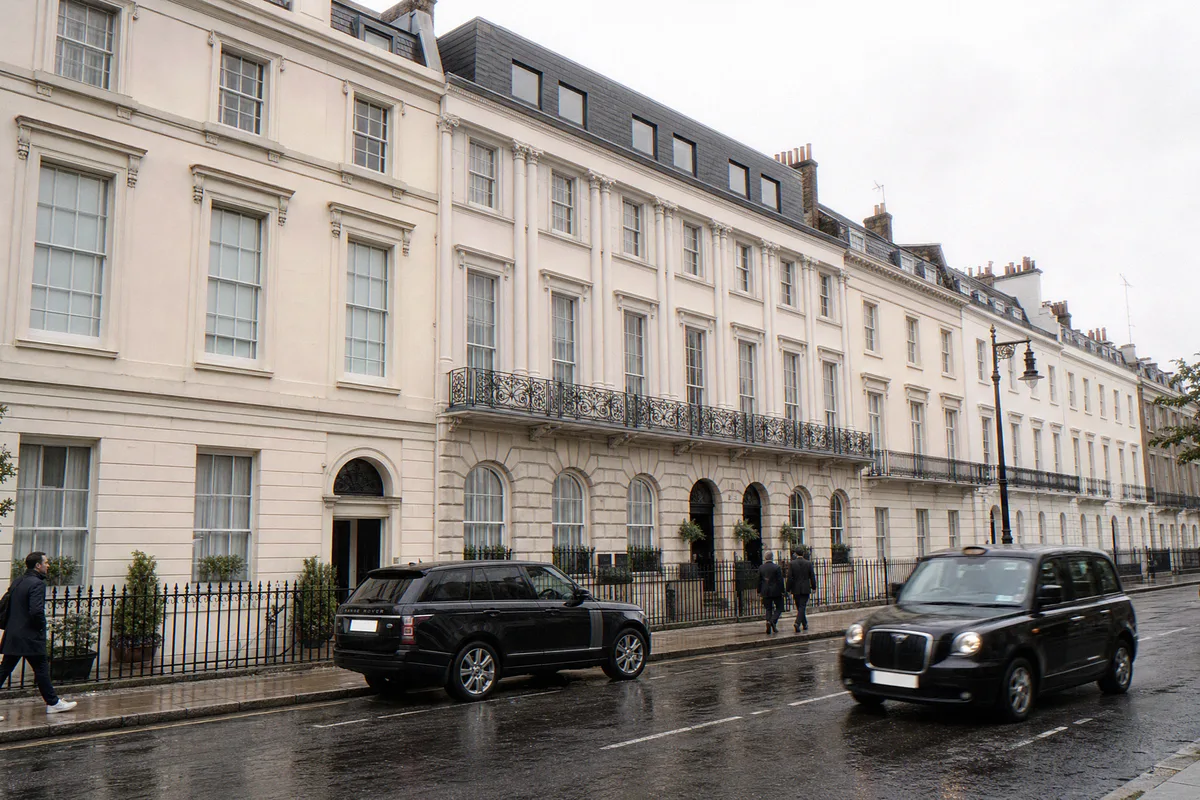
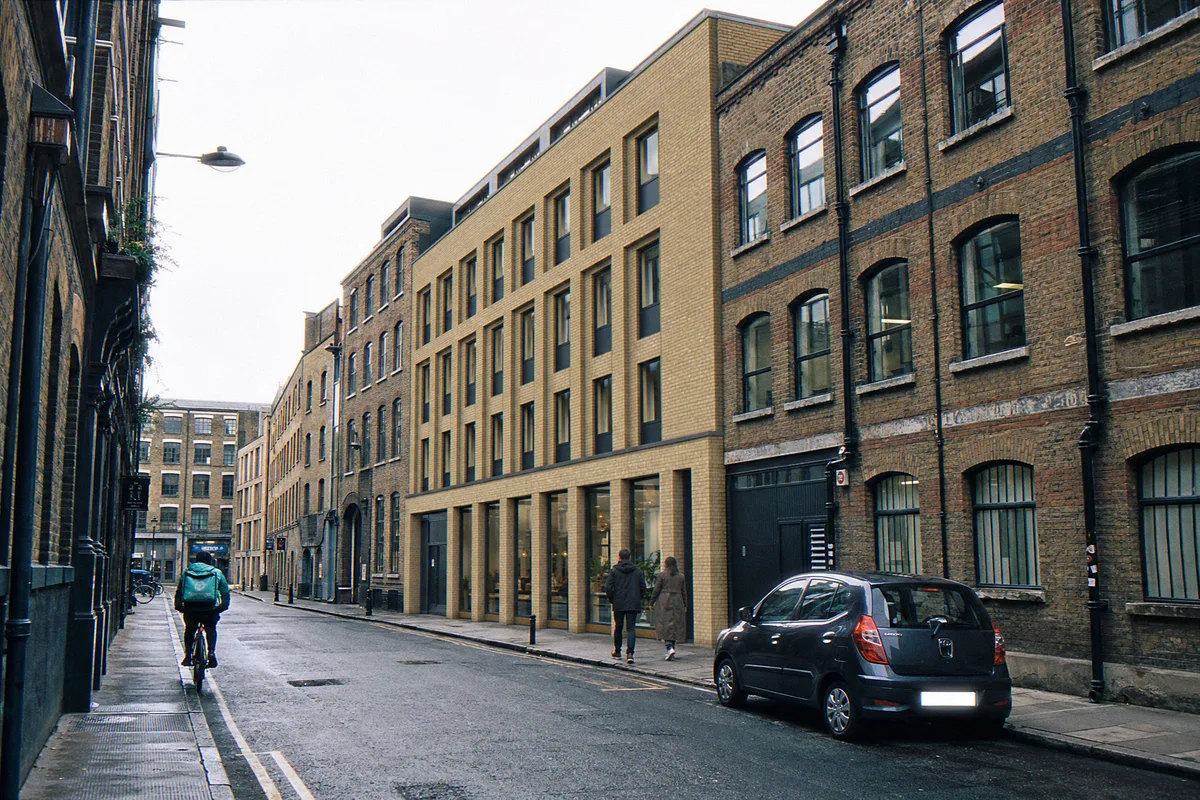
The hotel sits in Soho, London W1, on the West End side of Westminster. The neighbourhood is dense, late-night, food-and-drink led, and run by small independents rather than corporate operators. A new hotel here is read against the bars and restaurants on its doorstep, not against the corporate hotel cluster south of Piccadilly.
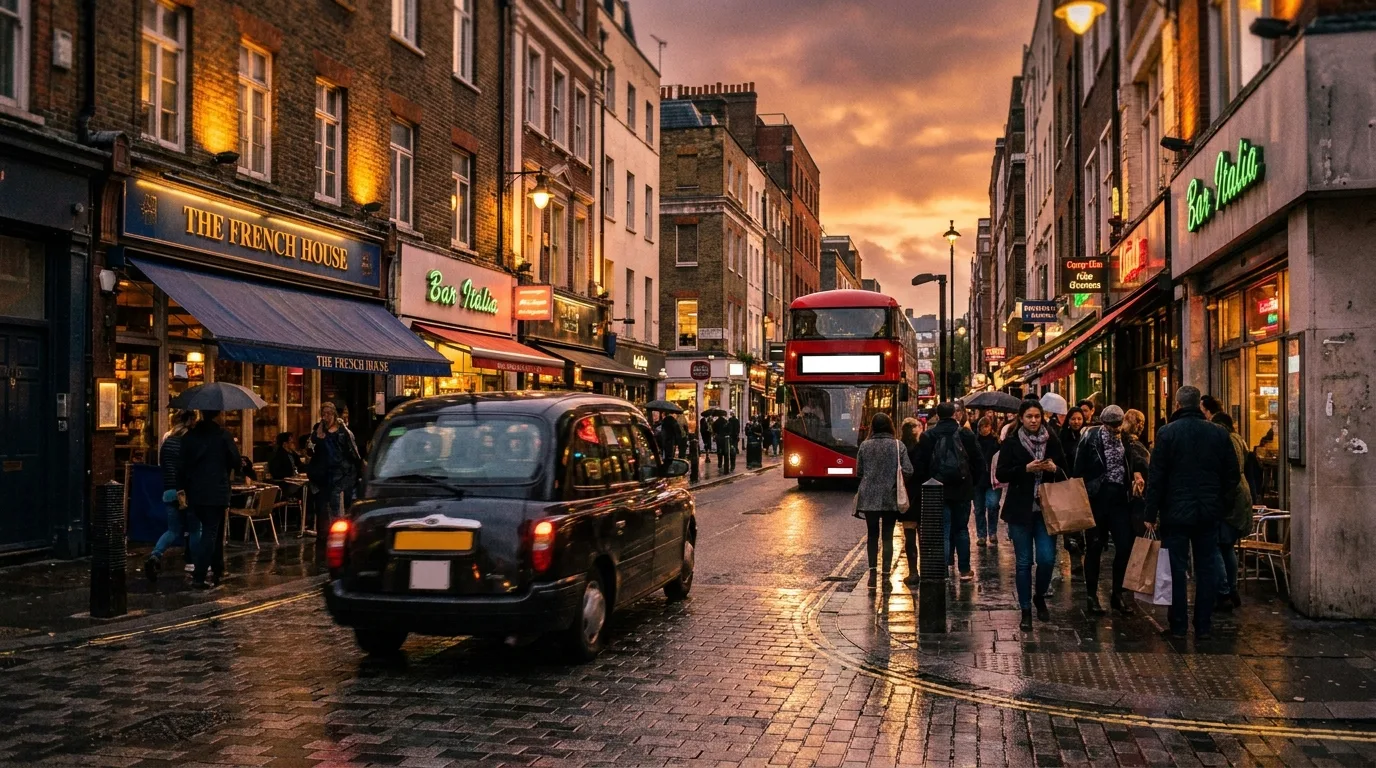
That backdrop shaped the visual decisions. The interior had to look like it belonged to Soho specifically, not a luxury template that could land in any city. The renders were built to place the property inside the neighbourhood it would actually open into.
The visual challenge
Three spaces meant three connected visual problems that still had to read as one hotel. The first was tone. Finishes, lighting and texture had to combine into a single character that an investor or a future guest would recognise across all three rooms.
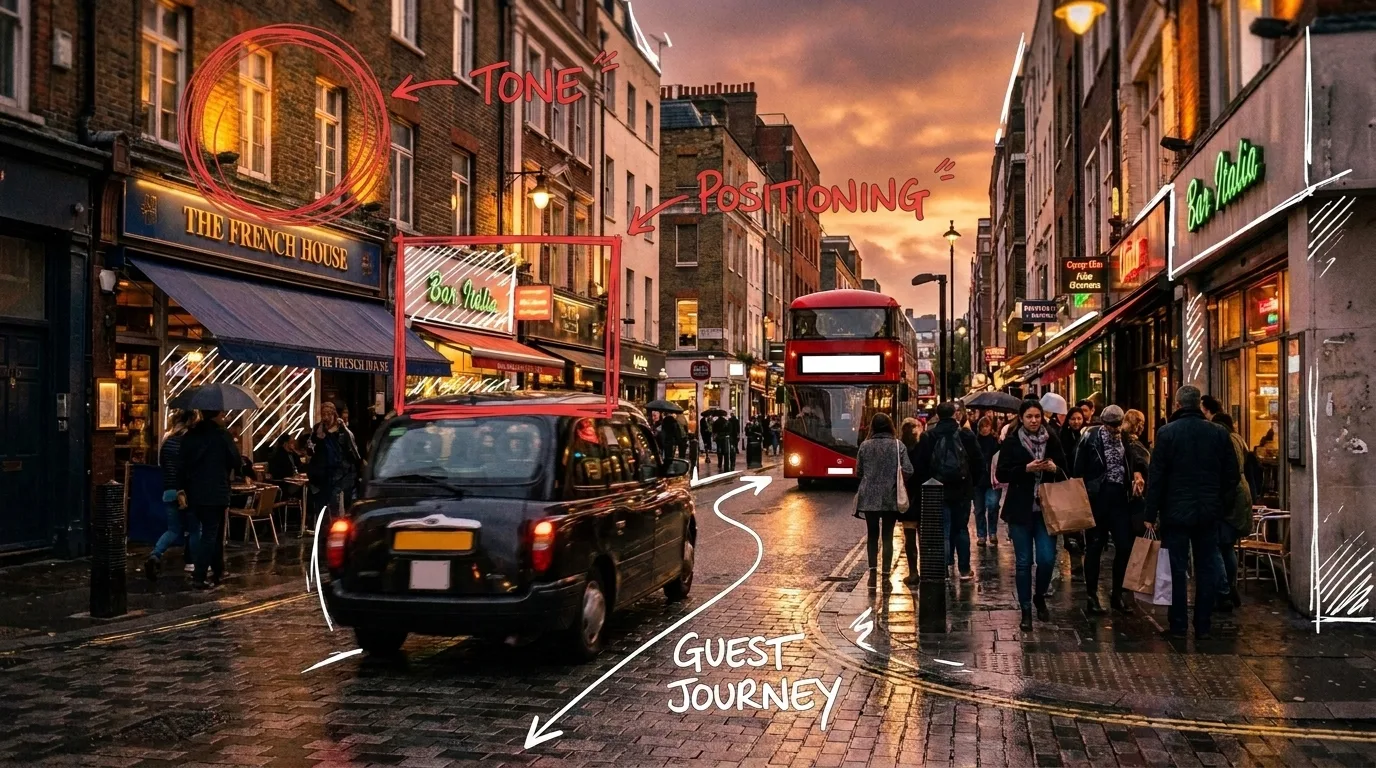
The second was the guest journey. The lobby view had to read as arrival, the restaurant view as a dining moment, and the suite as the room itself. The third was positioning. The set had to make the case for an independent hotel with the visual confidence of a finished property, without overpromising what the building does not yet deliver.
How the renders supported the investor deck
The visuals went into an investor deck before any room existed to walk people through. They had to do three things at once: let non-technical readers understand the design, put the feel of the property into the room, and let the team test how the suite would actually sell.
In review meetings the hospitality group used the views to anchor decisions on the actual interior. Finishes, lighting and FF&E were argued against the rendered rooms rather than against samples laid out on a meeting table, which moved the conversation from abstract scheme talk to direct calls on the spaces the hotel would eventually operate.
Key spaces visualised across the hotel
The set covered the three spaces that carry most of the brand and commercial weight in a boutique hotel: arrival, dining and the suite. Each was treated as a separate composition, then balanced against the other two so the property reads as a single boutique hotel in Soho.
The three views were composed as a sequence so the lobby, restaurant and luxury suite read as parts of the same property rather than three unrelated interiors. The sections that follow take each space in turn.
Lobby and arrival
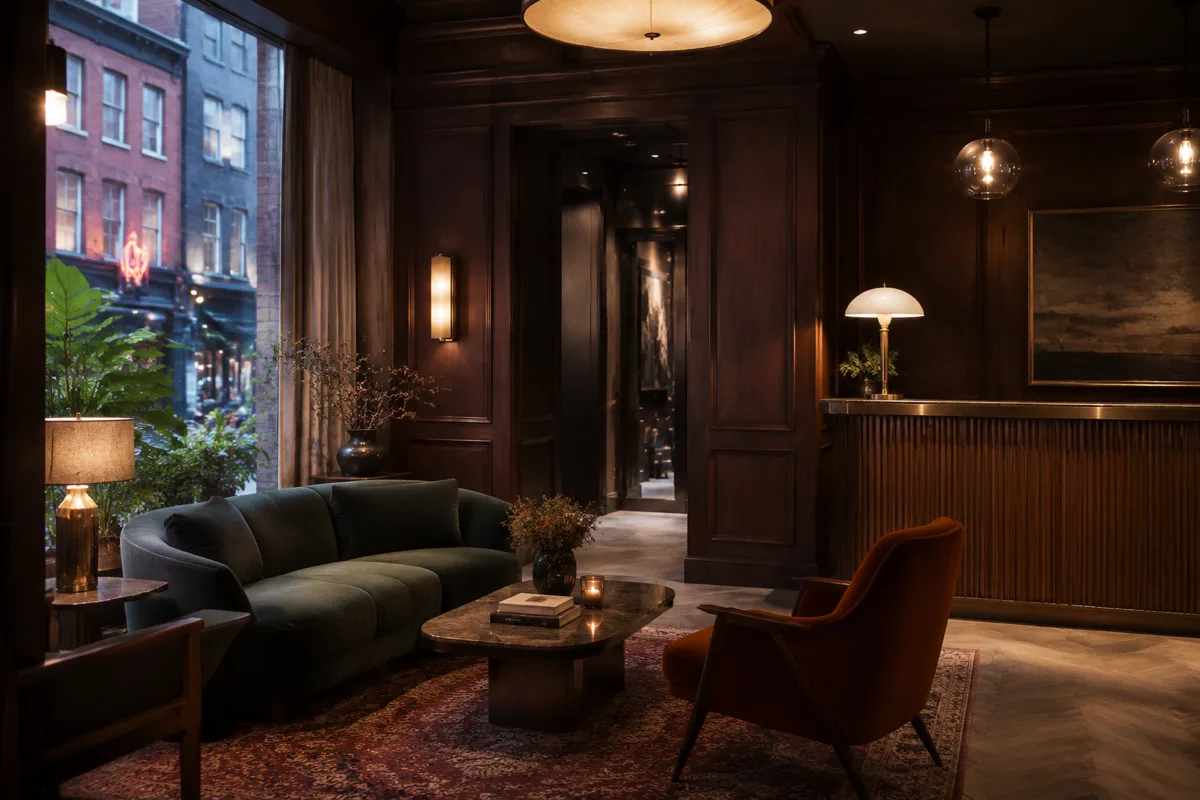
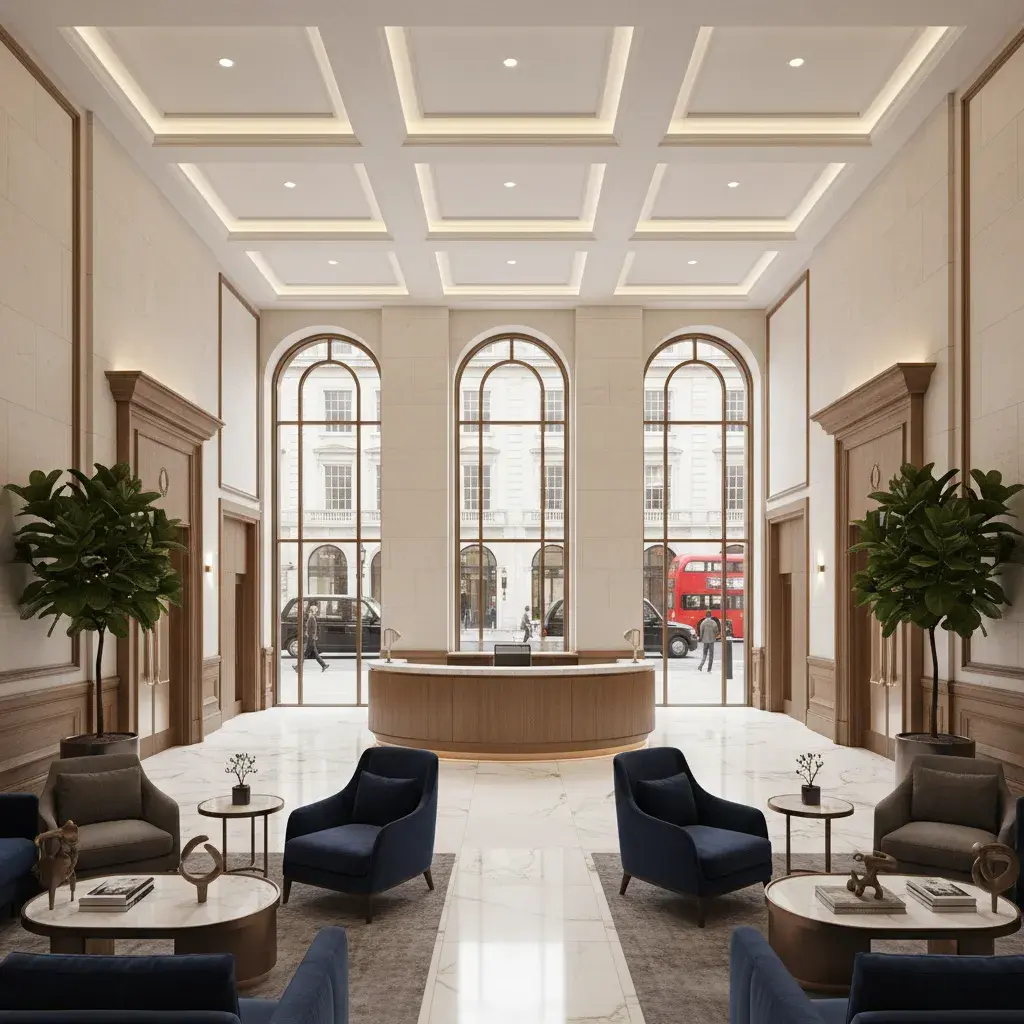
The lobby view sets the arrival sequence. Reception anchors the composition, layered lighting carries the mood from the entrance through to the seating area, and the finishes are introduced at the first thing a guest touches. The camera height is set so a reader can place the space inside Soho rather than read it as a generic reception.
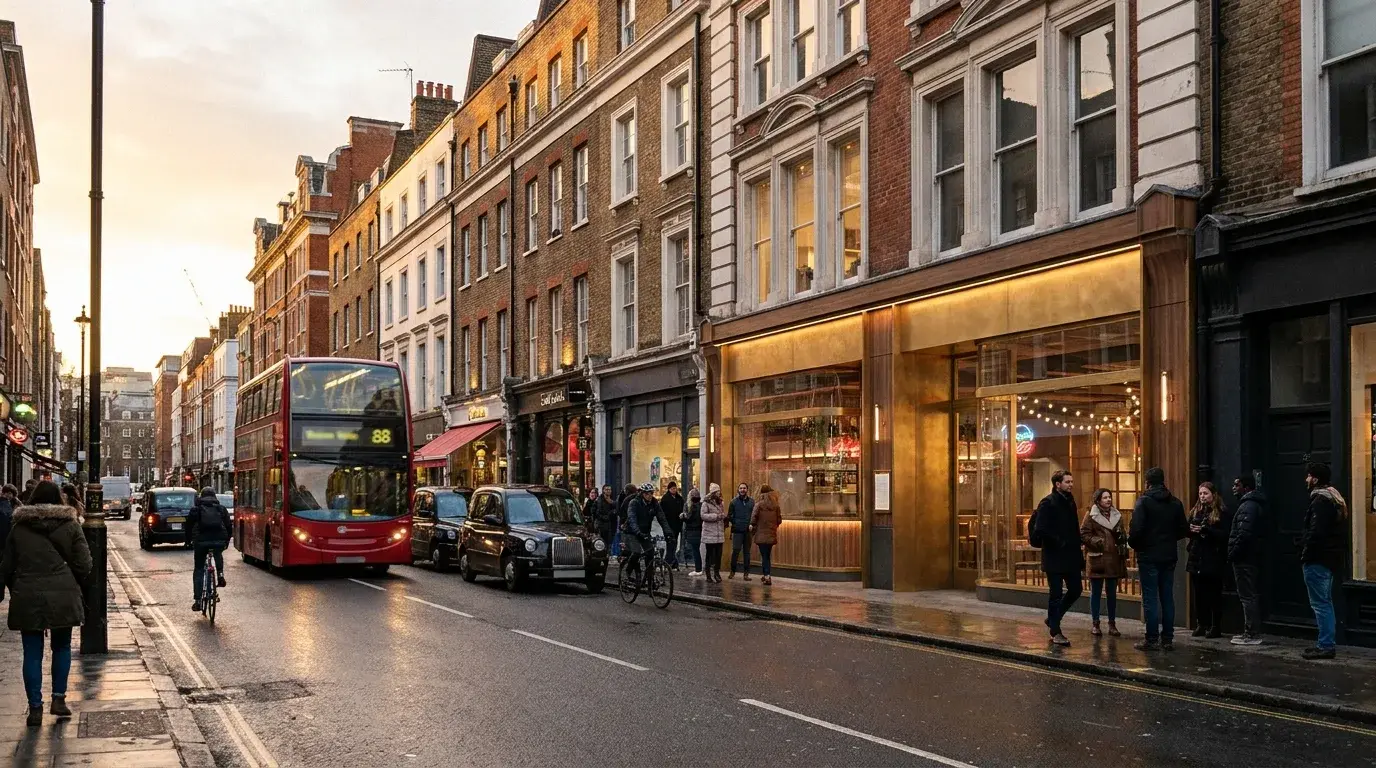
Light carries most of the work in this image. Warm pools, controlled contrast and accent fixtures placed with intent give the lobby its character before any signage, branding or wayfinding is added.
Restaurant atmosphere
The restaurant view is set at guest-eye height, with the finishes from the lobby carried through the dining room. The brief was the atmosphere of a Soho restaurant rather than a generic hotel dining room: surfaces, textures and lighting tuned to evening service as much as a daytime cover.
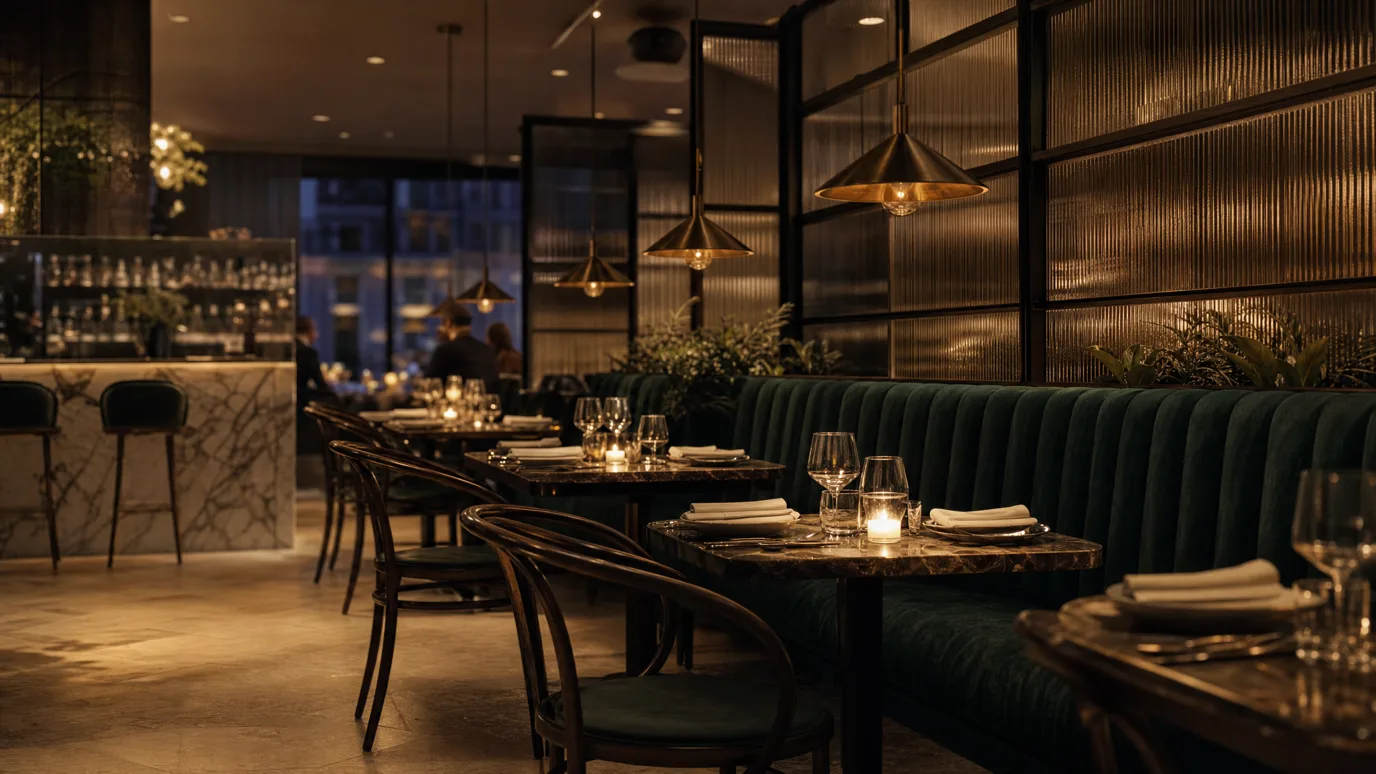
The composition is built around the relationship between seating, lighting and the surfaces a guest actually puts their hands on. That keeps the image working as a real dining room and gives the team a way to talk about how the restaurant performs as its own room within the property.
Luxury suite
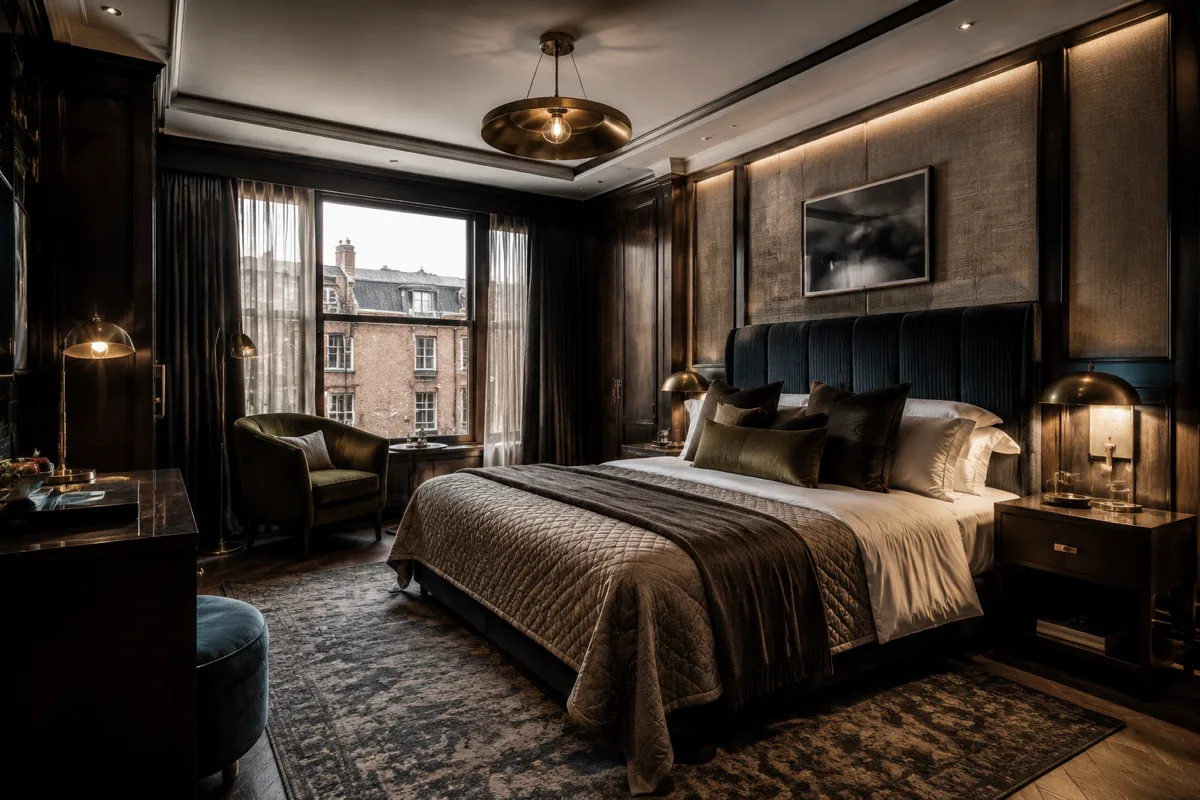
The suite view treats the room as the product it is. FF&E, textiles and finishes are placed at correct scale, with the references mood-boarded rather than locked to a supplier: the bed and headboard wall composed against the visual language of Poliform and Molteni&C, a lounge chair in the Carl Hansen and Fritz Hansen register near the window, drapery and bed linens checked against weights in the de Le Cuona and Pierre Frey families, and bedside and reading lights drawn from a Flos and Astep palette. The lighting layer expresses how the room is meant to feel after dark as well as in daylight.
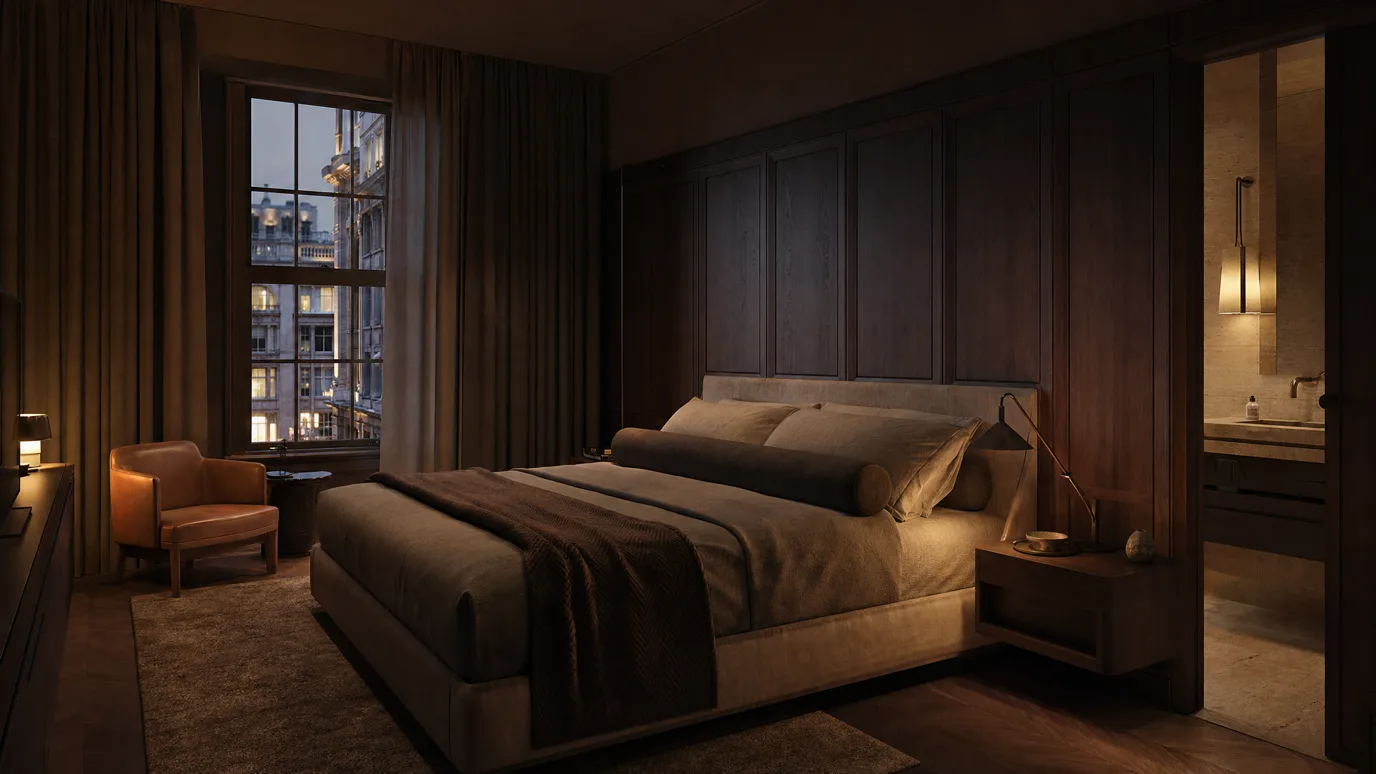
For an independent operator positioning an upper-tier room category, this is the image that has to carry the room. The render is composed so a viewer can read the suite quickly: where the bed sits, how the layered lighting works, how the surfaces read against each other, and what a guest sees on arrival.
Finishes, FF&E and lighting
Finishes were the through-line across the three views. Specific materials were modelled rather than generic groups, with the mood board drawing on recognisable design-world references rather than fixed supplier specifications: honed travertine and book-matched marble in the Salvatori and Solid Nature register on lobby and bar surfaces, warm-toned timbers in the smoked-oak and walnut family that Dinesen and Bolefloor are known for in the suite joinery, linen and velvet upholstery referenced against weights in the Kvadrat, Dedar and Pierre Frey families in the restaurant seating, brushed brass and patinated bronze with the visual register of Apparatus and Allied Maker across lighting and ironmongery, and back-painted and reeded glass across screens and partitions. Each was set up so it held its identity at full image resolution and read consistently from arrival through to the room.
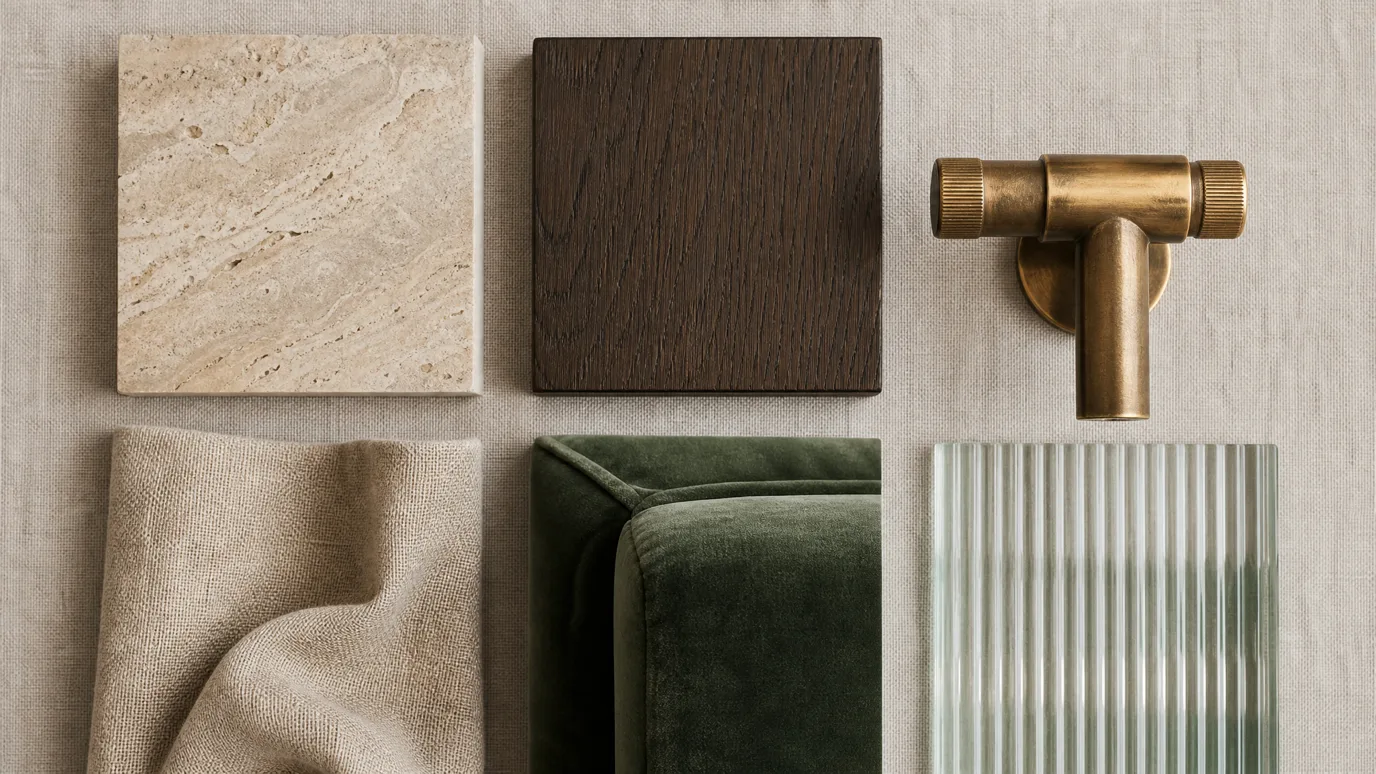
FF&E (furniture, fixtures and equipment) was scaled to the rooms rather than dropped in, with the references mood-boarded rather than specified. Lounge seating in the &Tradition, Gubi and Carl Hansen idiom anchors the lobby. Dining chairs and banquettes were composed against the visual language of Cassina, B&B Italia and Minotti. The suite reads in the Molteni&C and Poliform key for casegoods. Decorative lighting was set out against the family of Flos, Tom Dixon and Astep fixtures, so the moody character the brief asked for was carried by the fixtures themselves rather than imposed in post-production.
Deliverables and review process
The deliverable was a set of atmospheric renders covering arrival, dining and the suite, supplied at print-ready and screen-ready sizes so the deck and the early marketing edit could draw on the same file. Production followed a standard hospitality visualisation route: design information from the hospitality group was translated into a 3D model of the rooms, surfaces and FF&E were applied, draft views were issued for review, and final imagery was exported once feedback had landed.
Review rounds tested finishes, lighting, FF&E placement and the overall feel of each room. Each round refined the conversation until the imagery sat with the design intent and could carry both the deck and the marketing edit.
Related hospitality and interior visualisation services
This project sits inside our wider interior visualisation offer, which covers room-by-room imagery for hospitality operators, interior design studios and private clients. For developer-led schemes elsewhere in central London, our residential developments visualisation page sets out the approach to prime residential work across the capital.
The architectural CGI portfolio lists other case studies, and the contact page is the route for scoping a hospitality interior package of your own.