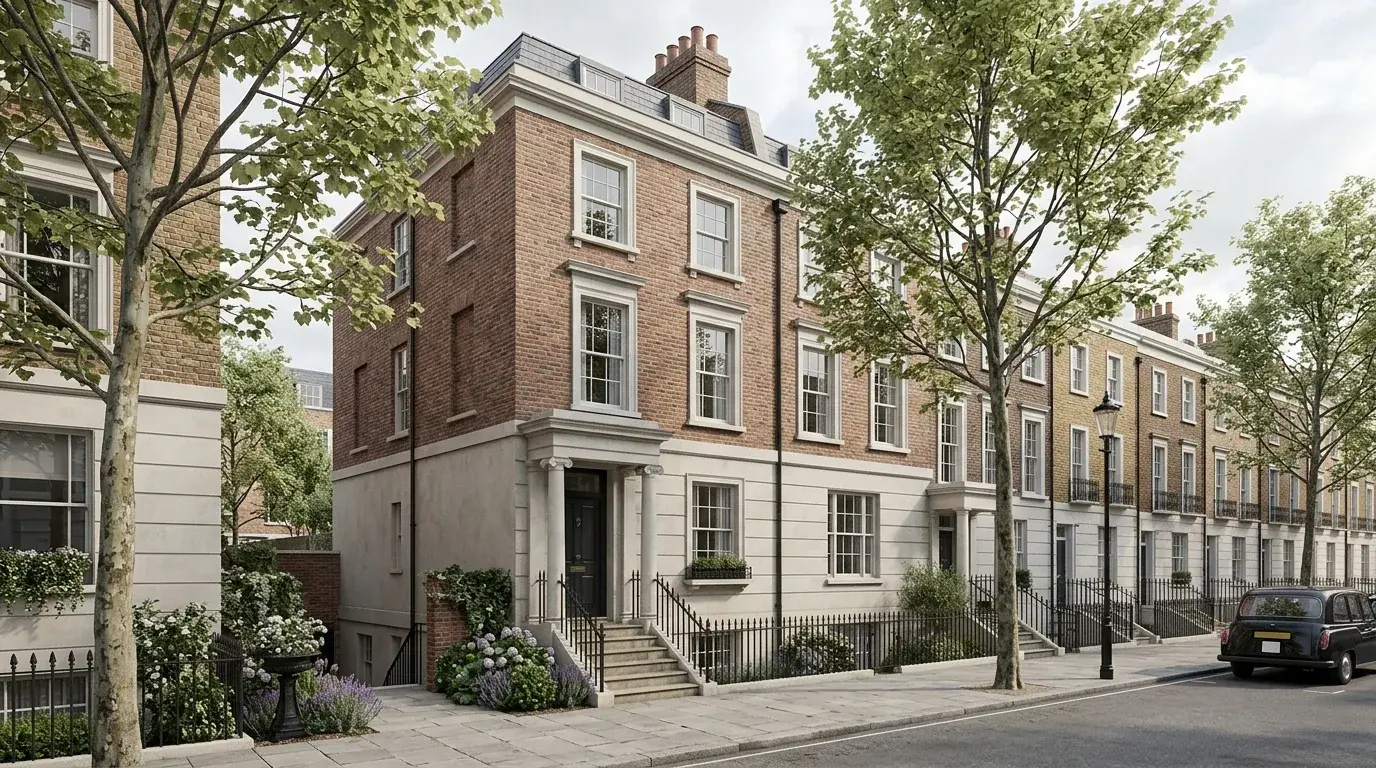
Interior and exterior CGI for a Grade II listed Mayfair penthouse
London W1 · Private Client (via Lead Architect)
A lead architect commissioned a full twenty-view CGI package for a Grade II listed Mayfair penthouse conversion in the Mayfair Conservation Area, London W1. The new accommodation sits at roof level as a contemporary mansard set back from the original parapet, and the visual package served three audiences before fit-out began: Westminster City Council planning officers, the conservation officer reviewing listed building consent, and the private client signing off on materials and lighting inside the new principal apartments.
Project overview
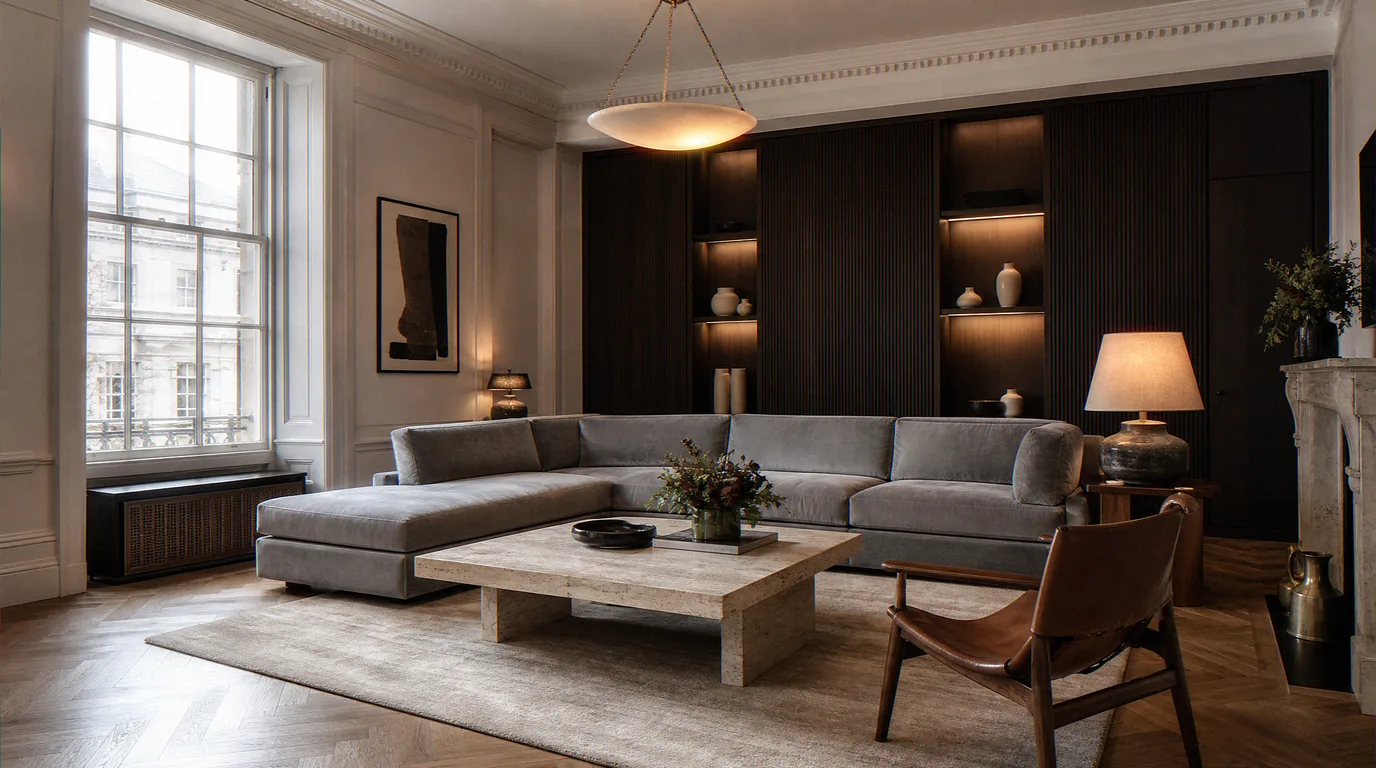
The brief split into two visual languages on the same scheme. Camera-matched exterior photomontage at AVR Level 2 to 3, where AVR is the Accurate Visual Representation scale used in planning, plus two aerial townscape views, evidenced the mansard against the original cornice line and the wider Mayfair rooftop rhythm. Prime residential interior CGI for the twelve principal interior views evidenced material palette, daylight and joinery before the apartments were built out.
- Location
- London W1
- Borough
- Westminster
- Local planning authority
- Westminster City Council
- Conservation area
- Mayfair
- Listing status
- Grade II listed host building
- Sector
- Prime residential
- View package
- 6 exterior + 12 interior + 2 aerial = 20 total
- AVR level
- Level 2 to 3 (exterior subset)
Project brief: a twenty-view CGI package across planning, listed-building consent and private-client sign-off
The brief named twenty views as the deliverable, split across three audiences. Six camera-matched exterior photomontages, two aerial townscape views and twelve interior CGIs of the principal apartments. The mix is unusual in scope but the logic is simple: a Grade II listed roof-level intervention has to satisfy planning, listed building consent and the private client, and each audience reads a different view.
Twenty views, three audiences, one scheme.
Beyond the view count, the lead architect set three jobs for the package. Evidence the new mansard against the original parapet and the surrounding Mayfair rooftop fabric for the conservation and planning routes. Evidence the material palette, joinery and lighting of the new principal apartments for the private client sign-off. Tie both sets together as one scheme rather than two unrelated visual languages.
Site context: Mayfair Conservation Area and the Grade II listed host building
Mayfair is one of the most tightly scrutinised pieces of central London. The Mayfair Conservation Area, a designated heritage area with extra planning scrutiny, covers most of the district and sets a high bar for any visible change at roof level. The host building is Grade II listed, meaning every intervention on its original fabric needs listed building consent in addition to planning permission, and a separate Heritage Statement to support that consent.
The host is Grade II listed. Every intervention on its original fabric needs listed building consent in addition to planning permission.
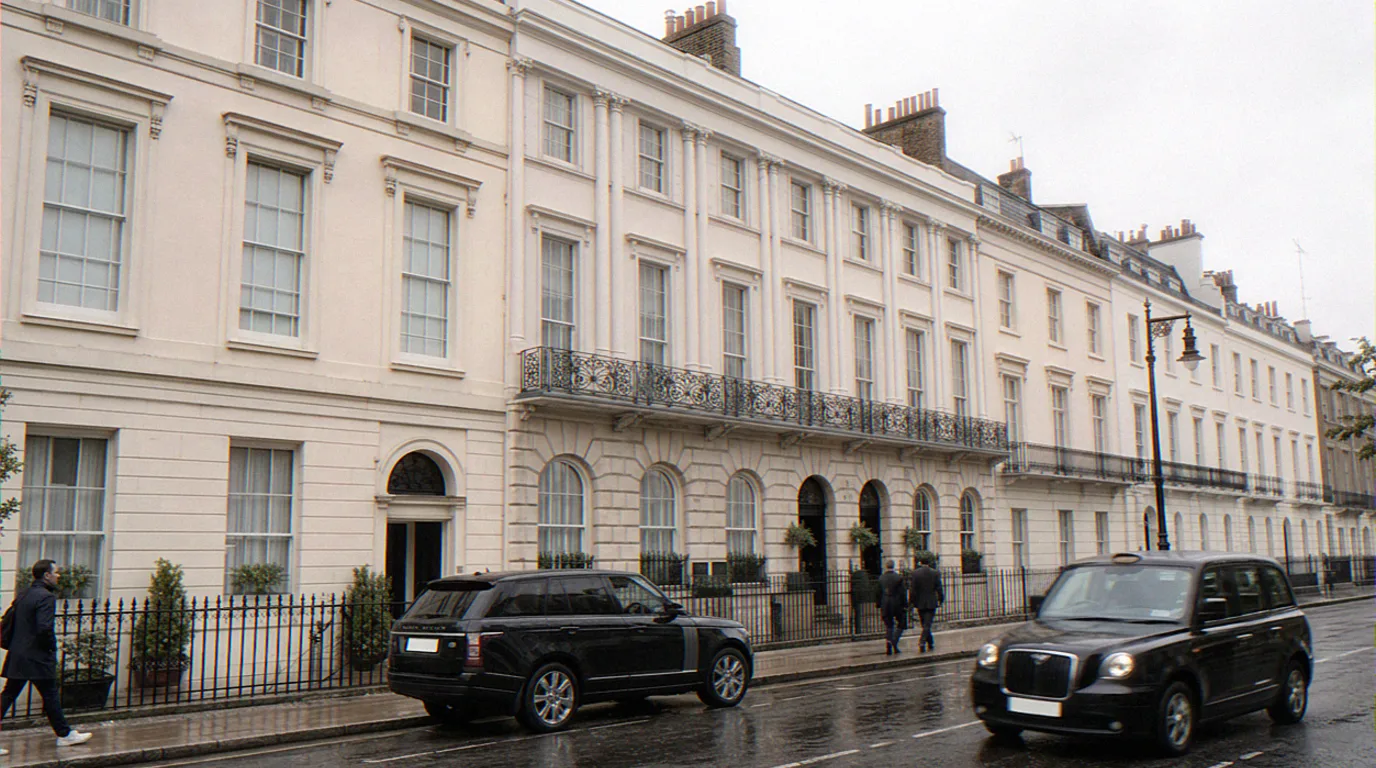
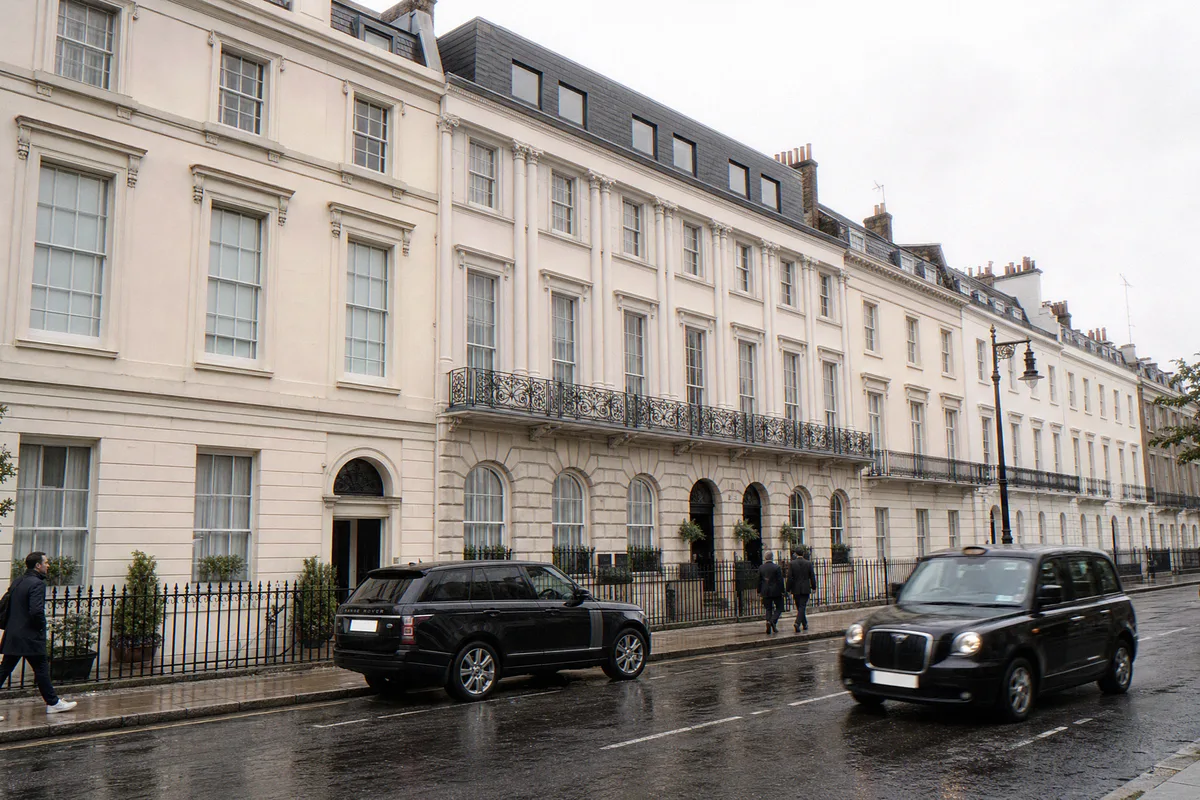
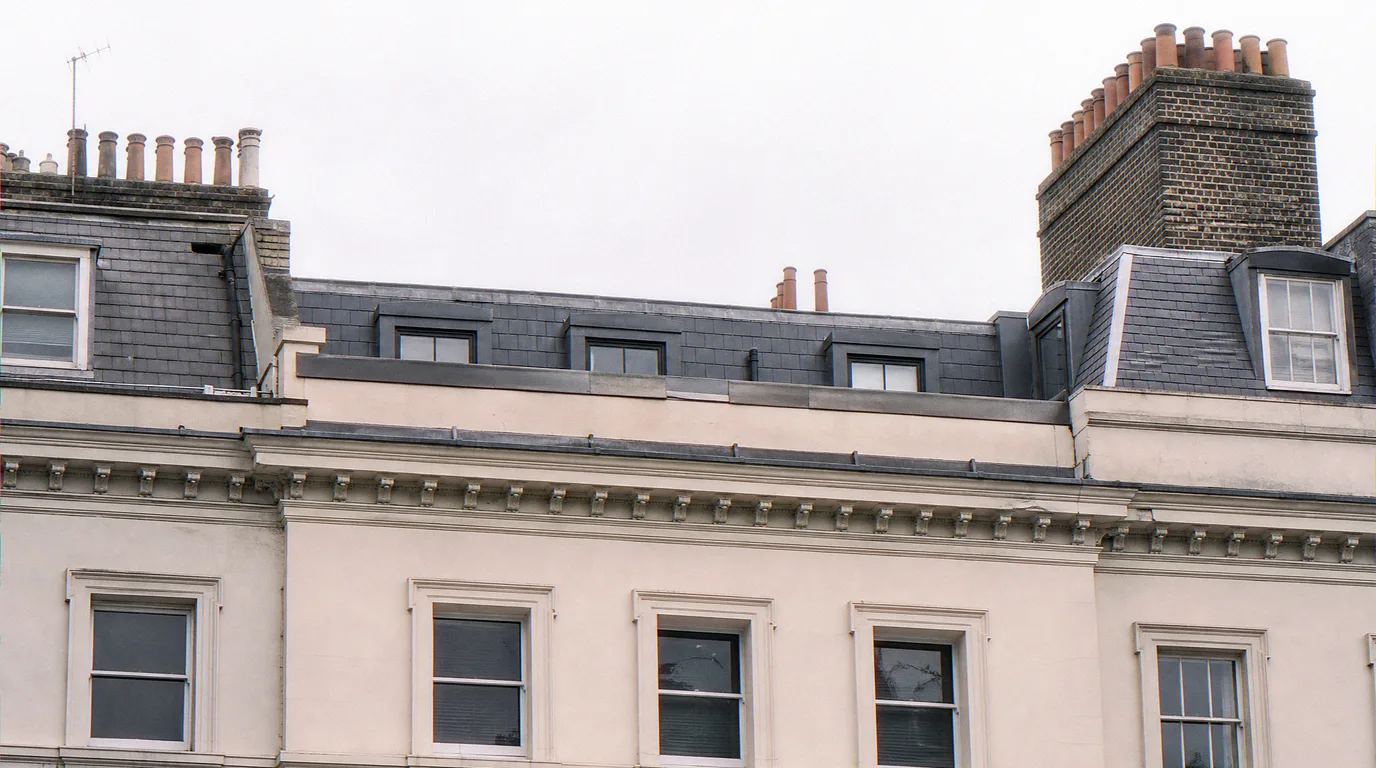
The host is a four-storey early-nineteenth-century stucco-fronted Mayfair terrace with rusticated stonework at ground floor, painted stucco above, original sash windows, ornamental cast-iron balconies at first floor, and a clear cornice and parapet line shared across the row. The penthouse conversion sits behind the existing parapet, as a mansard set back from the front face of the building. The intervention is legible as new build to the trained eye but does not break the dominant cornice line when read from the public realm.
The conservation challenge: a roof-level intervention on a listed building
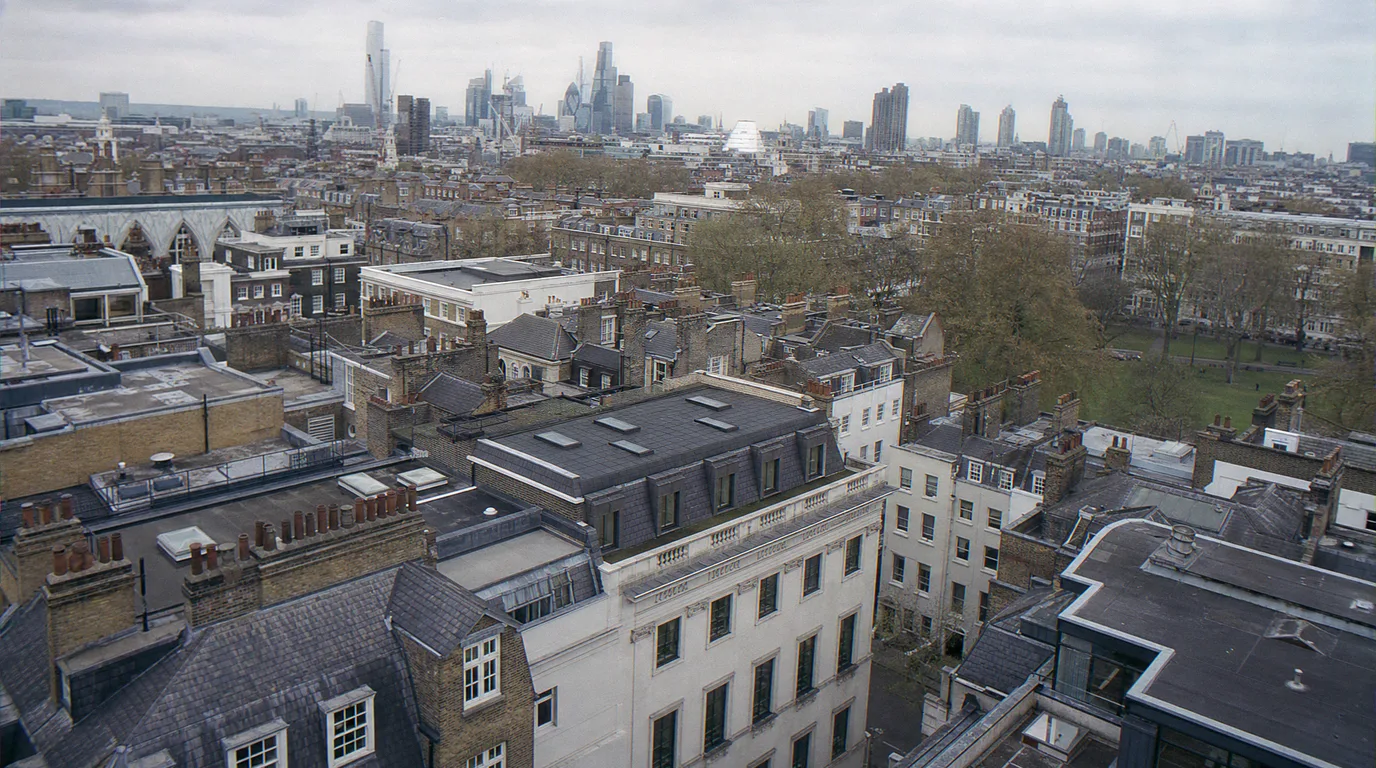
Roof-level interventions on listed Mayfair terraces are the most-scrutinised category of work in the district. The conservation challenge for this scheme had three parts. First, the mansard set-back from the original parapet had to be evidenced from the public realm, so a pedestrian walking past did not see the new build break the cornice line of the row. Second, the slate cladding and rooflight pattern had to read sympathetically with the surrounding rooftop fabric when viewed from above, where neighbouring roofs and the City skyline frame any new addition. Third, the listed fabric of the host building below had to be preserved and evidenced as preserved, in plate photography and section drawings alongside the photomontage.
A mansard at roof level on a Grade II listed Mayfair terrace is the most-scrutinised category of work in the district.
Listed building consent and planning permission are two separate consents at Westminster City Council. Listed building consent deals with the impact on the listed fabric of the host building. Planning permission deals with the visual impact on the conservation area as a whole. The photomontage and aerial views were built to feed both routes from a single set of plates and aerial captures, so the conservation officer and the planning officer were looking at evidence that did not contradict itself.
View package: planning visuals, listed-building consent evidence and interior CGI
The twenty views were not distributed evenly. The split followed the consents and the client sign-off process.
-
Six exterior camera-matched photomontages
Street-level views from the public realm, positioned where the mansard first reads to a pedestrian, where the full elevation is visible, and at the corner positions a design review panel and committee will recognise.
-
Two aerial townscape views
One looking down on the host building from a publicly accessible upper level nearby, one wider townscape view setting the mansard within the surrounding Mayfair rooftop rhythm and the distant City skyline.
-
Twelve interior CGIs of the principal apartments
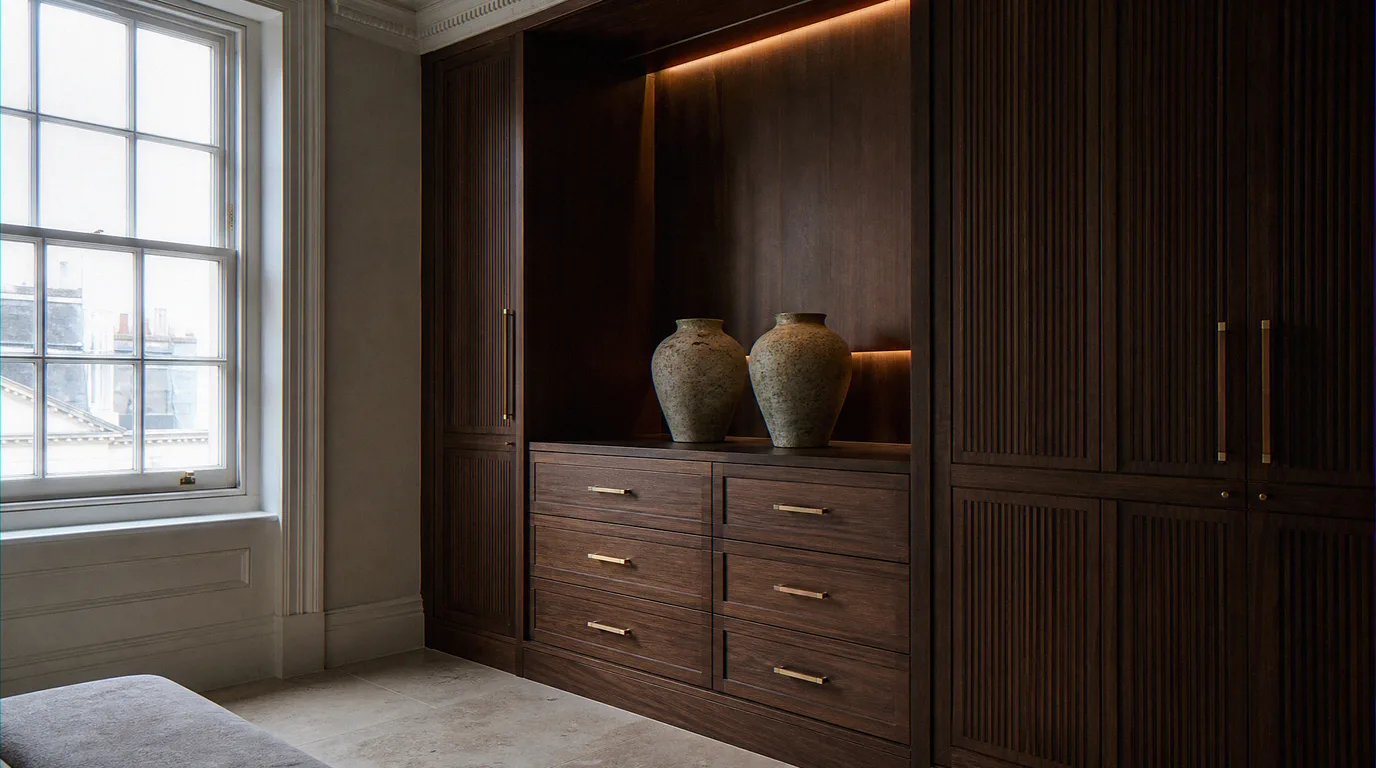
Principal reception, dining, kitchen, two principal bedrooms, two principal bathrooms, dressing room, study, hallway, library and a roof terrace. Each tested material palette, joinery, daylight and lighting before fit-out.
Method: camera-matched photomontage outside, prime residential CGI inside
- AVR Level 0
- Illustrative sketch, no positional or scale accuracy guarantee.
- AVR Level 1
- Position accuracy only, basic massing block.
- AVR Level 2
- Position, scale and degree of visibility accurate, no material detail.
- AVR Level 3
- Full visual representation, material and architectural detail accurate.
The exterior method follows the camera-matched photomontage protocol used across our planning visualisation work. Plate photography records each camera position, lens, sensor height, target points on retained masonry and the time of day. The 3D model of the new mansard is aligned to those survey points, the camera in the 3D scene is matched to the camera that took the photograph, and daylight is matched to the time of day on the plate. Materials are then resolved at the scale of the final image. The output sits at AVR Level 2 to 3, where AVR is the Accurate Visual Representation scale, the planning industry framework that sets accuracy expectations for photomontage and verified views. The full verified view framework is covered on the verified views service page.
Outside: camera-matched photomontage. Inside: lit scenes built from the architect's model and the interior design studio's specification.
The interior method is different. Interior CGIs are built from the architect's 3D model and the interior design studio's specification: material samples, joinery drawings, lighting layouts and FF&E intent. Each room is set up as a lit scene with daylight from real sash windows balanced against the layered artificial lighting scheme. Material behaviour is tested at full image resolution, because marble, timber, lacquer, brushed metal and fabric all behave differently under render and the private client signs off on what the apartments will look like in real light.
-
Plate photography and aerial capture
Six street-level plates and two aerial captures recorded at the time of day chosen for the photomontage set, with camera metadata logged for each.
-
Camera and survey match
The 3D model of the mansard is aligned to survey points on the retained parapet, cornice and adjacent buildings. The 3D camera is matched to the plate camera frame by frame.
-
Light match outside, layered lighting inside
Sun position is set to the plate time of day for the exteriors. Interior lit scenes are built with daylight from sash windows plus the proposed layered artificial lighting scheme.
-
Material resolution
Brick, stucco, slate, glass and metal calibrated on the exterior set. Travertine, timber, brushed brass, fabric and joinery calibrated on the interior set.
-
Integration and sign-off
Exteriors composited back into plates with depth-correct masking. Interiors finalised as standalone lit scenes for client sign-off, with two review rounds before delivery.
What the twenty-view package was built to show
- Exterior evidence: cornice line
- New mansard sits below the original cornice when read from the public realm.
- Exterior evidence: rooftop rhythm
- Mansard reads sympathetically within the surrounding Mayfair rooftop fabric in aerial townscape view.
- Exterior evidence: listed fabric preserved
- Original stucco, parapet, sash windows and cast-iron balconies preserved and evidenced in plate photography.
- Interior evidence: material palette
- Travertine, brushed brass, timber veneer, fabric and joinery resolved at full image resolution.
- Interior evidence: daylight and lighting
- Sash-window daylight and layered artificial lighting tested in every principal room before fit-out.
- Interior evidence: spatial flow
- Sequence of principal rooms reads as one home across the twelve interior views.
The exterior and aerial subset carries three pieces of planning and listed-building-consent evidence. The interior subset carries three pieces of evidence for the private client and post-completion marketing.
Each view carries one piece of evidence to one reader.
Each view carries one piece of evidence to one reader. The relationships below are what each stakeholder extracts from the same set of plates and lit scenes.
- Planning officer compares new mansard against original cornice line in the same street-eye plate
- Conservation officer assesses listed building consent evidence and Heritage Statement against retained fabric
- Design review panel sees mansard read within the wider Mayfair rooftop rhythm in aerial townscape view
- Private client signs off on material palette and lighting across twelve interior CGIs before fit-out
- Lead architect tests joinery, finish and daylight decisions across every principal room
Review process and deliverables
The package ran across two review rounds. Round one set the exterior camera positions, mansard model fit against survey, and the interior material palette across all twelve rooms. Comments came back against material samples and joinery drawings, not against a separate render brief. Round two resolved view-specific details: foreground masking on people and vehicles in each plate, sky balance on the aerial views, joinery shadow detail and lighting balance across the interior set.
The final pack carries six items into the planning, listed building consent and private-client sign-off routes.
- Six high-resolution camera-matched exterior photomontages at AVR Level 2 to 3
- Two aerial townscape views with the new mansard set within the Mayfair rooftop fabric
- Twelve principal interior CGIs across reception, dining, kitchen, bedrooms, bathrooms, dressing room, study, library, hallway and roof terrace
- Plate photography and aerial captures with camera metadata and survey points
- Methodology note describing how each view was matched
- Captions and figure references ready for the Design and Access Statement, the Heritage Statement and the private-client sign-off pack
Related services and the Westminster planning context
Roof-level interventions on Grade II listed Mayfair terraces almost always need a layered visual package. Camera-matched photomontage carries the planning and conservation evidence. Aerial townscape views carry the rooftop-rhythm read. Interior CGI carries the private-client sign-off and post-completion marketing. The studio's coverage of Westminster as a planning authority and the wider context for prime residential schemes is covered on the related service and borough pages.
Get a CGI package for your Mayfair planning and listed-building consent submission
We work across Mayfair, Belgravia, Knightsbridge, Marylebone and the wider Westminster prime residential market on full CGI packages for planning, listed building consent and private-client sign-off. Tell us the address, the listing status and the view count, and we will come back with a quote and timeline.