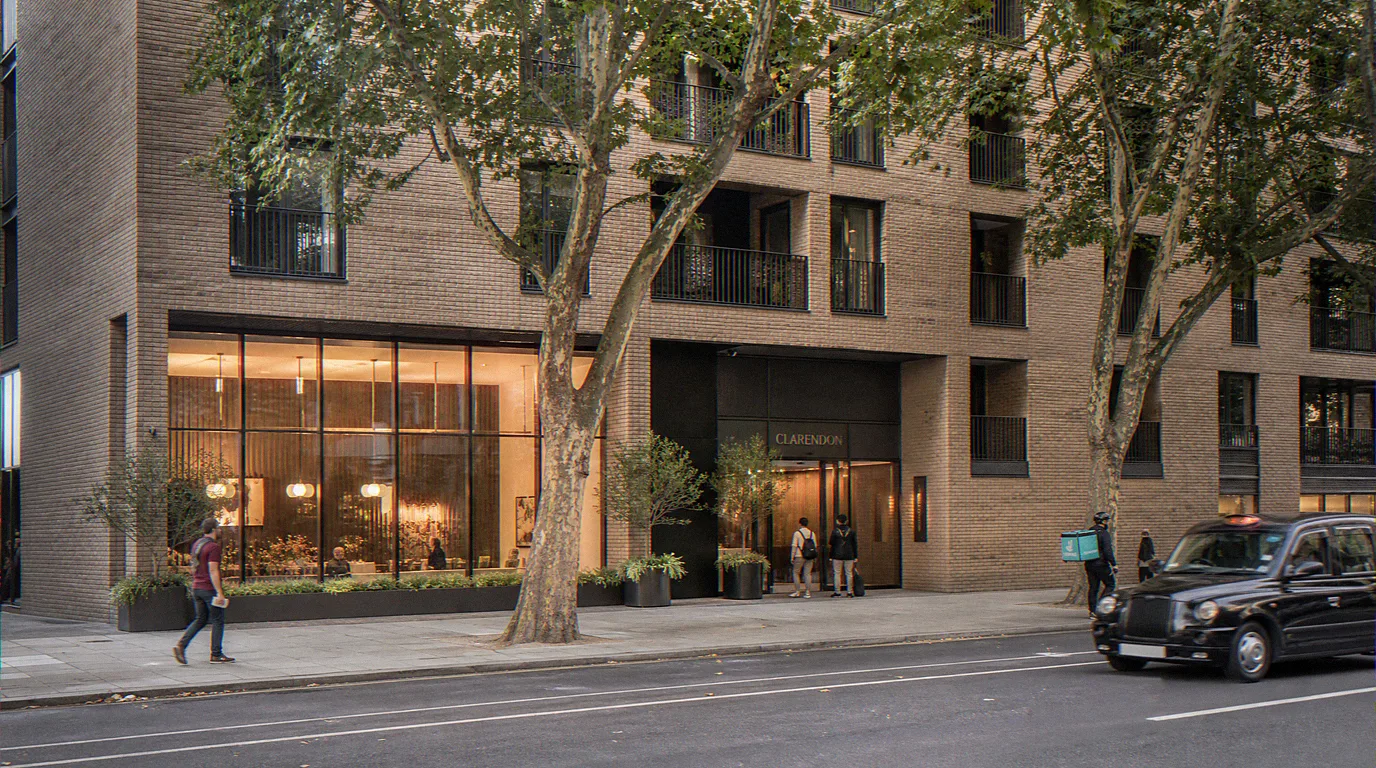
Residential blocks
Private sale, BTR / PRS, podium, mansion blocks
- Private sale
- BTR / PRS
- Podium blocks
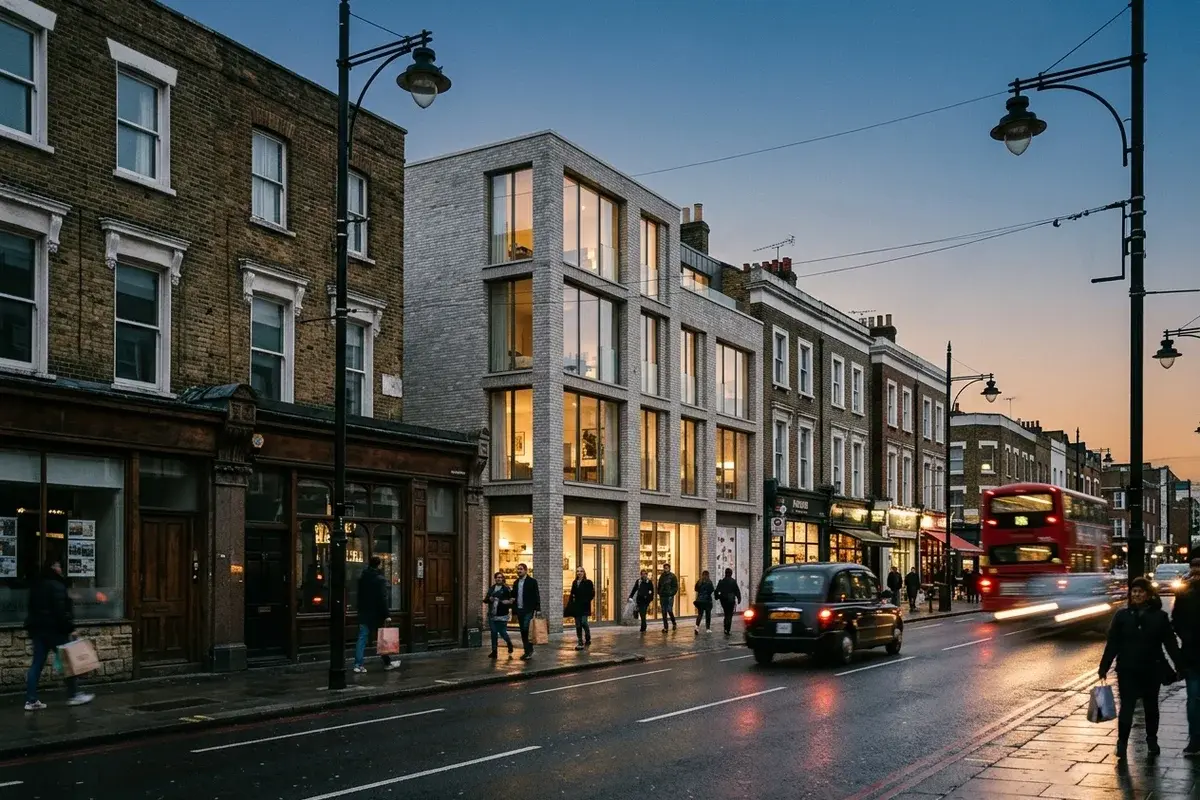
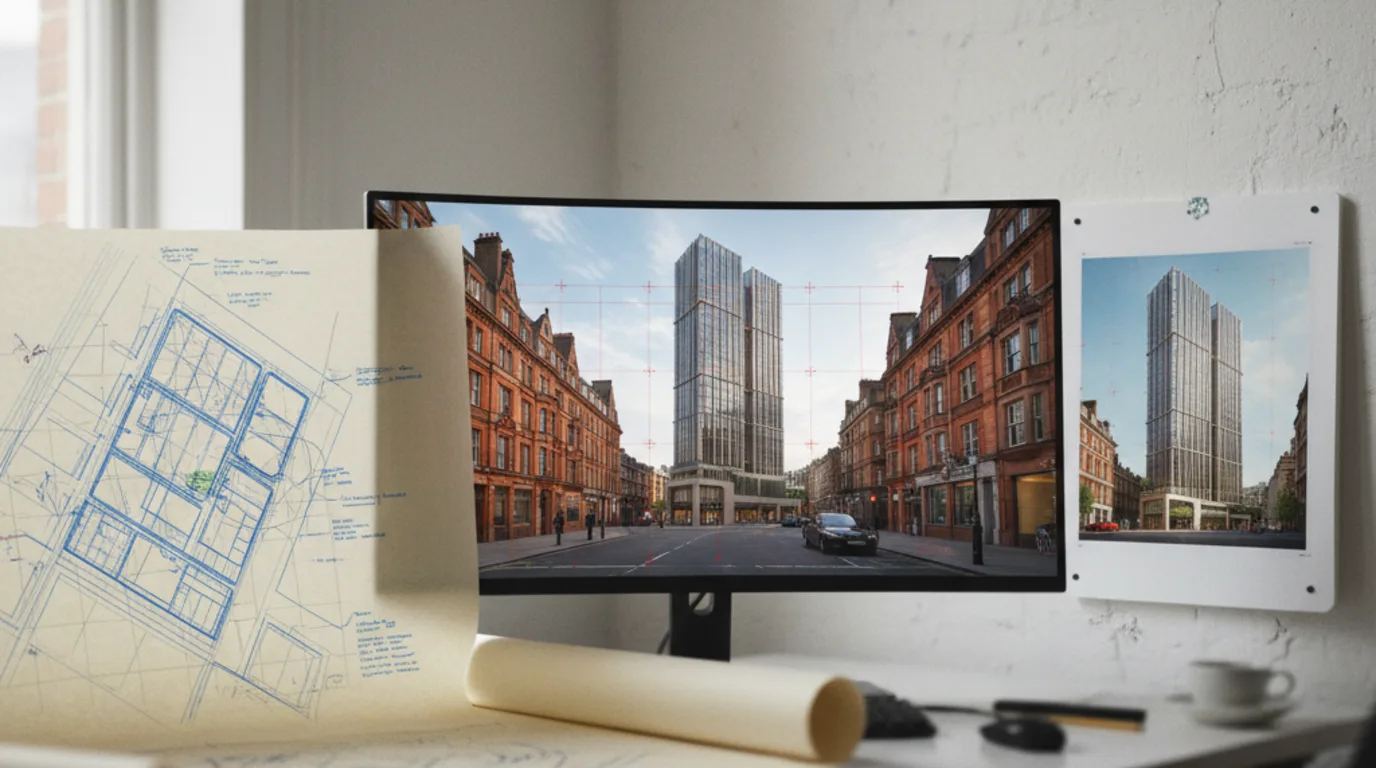
Exterior architectural visualisation is the production of photoreal exterior CGI from drawings, models, and site context, used in London for planning submissions, design review, and the marketing of new buildings. AVR and verified-view photomontage are available through our specialist services when a site needs surveyed cameras or conservation-area evidence.
Request exterior CGI quoteWe produce exterior CGI across the full London development pipeline with the camera, verification, and planning-pack rigour each typology demands.
Private sale, BTR / PRS, podium, mansion blocks
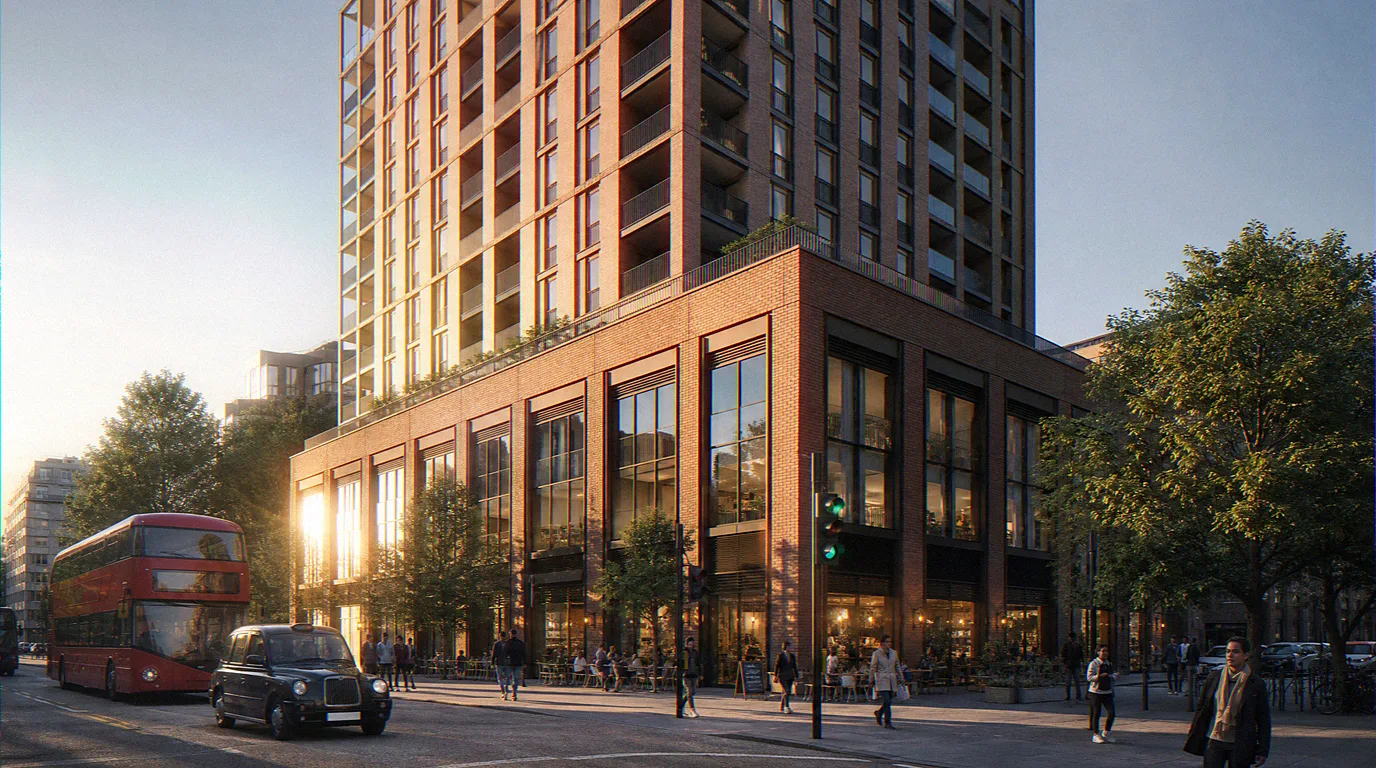
Tenure-led marketing CGI for letting and student schemes
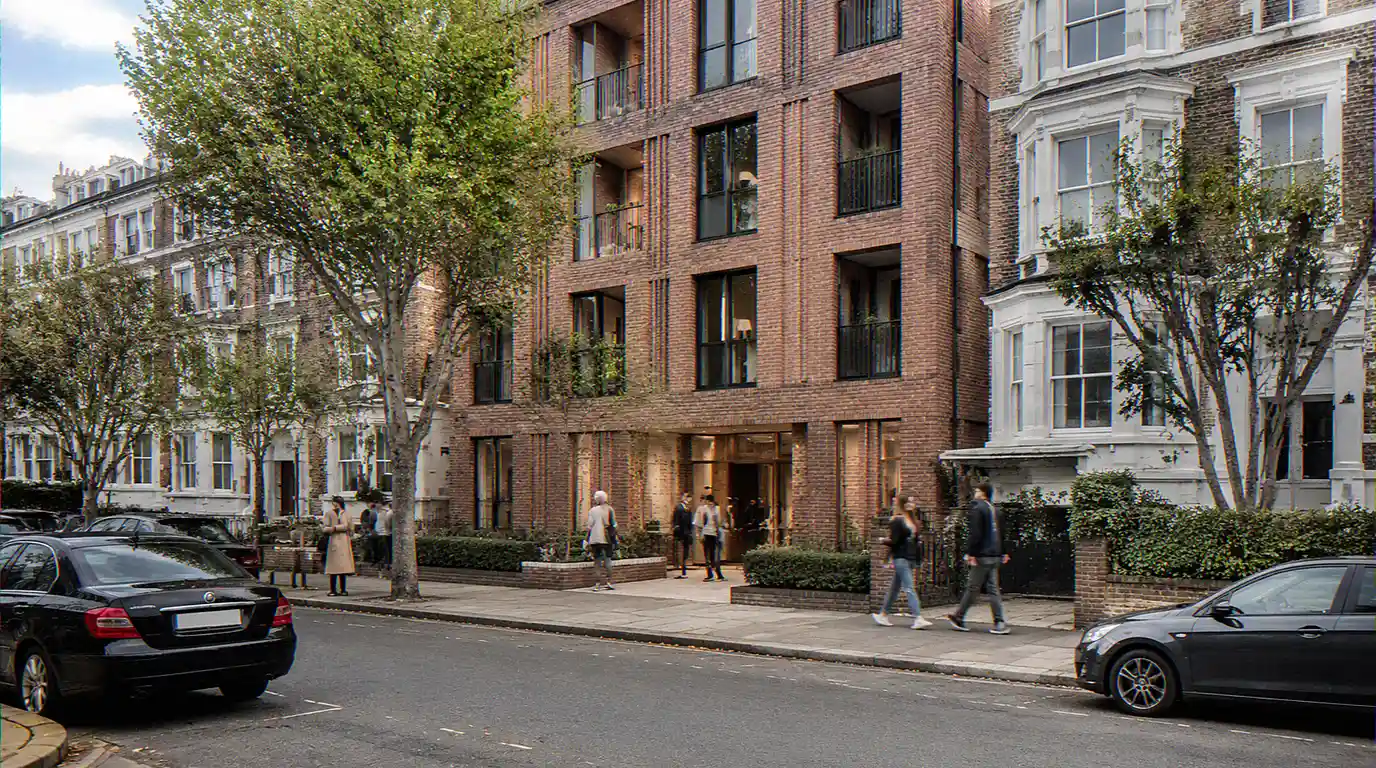
Underclaimed sectors needing lifestyle-driven exteriors
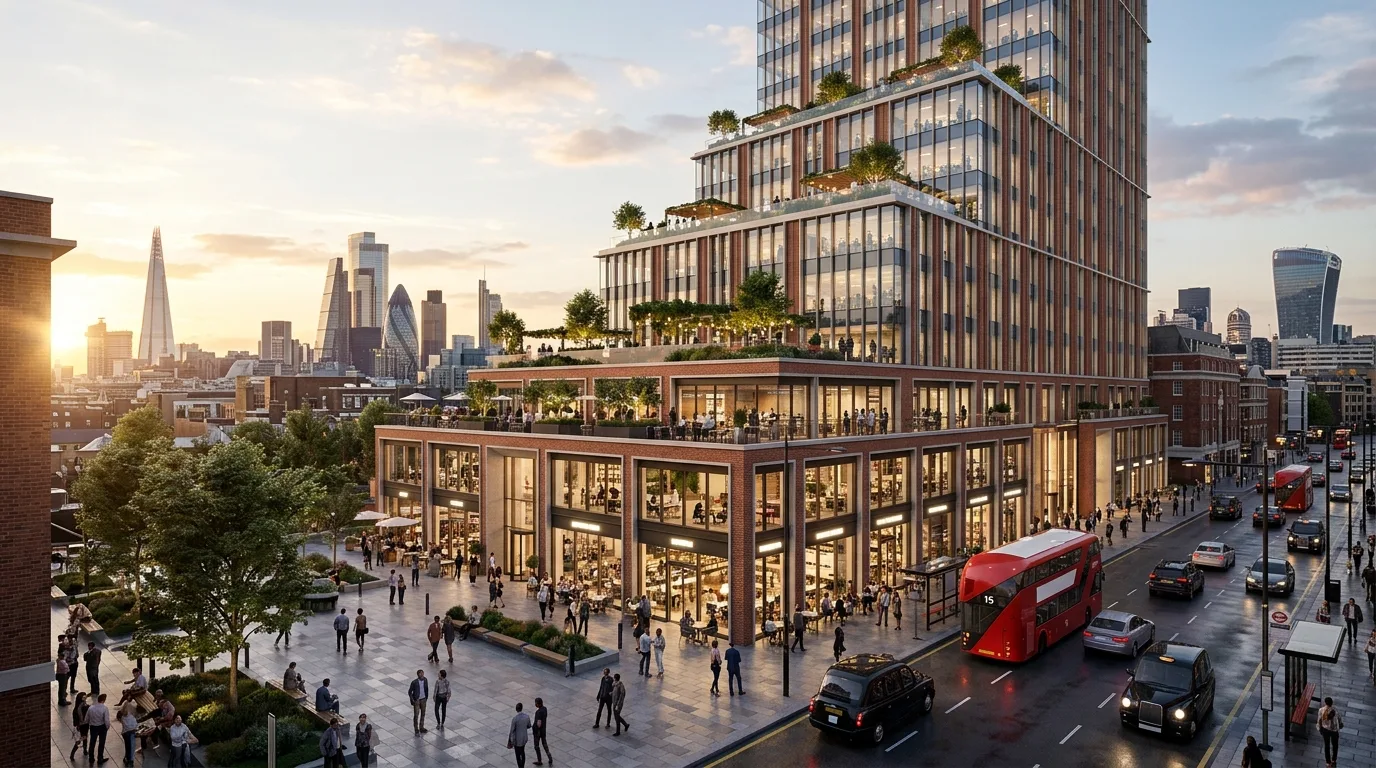
Office-led, retail-led, ground-floor activation
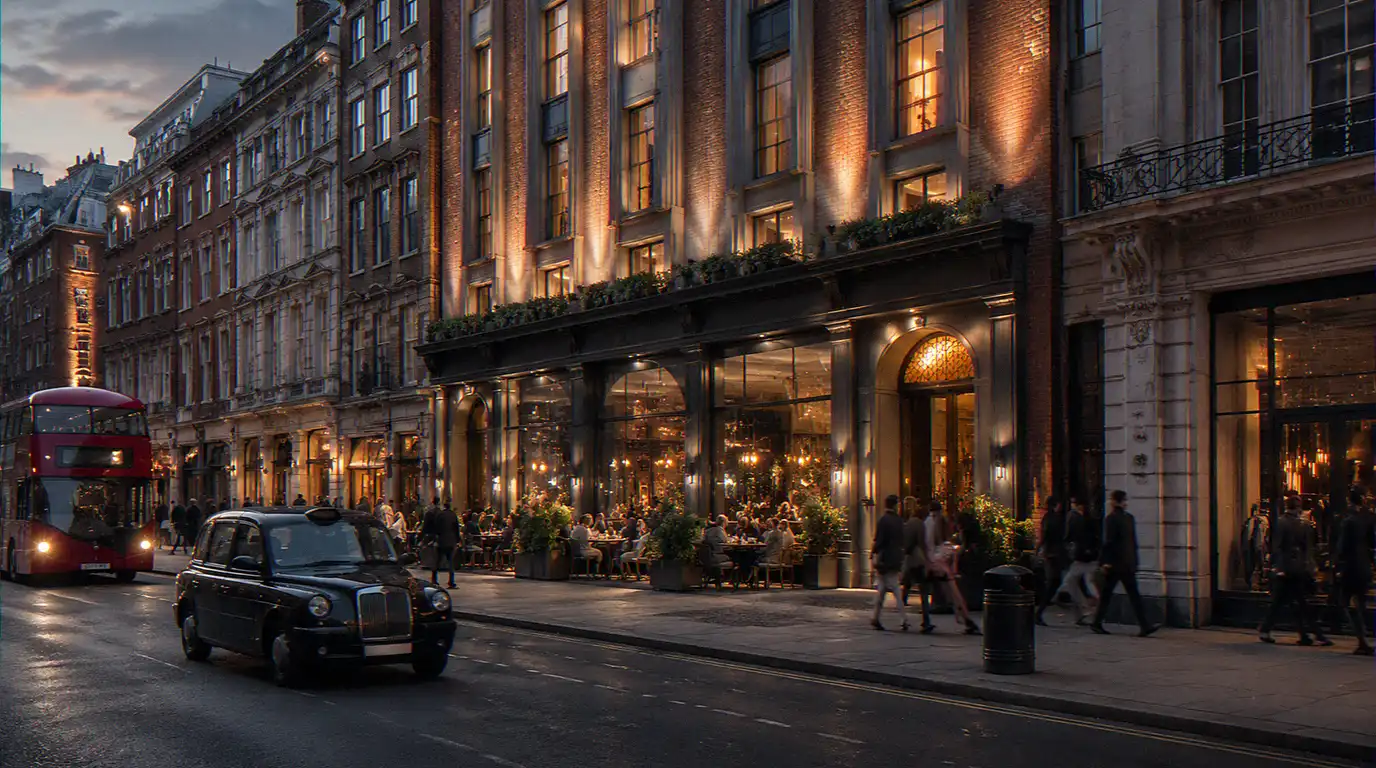
Hotels, restaurants, cultural and civic frontages
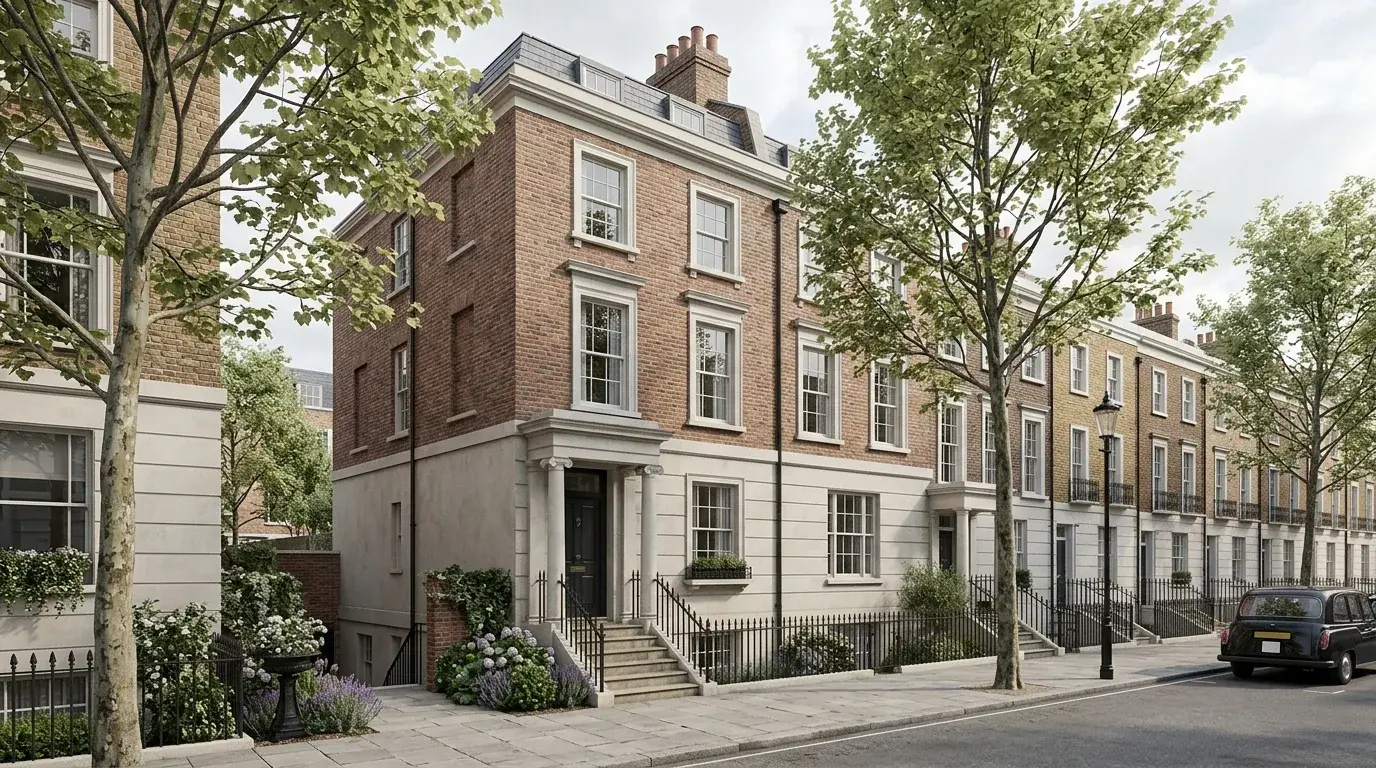
Townhouses, mews, private residences, new-build homes
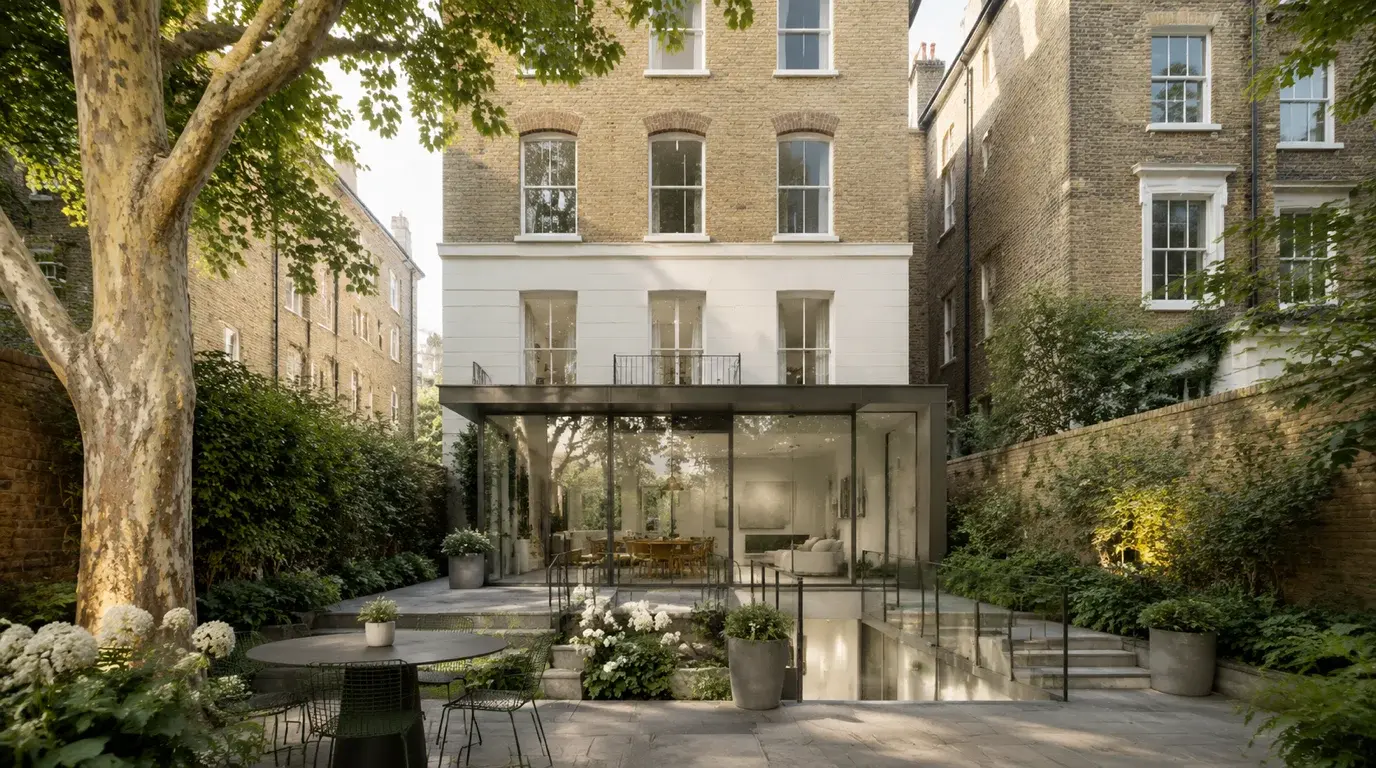
Rear / side-return, rooftop, loft, listed-fabric work
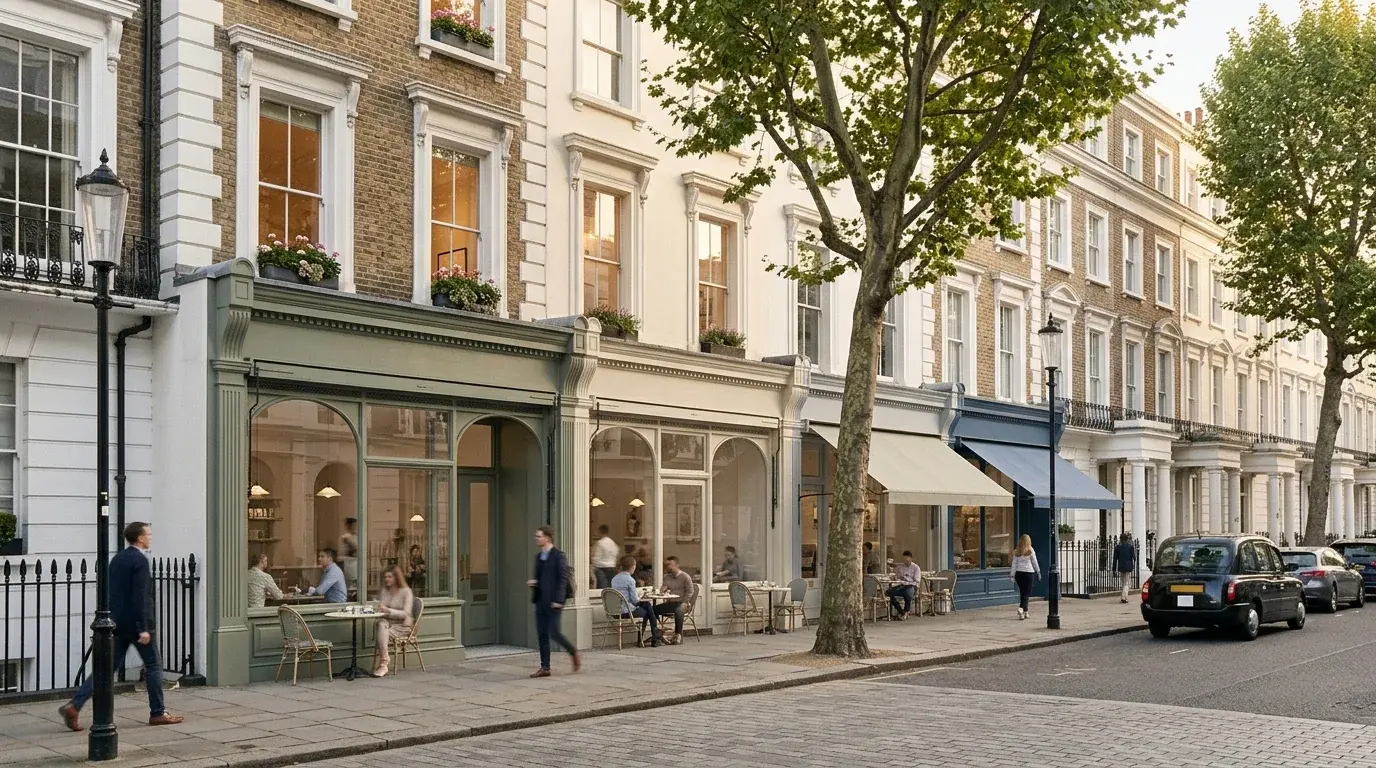
Grade I / II* / II settings, photomontage and AVR
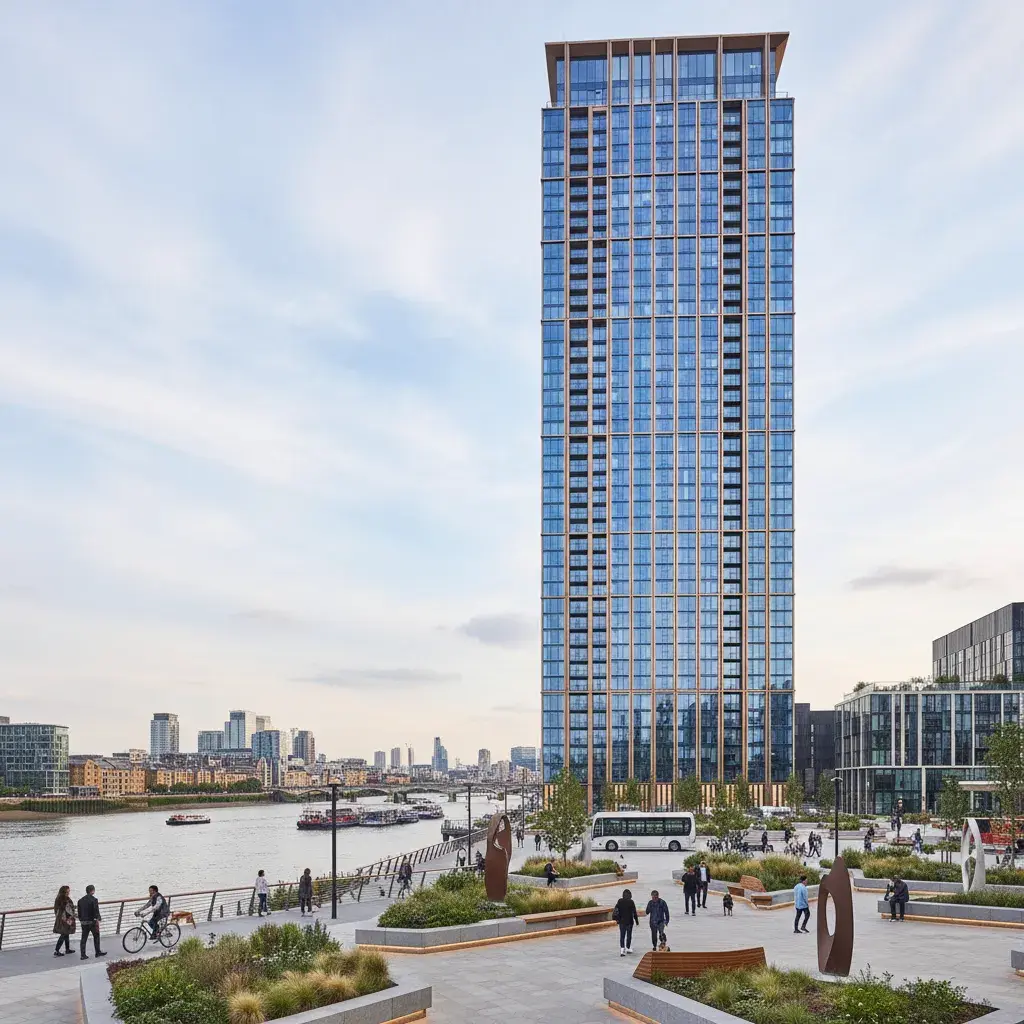
AOD height studies, LVMF protected views, GLA referable
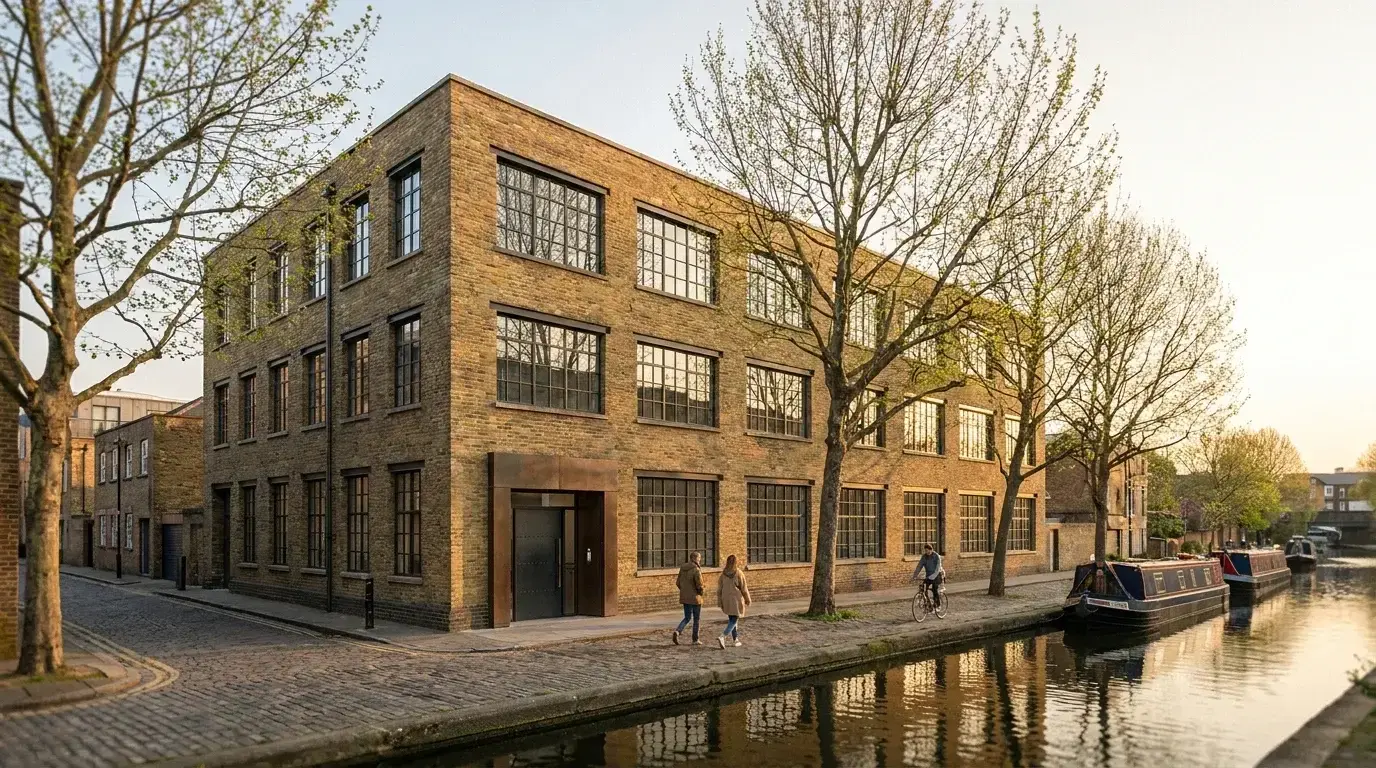
Sheds, last-mile, podium-and-deck schemes
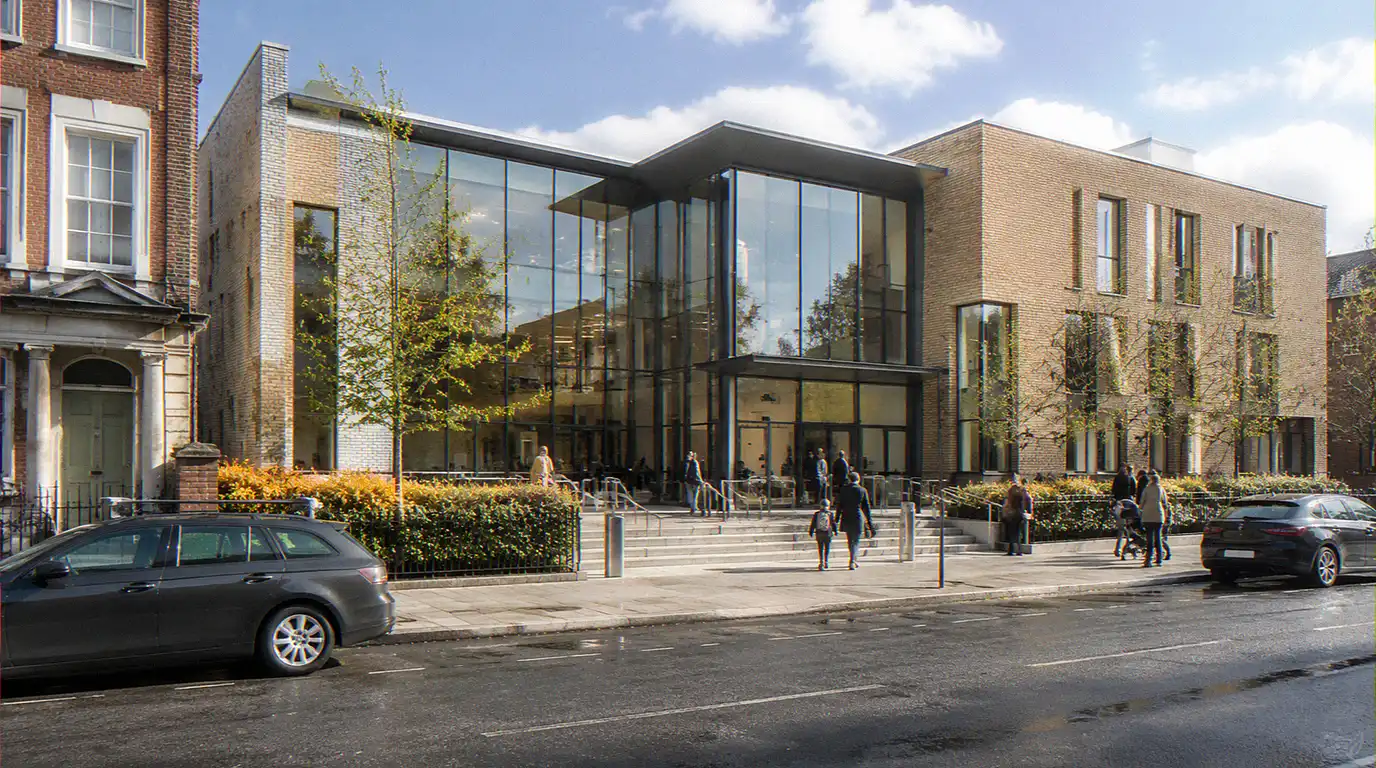
Schools, university estates, hospital frontages
Phased delivery, streetscape, townscape, regeneration
An exterior CGI package delivers a photoreal view of the proposed building in its London setting, with the camera angles, material variants, lighting versions, and file formats a planning panel or sales agent expects to see. Every commission ships the items below.


London exterior CGI is judged against scale, massing, material tone, and neighbouring context. Conservation areas, listed settings, LVMF protected views, and BRE 209 daylight and sunlight assessments shape what the render must demonstrate; when these constraints require surveyed cameras and documented methodology, the work bridges into our planning photomontage service or our verified-view AVR service.
Site Layout Planning for Daylight and Sunlight: A Guide to Good Practice (BRE 209, 2022) is the industry standard for assessing how a new development affects the daylight and sunlight rights of neighboring occupants. Accurate CGI shadow studies and daylight massing overlays provide essential scientific evidence to planning committees.
The 25-Degree Rule: Under BRE 209 guidelines, a preliminary assessment is conducted by drawing a 25-degree angle from the center of the lowest neighboring windows. If the proposed development does not break this plane, adequate daylight is preserved.
Vertical Sky Component (VSC): If the 25-degree plane is breached, a detailed VSC analysis is required. VSC measures the ratio of direct sky light falling on the center of a window facade under an overcast sky. Planners demand that the proposed VSC remains above 27%, or at least 0.8 times its baseline value, to prevent noticeable overshadowing, strictly coordinating with the British/European **BS EN 17037** interior daylighting standard.
Right to Light Easements: It is crucial to distinguish between non-statutory planning daylight checks (BRE 209) and common law Right to Light easements. A development may achieve full BRE 209 planning compliance, but neighbors can still pursue private legal injunctions under property law if their ancient windows suffer an unreasonable easement loss.
Transient Shadow Maps: For dense London developments or roof extensions, councils require transient shadow maps tracking hourly paths on the March 21st equinox. Outdoor amenity spaces must receive at least 2 hours of direct sunlight on March 21st across at least 50% of their area.
Before a single brick is laid, property marketing CGI transforms architectural plans into high-end visual stories. These premium renders drive off-plan residential sales, secure funding, and attract B2B commercial pre-lets. For developers orchestrating a comprehensive sales campaign across multi-unit schemes, our specialised residential developments cgi and property marketing packages provide cohesive visual consistency from pre-application to final brochures. For developers focused on high-density office blocks, workspace hubs, and clinical environments, our specialized commercial developments cgi and leasing visualisations ensure maximum occupancy interest before the fit-out begins.
Brochure Visuals: High-end marketing campaigns require visuals that convey a premium lifestyle. We composite photo-real architectural designs with active streetscapes, local shopfronts, and luxury vehicles to attract high-value reservations.
Site Hoardings: Giant physical hoardings enclosing active London construction sites are a primary advertising medium. We supply high-resolution, print-ready TIFF renders (up to 300 dpi at A0 scale) that maintain absolute visual crispness and color accuracy on large-format print boards.
PBR Shader Materials: Physically-Based Rendering shaders simulate the realistic physical properties of materials under varying light conditions. This ensures that brickwork bump maps, glass reflections, cladding roughness, and steel specular highlights look photorealistic.
Atmospheric Lighting & Details: High-impact sales CGI relies on natural environment tracking—simulating correct seasonal sun paths, sunset warmth, dusk ambient light, and interior lighting glow. We model micro-level details (such as facade weathering, foliage depth, and wet pavements) to produce rich, immersive visual narratives.
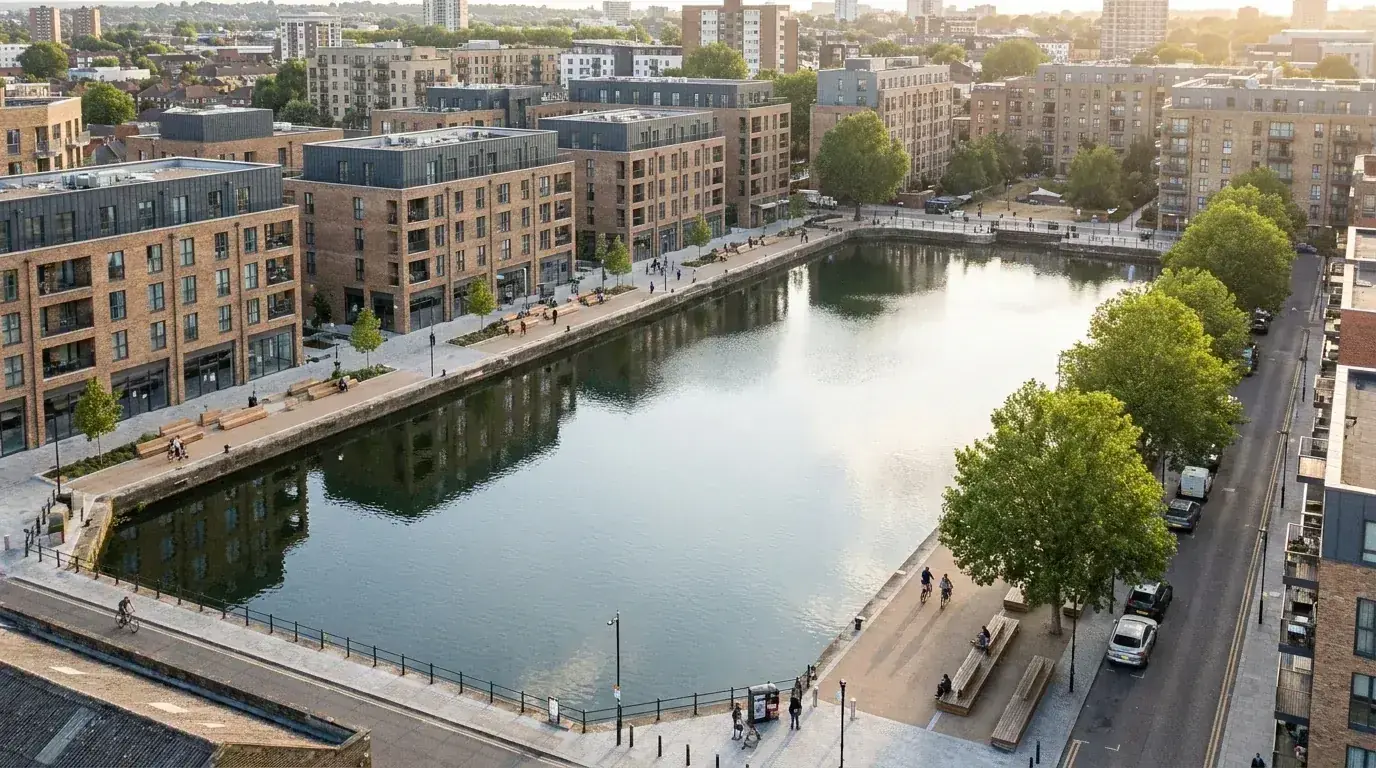
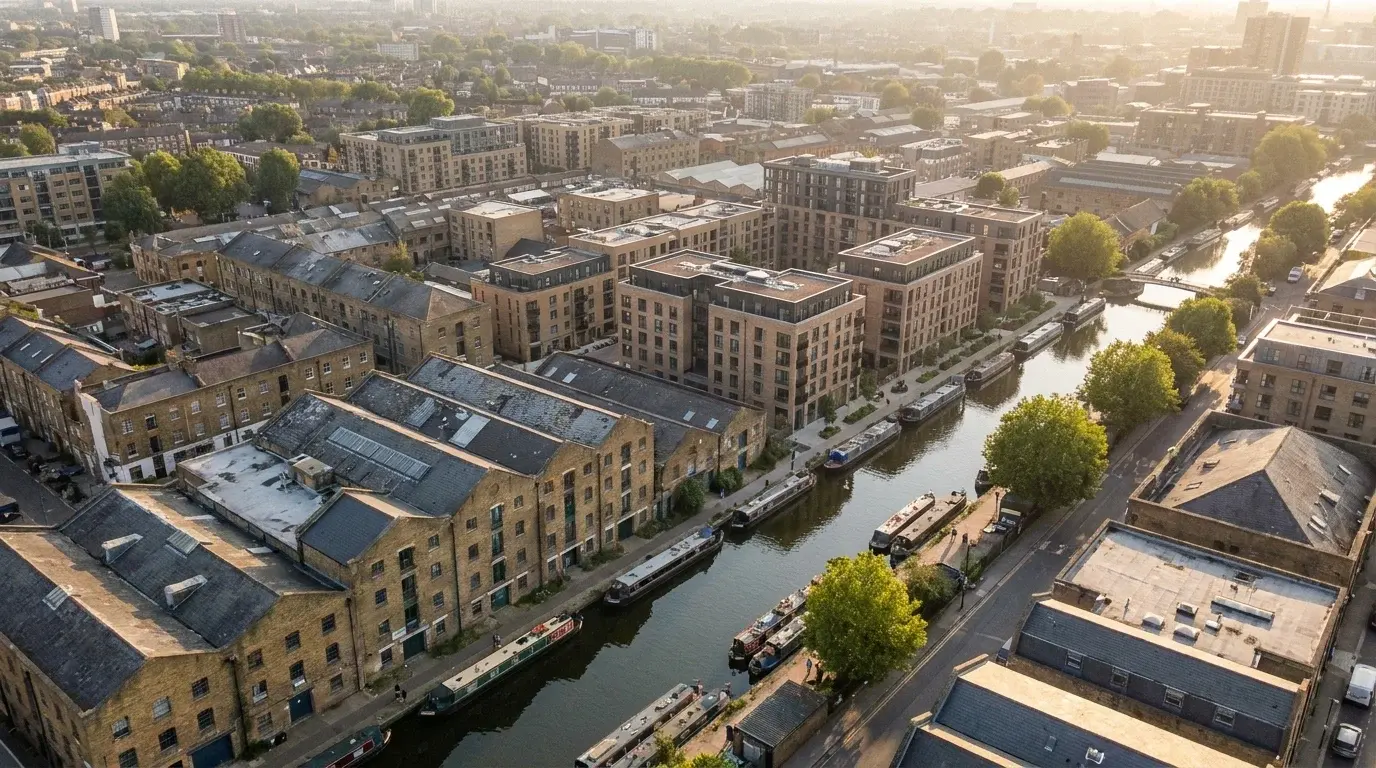
For major urban regeneration schemes and multi-block developments, street-level views are not enough. High-altitude birds-eye visualisations demonstrate how a masterplan integrates into the wider London townscape.
Drone Integration: We combine georeferenced aerial drone photography with high-poly 3D models. By matching camera lens focal lengths, altitude coordinates, and sun positions, we composite the proposed development seamlessly into the real London cityscape.
Context Massing: Large-scale masterplans must document their cumulative visual impact. We model surrounding consented schemes as semi-transparent massing volumes to give planning committees a clear view of the future urban context.
Developer Tenders: Sweeping birds-eye visuals convey both architectural ambition and commercial scale, making them critical assets for B2B funding applications and major land bid packages.
Public Consultations: When presenting masterplans to local resident panels or during municipal planning inquiries, aerial photomontages act as transparent, highly scannable visual aids. They clearly demonstrate landscape integration, transport connections, and pedestrian route flow.
Each commission moves through four stages (brief review, camera lock, modelling and lighting, draft and final delivery), typically over three to five weeks. For full studio process across services, see our architectural visualisation process.
A standard exterior commission typically runs three to five weeks from sign-off to final delivery. Fees are quoted per package based on the technical rigour required, camera count, AVR type, and survey scope. We provide a bespoke quote once we have reviewed the drawings, site context, and intended use for the visuals.
| Package | Typical use | Cameras | Verification | Survey input | Lead time | Deliverables |
|---|---|---|---|---|---|---|
| Marketing exterior CGI | Brochure, off-plan launch, internal design review | 2 to 4 views | AVR Type 0 | Drawings and site photographs | 2 to 3 weeks | Print-ready and web-optimised AVIF, WebP, TIFF |
| Planning exterior CGI | Borough planning submission, design review panel, neighbour consultation | 3 to 6 views | AVR Type 1 to 2 | Drawings, measured site photographs, agreed viewpoints | 3 to 4 weeks | Submission PDFs sized to planning portal limits, layered PSD on request |
| Premium exterior CGI | Hero marketing image, design review panel, GLA referable scheme | 4 to 8 views | AVR Type 2 | Drawings, measured site photographs, agreed viewpoints, material samples | 4 to 5 weeks | Layered PSDs, print-ready TIFFs, dusk and seasonal variants |
| Need surveyed cameras, wirelines, methodology statements, or a conservation-area AVR Type 3? Those deliverables sit with our AVR Type 3 verified-view service. | ||||||
AVR Types 0 to 3 are defined by Landscape Institute TGN 06/19.
A single hero exterior CGI starts in the low hundreds for a marketing render and rises with view count, verification grade, and survey scope. Planning-pack packages typically sit in the low four-figures. Verified-view photomontage packages with surveyed cameras and methodology statements sit higher and are quoted by the verified-view service that delivers them.
Indicative turnaround and verification levels for a London exterior CGI commission. Quotes are provided after a brief review of the project requirements.
Final delivery includes high-resolution TIFFs sized for planning packs (A1/A0), web-optimised WebP and AVIF for marketing, and a layered PSD on request.
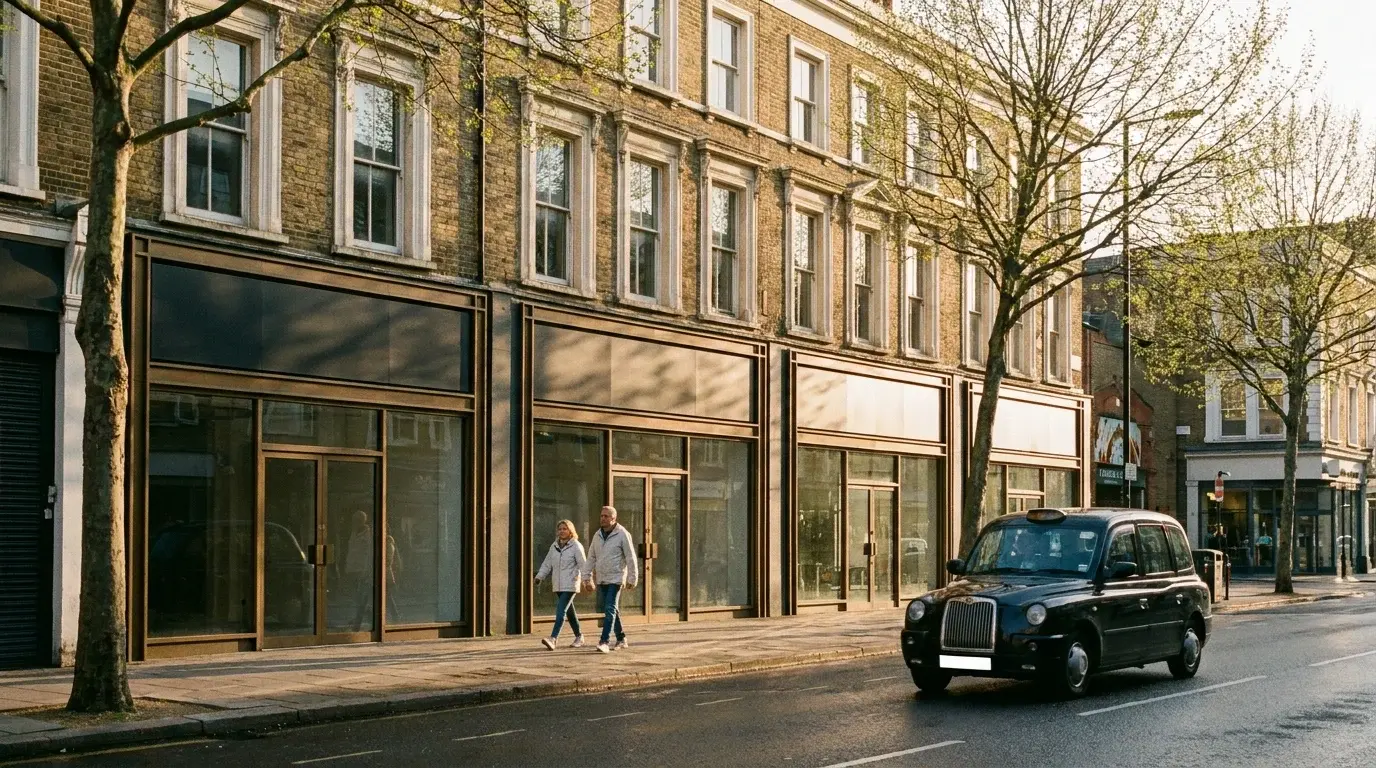
These three recent commissions cover an Islington mixed-use streetscape, a Kensington and Chelsea conservation-area photomontage, and a Hackney Wick aerial townscape.
Send drawings, site photographs, deadlines, and the intended use (planning, marketing, investor). We scope the verified-view package against that brief.
Send exterior CGI brief