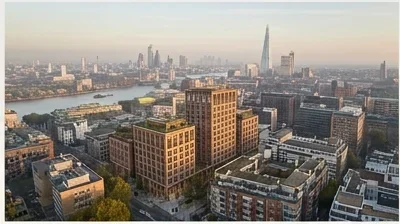
Exterior flythrough
A drone-style aerial camera covers the scheme and its London townscape context, showing masterplan reads, massing in townscape, and approach from key views. This format runs most often in planning packs and investor decks.

Architectural Visualisations London (AVL) is a London 3D animation studio producing measured walkthroughs, flythroughs, time-lapses, and cinemagraph reels for developments across Greater London. Each reel choreographs sequence, arrival, scale, interior experience, and wider site context. Output spans Full HD and 4K, from 30-second social cuts to three-minute cinematic reels, in formats accepted by planning officers, investor decks, and sales campaigns.
Request a quote
Every 3D animation commission AVL accepts scopes four production elements: the camera path we storyboard, the route we choreograph, the look we light and grade, and the files we render and deliver. We then recut each reel for the audience that needs to be convinced: planning committees reviewing massing evidence, investor presentations showcasing material and interior, or sales suites demonstrating arrival sequence.
AVL produces six animation formats in-house: exterior flythrough, interior walkthrough, cinemagraph, vignette, time-lapse, and camera-tracked composite. Most architects default to cinematic appeal; planning approval, however, hinges on spatial clarity and shadow documentation, the evidence committees weight most heavily in scheme review.
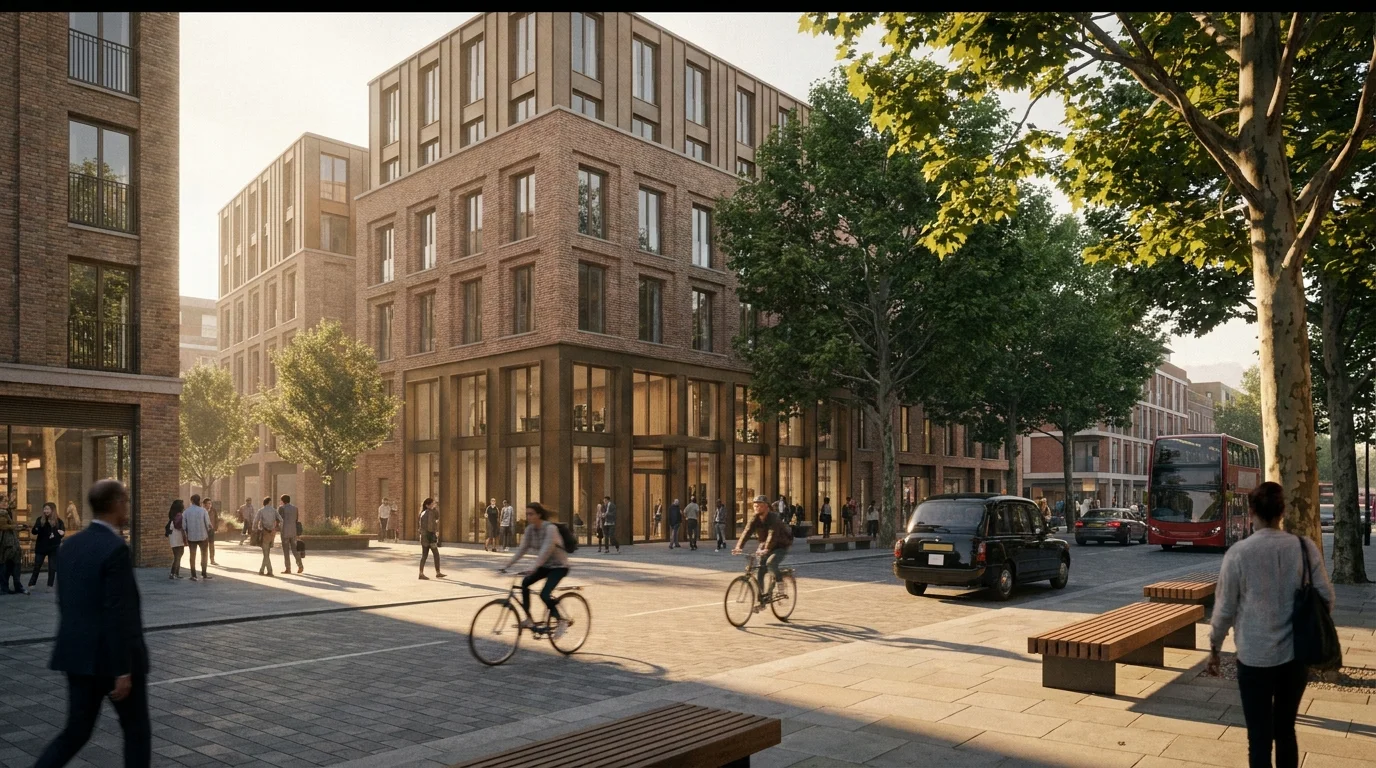
A drone-style aerial camera covers the scheme and its London townscape context, showing masterplan reads, massing in townscape, and approach from key views. This format runs most often in planning packs and investor decks.
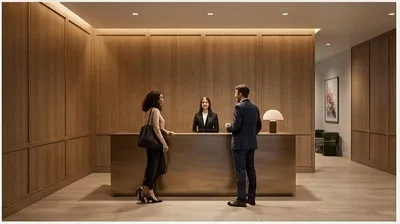
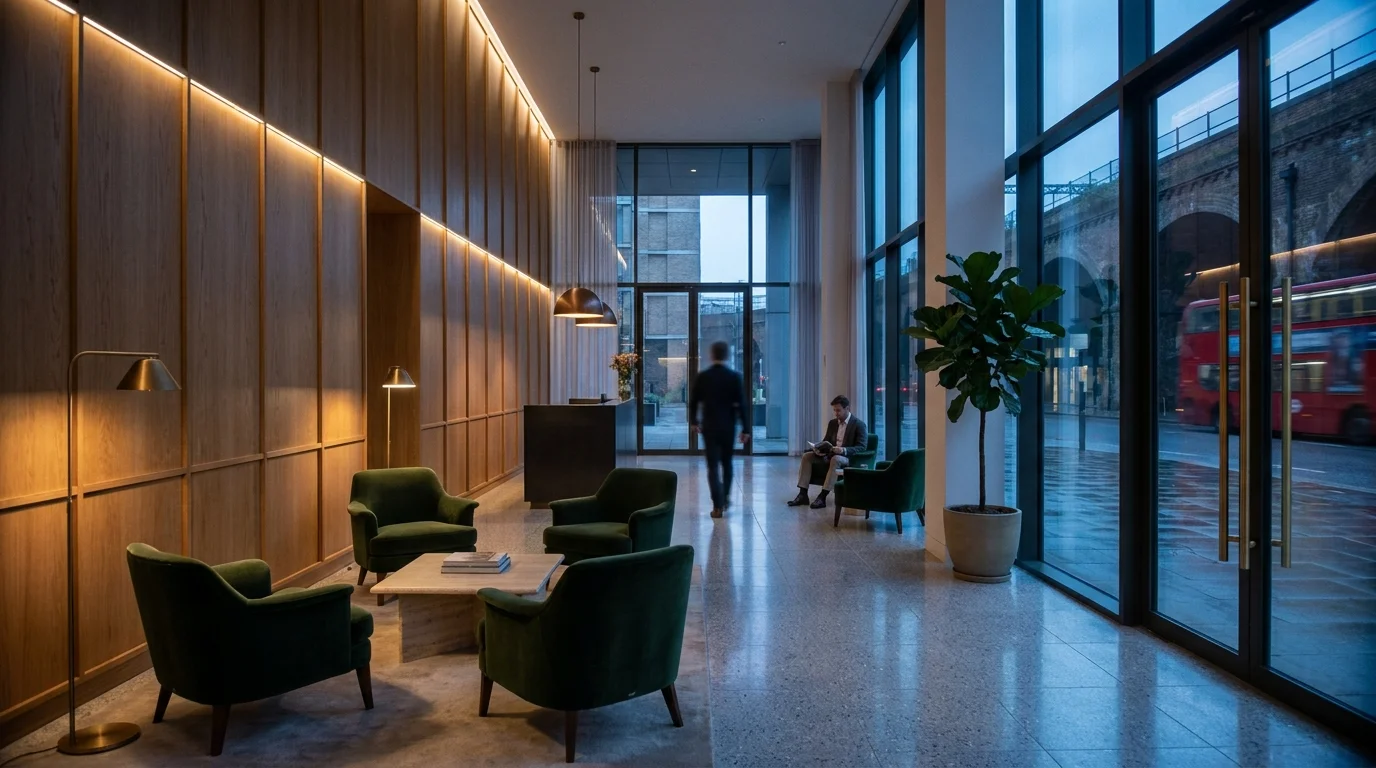
The first-person camera moves through reception, amenity, and residential interiors, letting material, light, and ceiling-height decisions register instantly. This format is the default for off-plan sales suites.
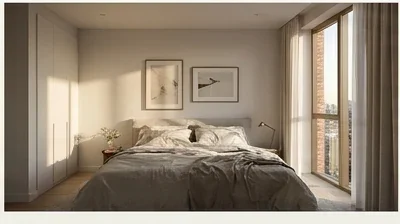
A still hero image with one isolated motion layer: curtains drifting, fire flickering, water moving, a single figure walking past. High-impact on social channels, low render cost, no full animation budget required.
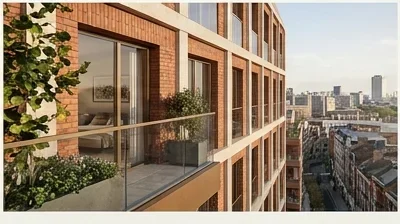
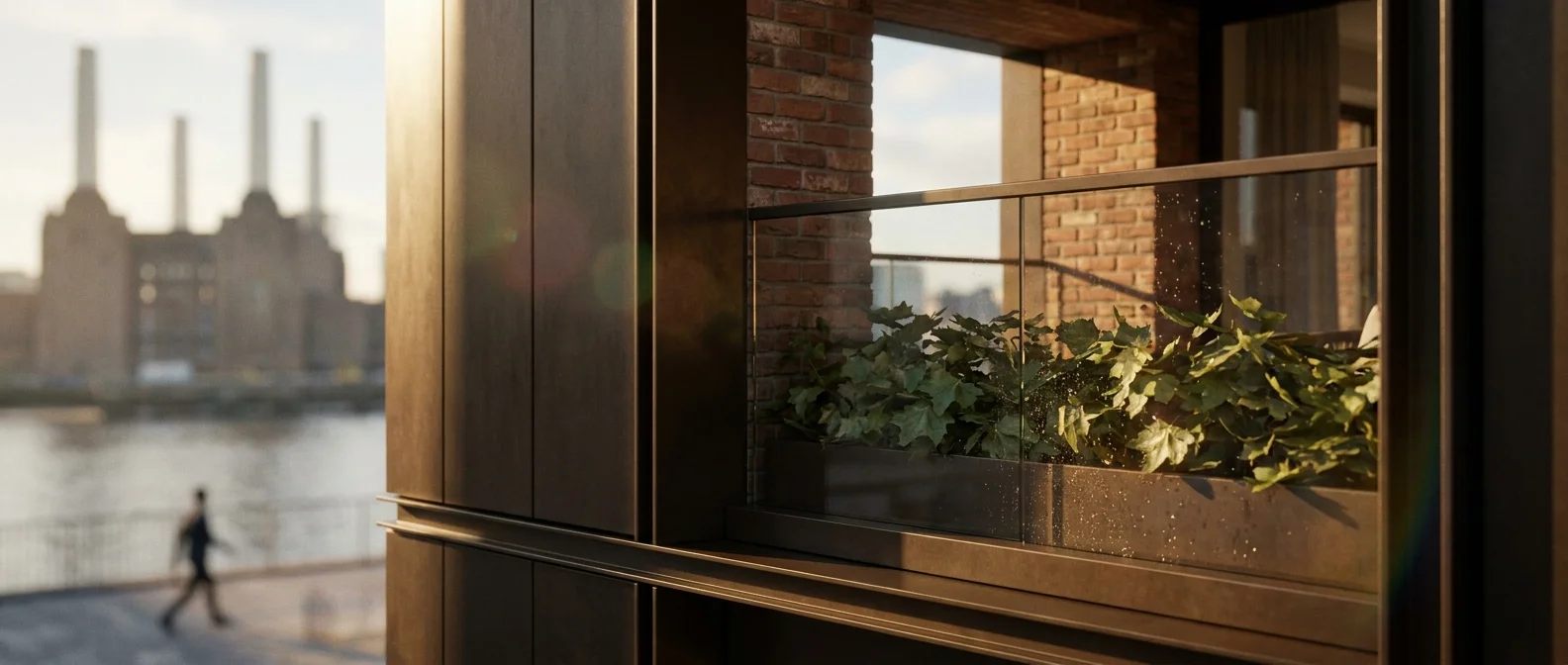
Close-up animated shots that draw attention to a single design moment: a balcony detail, a material joint, a courtyard at golden hour. Used to layer atmosphere into longer cinematic reels or as standalone social cuts.
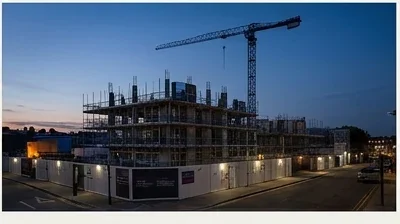
Day-to-night light studies, seasonal change, or 4D construction sequences showing the scheme rising through phases. Planning committees use this format to read programme and townscape impact in one clip.
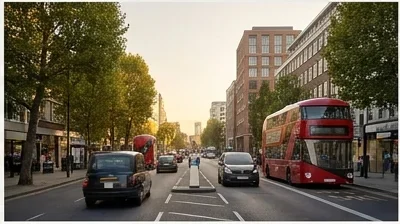
CGI proposal matched into live-action plate footage of the real site, with the new building inserted into the same camera move. Bridges to our verified-view photomontage work and answers the strictest planning-officer accuracy tests.
Every AVL commission ships with a written deliverable sheet so planning consultants, marketing teams, and developers know exactly what arrives, in what format, and at what resolution.
Full HD (1920×1080) and 4K UHD (3840×2160) at 25 fps for UK PAL delivery, or 30 fps where social platforms require it. 5K masters available for cinema or large-format projection.
We deliver 16:9 for committee packs and investor screens, 9:16 for Instagram Reels and TikTok, and 1:1 for LinkedIn and Instagram feeds. Each clip is recut and reframed natively (never letterboxed) so the composition reads correctly on the target platform.
H.264 MP4 for planning portals, web embedding, and email-attachable files. ProRes 422 masters for editors and broadcast. Image-sequence EXR on request for in-house post pipelines. Files delivered via direct download link, with archive backup held for twelve months.
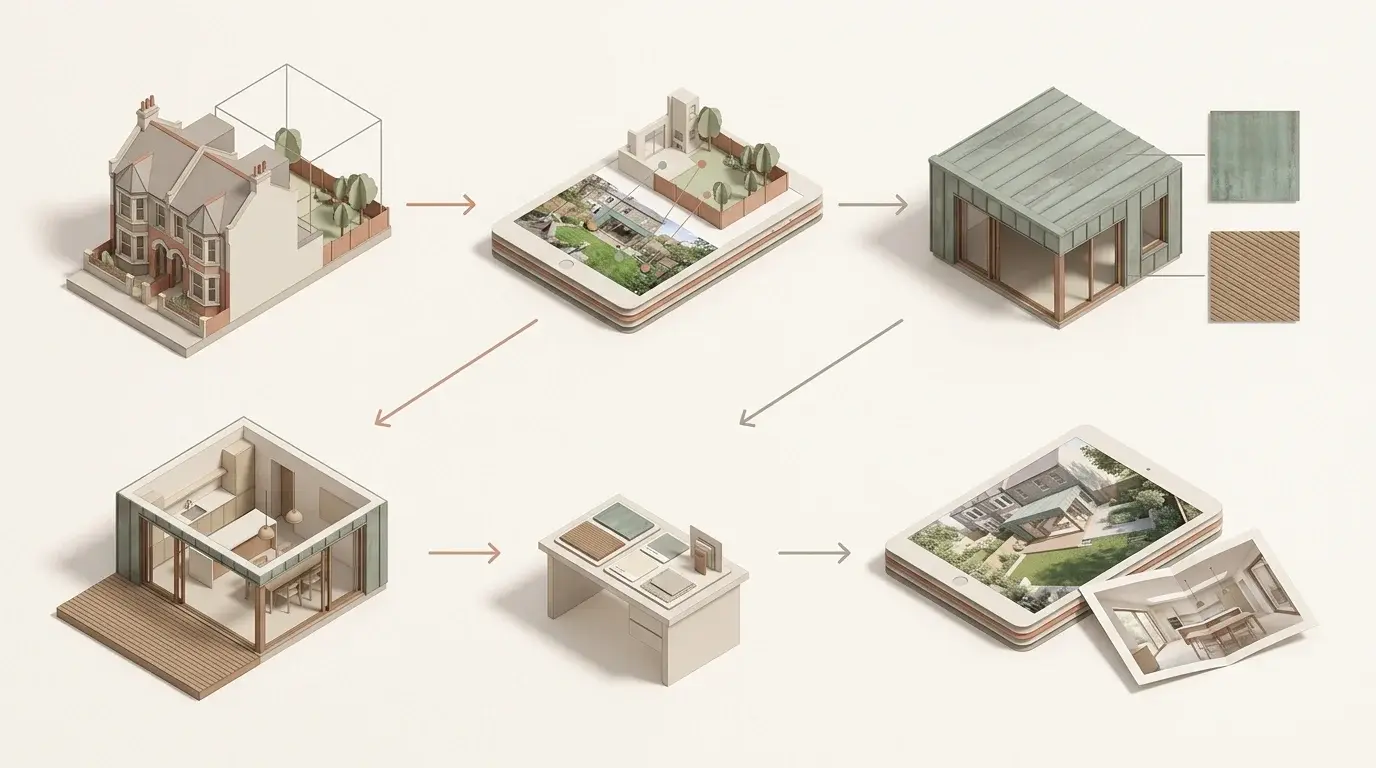
Residential and mixed-use schemes with complex phasing, public realm transitions, or interior sequences are best understood through movement: approach from the street, transition through public realm, arrival into reception, or connection to wider site context. Animation gives planning, investor, and sales audiences a controlled spatial narrative.
Planning officers prioritise animations that verify camera position and demonstrate massing in townscape. Investors prioritise cinematic narrative and material showcase. AVL produces committee animation that answers specific design and access statement questions directly: the evidence committee members need to recommend approval.
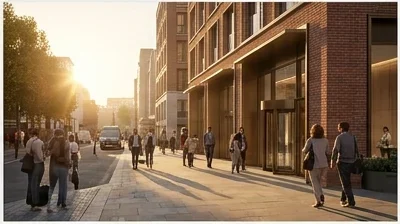
Camera positions matched to surveyed Townscape and Visual Impact Assessment viewpoints, including the London View Management Framework strategic views: Parliament Hill, Primrose Hill, Alexandra Palace, Greenwich Park, Westminster Bridge, Waterloo Bridge, and Tower Bridge. The same viewpoints used in verified-view still images, animated to show the scheme reading at full speed from approach to closest view.
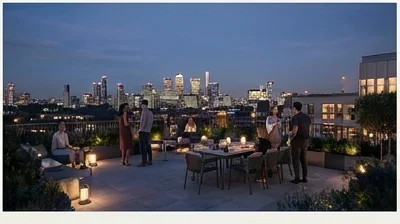
Day-to-night, summer-to-winter, and seasonal-foliage animations show how the proposal sits against London's major townscape landmarks: the South Bank (Westminster view sensitivity), the Square Mile cluster (City of London tall-building policy), Canary Wharf (Isle of Dogs cluster), Battersea Power Station (south London heritage), and the Greenwich peninsula (UNESCO World Heritage buffer). The shadow envelope sweeping across the year is the question committees ask most often.
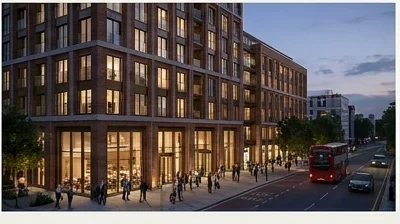
Files cut to the formats LPA portals accept (H.264 MP4 under planning-portal size limits), with a separate high-quality master for the borough's hearing screen. Our committee-format animations are tuned to each authority's design and access statement template. We maintain delivery checklists for Westminster, the City of London, Camden, Hackney, Islington, Tower Hamlets, Southwark, Lambeth, Wandsworth, Newham, Greenwich, and Hammersmith & Fulham.
Verified-view photomontage answers the static townscape test from fixed surveyed viewpoints. Animation extends the same evidence into movement: the proposal reading as the viewer walks the approach, the shadow envelope sweeping across the year, or the construction sequence resolving over phases. The two formats are complementary, and most committee packs commission both. See our verified views page for the still-image counterpart.
Animation addresses the planning evidence committees prioritise most: massing in context, shadow envelope across seasons, and arrival sequence from key views. Each borough centres scrutiny on a distinct design challenge.
Camera positions are matched to that borough's published Townscape and Visual Impact Assessment viewpoints. Each animation demonstrates how the scheme reads against those specific scrutiny criteria. See our borough pages for Tower Hamlets, Southwark, Hackney, Camden, and Islington.
Eight checkpoints take a London 3D architectural animation brief from drawings to delivered files. Each stage names what you approve and what you receive, so you always know where the project sits. For a broader view of how Architectural Visualisations London manages CGI commissions, visit our process page.
| Animation Stage | You approve | You receive |
|---|---|---|
| 1. Brief and source-file audit | Scope, audience, route, deadline | Brief sheet, model audit notes, flagged rework |
| 2. Storyboard and shot list | Storyboard frames | 2D shot frames, camera-rig list, length plan |
| 3. Clay-model camera preview | Revision round 1: timing and camera path | Grey-shaded animated preview, no textures |
| 4. Build, texture, light | Internal quality check | Full-fidelity scene: materials, lighting, populated public realm |
| 5. Textured preview | Revision round 2: look and atmosphere | Textured single-frame stills or low-resolution clip |
| 6. Render | Internal quality check | Full-resolution frame sequence and render passes |
| 7. Composite, colour grade, final polish | Client sign-off on the graded master | Graded master clip with final atmosphere and edit |
| 8. Delivery and archive | Project closed | Files in every agreed format; working files archived 12 months |
AVL quotes three project scales that cover the bulk of London 3D architectural animation briefs, each with its own clip length, shot count, and turnaround. Cost scales with the same three variables. Final fees reflect additional factors: brief scope, model intake quality (rework effort), and delivery deadline.
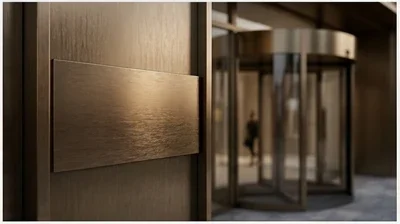
Single shot, 5 to 15 seconds, one camera angle. Two-week turnaround from approved model and storyboard. Suited to social marketing reels and pre-launch teasers.
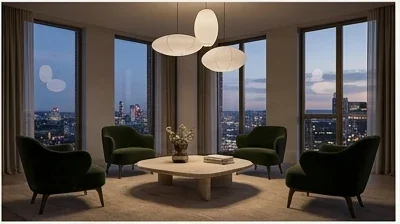
60 to 90 seconds, three to five shots, full lighting and material direction. Three to five weeks from briefing to delivered files, including two preview-round revisions.
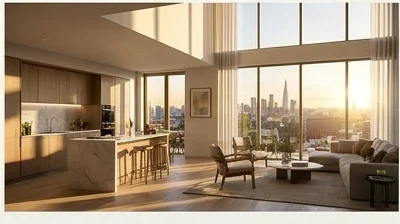
Two to three minutes, six or more shots, day-to-night or seasonal sequences, optional camera-tracking against live-action plates. Six to ten weeks. Includes verified camera paths and borough committee-format outputs where required.
Stills from recent animation commissions across Lambeth, Wandsworth, and Hammersmith & Fulham. Each one a measured camera path matched to the borough's planning and marketing context.
Find answers below to the questions London developers, architects, and planning consultants ask before commissioning a 3D animation.
A short cinemagraph or vignette starts at the lower end of our scale; a 60 to 90-second standard flythrough sits in the middle band; a two-to-three-minute cinematic reel or planning-pack animation sits at the upper end. We quote against the brief, with clip length, shot count, and scene complexity driving the final fee.
Two weeks for a single-shot cinemagraph, three to five weeks for a standard flythrough or walkthrough, six to ten weeks for a cinematic reel with multiple shots or camera-tracking against live-action plates. Timings start from the point we have an approved model and storyboard.
A flythrough is a single continuous camera move through a static 3D model, efficient for spatial sequence and arrival. A cinematic animation combines multiple shots, motion graphics, animated people, traffic, water, and atmosphere, sometimes layered with live-action plates. Cinematic reels carry more storytelling; flythroughs carry more information density per second.
Full HD (1920×1080) and 4K UHD (3840×2160) as standard, at 25 fps for UK PAL delivery or 30 fps for social platforms. 5K masters are available for cinema-scale or large-format projection.
Yes. Each animation is recut and reframed natively for 9:16 (Reels, TikTok), 1:1 (LinkedIn, Instagram feed), and 16:9 (committee packs, investor screens), recomposed shot by shot, not letterboxed.
Yes, this is camera tracking. We capture or work from live-action plate footage of the real site, solve the camera move, and insert the CGI proposal into the same frame. Used for the strictest planning-officer accuracy tests and verified-view animations.
H.264 MP4 is universally accepted on borough planning portals, within their file-size limits. We deliver a portal-sized MP4 alongside a high-quality master for the hearing screen. EXR image sequences and ProRes 422 are available for in-house post pipelines.
Two preview rounds before final render are included as standard: a clay-model preview to lock camera paths and composition, and a textured preview to approve lighting, materials, and atmosphere. Additional rounds are priced separately and disclosed up front.
Yes. Animated people, cyclists, vehicles, foliage movement, water, cloud movement, and lighting transitions are all standard elements. Density and behaviour are scoped to the audience: sparse and considered for planning, more populated for sales and marketing.
Yes, and it usually reduces both cost and time. We accept Revit, Rhino, SketchUp, ArchiCAD, 3ds Max, and IFC. We will audit and clean the model on intake (broken meshes and inconsistent units are common) and flag any rework before quoting.
Tell us the animation type, your borough, and the deadline, and we will scope the reel around the decision it needs to support. Prefer the full form? Use our contact page.