LP33 planning submissions
Hackney Council submission imagery framed against the Local Plan 2033 (LP33), the HWFI SPD and the relevant conservation area appraisal, including pre-application advice and design review panel material.
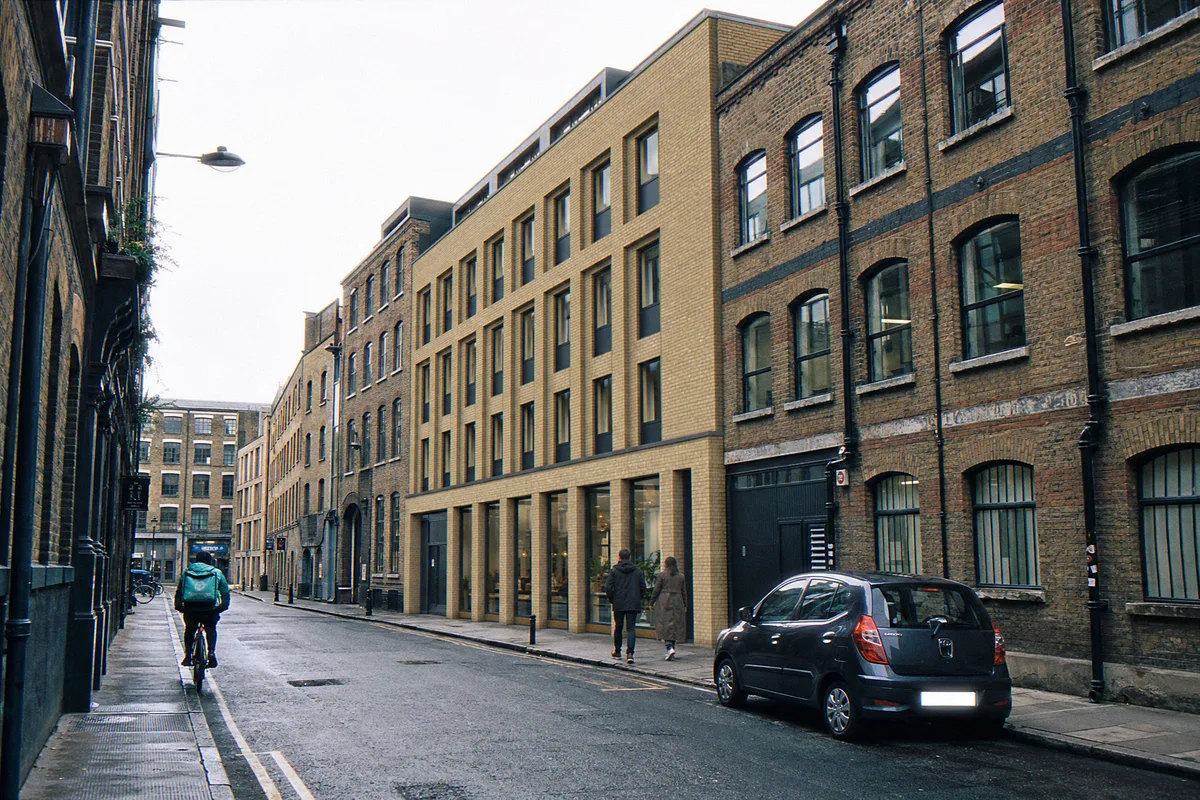
Hackney Council submissions often need visuals that make scale, materials and street context easy to understand.
Hackney covers four very different visualisation regimes inside one borough: Hackney Wick and Fish Island canalside warehouse-conversion under the joint LLDC + Hackney + Tower Hamlets HWFI SPD; Dalston, Hackney Central, Stoke Newington and Hoxton mixed-use frontages under three stacked Article 4 directions (Class E, light industrial and B8 storage to C3, in force from 27 April 2023); 35 named conservation areas including Stoke Newington, De Beauvoir, Clissold, Clapton Square, Clapton Common, Clapton Pond and Cazenove; and the borough's aggressive ACV-listed-pubs framework that makes pub-to-home conversions a sympathetic-retention exercise rather than a speculative gut-and-flat. Each of those regimes asks a different question of the CGI.
A Hackney project lands in one of four regimes: Hackney Wick canalside warehouse-conversion (HWFI SPD, post-industrial), Dalston / Hackney Central / Hoxton mixed-use frontage (three stacked Article 4 directions), Stoke Newington / De Beauvoir / Clapton conservation-area terraces (35 named appraisals), or the borough's aggressive ACV-listed-pubs framework where a pub-to-home scheme has to evidence sympathetic retention. The image set follows the regime, not the postcode.
Hackney Council submission imagery framed against the Local Plan 2033 (LP33), the HWFI SPD and the relevant conservation area appraisal, including pre-application advice and design review panel material.
Garden-side rear and side-return extension CGI for Victorian terrace stock in Stoke Newington, Clissold, Cazenove and the four 1969 Clapton conservation areas (Square, Common, Pond and Clissold Park).
Sympathetic-retention CGI for De Beauvoir, Stoke Newington and Dalston corner-pub conversions where ACV listing and the post-2015 permitted-development restrictions require retained ceramic, timber bar and original window fabric to read in the image.
Retained-fabric exterior and creative workspace floor-plate CGI for Hackney Wick and Fish Island canalside schemes governed by the joint LLDC + Hackney + Tower Hamlets HWFI SPD.
Dalston, Hackney Central, Hoxton and Stoke Newington shopfront CGI inside the three-direction Article 4 scope (Class E, light industrial and B8 storage to C3) where ground-floor commercial and upper-floor residential evidence has to be separated.
Townscape and visual impact assessment, verified-view and AVR support for Hackney Wick canal, Hackney Marshes and Lee Valley edge receptors agreed before surveyed photography.
Hackney Council submissions are governed by the Hackney Local Plan 2033 (LP33, adopted 22 July 2020) which replaced the Core Strategy, DM Local Plan and the Dalston, Hackney Central and Manor House Area Action Plans. A typical evidence pack carries a heritage statement, a daylight and sunlight assessment under BRE 209, pre-application advice notes, a townscape and visual impact assessment (TVIA) where receptors are flagged, and verified views or AVR for canal, roofline or skyline-sensitive sites.
Verified views are essential for Hackney sites where conservation-area character, canal-edge settings or development scale is central to the planning argument.
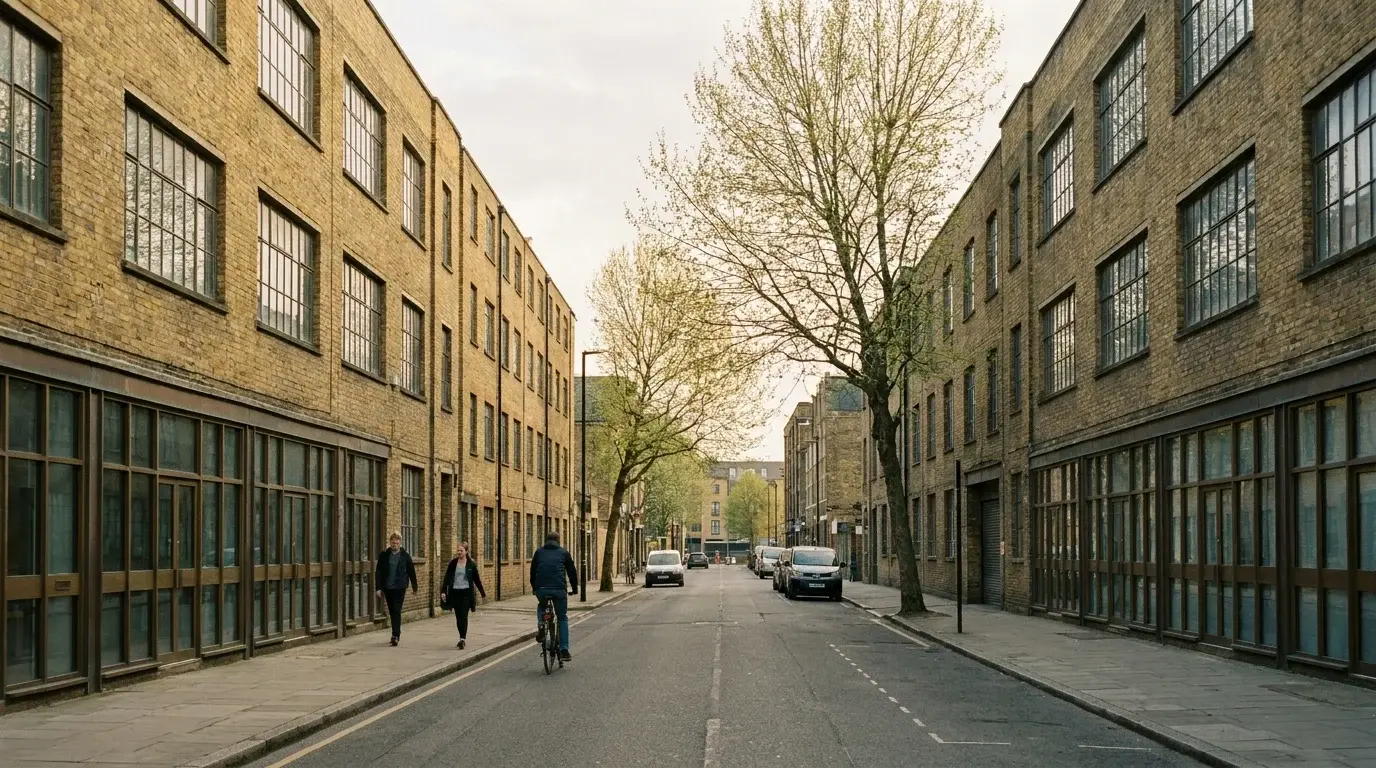
The need is normally set by the planning consultant, project team or authority requirements. Prominent warehouse conversions, canal-side proposals and heritage-sensitive changes should be reviewed early.
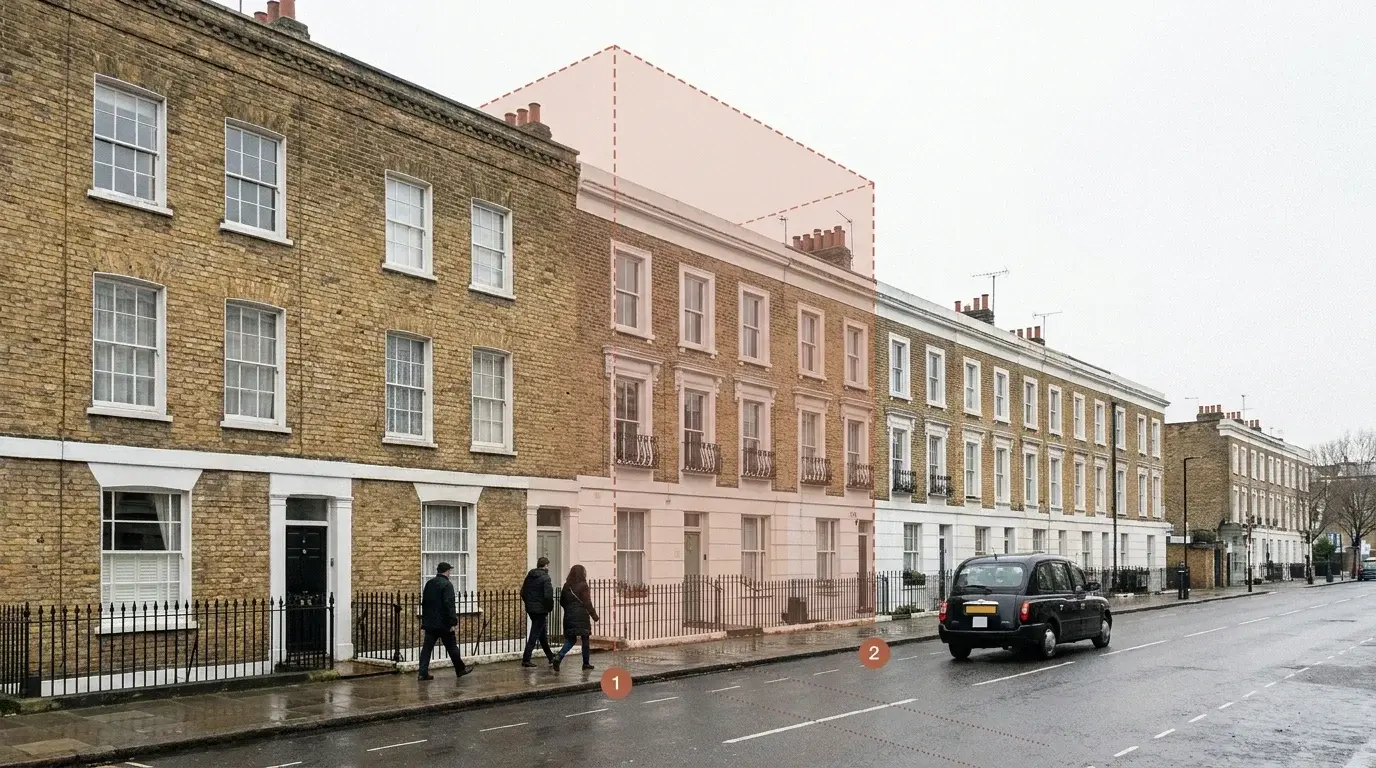
The first view acts as the surveyed AVR baseline: the existing Hackney street scene is held in the agreed camera position, with the proposed-development zone, viewpoint information and facade callouts marked for review. The second keeps the same view and annotation logic, then visualises a contemporary facade intervention within the conservation-area terrace so the planning team can compare existing context and proposed change directly.
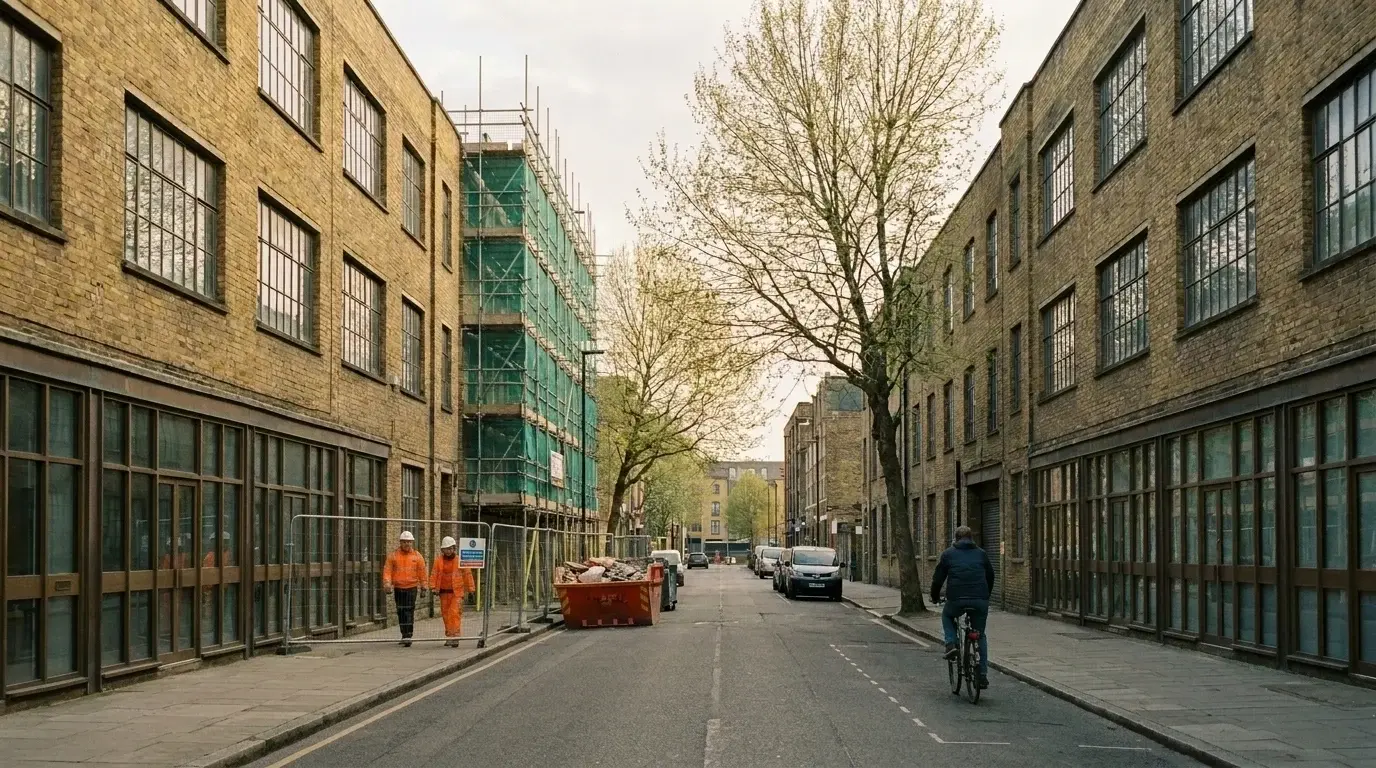
For teams comparing routes, planning application visuals can cover design explanation and committee-pack imagery, while verified views are scoped when the viewpoint, survey relationship and methodology need to be documented.
For Hackney projects that take the verified-view route, the methodology runs through four stages: viewpoint scoping, surveyed photography, camera matching against the 3D model, and final photomontage or AVR reporting.
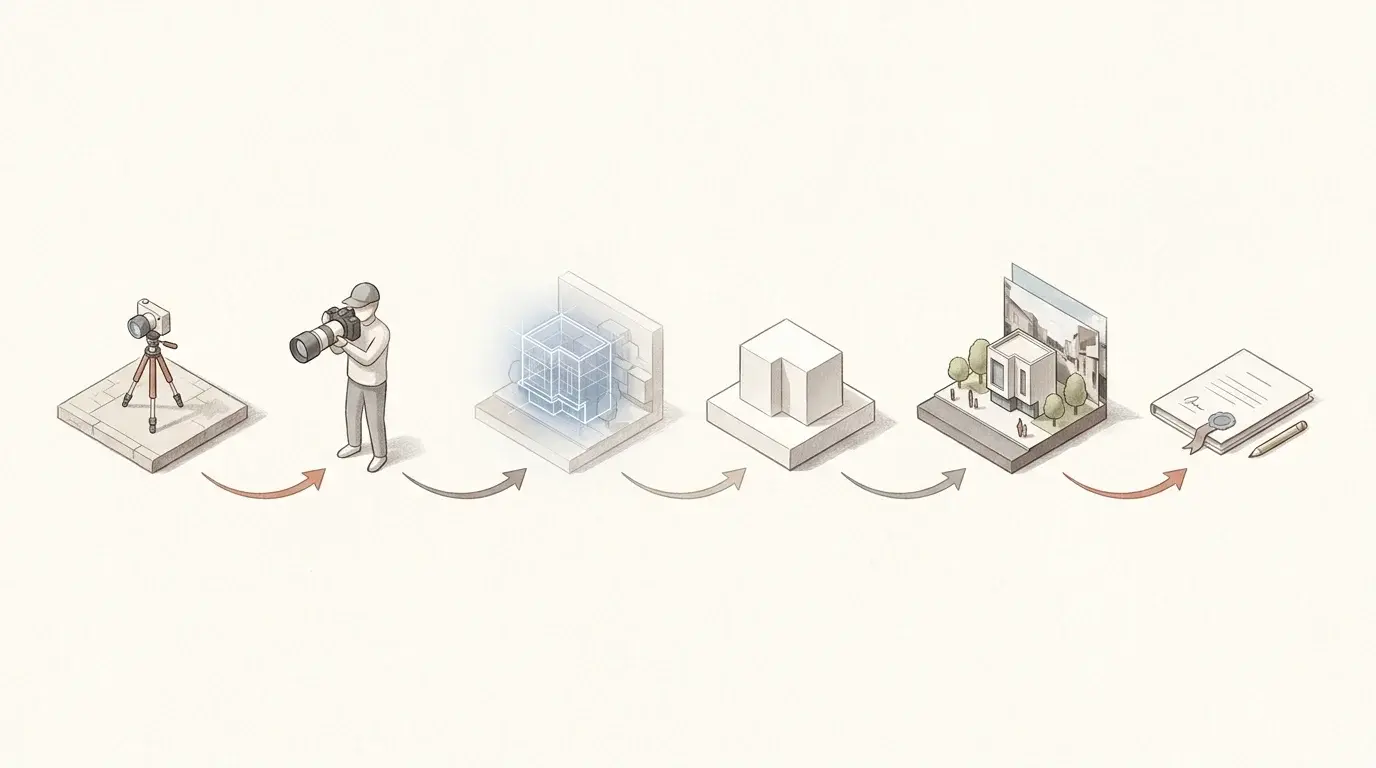
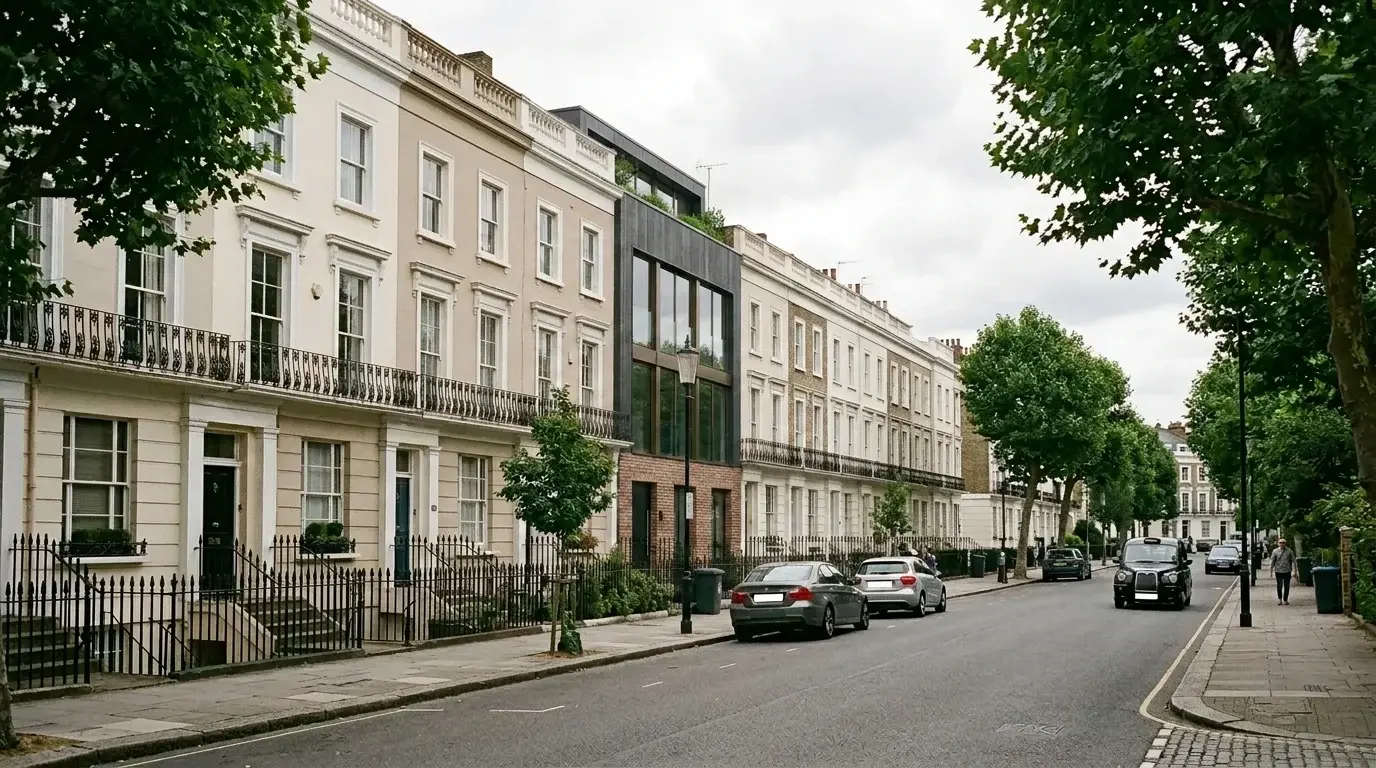
Relevant references include Landscape Institute Technical Guidance Note 06/19: Visual Representation of Development Proposals, Hackney Council planning guidance. If the Hackney brief may need AVR, agree the visual route before photography and viewpoint selection are fixed.
Six clusters dominate Hackney visualisation work: Hackney Wick canalside warehouse-conversion to creative workspace; De Beauvoir Town pub-to-home and townhouse interior; Stoke Newington, Clissold and Cazenove terrace extension; Dalston and Hoxton mixed-use frontage; Clapton infill on Victorian terrace gaps; and Regent's Canal and Hertford Union towpath context.
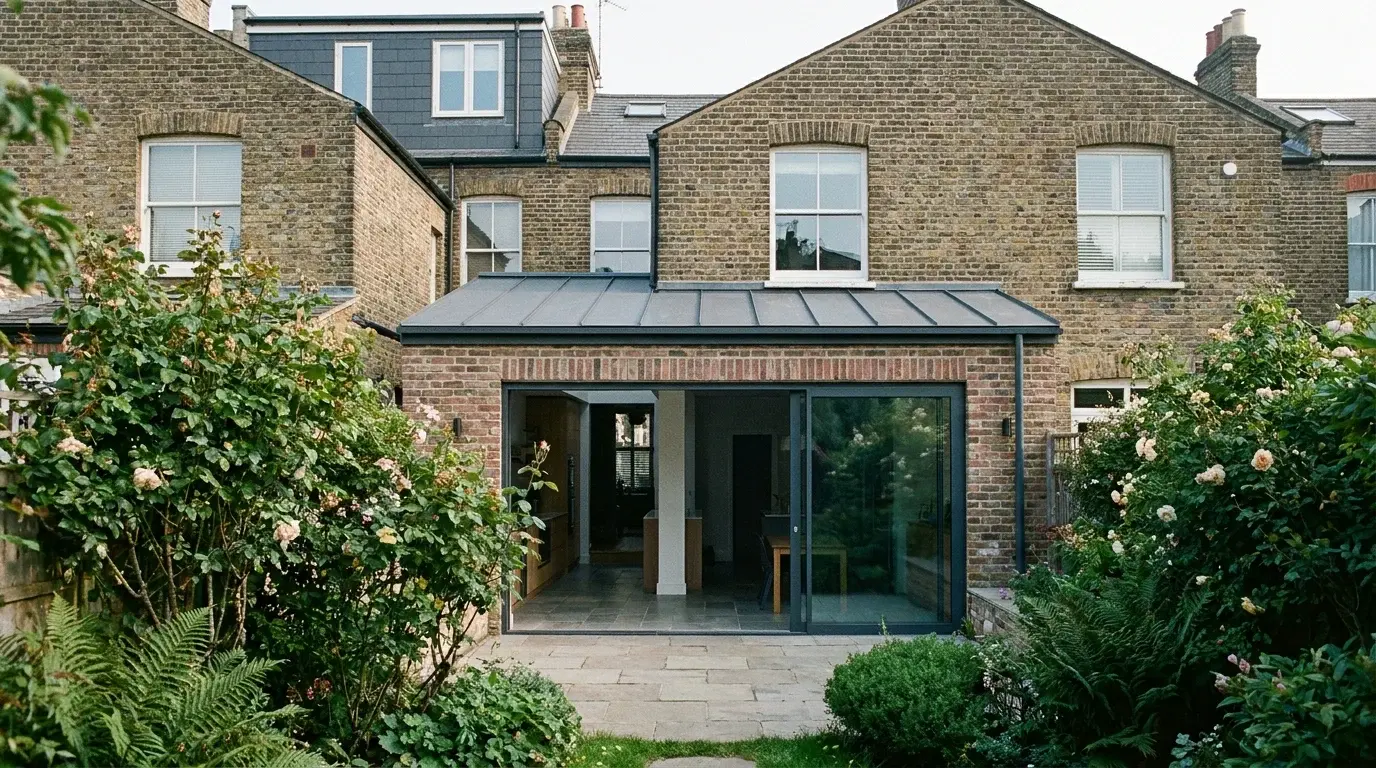
Garden-side rear and side-return extension CGI for Victorian terrace stock inside the Stoke Newington, Clissold and Cazenove conservation areas, where stock brick, dark zinc roof additions and slim glazing have to read against the appraisal.
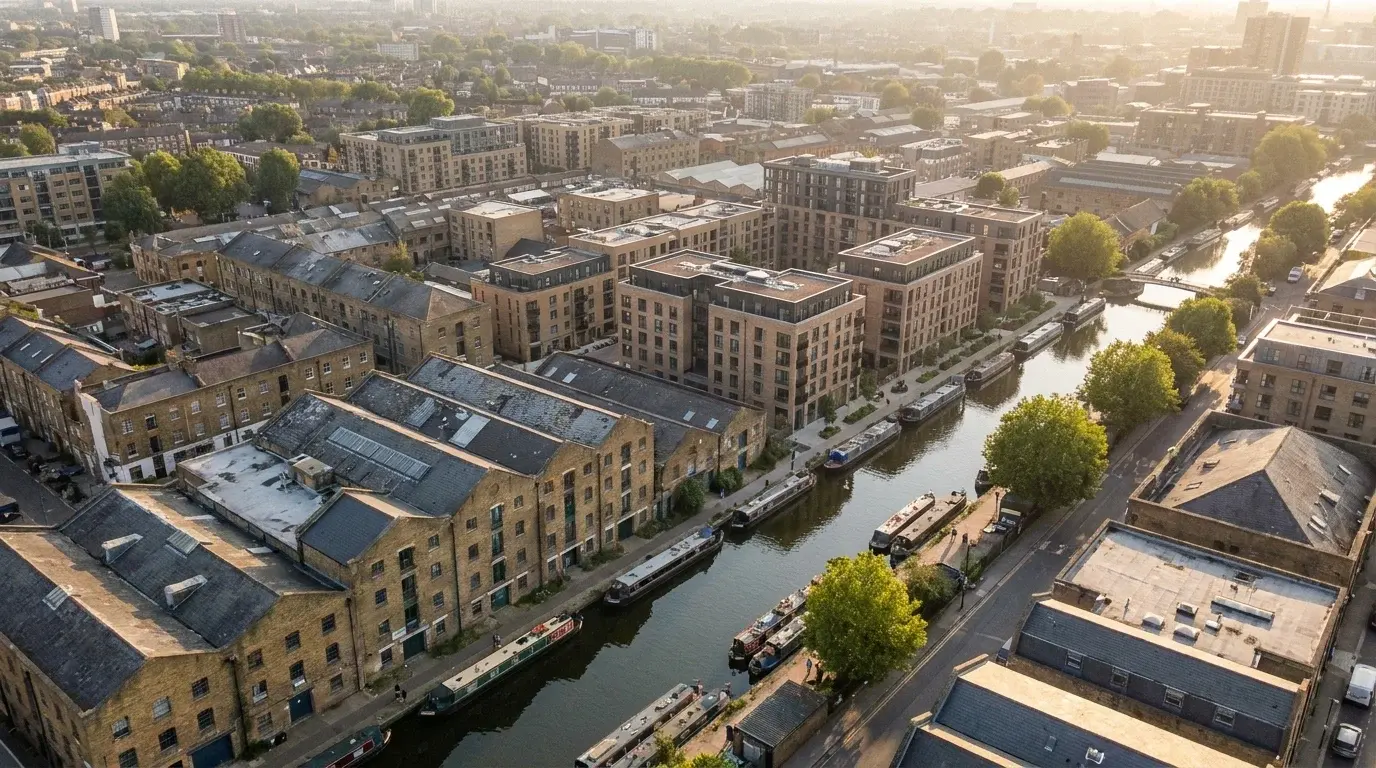
Aerial CGI for Hackney Wick canalside sites under the joint LLDC + Hackney + Tower Hamlets HWFI SPD, where retained warehouse roofs, narrowboats and contemporary mid-rise stock brick blocks all sit inside one composed view.
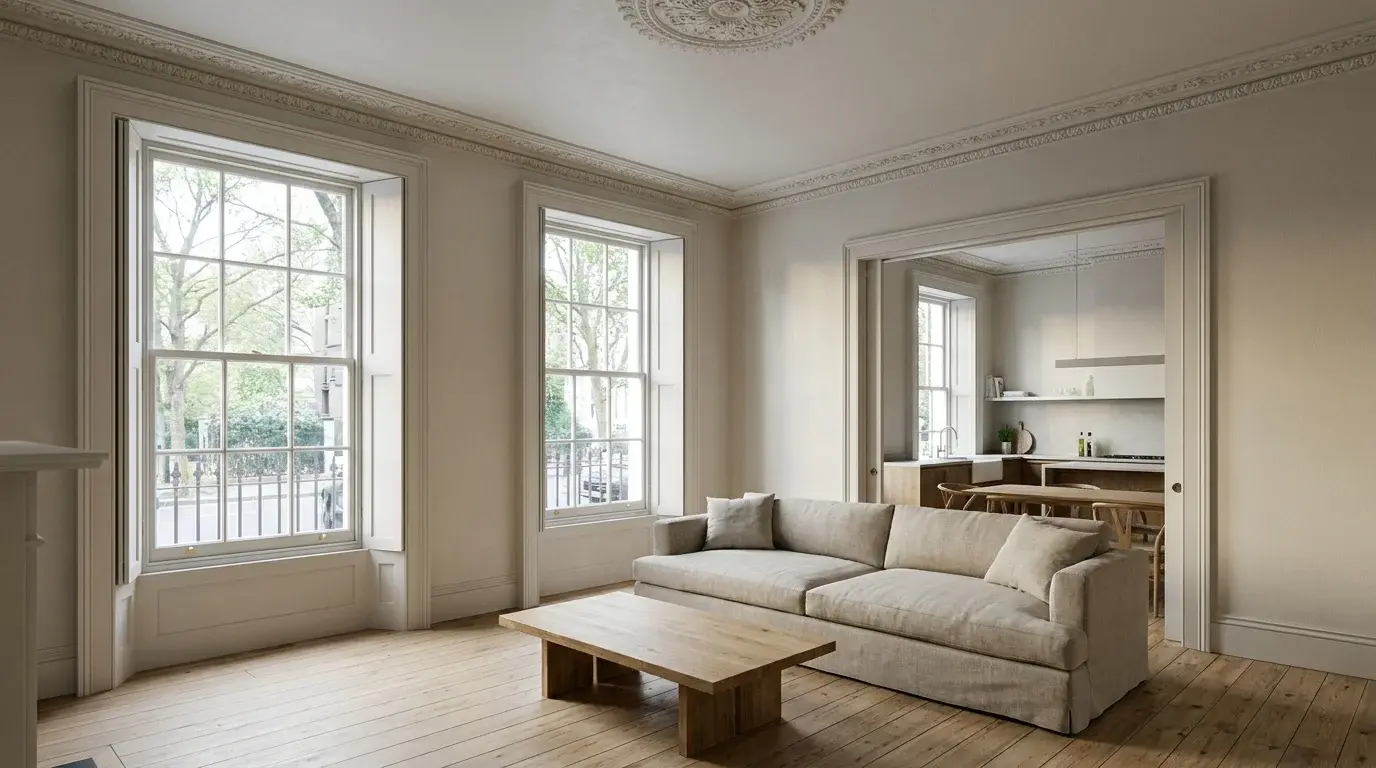
Interior CGI for De Beauvoir, Newington Green and Mapledene Victorian terrace refurbishments where restored cornice, ceiling rose, sash windows, sanded floorboards and an inserted contemporary kitchen need to feel resolved.
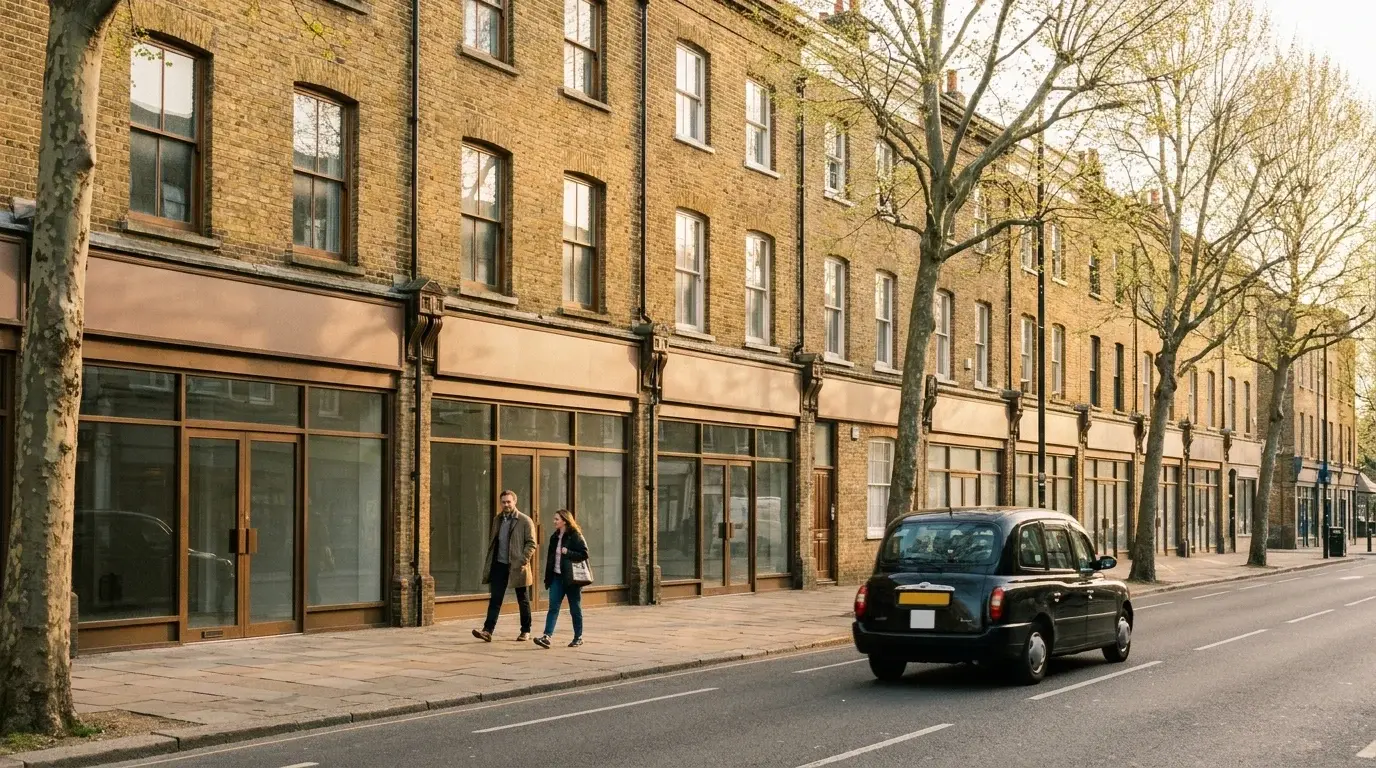
Mixed-use frontage CGI under the three stacked Article 4 directions (Class E, light industrial and B8 storage to C3, in force 27 April 2023), where ground-floor commercial and upper-floor residential evidence have to be separated for the planning case.
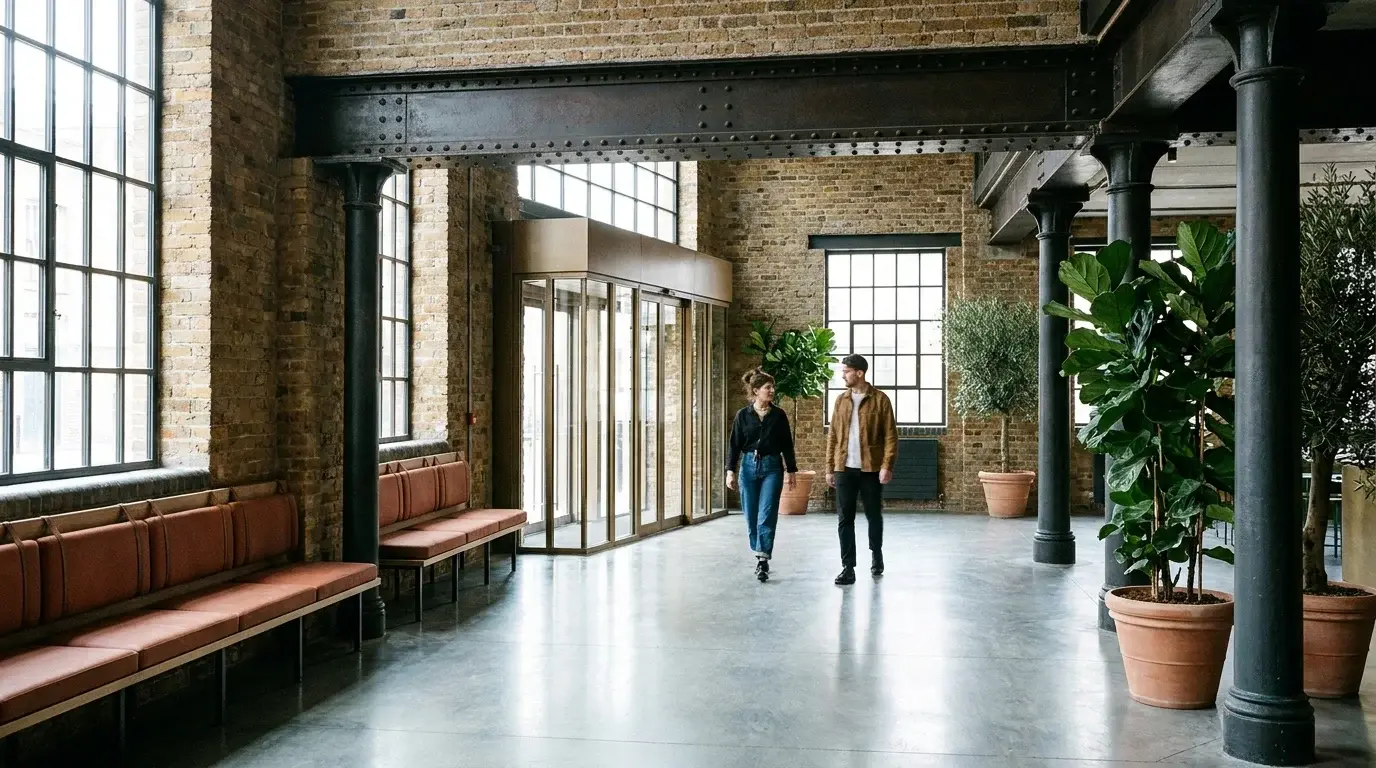
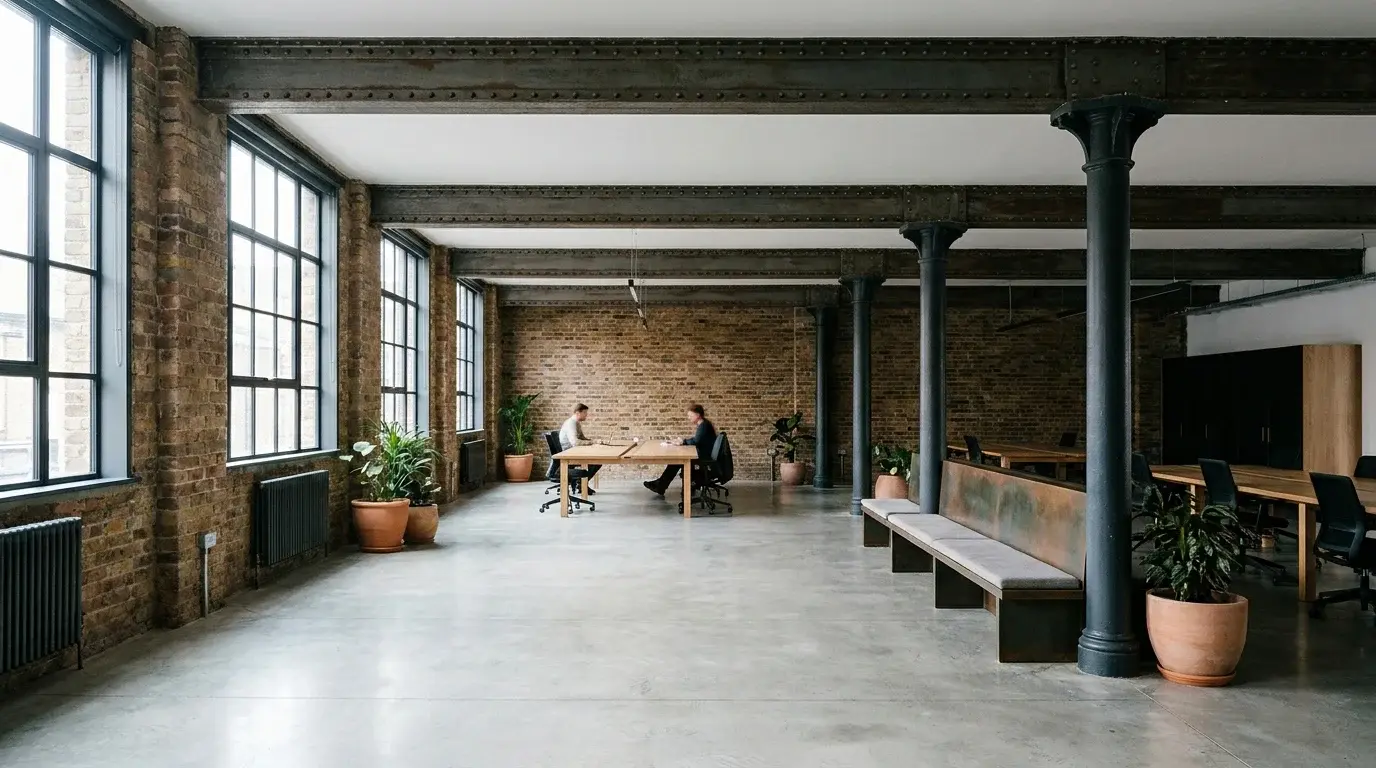
Workspace lobby and floor-plate CGI for warehouse conversions in Hoxton, Shoreditch and Haggerston, where loadbearing brick, cast iron, riveted steel beams and material accents have to read alongside a credible arrival sequence.
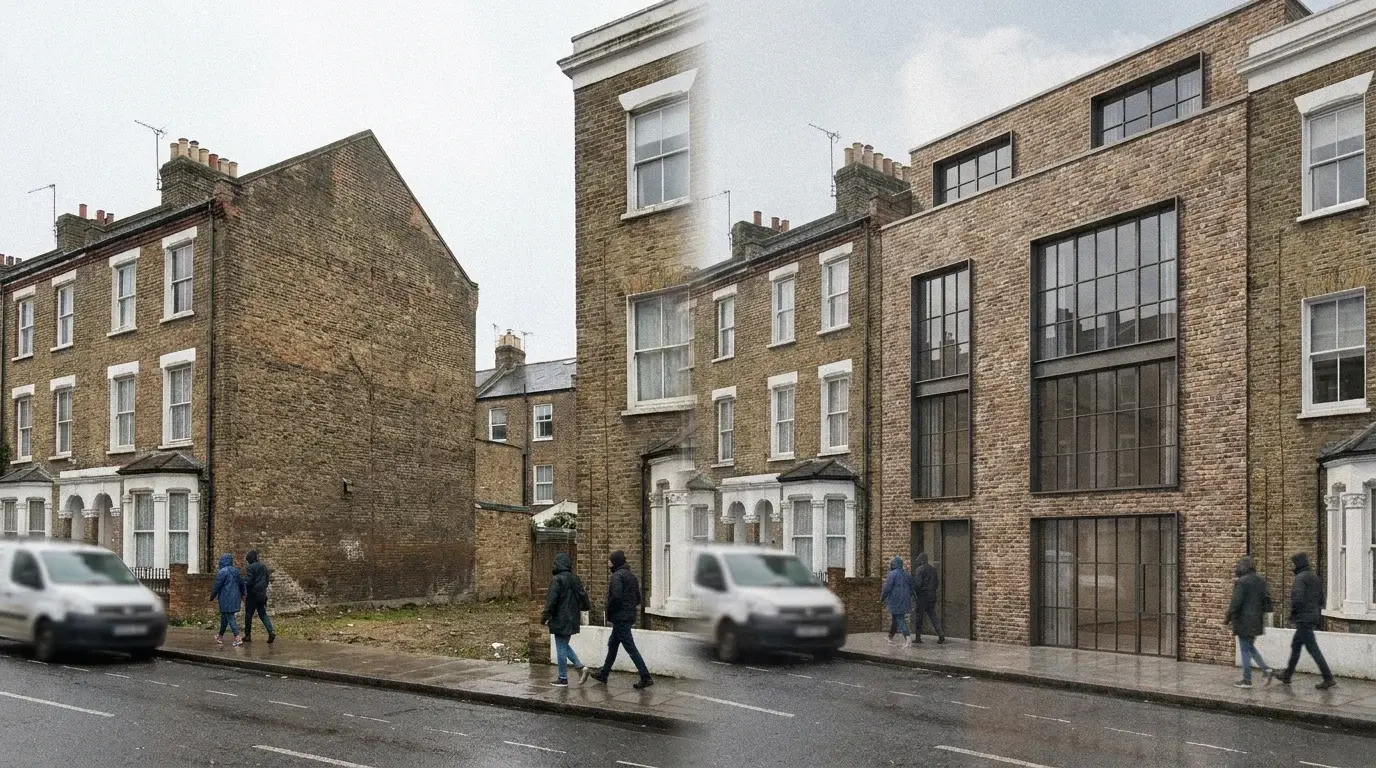
Infill CGI that pairs the existing party-wall gap or backland site photograph with the proposed contemporary stock-brick volume, calibrated to the four 1969 Clapton conservation area appraisals (Clapton Square, Clapton Common, Clapton Pond and Clissold Park).
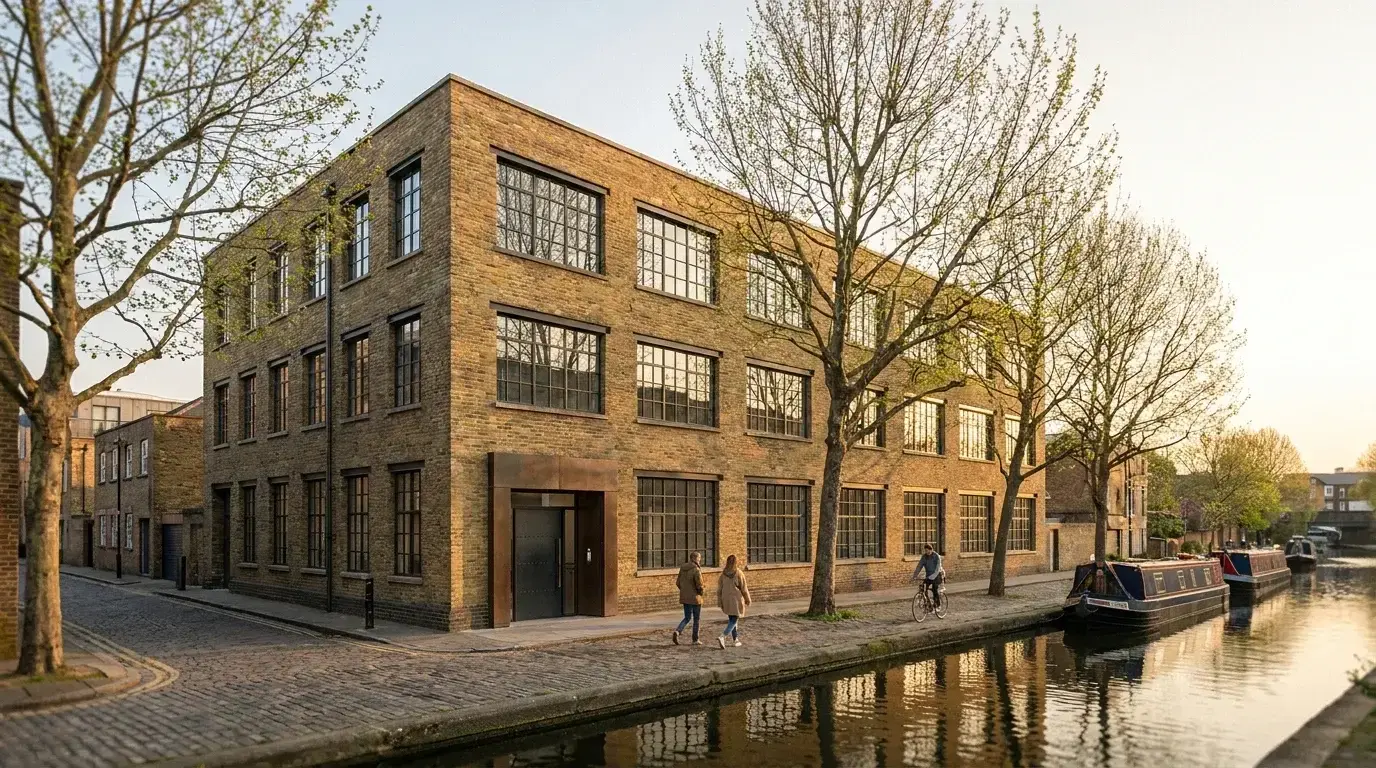
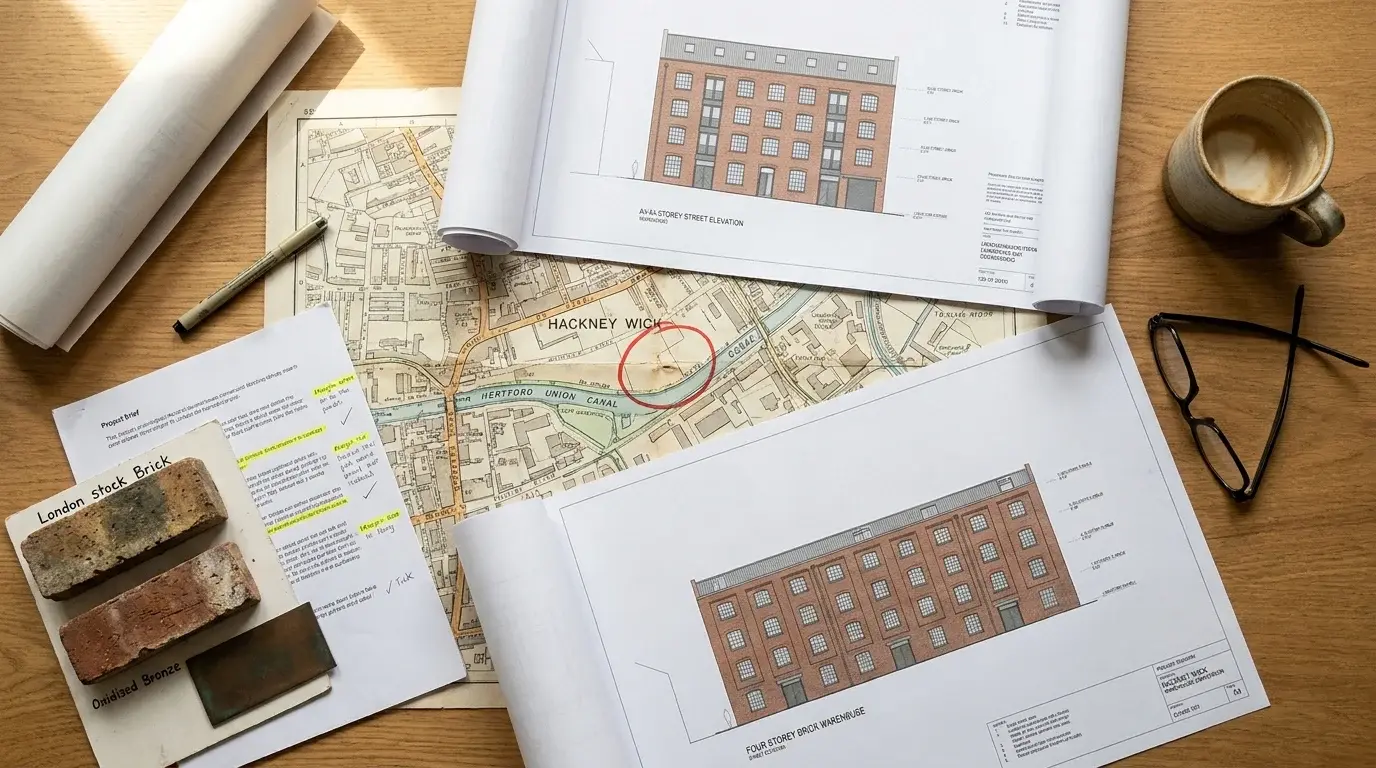
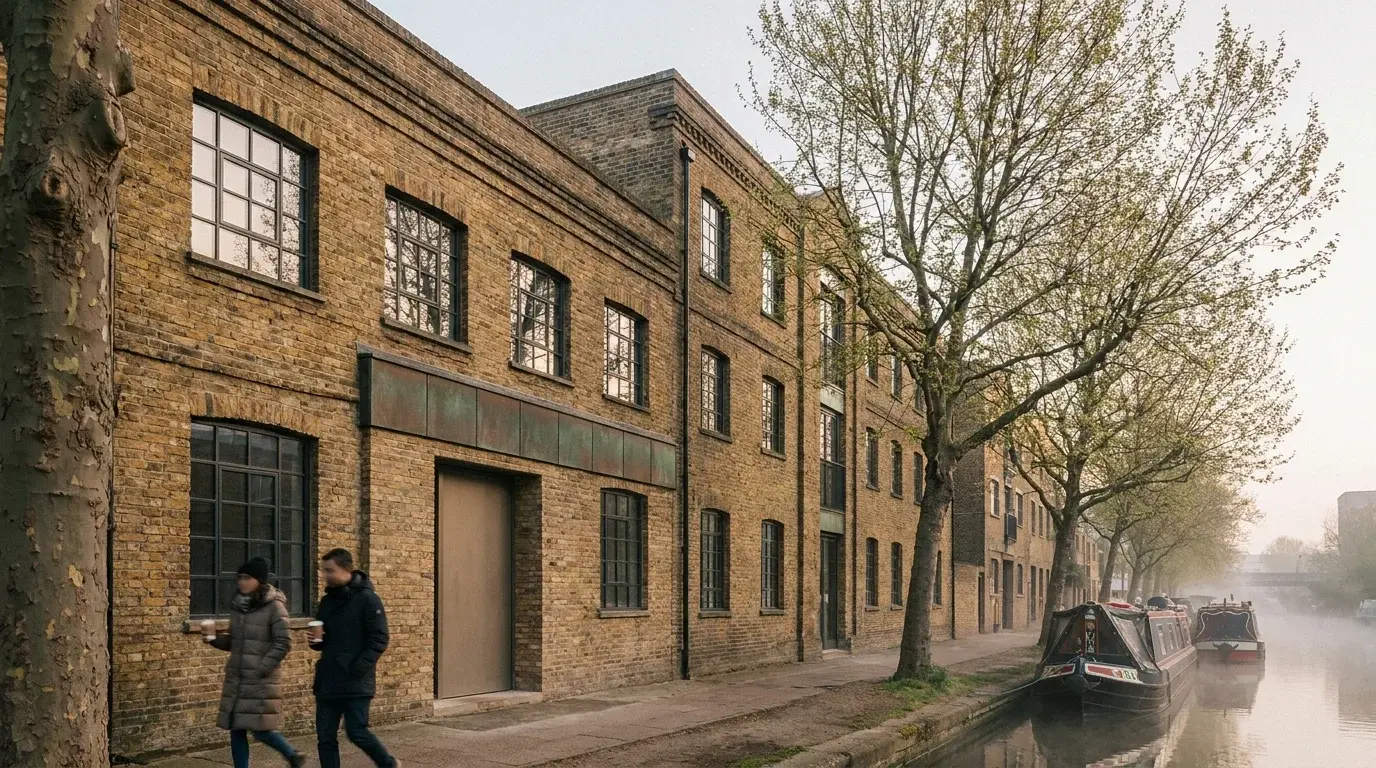
A typical Hackney Wick warehouse-conversion project sits on the Hertford Union Canal towpath, inside the joint LLDC plus Hackney plus Tower Hamlets HWFI SPD sub-area adopted on 22 March 2018. The CGI has to evidence whether retained London stock brick, restored industrial glazing, an oxidised bronze entrance band and a slim recessed entrance compose a credible reuse of post-industrial fabric, or arrive as a foreign object dropped onto the towpath. The HWFI SPD frames sub-area residential and business floorspace planning, so the visual evidence pack separates retained employment floorspace from any new conversion.
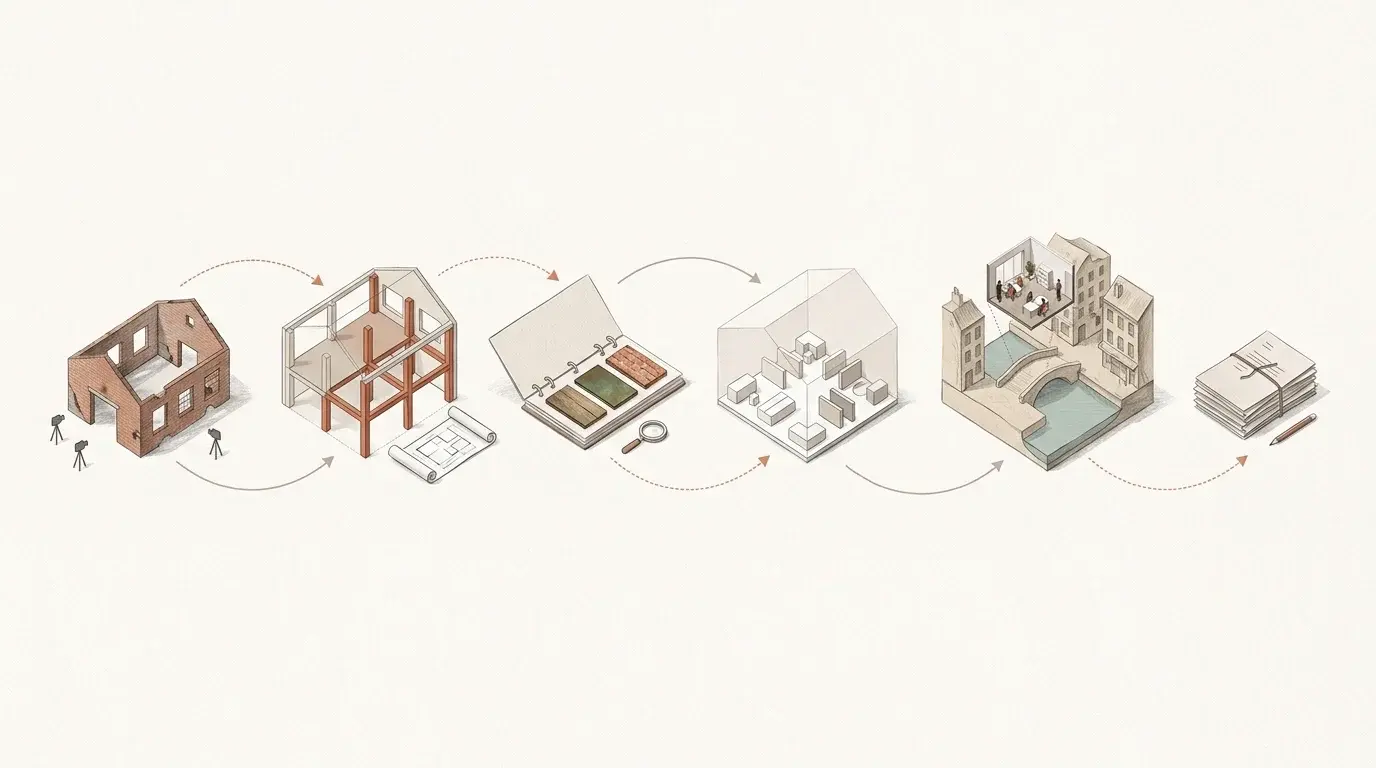
The workflow diagram traces the move from existing brick shell and structural fabric audit through material study, fit-out massing and photomontage to final reporting. Recent third-party precedents shaping the Hackney Wick pipeline include Adam Khan Architects with Muf Architecture/Art and Child Graddon Lewis on Tower Court in Clapton (RIBA London 2025 Award winner), Haworth Tompkins, Pitman Tozer and Lyndon Goode at Fish Island Village, Henley Halebrown at Fish Island and Stour Road East, and muf architecture/art's HWFI guidance. The Hackney Local Plan 2033 (LP33, adopted 22 July 2020) replaced the Core Strategy, DM Local Plan and the Dalston / Hackney Central / Manor House Area Action Plans.
An architects desk flat-lay shows the inputs that arrive before any 3D model is started: a marked-up Ordnance Survey extract of Hackney Wick and the Hertford Union Canal, two A3 warehouse street elevations, weathered London stock brick samples and an oxidised bronze sample. The decisions that drive the planning argument are made on the desk, not in the render engine. A pre-application advice meeting with Hackney Council, a heritage statement, a daylight and sunlight assessment under BRE 209, design review panel feedback, a TVIA where receptors are flagged, and a CIL liability notice are arranged in parallel with the visual programme.
A creative workspace floor-plate interior captures the same Hackney Wick project at desk level so retained brick, exposed riveted steel beams, cast-iron columns and polished concrete can be assessed at human scale. For larger Hackney Wick proposals or schemes adjacent to Hackney Marshes and the Lee Valley edge, verified-view methodology is agreed with the planning consultant before surveyed photography. We scope and deliver verified views and TVIA receptor work where the canalside or wider townscape route requires the stricter visual method.
A Hackney Wick warehouse-conversion package usually needs more than a single hero render. Hackney Council case officers, the LLDC, the design review panel, the developer and the future creative tenant each assess different evidence. Useful deliverables include kerb-opposite canalside photomontages, retained-fabric and structural audit diagrams, material studies (weathered London stock brick, oxidised bronze, CLT or glulam where exposed), creative-workspace floor-plate interiors, lobby and arrival views, towpath context views and HWFI SPD sub-area massing diagrams.
Each output is built around a single decision, not a generic image count. Planning evidence emphasises retained fabric, conservation-area context and HWFI SPD compliance. Creative-tenant presentation leans on workspace atmosphere and material accent. Both can come from one model. Both are priced and reviewed separately because the audience and the review criteria are different.
The Hackney Wick and Fish Island Supplementary Planning Document (HWFI SPD) was adopted on 22 March 2018 as a joint LLDC plus Hackney plus Tower Hamlets framework, superseding for Hackney the earlier 2012 Hackney Wick AAP after LP33 came into force. Fish Island sits with Tower Hamlets. The sub-area carries significant residential and business floorspace capacity, which is why warehouse-to-creative-workspace and mixed-use schemes evidence retained employment floorspace alongside any residential conversion.
Recent third-party precedents in this part of the borough include Adam Khan Architects with Muf Architecture/Art and Child Graddon Lewis on Tower Court in Clapton (RIBA London 2025 Award winner), Haworth Tompkins, Pitman Tozer and Lyndon Goode at Fish Island Village, Henley Halebrown at Fish Island and Stour Road East, and muf architecture/art's HWFI guidance. CGI for a Hackney Wick scheme shows brick reveal depth, exposed CLT or glulam soffit, stone joint alignment, metal frame depth and entrance threshold credibly at both street scale and detail scale.
Hackney Wick streets sit inside one of Hackney's 35 conservation areas, with the Hackney Local Plan 2033 (LP33, adopted 22 July 2020) governing the heritage decision. Three Article 4 directions in force from 27 April 2023 cover Class E to C3, light industrial to C3 in Designated Industrial Areas, and B8 storage to C3 borough-wide. ACV-listed pubs covered nationally (lost permitted-development rights 6 April 2015) and locally (Hackney pioneered the legal precedent with the Chesham Arms 2013 and the Prince Edward later) require sympathetic-retention CGI showing original fabric kept.
Verified-view or AVR methodology is agreed with the planning consultant before surveyed photography for canal, Hackney Marshes and Lee Valley edge receptors. Methodology references include Landscape Institute Technical Guidance Note 06/19: Visual Representation of Development Proposals.
Not every Hackney Wick scheme needs verified views. A modest creative-workspace fit-out within an existing warehouse shell may only need clear illustrative photomontages, a retained-fabric study and a material board. A larger HWFI sub-area scheme, a canalside receptor near Hackney Marshes or a project the Mayor of London may call in for stage-2 review usually needs AVR methodology and surveyed photography agreed before viewpoint selection.
The Hackney Wick and Fish Island Supplementary Planning Document (joint LLDC, Hackney and Tower Hamlets, adopted 22 March 2018) frames the sub-area's residential and business floorspace planning. Visualisation evidences retained employment floorspace alongside any residential or creative-workspace conversion, plus the relationship between the building and the canal towpath, the LLDC public realm and the wider SPD zone.
Send the site address, HWFI SPD sub-area context, an Ordnance Survey extract or Land Registry plan, existing and proposed drawings, retained-fabric inventory (warehouse columns, beams, brick, glazing), material intent (stock brick, oxidised bronze, CLT or glulam), preferred viewpoints, planning consultant notes, the heritage statement and design review panel feedback. Article 4 scope, conservation-area appraisal references and any Mayor-of-London call-in correspondence should also come with the brief.
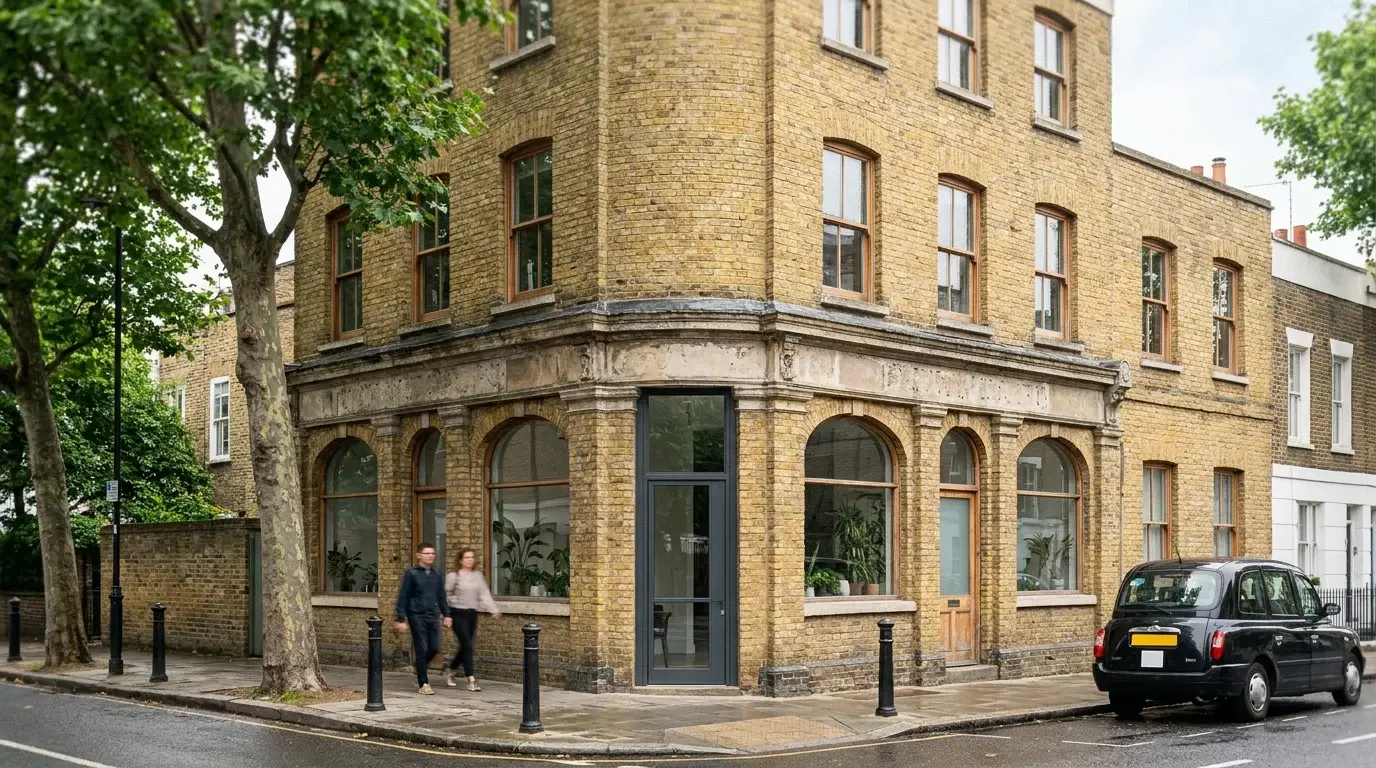
A typical De Beauvoir Town pub-to-home project turns on retention. Hackney pioneered the ACV-listed-pubs legal precedent with the Chesham Arms 2013 case and the Prince Edward later, and Article 4 plus the national change to permitted-development rights on 6 April 2015 for ACV pubs put a sympathetic-retention floor under any pub-conversion design. The CGI for this kind of project has to hold retained original ceramic bar tile, the timber bar back-shelf preserved as a sideboard, restored Victorian cornice and the retained pub-corner arched ground-floor bays in one frame, because those four elements carry the entire planning argument.
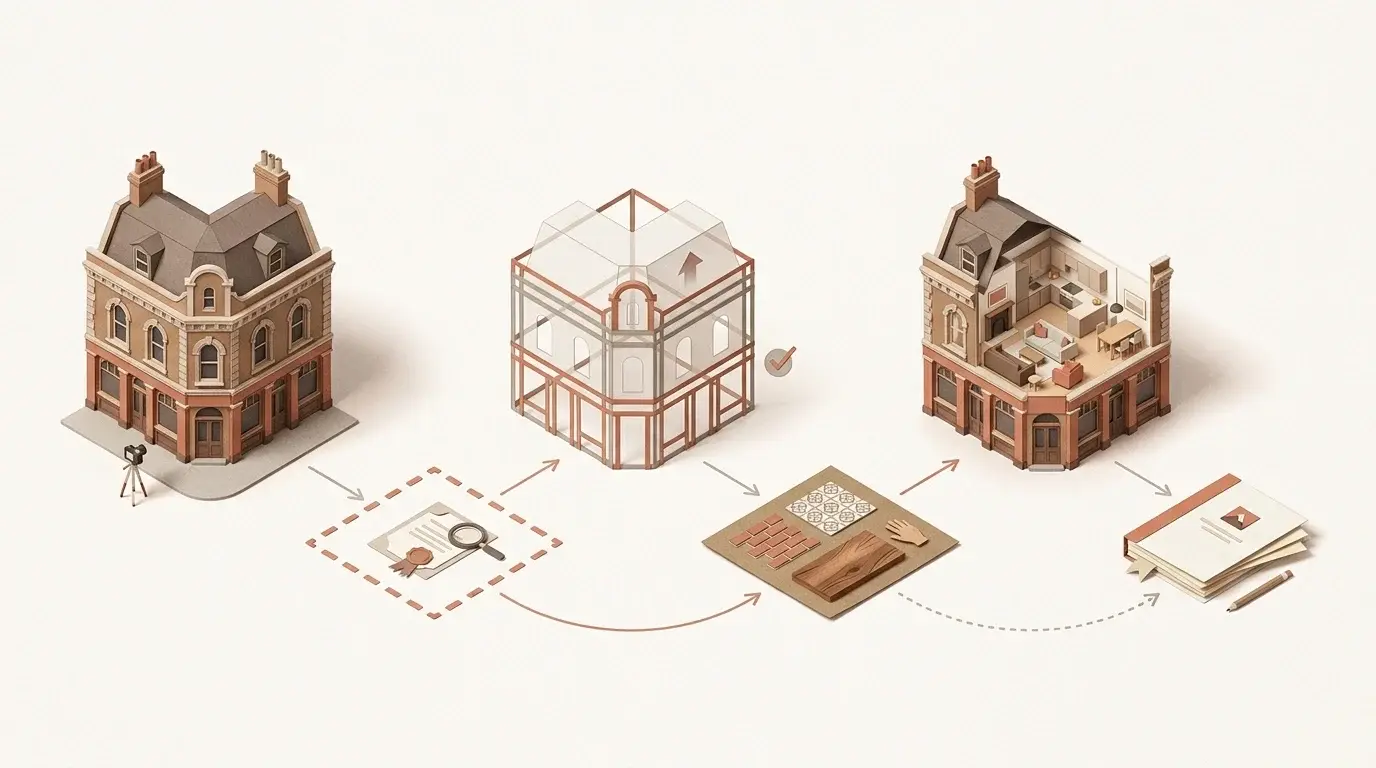
The workflow diagram traces six stages from existing pub building survey through ACV listing study and planning consent through retained interior fabric study, retained-shell composite and final reporting. De Beauvoir Town sits inside the De Beauvoir Conservation Area, governed by the Hackney Local Plan 2033 (LP33, adopted 22 July 2020) policies on heritage and historic environment. The visual evidence bar published by Architecture for London, Henley Halebrown and similar Hackney practices for conservation-area residential work is what new pub-to-home schemes are now expected to meet.
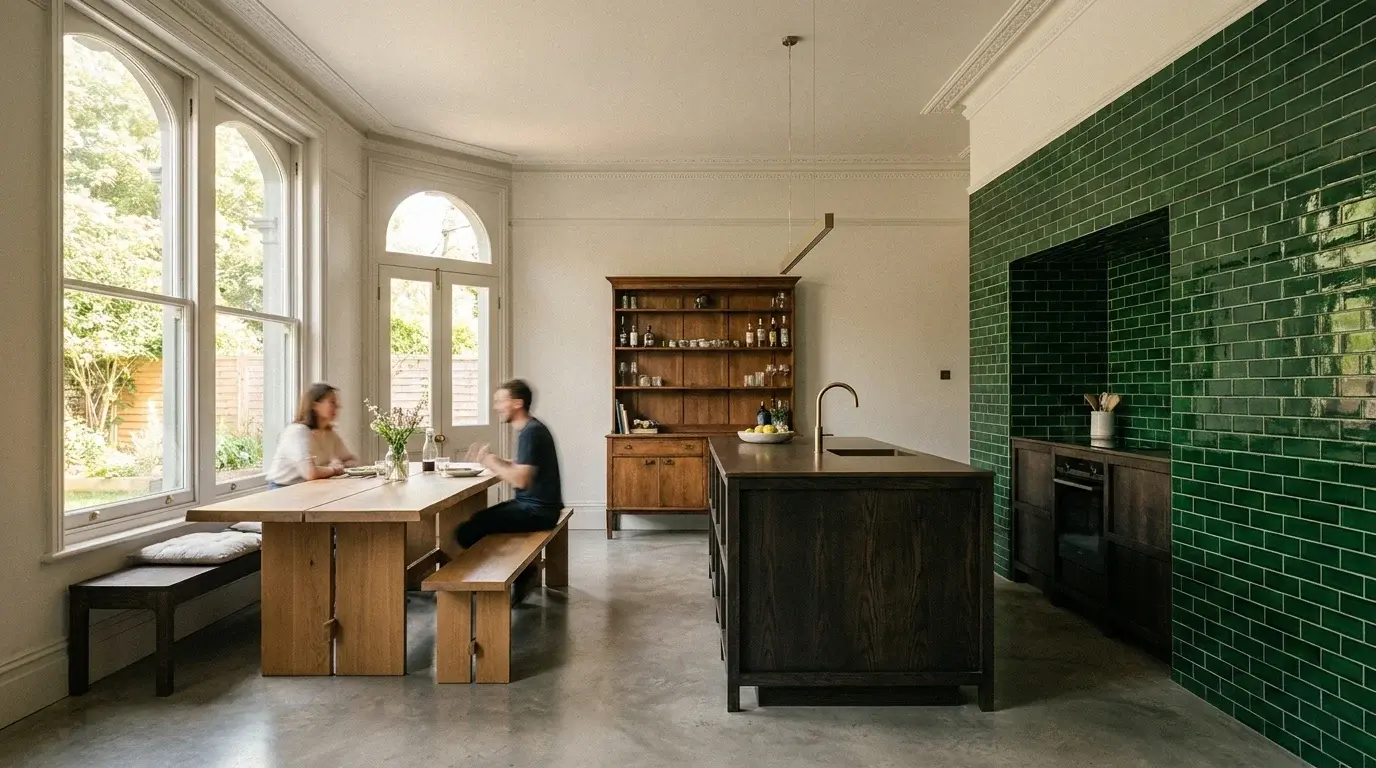
The closing image holds the retained ceramic bar tile, the timber bar back-shelf, the new dark-stained timber kitchen island and the open-plan kitchen and dining inside the original pub footprint in one composed frame. For ACV pub-to-home schemes, design sign-off CGI arrives before the listed-building consent application and the structural calculation, because the homeowner, architect, planning officer and Asset of Community Value campaigners all need to agree on retained-fabric scope first. We deliver this kind of retained-fabric conversion CGI for De Beauvoir, Stoke Newington, Dalston, Clapton and Hoxton ACV-pub conversions across Hackney.
A De Beauvoir or wider Hackney pub-conversion package leans toward retained-fabric evidence rather than a stack of polished marketing renders. The homeowner, architect, planning officer and ACV campaigners have to agree on retained-fabric scope before the listed-building consent application and the structural calculation land. Useful deliverables include retained ceramic bar tile and timber back-shelf studies, retained pub-corner arched window views, restored cornice and ceiling rose interiors, contemporary kitchen and dining inserted into the retained shell, exterior corner views with retained signage band and material samples for retained versus new fabric.
Where the property carries an ACV listing or sits inside a conservation area appraisal (De Beauvoir, Stoke Newington, Clissold, Cazenove, Mapledene), additional outputs may include old-new junction drawings, material annotation and an explicit narrative for any retained or altered original fabric.
Hackney pioneered the ACV-listed-pubs legal precedent, with the Chesham Arms 2013 case and the Prince Edward later establishing that Asset of Community Value listing protects pubs from speculative conversion. The national change to permitted-development rights on 6 April 2015 for ACV pubs added a planning-permission requirement, and Hackney's three Article 4 directions in force from 27 April 2023 (Class E, light industrial and B8 storage to C3) sit alongside that protection.
A pub-to-home project in Hackney is therefore a sympathetic-retention exercise. The CGI evidences retained ceramic bar tile, the timber bar back-shelf preserved as a sideboard, original pub-corner arched ground-floor bays kept (often glazed as residential), restored Victorian cornice and ceiling rose, and retained signage band on the exterior corner. Speculative gut-and-flat imagery does not pass the planning case officer or the ACV campaigners.
De Beauvoir Town sits inside the De Beauvoir Conservation Area. Stoke Newington, Clissold, Cazenove, Mapledene, Hackney Wick and the four 1969 Clapton designations (Clapton Square, Clapton Common, Clapton Pond and Clissold Park) are the named appraisals most relevant to typical Hackney residential work. The Hackney Local Plan 2033 (LP33), adopted at Full Council on 22 July 2020, replaced the Core Strategy, DM Local Plan and the Dalston, Hackney Central and Manor House Area Action Plans, and governs heritage decisions across the borough.
For Grade II listed pub buildings (or pub-conversion sites adjacent to listed terraces), the package needs listed-building consent drawings as well as planning-application visuals. The visual evidence bar published by Architecture for London, Henley Halebrown and Adam Khan Architects (Tower Court, Clapton, RIBA London 2025) is the benchmark for this kind of work in Hackney. Trees in conservation areas are protected by Town and Country Planning Act 1990 section 211.
Most Hackney pub-conversion sites are ACV-listed (Hackney has been the most aggressive borough in England on this since the Chesham Arms 2013 precedent). The CGI has to evidence retained original fabric such as ceramic bar tile, timber bar back-shelf, original signage band, sash windows and Victorian cornice for the planning case to land with both Hackney Council and the local ACV campaigners.
The interior CGI typically keeps the original ceramic bar tile (often emerald or deep green) as a feature wall, the timber bar back-shelf preserved as a sideboard, restored Victorian cornice and ceiling rose, and original pub-corner arched ground-floor windows now glazed as residential. The exterior CGI keeps the original ornamental signage band on the corner with no readable text.
It depends on the building. Most Hackney corner-pubs are not Grade-listed but are ACV-listed and sit inside a conservation area, so they need full planning permission rather than permitted development. Where a pub is Grade II listed (more common in some Hackney conservation areas than others) the package needs listed-building consent drawings as well as planning-application visuals.
A pub-conversion is a sympathetic-retention exercise governed by ACV listing, Article 4 directions and the national post-2015 permitted-development restrictions on ACV pubs. A standard rear extension is governed by the conservation-area appraisal alone. The pub-conversion CGI evidences retained fabric and original character; the rear-extension CGI evidences scale, material and neighbour relationship.
Service scope on a Hackney commission tracks the planning route. A Hackney Wick warehouse-conversion project needs HWFI SPD context plus retained-fabric and CLT structure evidence. A Dalston shopfront under the Class E to C3 Article 4 needs upper-floor residential and ground-floor commercial separated. A De Beauvoir pub-to-home scheme needs ACV listing context plus retained ceramic and timber bar fabric. A Stoke Newington extension needs the Stoke Newington appraisal in the loop.
Hackney Wick canalside facade studies, Dalston shopfront frontages, Stoke Newington terrace exteriors and Clapton infill street views, each calibrated to the conservation area appraisal or AAP that case officers read from.
Discuss this service Planning Application VisualsSubmission imagery sized to the planning route: full applications under LP33, listed-building consent, ACV-pub retention evidence, HWFI SPD compliance and design review panel packs.
Discuss this service Verified ViewsTVIA and AVR methodology agreed before surveyed photography for Hackney Wick canal, Hackney Marshes, Lee Valley edge or Mayor of London stage-2 referral receptors.
Discuss this service Interior VisualisationsDe Beauvoir Town pub-conversion home interiors, Stoke Newington Georgian terrace front rooms, Hackney Wick creative workspace floor plates and Hoxton workspace lobby CGI for design sign-off before fit-out.
Discuss this service House ExtensionsGarden-side rear extensions, mansard and dormer additions, basement lightwell studies and loft conversions inside the Stoke Newington, Clissold, Cazenove and Clapton conservation areas where the appraisal sets the heritage frame.
Discuss this service Commercial DevelopmentsHackney Wick warehouse-to-creative-workspace CGI plus Dalston, Hoxton and Broadway Market mixed-use frontage imagery framed against the three Article 4 directions in force from 27 April 2023.
Discuss this serviceBring LP33 policy framing, conservation area appraisal references, HWFI SPD context, ACV listing notes and Article 4 direction scope. The CGI package calibrates the visual evidence to the regime that case officers will read it against.
A Stoke Newington rear extension, a Clapton mansard, a De Beauvoir corner-pub conversion or a Hackney Wick warehouse loft each lands at a different point in the planning route. CGI is the bridge from drawings to a sign-off the homeowner, architect and planning officer can argue from.
Hackney Wick warehouse-conversion creative workspace, Dalston Article 4 mixed-use frontage and Hoxton workspace lobby schemes each need separated planning evidence and commercial presentation, because the consultant team and the future tenant assess different layers of the same model.
Hackney CGI is judged on whether the proposal sits inside the right planning regime: HWFI SPD sub-area, the three-direction Article 4 scope, conservation-area appraisal references, ACV listing for pub conversions, and Town and Country Planning Act 1990 section 211 for trees in conservation areas. For facade, roofline and streetscape visibility, see exterior rendering support.
A Hackney visualisation programme opens with the planning regime (HWFI SPD, Article 4, conservation-area appraisal, ACV listing, listed-building consent or Mayor of London stage-2 referral), then matches model detail, viewpoint method and material study to the receptors that decision will be assessed against. A Hackney Wick warehouse-conversion needs different evidence from a Stoke Newington rear extension or a De Beauvoir corner-pub conversion.
Establish the Hackney planning regime first: HWFI SPD sub-area, Article 4 direction scope, conservation-area appraisal name, ACV listing status or listed-building consent route.
Confirm the visual decision the CGI must support: pre-application advice, design review panel, full planning application under LP33, listed-building consent, TVIA receptor evidence or homeowner sign-off.
Model the existing fabric and proposed intervention with neighbouring context calibrated to the appraisal or AAP the case officer reads from.
Compose viewpoints for the regime: kerb-opposite for Article 4 frontages, garden-side for Stoke Newington and Clapton extensions, interior for ACV pub-to-home, low-angle canalside for Hackney Wick warehouse-conversion.
Apply materials, lighting, retained-fabric annotation and Hackney-specific context, then deliver planning-pack stills, design review panel boards and creative-tenant or homeowner presentation variants separately.
Tell us where the Hackney project is, what stage it has reached, which drawings or references are ready, and whether the images need to support planning, extension design, client sign-off, procurement, consultation or marketing.
You can also email drawings, image references and deadlines to hello@architecturalvisualisationlondon.uk.
A Hackney quote opens with the planning regime the site sits inside (HWFI SPD, Article 4, conservation area appraisal, ACV listing or listed-building consent), then moves to the visual method and the decision the imagery has to support.
Send the regime context plus drawings and we will scope the visual programme to match before confirming the price.
Hackney sits between Islington, Camden and Tower Hamlets, with Hackney Wick and Fish Island shared across the LLDC + Hackney + Tower Hamlets HWFI SPD. Internal links into adjacent boroughs follow that planning geography.
Tower Hamlets shares the Fish Island half of the HWFI SPD with Hackney, so canalside warehouse-conversion and creative-industrial briefs often need to read across both boroughs. See Hackney Wick and Fish Island creative-industrial visualisation in Tower Hamlets, plus the Canary Wharf, Isle of Dogs and Whitechapel verified-view context.
Islington links Hackney to the Clerkenwell, Old Street and City Fringe commercial corridor, which matters for mixed-use frontage and workspace visualisation around Shoreditch, Hoxton and Dalston.
Camden joins Hackney through Stoke Newington edge, Highbury Fields adjacency and the wider north London terrace, mews and conservation-area context.
Not every Hackney planning application requires verified views. Smaller extension, interior or material-study projects use illustrative CGI alone. Sensitive townscape, roofline, conservation-area, canal-edge, warehouse-conversion or larger-development proposals route to photomontage or verified-view support set by the consultant team.
Yes. CGI can show how proposed materials, massing, roof changes, extensions, shopfronts or facade alterations sit within the appraisal evidence for the named Hackney conservation area: Stoke Newington, De Beauvoir, Clissold, Cazenove, Mapledene, Hackney Wick or one of the four 1969 Clapton designations (Clapton Square, Clapton Common, Clapton Pond, Clissold Park).
Typical inputs include existing and proposed drawings, roof or section drawings, site photographs, garden or neighbour context, material references, preferred viewpoints, planning notes and the intended use of the image.
Yes. We can prepare exterior CGI, planning visuals, interior renders, retained-fabric studies and photomontage-style material for warehouse-conversion, creative-workspace and mixed-use Hackney projects, provided the project team supplies the drawings and context needed for the intended use.
Yes. Interior CGI can support design sign-off, fit-out decisions, investor presentations, leasing material or marketing imagery by showing finishes, lighting, furniture, circulation and atmosphere before procurement or construction begins.