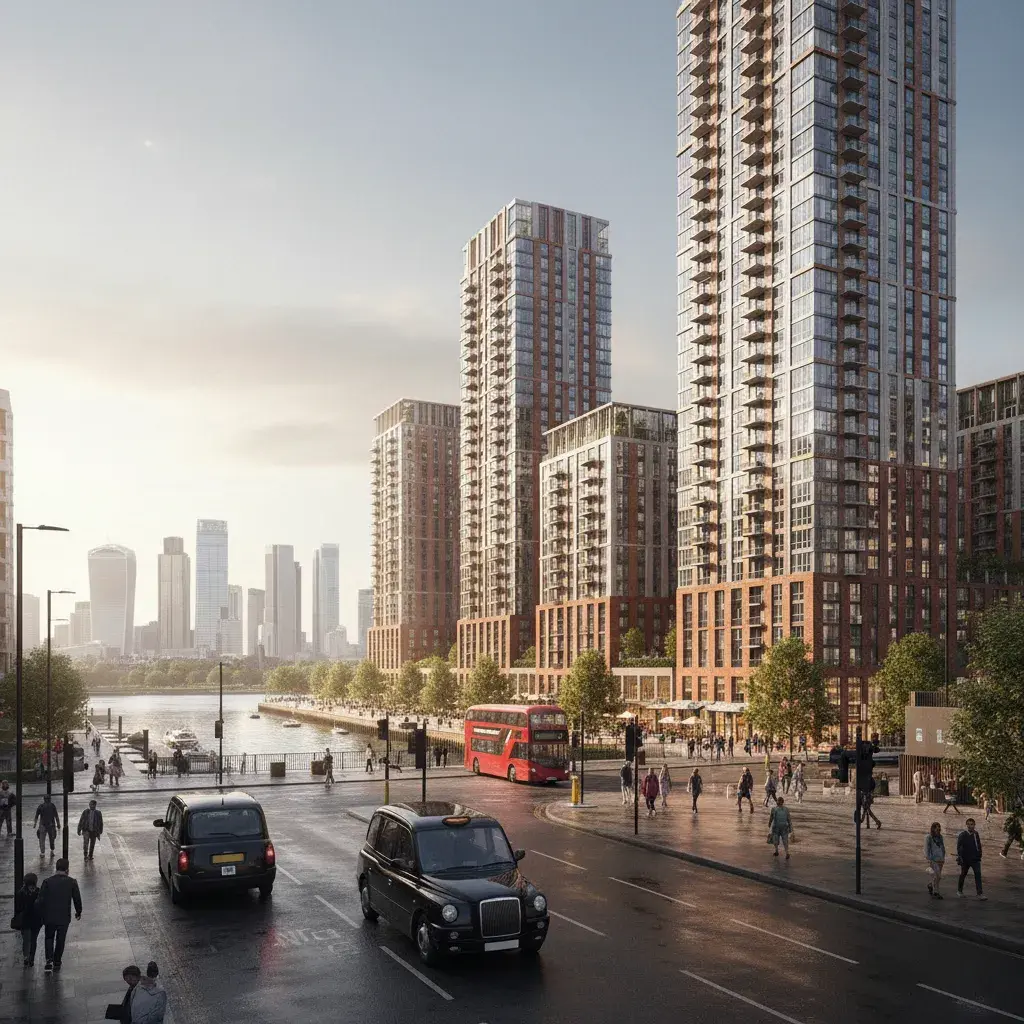
Property CGI for London Residential Developments
Property CGI for London residential developments, apartment schemes, Build to Rent (BTR), co-living, and mixed-use residential, scoped from one coordinated model so the same imagery supports planning packs, off-plan sales launches, investor decks, and buyer communication.
Request a quote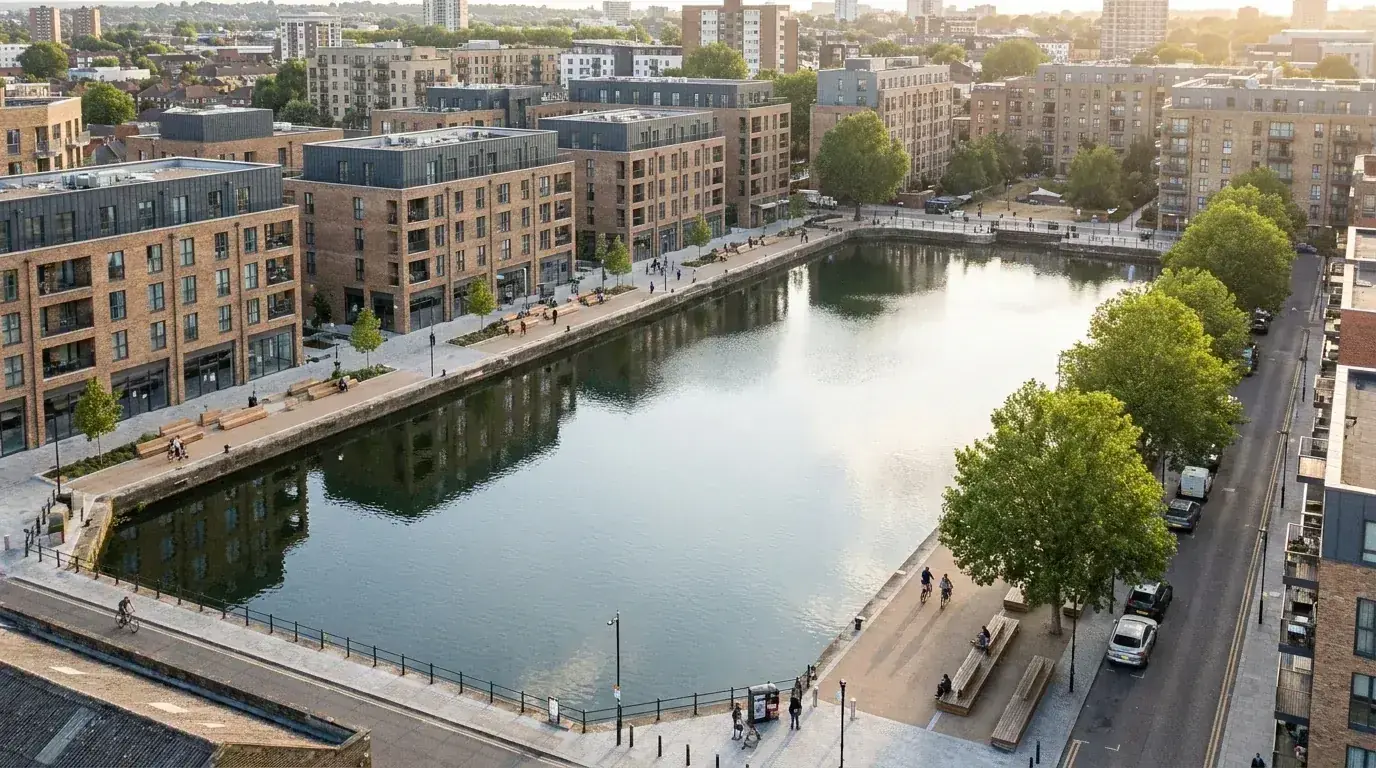
Residential CGI in London answers planning and sales in the same week
A London apartment scheme is read by GLA officers, design-review panels, local-authority case officers, lenders, investment committees, sales agents, and prospective buyers, often inside the same fortnight. Property CGI for London residential developments has to survive every one of those audiences, not just look good in a brochure. We treat the visualisation as a staged package: one coordinated model, multiple outputs across exterior CGI, interior CGI, amenity CGI, aerial and masterplan CGI, with photomontage where the proposed scheme has to sit inside real London context photography.
The unique angle is package orchestration. Planning evidence, sales imagery, hoarding artwork, brochure visuals, and investor-deck assets are produced from the same scene, so what is reviewed at committee and what is shown on portals stays visually consistent. Where the methodology becomes specialist, sibling services take over: verified views for AVR-bound planning evidence, TVIA visual material for townscape submissions, exterior renderings for facade-led packages, and interior visualisations for show-apartment and amenity interiors.
What a residential CGI package includes
- Exterior CGI of the residential building and street frontage covering arrival, massing, materials, set-back, and the public realm interface at eye level and from contextual townscape positions.
- Interior CGI for show apartments, model unit types, and amenity spaces across living, kitchen, primary bedroom, bathroom, and the residents' lounge, gym, co-working, and rooftop terrace where the scheme includes them.
- Aerial and masterplan CGI showing phasing, block layout, unit mix at a glance, retained landscape, and how the scheme reads against the surrounding borough.
- Photomontage and Accurate Visual Representation (AVR) plates for planning evidence, prepared to Landscape Institute TGN 06/19 where verified-view rigour is needed, sized for Design and Access Statement artwork and committee submissions.
- Sales brochure imagery, portal listings, and hoarding artwork sized for off-plan launches, agent showrooms, and on-site marketing suites.
- Investor and JV pitch deck assets with hero exterior, masterplan, amenity, and a representative show-apartment view, sized for capital partners, funders, and board approval.
- Animation, flythrough, walkthrough, and 360 panorama for stakeholder briefings, public consultation, sales-suite touchscreens, and a residential development walkthrough animation when motion is the real ask.
- High-resolution layered masters (TIFF and PSD up to 6K) with two structured revision rounds and licensing scoped per use across planning, marketing, investor, and portal material, covered in residential CGI usage rights.
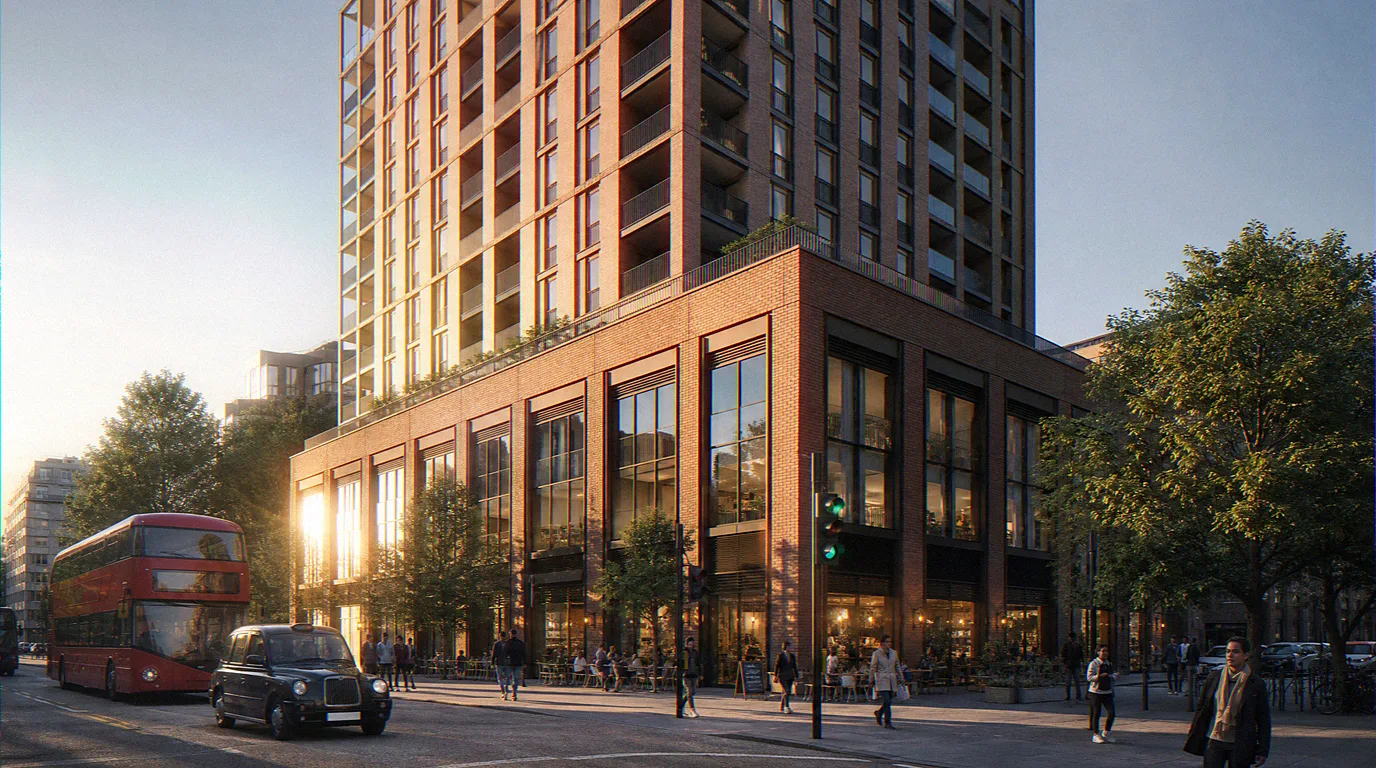
Property marketing CGI for off-plan sales, investor decks, and buyer confidence
Off-plan buyers, agents, and capital partners are being asked to commit to a scheme that does not exist yet. Property marketing CGI is the confidence infrastructure for that decision. The job of the image set is not to over-promise an outcome, it is to show what the apartment, the amenity, the arrival, and the public realm will feel like with enough accuracy that a brochure, a portal listing, a hoarding panel, an agent's tablet, and an investor deck all carry the same scheme.
A typical off-plan package covers a hero exterior, two or three show-apartment unit types, an amenity sequence covering lounge and gym, a rooftop or terrace view, a masterplan plate showing position and phasing, and a small set of context views that establish the borough. The brochure crop, the portal thumbnail, the hoarding artwork, the marketing-suite wall print, and the investor-deck spread are derived from the same masters so visual consistency holds across the launch window. Where buyer confidence depends on stakeholder briefings or video assets, motion is added through walkthrough animation rather than retrofitted later.
Planning visuals for London apartment schemes
London apartment schemes are scrutinised on massing, height, density, layout, unit mix, public realm, landscaping, daylight and sunlight, and contextual fit. Visuals do not decide planning, they evidence it. A planning pack typically needs an exterior view from a public vantage, contextual townscape views from agreed positions, a masterplan plate, and where the site is sensitive, photomontage or verified-view plates prepared to TGN 06/19 with camera, lens, and sun-study date locked.
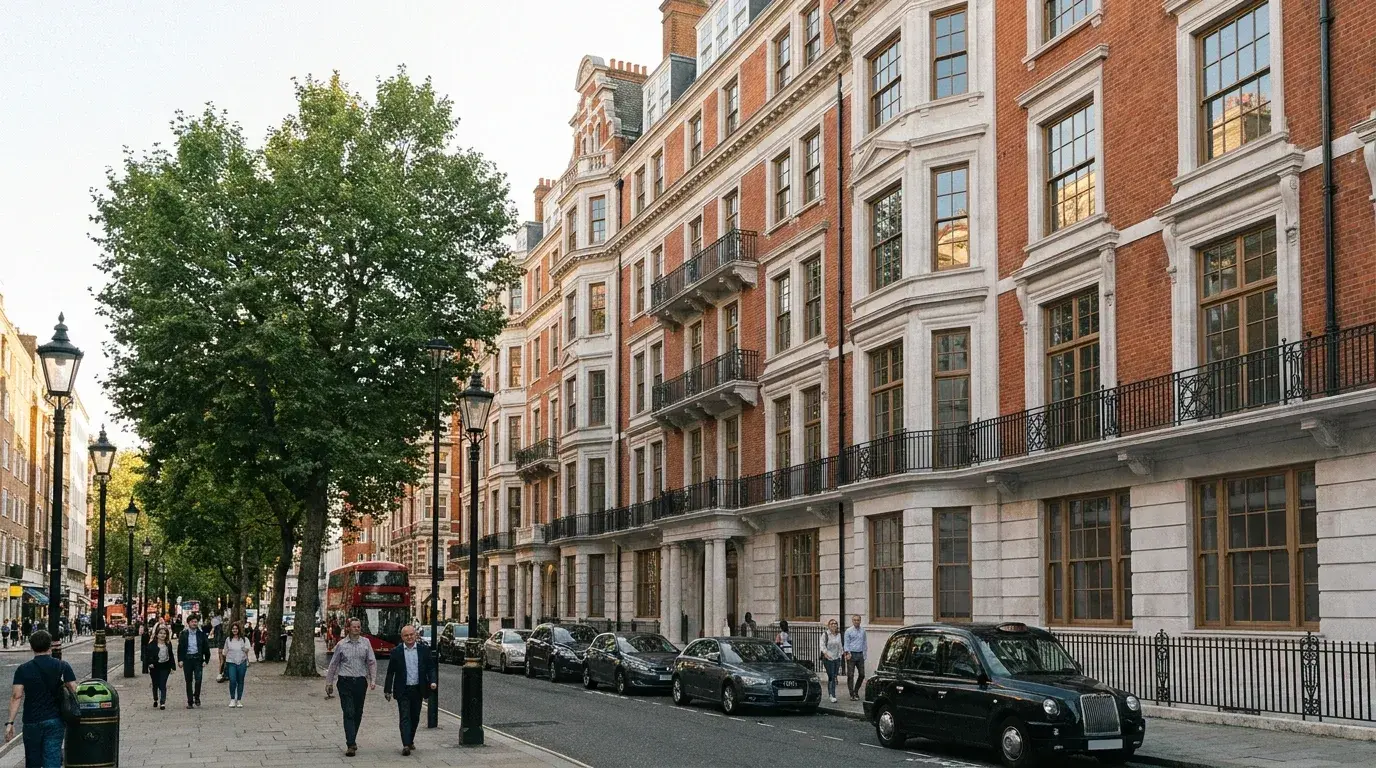
Imagery is shaped around the London Plan Policy D4 (Delivering good design) and Policy D6 (Housing quality and standards) tests, alongside daylight and sunlight assessment under Building Research Establishment guidance BR 209 (BRE 209) where committee reports require it. Where the scheme touches strategic views, conservation areas, or sensitive townscape, the AVR work is handled by the sibling verified views service for sensitive residential sites, and the wider Townscape and Visual Impact Assessment (TVIA) work is led from the sibling TVIA visual material page. Standalone planning-pack visuals are scoped from the planning application visuals for residential schemes service. Furthermore, schemes within conservation-heavy zones must satisfy local design review rules, such as the Kensington and Chelsea borough planning guidelines governing townhouse and facade alterations. AVL produces the imagery, it does not act as planning consultant, TVIA author, surveyor, or sales agent.
Exterior, interior, amenity, and aerial view types
-
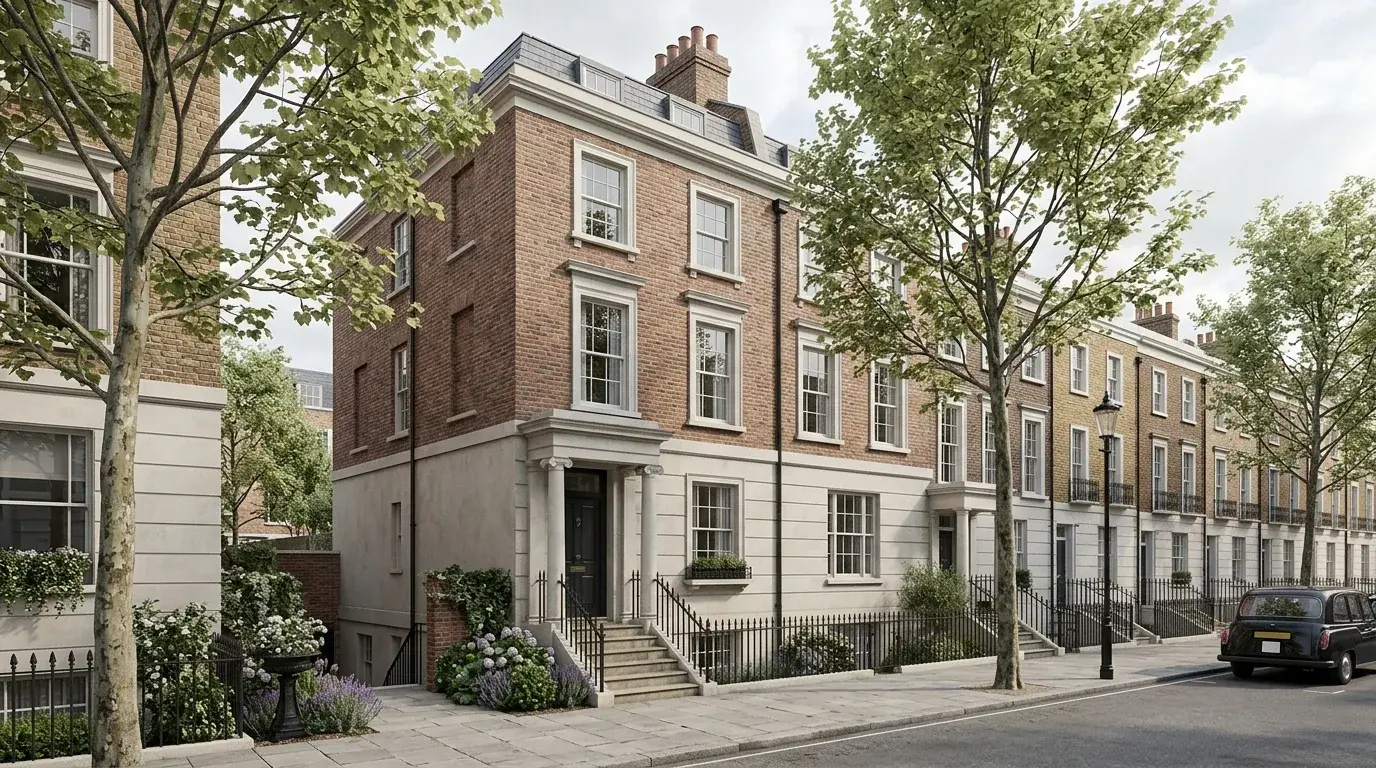 Exterior
 Exterior CGI
Eye-level and contextual townscape views showing facade, arrival, set-back, and the public realm interface, scoped through exterior renderings for apartment blocks and public realm.
-
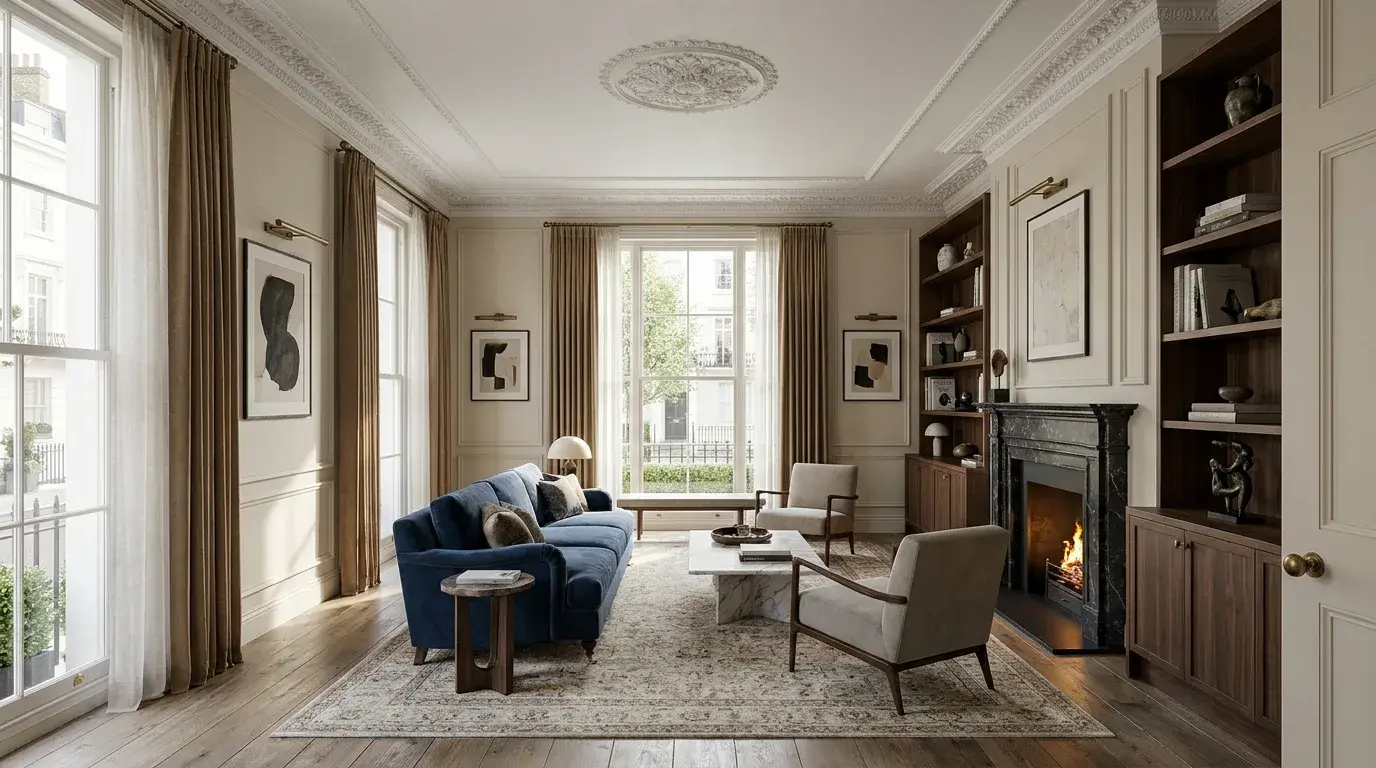 Interior
 Interior and Show Apartment CGI
Model unit types and amenity interiors that hold up under brochure print and portal compression, methodology in the show apartment and amenity interior CGI service.
-
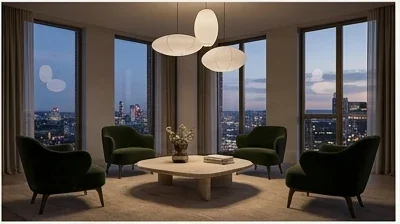 Amenity
 Amenity Space CGI
Residents' lounge, gym, co-working, rooftop terrace, and concierge views, often the second image a buyer or investor looks at after the apartment itself.
-
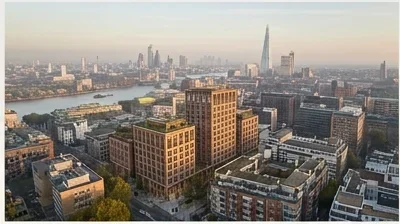 Aerial
 Aerial and Masterplan CGI
Block layout, phasing, retained landscape, and borough context from above, used in planning packs, investor decks, and large-format marketing suite walls.
3D floor plans and virtual tours sit alongside this set as supporting assets rather than the page focus, brought in when a brochure or portal listing needs them.
Apartment, BTR, PRS, co-living, and mansion-block typologies
-
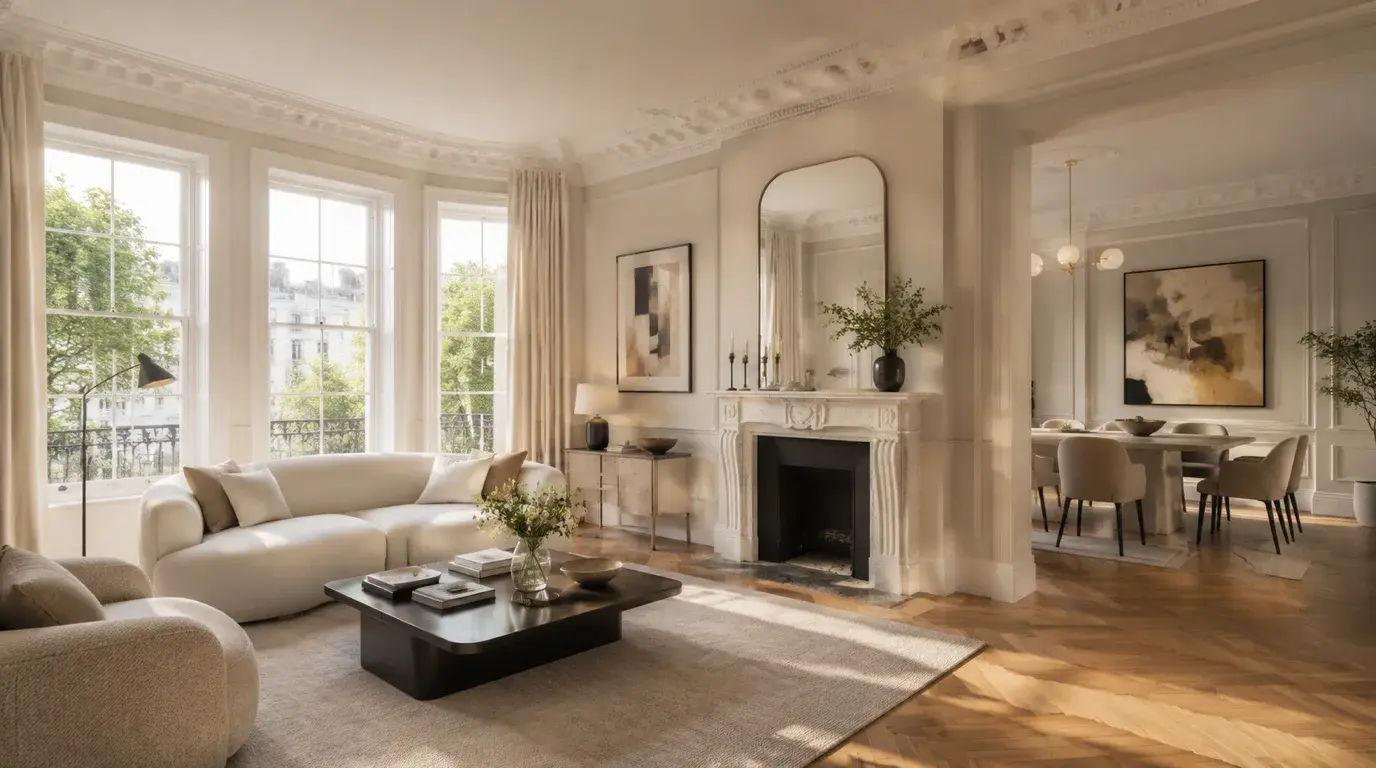 Apartment block CGI
 Apartment block
Private-sale apartment blocks in prime and outer London with unit mix from one-bed studio to three-bed family layout, rendered as a coordinated series for planning evidence and off-plan launch material.
-
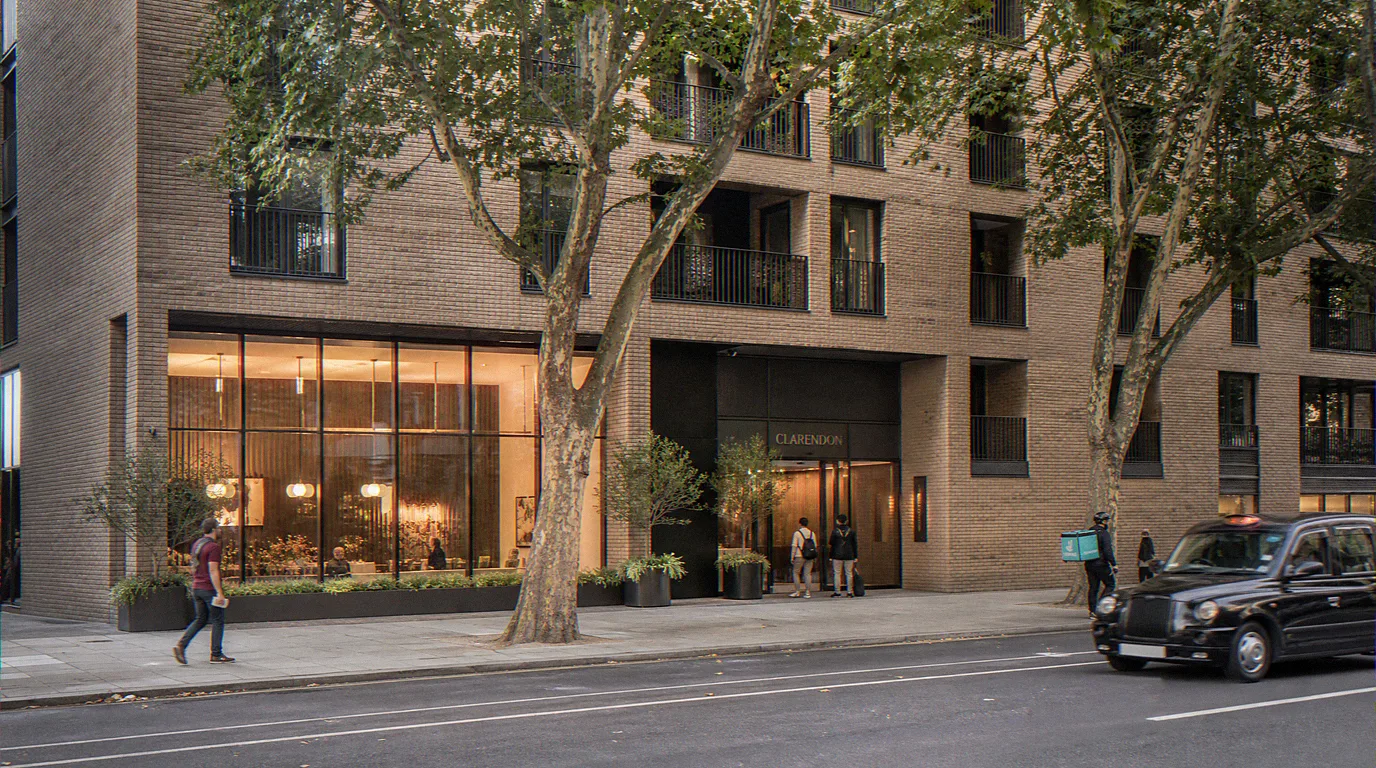 BTR and PRS CGI
 Build to Rent and Private Rented Sector
Build to Rent (BTR) and Private Rented Sector (PRS) schemes with branded amenity, on-site management, and operator-led marketing, rendered with the resident journey, lounge, gym, and concierge presence that funders and operators expect to see.
-
 Co-living CGI
 Co-living
Co-living schemes with private studios paired with extensive shared amenity, kitchen and dining, work zones, member events, and the social density that defines the typology against standard BTR.
- Mansion block CGI
Mansion block
Period and period-reference mansion blocks in central and west London, with the heritage facade language, mansard, dormer, and the porter-and-lobby arrival sequence buyers and investors associate with the prime resale market.
- Mixed-use residential CGI
Mixed-use residential
Residential-led schemes with active ground-floor retail, food and beverage, and amenity, where the podium frontage and the upper-storey unit mix have to read on planning sheets and on a sales floorplate at the same time.
-
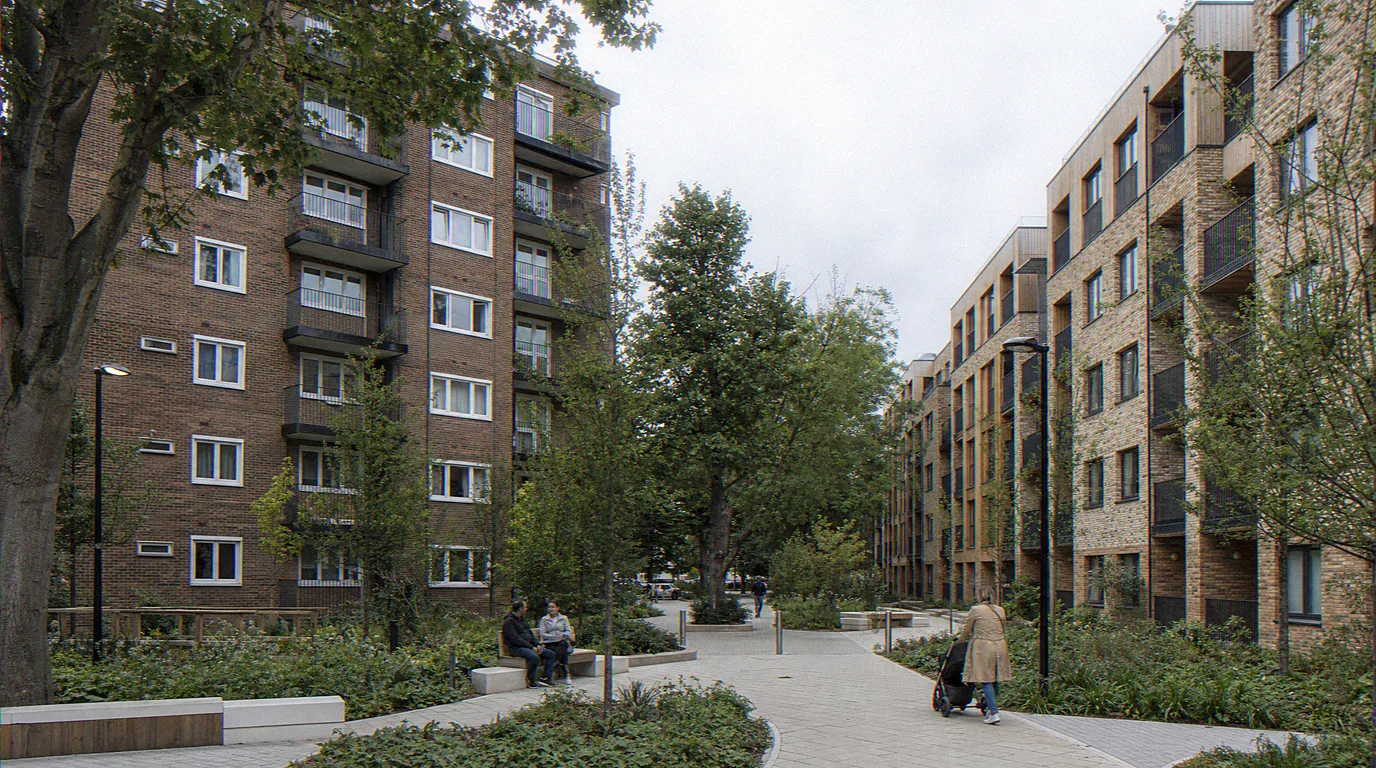 Estate renewal CGI
 Estate renewal
Refurbishment-led estate renewal with retained post-war blocks, fabric and facade upgrades, new infill mid-rise, and the public-realm story that resident-engagement consultations and committee reports increasingly require.
What we need from the developer, architect, or agent
A residential CGI commission starts faster when the brief carries the audience, the deadline, and the model. The earlier we see the design intent, the more useful the visualisation work is across planning, sales, and investor outputs.
- 3D model in Revit, SketchUp, Rhino, or 3ds Max, plus reference drawings and sample floor plans
- Site address, locked sun-study date, and any agreed verified-view positions
- Materials palette, landscape intent, and brand or operator references
- Submission deadline and the audience the visuals sit in front of, whether planning committee, sales launch, or investor pitch
- Brochure, portal, and hoarding output sizes and any agency brand guidelines
- Show-apartment specification, finishes, and styling intent for the unit types being rendered
- Pre-launch and reservation milestones the imagery has to support
- Scope of usage rights for portal listings, third-party agents, and ongoing campaign reuse
Timeline, review rounds, deliverables, and usage rights
Most residential packages sit between six and twenty views across exterior, amenity, interior, and aerial outputs. First-draft timing is confirmed after brief lock, view count, model condition, and review path are known. Each view passes through a grey-shaded composition stage and a final lit pass, with two structured revision rounds included. Final deliverables ship as layered TIFF and PSD masters up to 6K, plus web-optimised crops for brochure, portal, hoarding, and pitch use.
Working files (3D scenes, source textures, post-production layers) stay with the studio so subsequent edits, second-launch refreshes, and resale-phase reuse remain coordinated, unless a buyout is agreed up front. Usage rights are scoped per commission across planning, marketing, investor, and portal use. Full terms live in residential CGI usage rights. The same model can be revisited at a later phase for refurbishment imagery, second-tower views, or post-occupancy marketing without rebuilding from scratch.
- Lock view list, audience, and a sun-study date against the design stage and submission window.
- Capture context photography or commission a surveyed AVR base plate for sensitive sites.
- Develop materials, lighting, vegetation, and resident activity through a grey-shaded composition pass.
- Sign off the lit pass, run two structured revision rounds, then deliver coordinated visuals for planning, marketing, and investor review.
- Hand back layered masters with brochure and portal crops, and licence the imagery for the agreed uses.
Residential CGI FAQs
How is property CGI for a residential development different from a generic exterior or interior render?
A residential development package is a coordinated set, not an isolated image. The same 3D model produces planning evidence, off-plan brochure imagery, hoarding artwork, and investor-deck visuals so the scheme reads consistently across audiences. Generic exterior or interior work covers one output at a time, and is appropriate where the sibling exterior renderings or interior visualisations services already cover the brief. For single-dwelling domestic projects, rear additions, or loft conversions, our dedicated house extension cgi and visual planning support service handles smaller household scopes.
Can the same image set be used for planning and for off-plan marketing?
Often yes, with a caveat. A planning view produced as a verified AVR carries evidential constraints that a marketing-only image does not. We flag which views are AVR-bound from the brief stage so the marketing crops, retouching, and brand overlays sit on the right base. The detailed AVR rules live in the verified views service.
Do you cover Build to Rent (BTR), Private Rented Sector (PRS), and co-living differently from for-sale apartments?
Yes. BTR and PRS imagery foregrounds amenity, on-site management, and the resident journey because that is the funder and operator narrative. Co-living adds shared kitchen, member events, and social density. For-sale apartment imagery leans more on show-apartment finish, unit mix, and brochure-ready interiors. The brief stage agrees the emphasis before we start rendering.
How many revision rounds are included?
Two structured revision rounds per view: one on the grey-shaded composition pass and one on the final lit pass. Additional rounds, or rounds reopened after sign-off, are scoped separately so the launch timetable stays predictable for the developer, architect, and sales team.
Who owns the rendered files when the project completes?
Final image files transfer to the commissioning party on settlement of the final invoice. Working files remain with the studio so future edits, second-launch refreshes, and resale-phase imagery stay coordinated, unless a buyout is agreed up front. Full terms sit in licensing.
How early should we bring you in?
Earliest useful point is when massing is stable and the audience is roughly known. Bringing CGI in alongside an architect at RIBA Stage 2 or 3 is more productive than waiting for fully resolved drawings, because view selection shapes the imagery as much as the design itself. Pre-application advice, design-review panel feedback, and lender conversations all benefit from early visualisation.
Do you handle 3D floor plans and virtual tours?
Both are produced as supporting assets when a brochure or portal listing asks for them. They are not the page focus, because most residential decisions still turn on hero exterior, show-apartment interior, amenity, and aerial views. Where motion is the real ask, a residential development walkthrough animation is the more useful output than a static tour.
General studio questions sit on the FAQ, and the wider studio story is on about.
Request a quote for your London residential project
Send drawings, references, deadlines, and intended use across planning, sales, and investor outputs. We will scope the visualisation package around the decisions the imagery has to support.
Request a quote