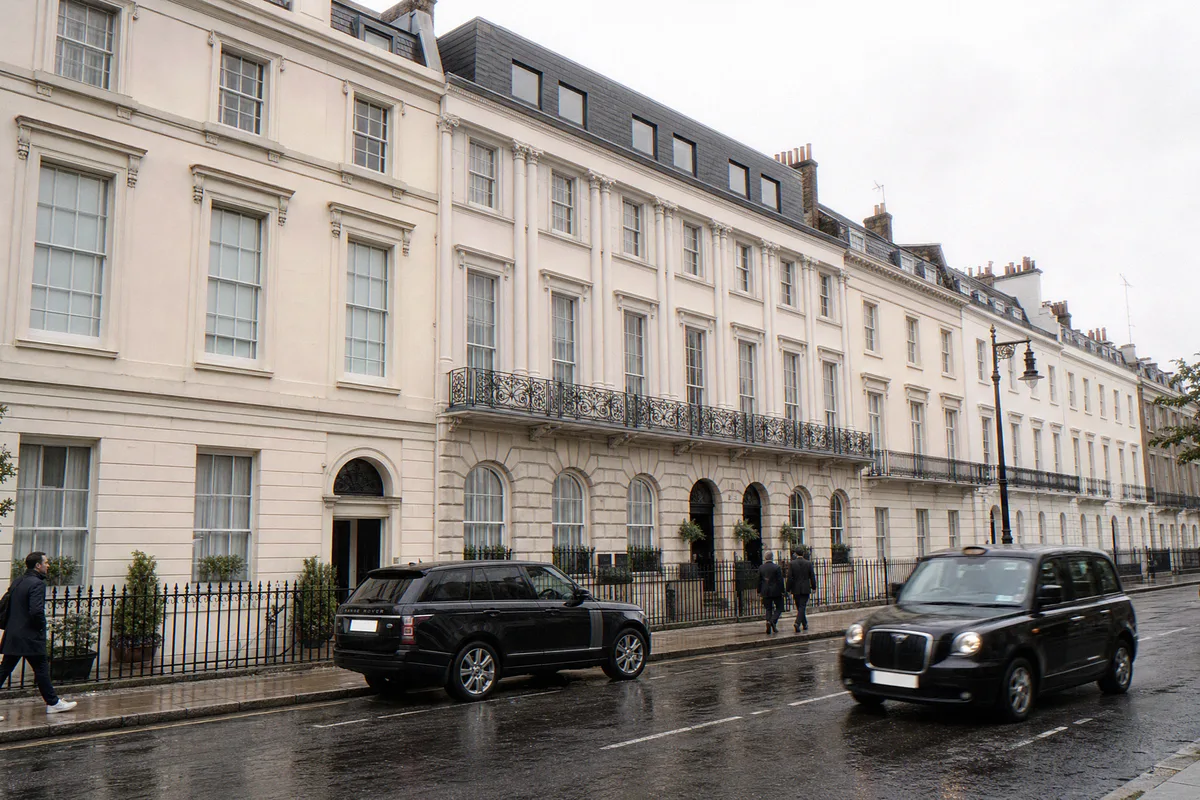
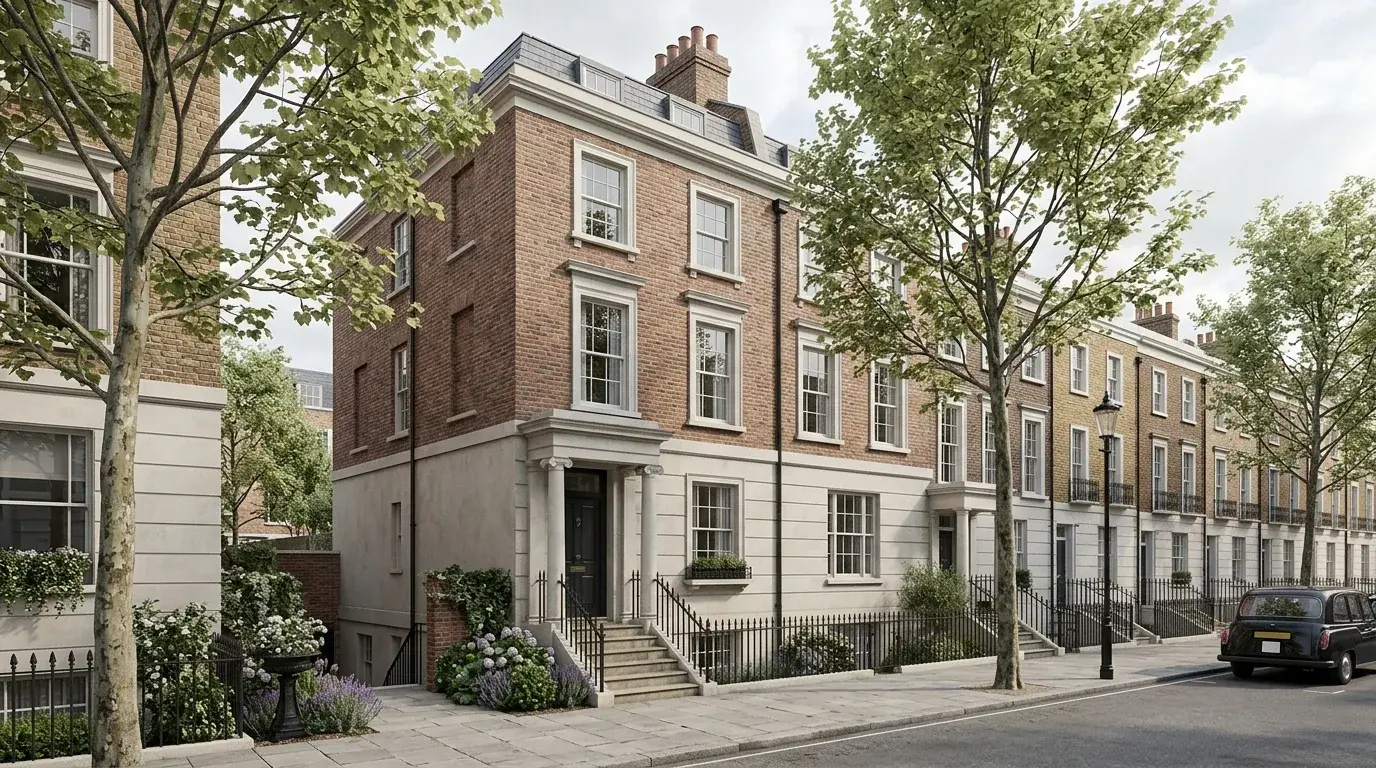
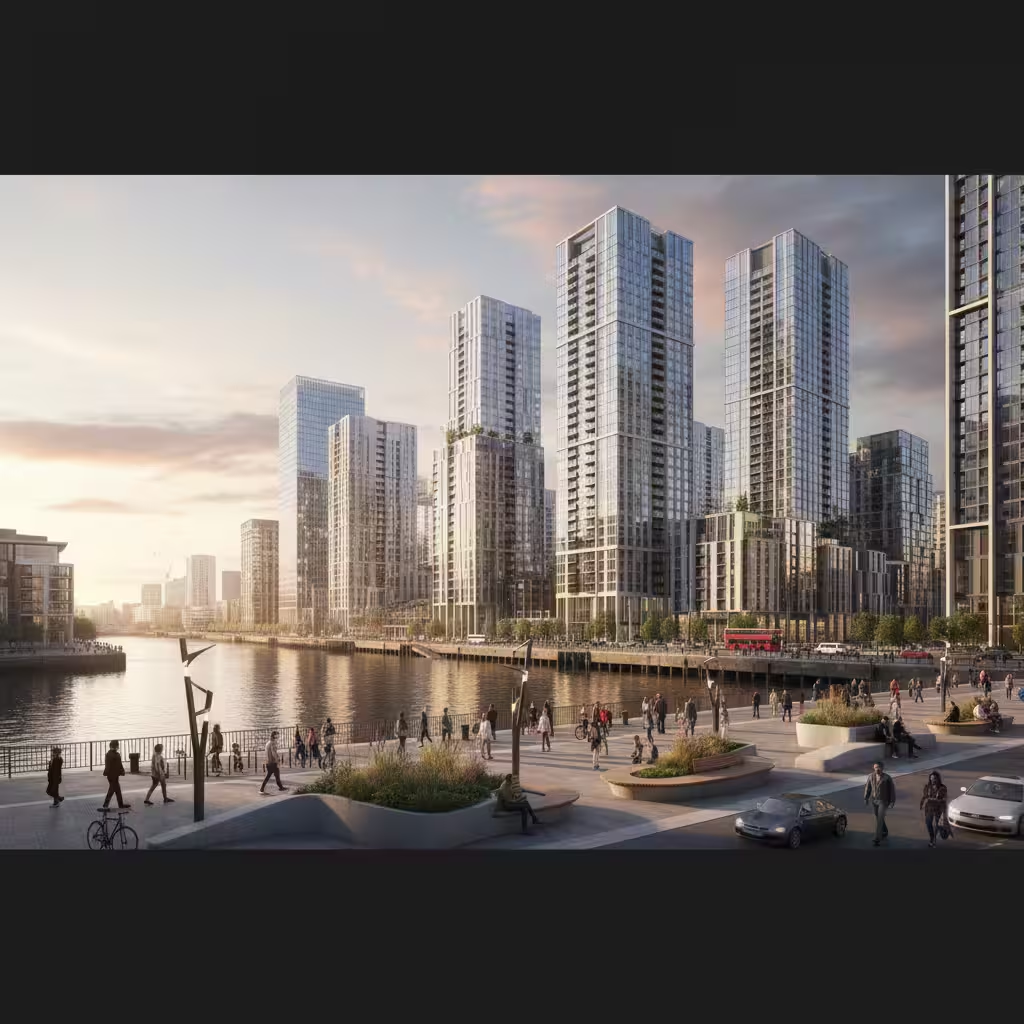
Exterior photomontage for a Shoreditch mixed-use scheme
London EC2A · Urban Development Partner
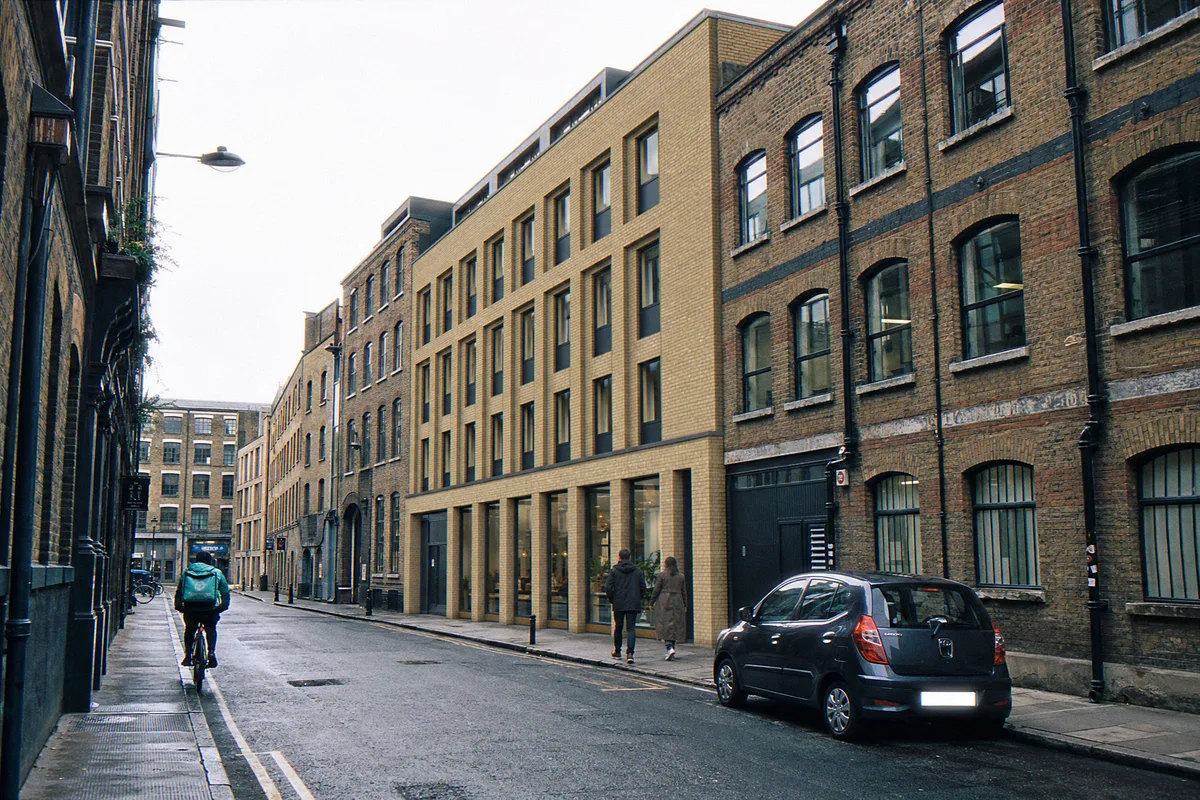
A development team commissioned a planning-grade photomontage package for a contemporary mixed-use scheme on a side street in the South Shoreditch Conservation Area, EC2A. The block sits inside a row of retained late-Victorian and early-twentieth-century warehouse frontages, and the proposed building had to be evidenced against that fabric before the planning application went in.
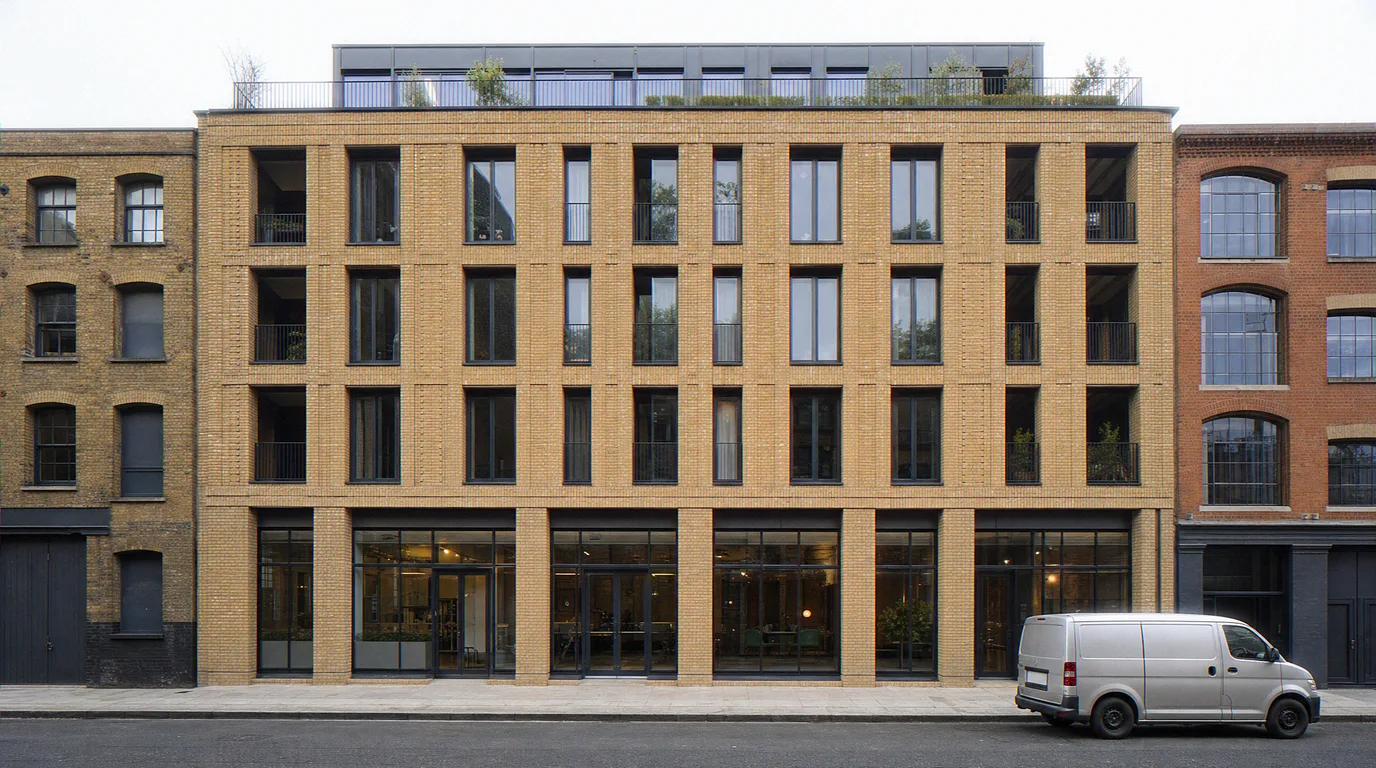
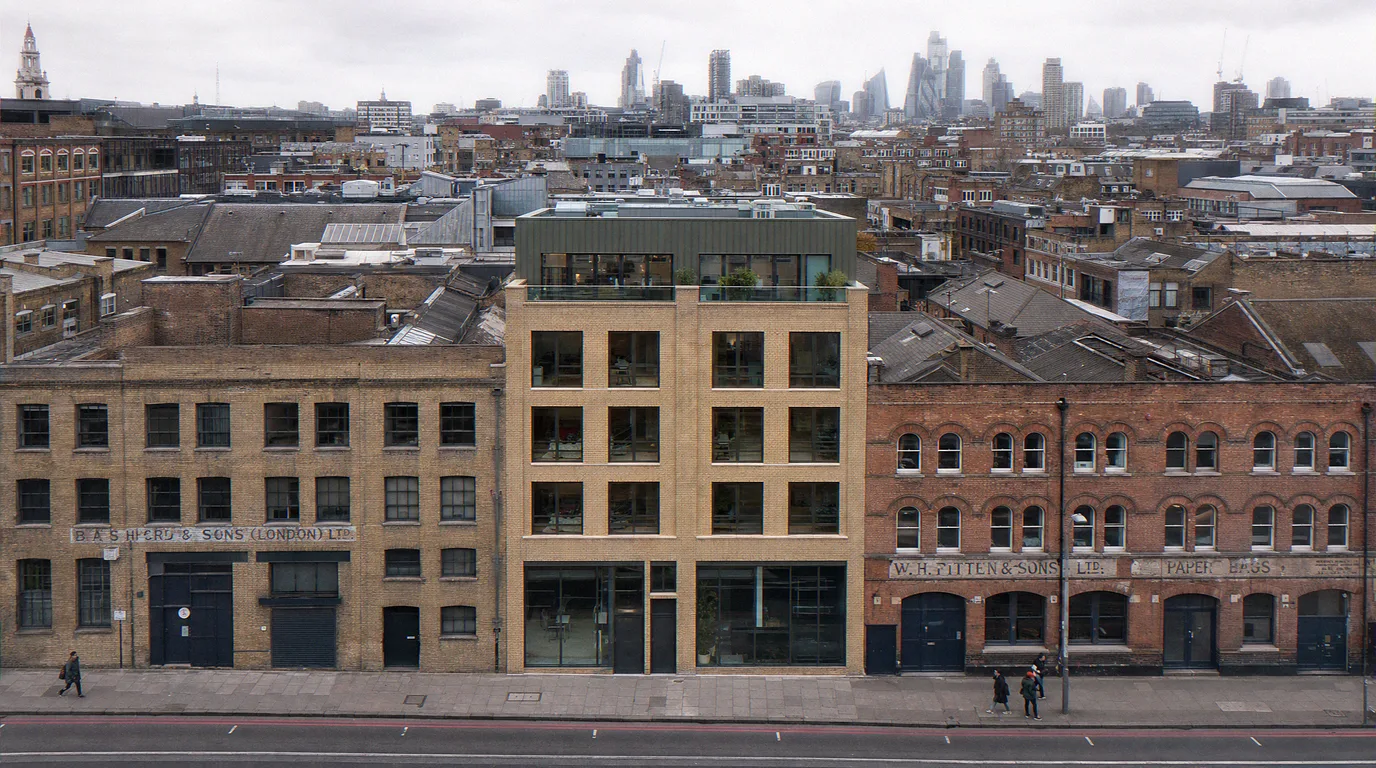
Project overview
The brief asked for a camera-matched photomontage set: photographs of the existing street with the new building rebuilt back into them at the same lens, position and time of day. Architectural Visualisations London, the architect and Hackney's planning officers could then read the new brick massing against the retained masonry honestly, not at a flattering angle.
- Location
- London EC2A
- Borough
- Hackney
- Local planning authority
- Hackney Council
- Conservation area
- South Shoreditch
- Sector
- Commercial mixed-use
- Type
- Camera-matched photomontage
- View package
- 4 street-eye + 1 elevated context
- AVR level
- Level 2 to 3
Project brief: a photomontage package for the planning submission
The brief named five views as the deliverable. Four were street-eye positions chosen along the public realm where the new massing first reads at pedestrian scale. The fifth was an elevated context view that sets the proposed roofline within the wider warehouse roofscape of the conservation area.
The brief named five views as the deliverable. Each view evidences material, massing or townscape.
Beyond the view count, the client and architect wanted the images to do three jobs at once. Evidence material relationship, so brick tone and mortar grain sit honestly against the retained masonry on either side. Evidence massing, meaning the overall shape and volume of the building as it meets the cornice line of its neighbours. And evidence townscape, meaning how the building sits within the surrounding streets and rooftops when read from the public realm.
Site context: South Shoreditch and the retained warehouse fabric
South Shoreditch is one of the densest pieces of inherited industrial fabric in inner London. Streets retain their late-Victorian rhythm: deep warehouse frontages, large openings, banded brickwork, segmental arches, surviving ghost signage on upper walls and the occasional faience or terracotta detail. The South Shoreditch Conservation Area, a designated heritage area with extra planning scrutiny, sets the rules: new build is expected to sit alongside the retained fabric without resorting to imitation or pastiche.
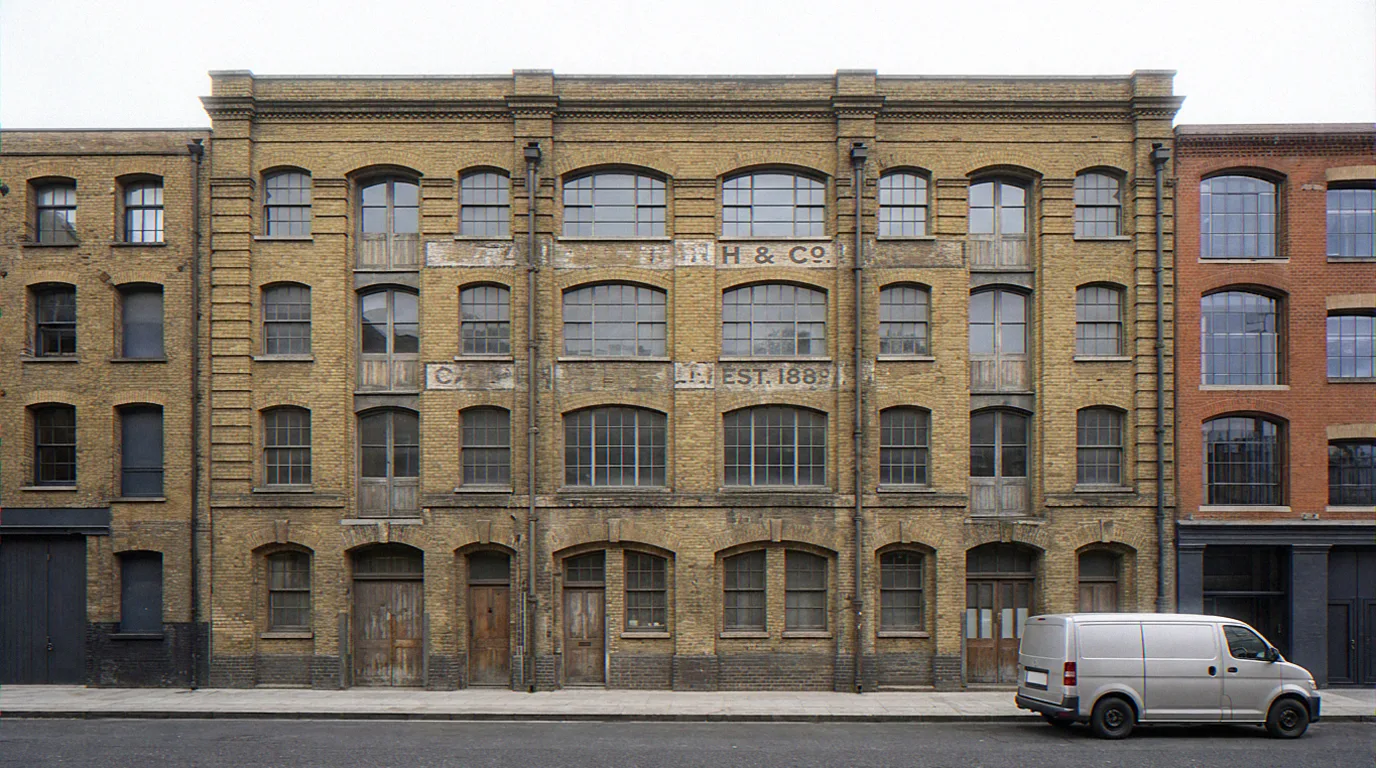
The scheme's plot fronts a side street between two retained warehouse blocks. Ground floor is commercial, with a glazed shopfront line set behind a contemporary brick pier rhythm. Upper floors are residential, expressed as a deep brick facade with regular openings, recessed reveals and a clear cornice line that registers against the parapet height of its neighbours. The brief from the architect was to keep the new building legible as new, but to let the brick choice carry the dialogue with the retained masonry rather than the form.
The visual challenge: new brick read against retained masonry
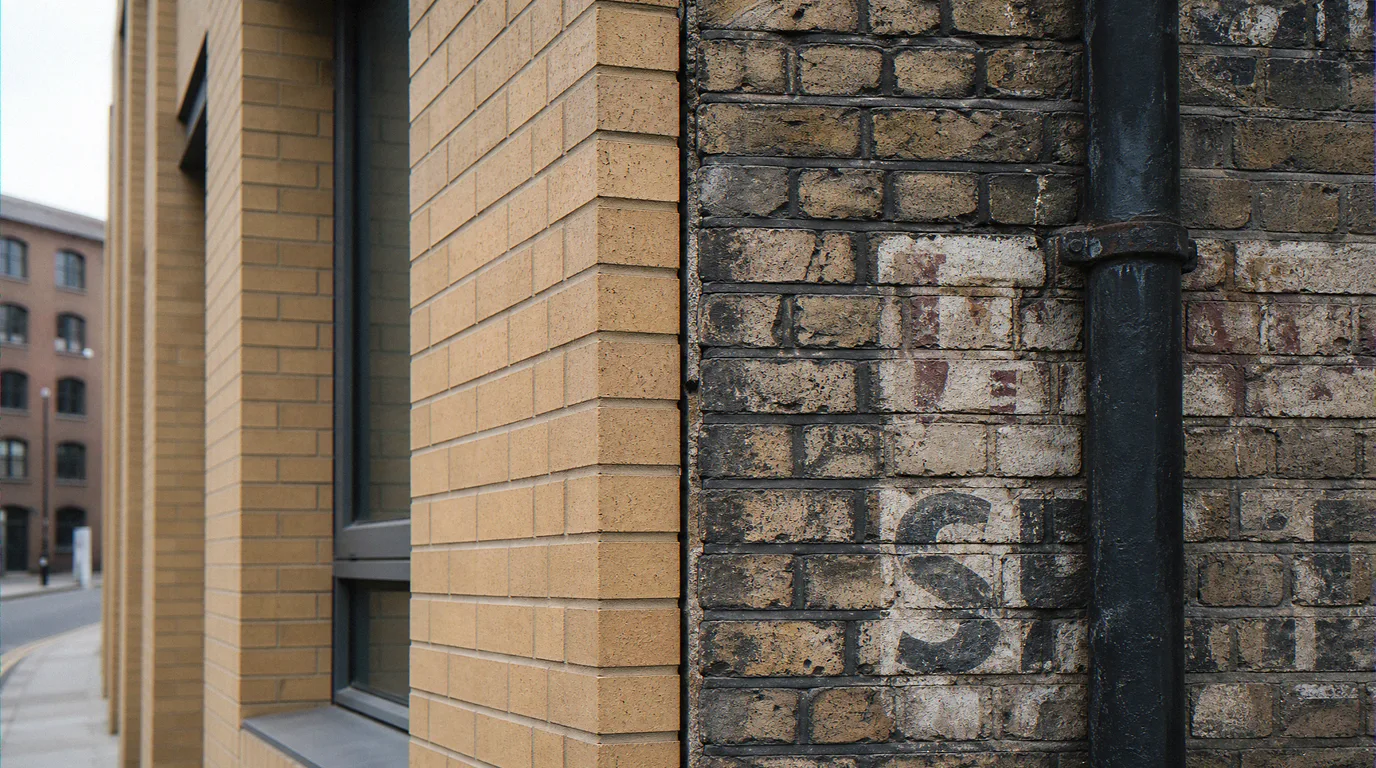
Brick is unforgiving in photomontage. The eye reads tone, grain, mortar joint colour, mortar joint width and weathering at the same time, and a render that fails on any one of these falls apart at the scale a planning officer will print. The first task was to build a brick specification on the model that holds against the retained masonry on either side under London daylight rather than under a polished studio light.
Brick is unforgiving in photomontage. The eye reads tone, grain, mortar joint colour, mortar joint width and weathering at the same time.
The second task was massing legibility. The new building is taller than two of its immediate neighbours by half a storey at the parapet and lower than one by a full storey. That sequence of relationships had to read clearly across the four street-eye views, with no view making the building look smaller or larger than it is.
The third task was the ground floor. Mixed-use schemes succeed or fail at pedestrian scale, and a glazed commercial frontage in the wrong rhythm flattens the rest of the elevation. The photomontages needed to read the new pier rhythm at eye level rather than from a flattering elevated camera.
View package: four street-eye positions and one elevated context view
Camera positions were not chosen for composition. They were chosen for evidence. Each of the five views was placed where the new massing first reads at pedestrian scale, where the full elevation can be read at once, or where the roofline relates to the wider warehouse roofscape.
Camera positions were not chosen for composition. They were chosen for evidence.
-
Same-side approach view
Street-eye view from the same pavement as the plot, where the new massing first appears to a pedestrian walking along the public realm.
-
Same-side onwards view
Second street-eye view further along the same pavement, evidencing the cornice line meeting the neighbouring warehouse parapet.
-
Across-street elevation view
View from the opposite pavement, where the full elevation reads at once and the new pier rhythm registers at the same scale as the retained openings.
-
Corner approach view
View from the corner where the side street meets the main road, the position most committee members and design review panels recognise.
-
Elevated context view
View from a publicly accessible upper level nearby, setting the proposed roofline against the wider South Shoreditch warehouse roofscape.
Photomontage method: site survey, camera match, light match, integration
- AVR Level 0
- Illustrative sketch, no positional or scale accuracy guarantee.
- AVR Level 1
- Position accuracy only, basic massing block.
- AVR Level 2
- Position, scale and degree of visibility accurate, no material detail.
- AVR Level 3
- Full visual representation, material and architectural detail accurate.
The method follows the camera-matched photomontage protocol used across our planning visualisation work. The output sits at AVR Level 2 to 3, where AVR is the Accurate Visual Representation scale, the planning industry framework that sets accuracy expectations for photomontage and verified views. The full verified view framework is covered on the verified views service page.
Daylight is matched next. Materials are then resolved at the scale of the final image.
-
Site survey
Each camera position, lens, sensor height, target points on retained buildings and time of day are recorded on the plate photography day.
-
Camera match
The architect's model is brought into a 3D scene aligned to the survey points, and the camera in the 3D scene is matched to the camera that took the photograph, frame by frame.
-
Light match
The 3D sun position is set to the date and time of the photograph, so shadow direction, shadow length and warmth of light match the plate.
-
Material resolution
Brick tone is calibrated against the retained masonry already in the photograph, mortar joints are tuned to the existing wall, glazing reflections sample the surrounding sky from the plate itself.
-
Integration
The new building is composited back into the photograph with depth-correct foreground masking, so people, vehicles, lamp posts, signage and street furniture pass in front of the new facade where they should.
What the photomontages were built to show
- Material relationship
- New brick reads against the retained masonry on either side under matched daylight, not under flattering studio light.
- Massing legibility
- New cornice line meets the neighbouring parapets at the heights the elevation drawings claim.
- Ground floor read
- New pier rhythm and shopfront line hold at pedestrian eye level, not only from an elevated camera.
The photomontage set carries three pieces of planning evidence inside the Design and Access Statement, the planning document that explains design choices and access.
Each view evidences material, massing or townscape under matched daylight.
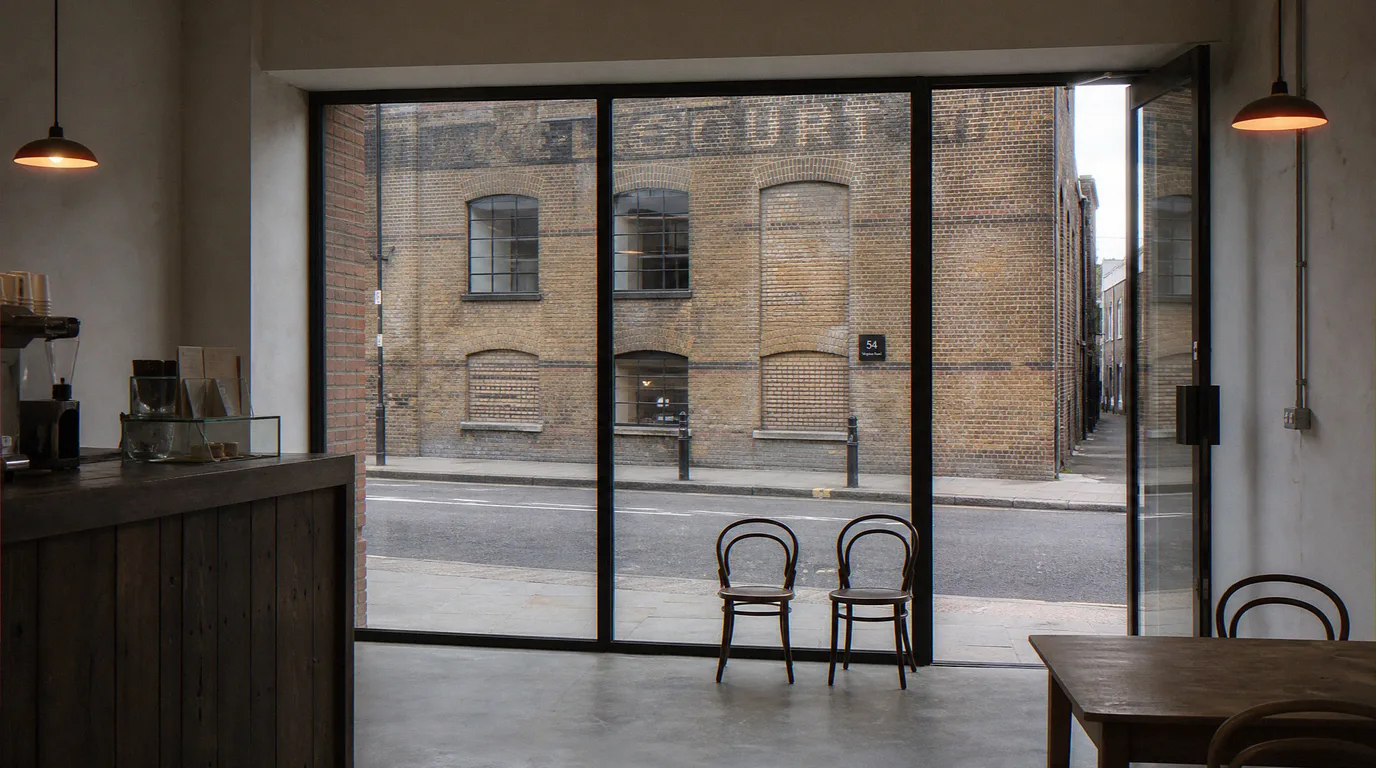
Each view carries one piece of planning evidence to one reader. The relationships below are what each stakeholder extracts from the same set of plates.
- Planning officer compares new brick tone against retained masonry inside the same plate
- Heritage consultee reads new cornice line against neighbouring parapets without translating from elevation drawings
- Design review panel sees ground floor pier rhythm at pedestrian eye level
- Neighbour sees shopfront line where it meets the retained kerb at the corner
- Architect tests material specification against the photographed daylight of the actual site
Review process and deliverables
The package ran across two review rounds. Round one set brick tone, mortar grain, glazing tone and the cornice-line read, with comments collected against material samples and elevation drawings rather than against a separate render brief. Round two resolved view-specific details: foreground masking on people and vehicles in each plate, sky balance, and the way the shopfront line meets the retained kerb.
The final pack carries four items into the Design and Access Statement.
- Five high-resolution camera-matched photomontages at AVR Level 2 to 3
- Supporting plate photography with camera metadata and survey points
- Methodology note describing how each view was matched
- Captions and figure references ready for the Design and Access Statement
Related services and the Hackney planning context
Schemes of this scale in South Shoreditch usually need a mixed visual package. Camera-matched photomontage carries the heritage and townscape evidence. Verified views or AVR Level 3 imagery are added where a heritage consultee or design review panel asks for a higher accuracy standard. Exterior CGI carries the marketing and pre-let work after planning. The studio's coverage of Hackney as a planning authority and the wider context for commercial schemes is covered on the related service and borough pages.
Get a camera-matched photomontage quote for your planning submission
We work across South Shoreditch, Hackney and the wider London boroughs on AVR Level 2 to 3 photomontage packages. Tell us the borough, the scheme type and the number of views, and we will come back with a quote and timeline.