Interior CGI for a Georgian Chelsea townhouse: eight room views for client sign-off
London SW3 · Boutique Interior Design Studio
A boutique interior design studio commissioned an eight-view interior CGI package for a Georgian townhouse in Chelsea, London SW3. The renders had to give the design team and their private client a reliable way to compare materials, lighting and bespoke FF&E across the home before installation.
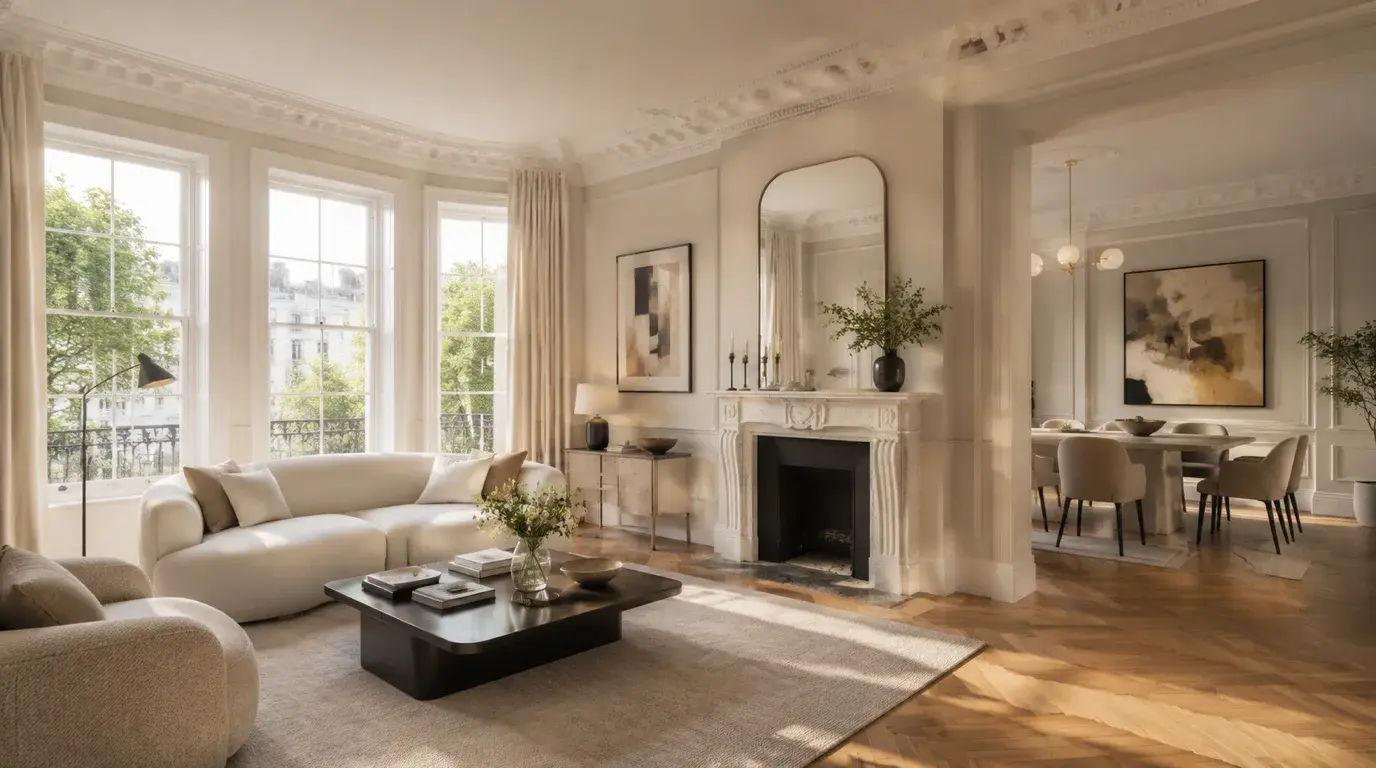
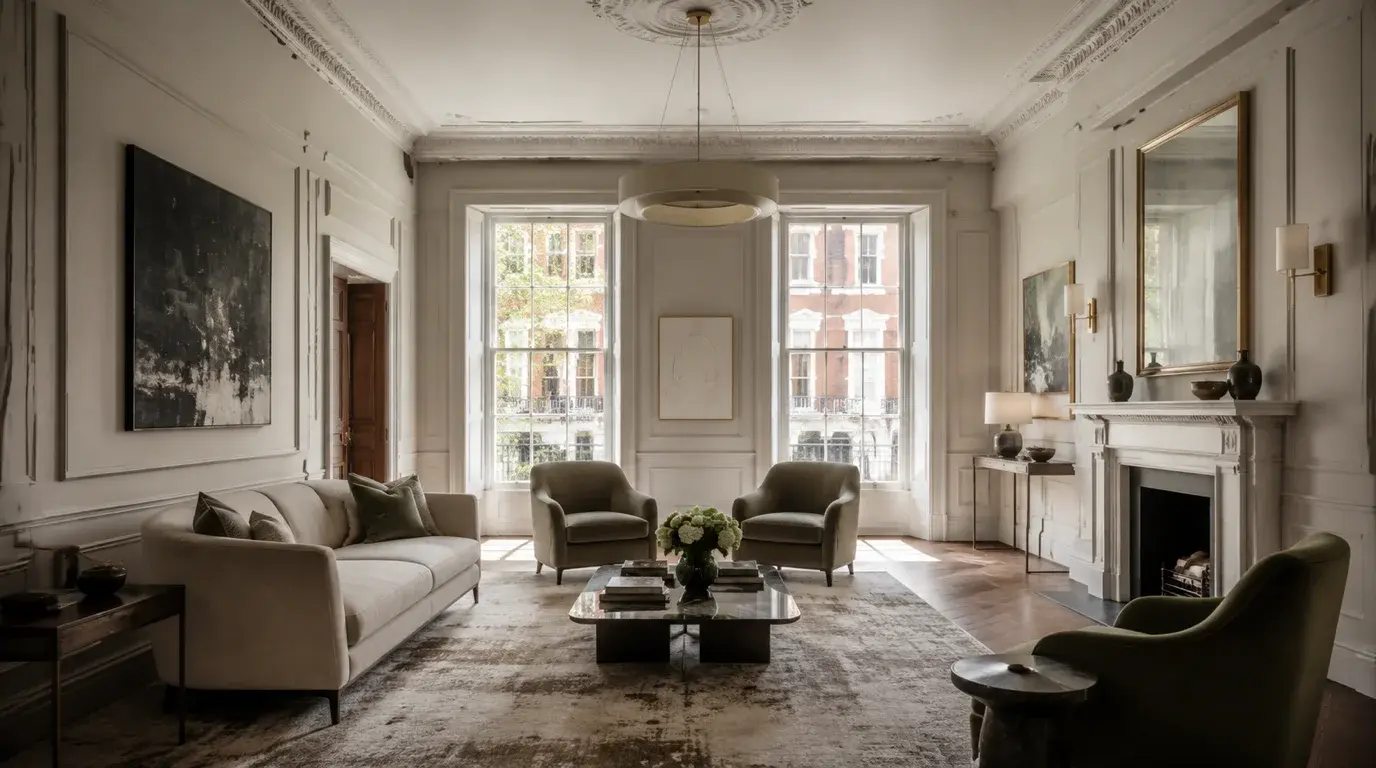
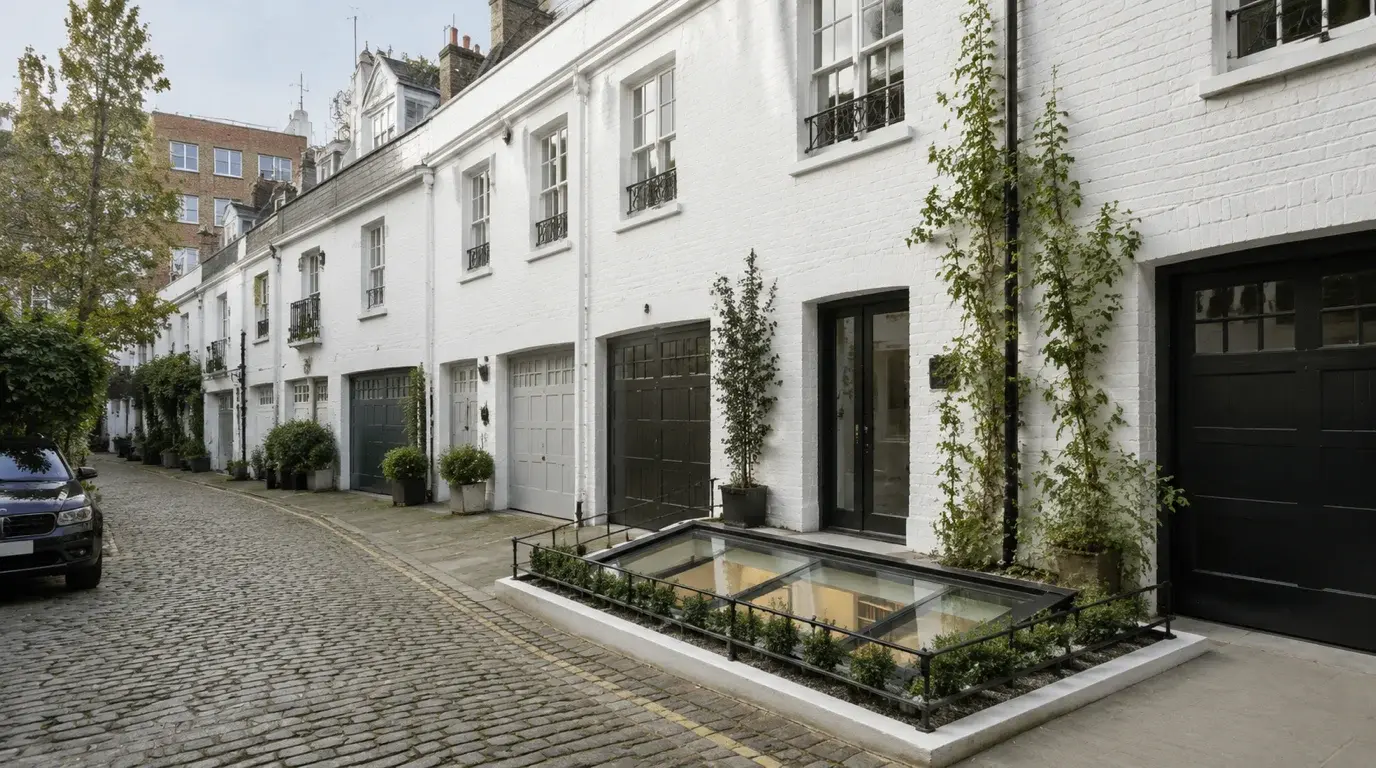
Project overview
The visual goal was simple to describe and demanding to deliver: photoreal interiors that read at scale, hold up under close inspection of joinery and finishes, and reveal how light moves through period rooms.
Project brief: eight high-end room views for client sign-off
The brief named eight room views as the deliverable. Each view had to perform two jobs at once. It had to present a finished interior scheme with photographic credibility, and it had to give the studio a working canvas to confirm material palette, lighting setup and furniture placement with the client.
The client was a private homeowner working through the design studio, so the imagery also functioned as the document that turned design intent into a decision. The studio briefed the project around four pressure points: material precision, lighting atmosphere, bespoke joinery resolution, and spatial flow between rooms.
Chelsea townhouse context: period fabric, layered interiors and family living
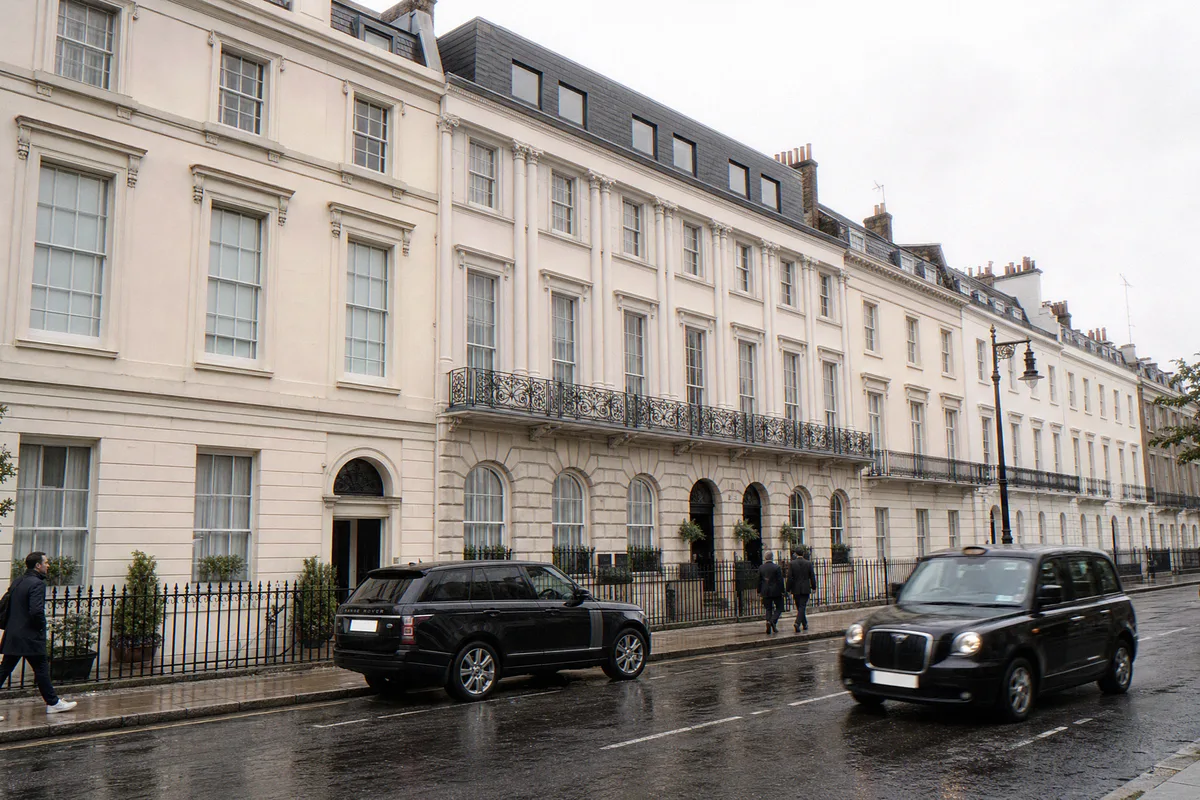
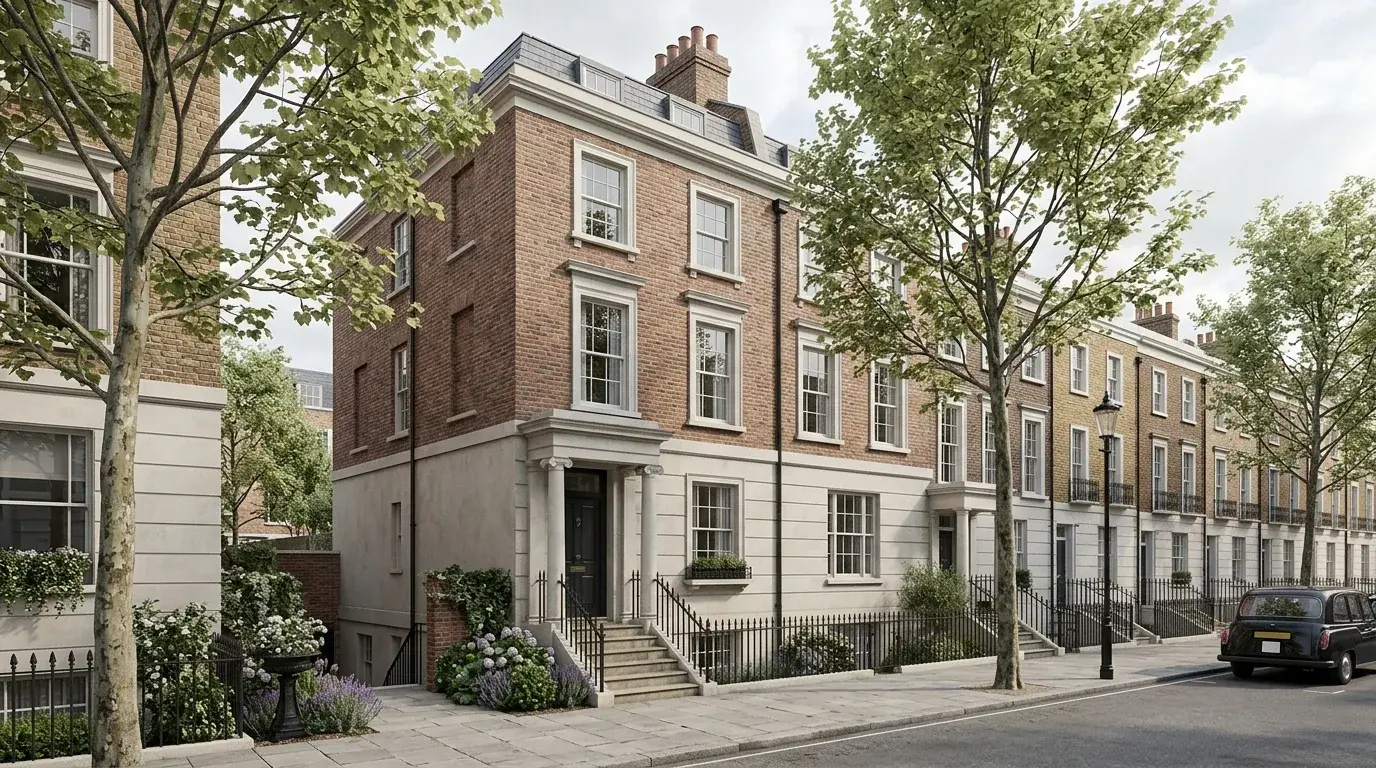
The property is a Georgian townhouse in Chelsea, on the SW3 side of the borough. Period London townhouses of this kind carry a particular set of constraints. Rooms sit within retained proportions, principal floors rely on tall sash windows for daylight, and any modern intervention has to reconcile contemporary living patterns with the historic character of the existing fabric.
The interior scheme followed the brief common to high-end Chelsea homes: layered finishes, restrained colour, integrated joinery, considered FF&E, and a clear hierarchy between formal reception spaces and quieter private rooms upstairs.
The visual challenge: material precision, lighting atmosphere and spatial flow
Eight rooms meant eight separate visual problems that still had to read as one home. Material precision was the first task. Marble, timber, lacquer, brushed metal and fabric all behave differently under render, and each surface had to hold its identity at full image resolution.
Lighting atmosphere was the second task. Daylight had to enter rooms with the correct orientation and warmth, and the layered artificial lighting scheme had to define mood without flattening detail. Spatial flow was the third task. The views needed to communicate how the principal rooms relate to circulation, how sightlines work through doorways, and how the home reads as a sequence rather than a set of isolated images.
FF&E placement carried the fourth task, since furniture, soft furnishings and accessories had to sit at correct scale within each room and support the period proportions rather than fight them.
How the room views resolved material and lighting decisions
The room views resolved material and lighting questions by showing samples at the scale they would actually be used, against the actual joinery and furniture that would surround them. A material sample on a table sits in one scale, the rendered room shows it in another, against the actual light it will live under.
The studio used the room views to test proposed combinations before specifying suppliers, to align the private client around the scheme, and to anchor conversations with the rest of the project team. Review rounds focused on materials, lighting balance, FF&E scale, and the reading of joinery details within each room composition.
Key spaces visualised across the townhouse
The eight room views covered the principal interior spaces of the townhouse and a small number of supporting moments. The set was structured so the home could be read as a connected sequence rather than disconnected stills.
Kitchen
Bespoke cabinetry, stone worktops, integrated lighting and the social heart of the ground floor.
Reception room
Formal living area with layered seating, fireplace and considered art placement.
Study
Timber joinery, controlled daylight and a quieter material palette for focused use.
Principal bedroom
Soft layering of fabric, lighting and bespoke furniture for a calmer atmosphere.
Dressing room
Integrated wardrobes, internal lighting and mirrored surfaces resolving as a single composed space.
Additional views captured circulation moments and secondary rooms so spatial flow could be evaluated between principal floors.
Bespoke joinery, FF&E and lighting details
Bespoke joinery carried much of the design intent. Cabinetry, wardrobes, panelling and the study shelving had to render as carefully detailed pieces, not as flat blocks of colour. Each joinery element was modelled with correct material, edge profile and proportion so the imagery could support specification decisions.
FF&E selection sat alongside the joinery. Sofas, chairs, side tables, rugs, curtains and accessories were placed at correct scale and styled to support, not crowd, the period rooms. The lighting layer combined natural daylight from sash windows with a designed scheme of pendant, recessed and accent fixtures, so each render expresses the atmosphere the studio intends in the finished home.
How conservation-area context shaped the interior CGI
Conservation-area context shaped the interior CGI by locking the period proportions, sash window detailing and retained fireplaces as fixed givens, then forcing every modern intervention in the scheme to read credibly against them. The townhouse sits within the Royal Borough of Kensington and Chelsea, where much of the residential fabric is covered by conservation-area designations, and that context matters even when the brief is interior only.
The CGI treats those elements as given, then shows the design studio’s intervention working with them rather than against them. Our Kensington and Chelsea borough page sets out the wider context for prime residential CGI projects of this kind.
Deliverables and review process
The deliverable was a set of eight high-resolution interior renders, issued in the agreed aspect ratios and supplied at print-ready and screen-ready sizes. The production route followed a standard CGI workflow: drawings and design specifications from the studio were translated into a 3D model of the rooms, materials and FF&E were applied, draft renders were issued for review, and final renders were exported once feedback was resolved.
Review rounds focused on materials, lighting balance, FF&E placement and joinery detail. Each round narrowed the visual conversation until the imagery agreed with the studio’s design intent.
Outcome: scheme signed off, specification confirmed
The eight room views carried the scheme through to client sign-off. With the renders on the table, the design studio and the private client agreed the material palette, the lighting layers and the FF&E selection without further iteration on those questions. Decisions that had previously sat in samples and mood boards moved into specification.
Joinery packages were issued to fabricators against the same imagery that the client had approved, so the suppliers, the studio and the homeowner were aligned on intent before installation began. The CGI continued to act as the reference document through the build, holding the agreed scheme steady while site decisions were resolved.
Related interior CGI and residential visualisation services
This project sits inside our wider interior visualisation offer, which covers room-by-room CGI packages for interior design studios and private clients. For developer-led residential schemes, our residential developments visualisation page sets out the approach to prime residential CGI across London.
The architectural CGI portfolio lists other case studies, and the contact page is the route for scoping a townhouse CGI package of your own.