Urban Integration
Specialized in blending contemporary massing with Camden’s complex urban and canalside fabric.
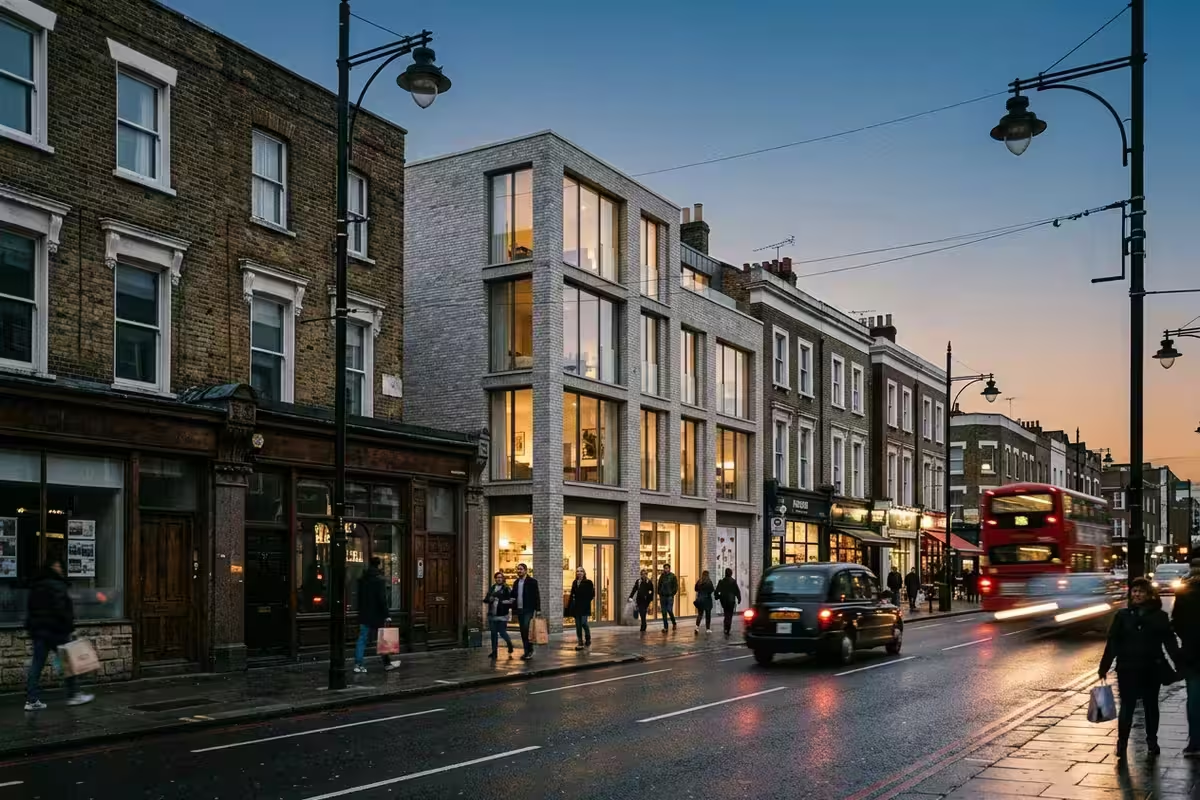
Specialized in blending contemporary massing with Camden’s complex urban and canalside fabric.
Accurate rear-extension and roofline studies for sensitive Hampstead and Belsize Park plots.
Developer of resident-first planning resources to support transparent local consultation.
Camden Council submissions often need visuals that make scale, materials and street context easy to understand.
Camden projects often need CGI that explains design intent, planning context and material choices for Camden Council submissions, private-client decisions and marketing presentations. The borough covers Camden Town, King’s Cross, Euston, Bloomsbury, Holborn, Hampstead, Belsize Park, Primrose Hill, Kentish Town, Chalk Farm, Gospel Oak, West Hampstead, the Regent’s Canal and the Fitzrovia edge. Each setting calls for a different visual approach, from heritage streets and dense town-centre frontages to residential extensions, commercial fit-outs and mixed-use schemes.
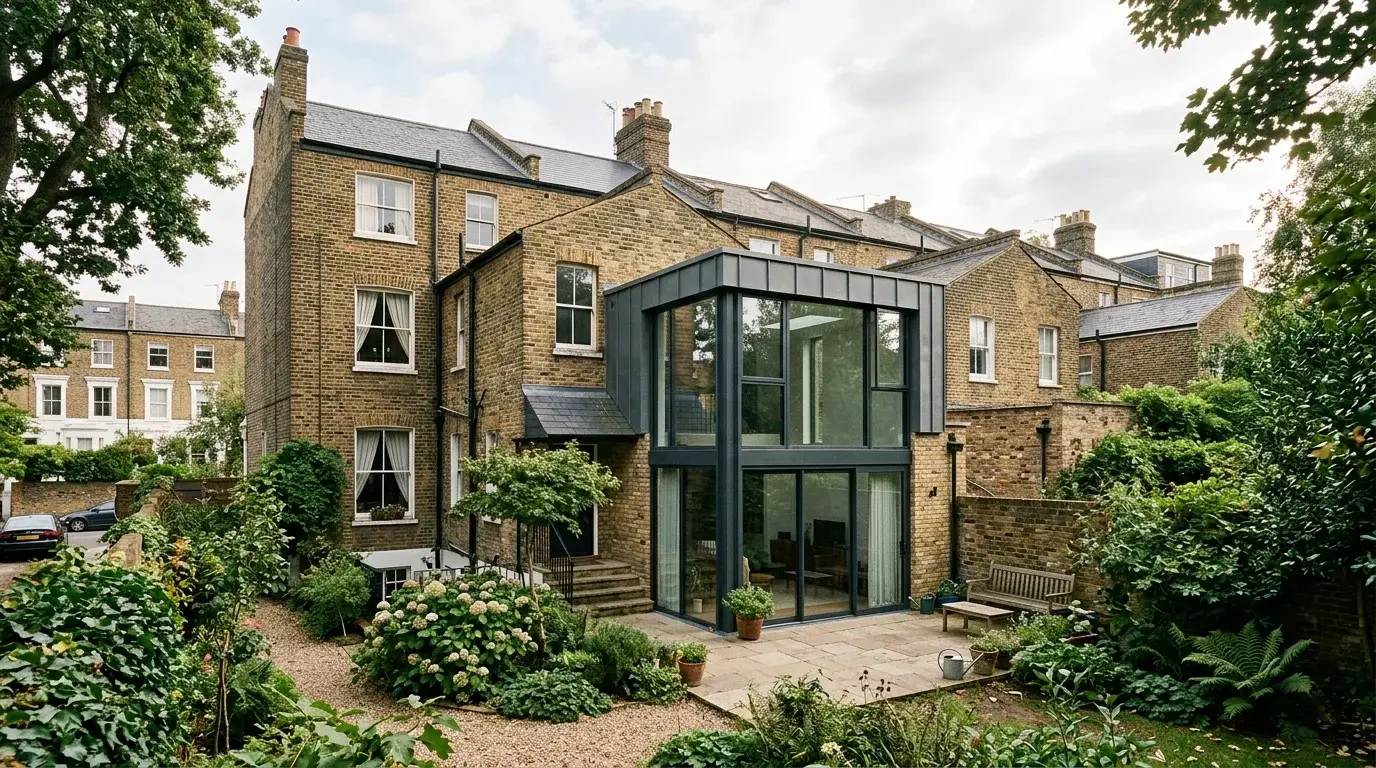
CGI is most useful in Camden when plans alone do not explain how a proposal changes a street, roofline, garden, interior, shopfront, workspace or development site. The image set should support the decision in front of the Camden Council case officer, the project team and the client rather than act as generic marketing decoration.
Submission-ready CGI, street-scene views and planning-pack imagery for Camden Council design review and consultation material.
Rear, roof, basement, dormer and garden-room visuals where scale, light, neighbours and material changes need to be understood quickly.
Visuals for heritage-adjacent streets, listed-building settings and conservation-area proposals where existing character must remain legible.
Exterior, public-realm and commercial CGI for mixed-use, workspace, retail, hospitality and town-centre settings.
Hospitality, workplace, cultural, residential and private-client interiors where finish, lighting and atmosphere need sign-off before procurement.
A stricter visual route for sensitive townscape, roofline or larger-development contexts when the consultant team needs documented viewpoint logic.
For Camden Council submissions, visual material should be scoped around the planning route, site sensitivity and intended audience. We can support design-and-access statement imagery, conservation-area context views, illustrative photomontage, material studies, street-scene images, interior sign-off renders and verified-view scoping where the project team needs a stricter visual method.
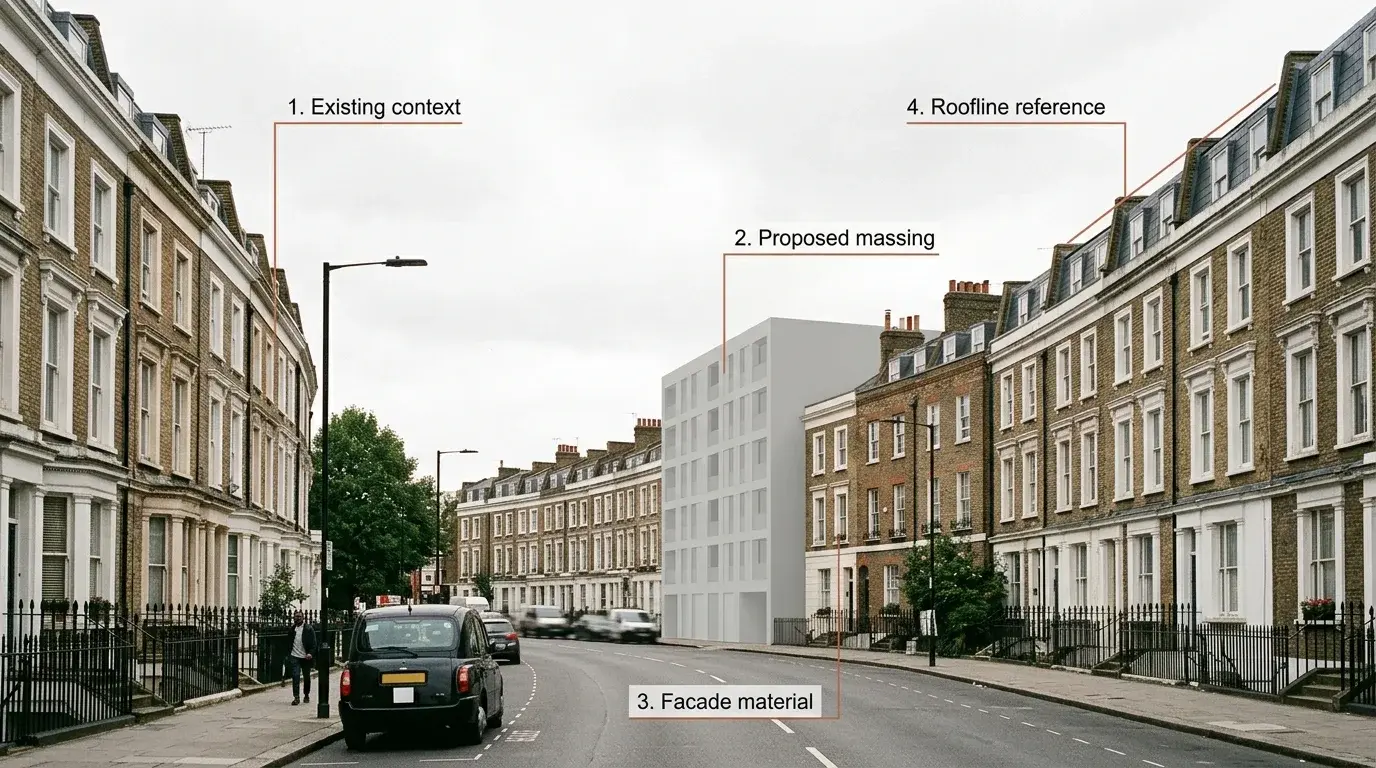
Verified views are essential for Camden sites where conservation-area character, roofline visibility or regeneration scale is central to the planning argument.
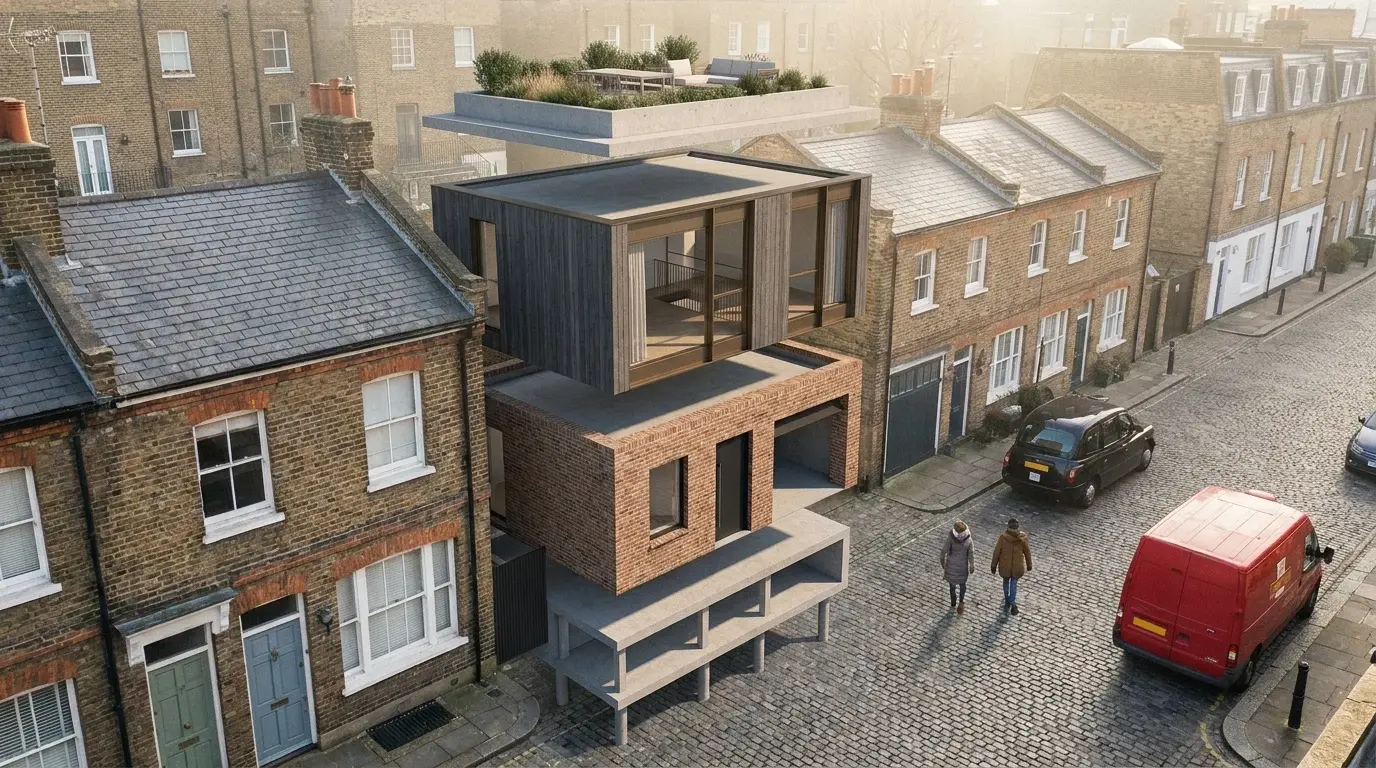
Planning consultants, the project team or authority requirements normally determine the need. Mixed-use proposals in Camden Town, prominent roof additions and heritage-sensitive changes should be reviewed early.

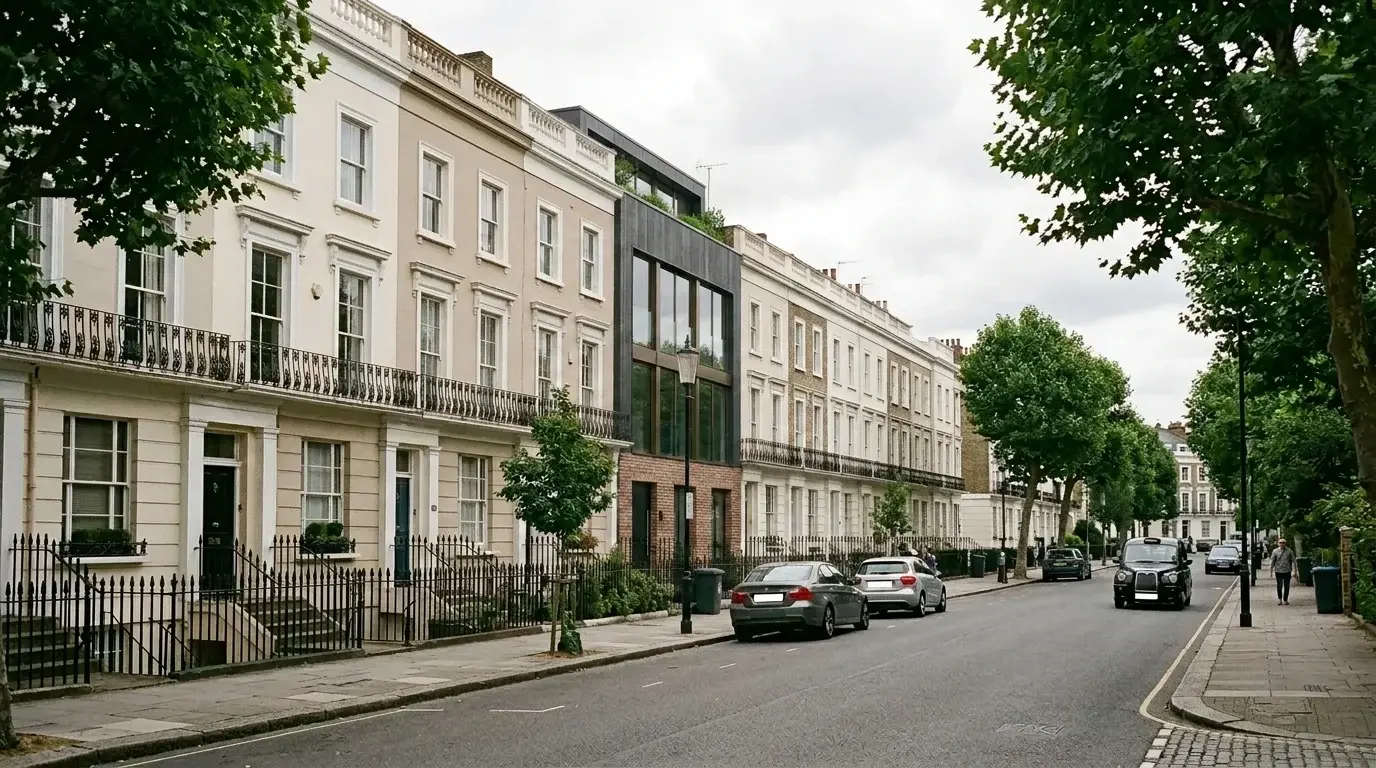
The first view acts as the surveyed AVR baseline: the existing Camden street scene is held in the agreed camera position, with the proposed-development zone, viewpoint information and facade callouts marked for review. The second keeps the same view and annotation logic, then visualises a contemporary facade intervention within the conservation-area terrace so the planning team can compare existing context and proposed change directly.
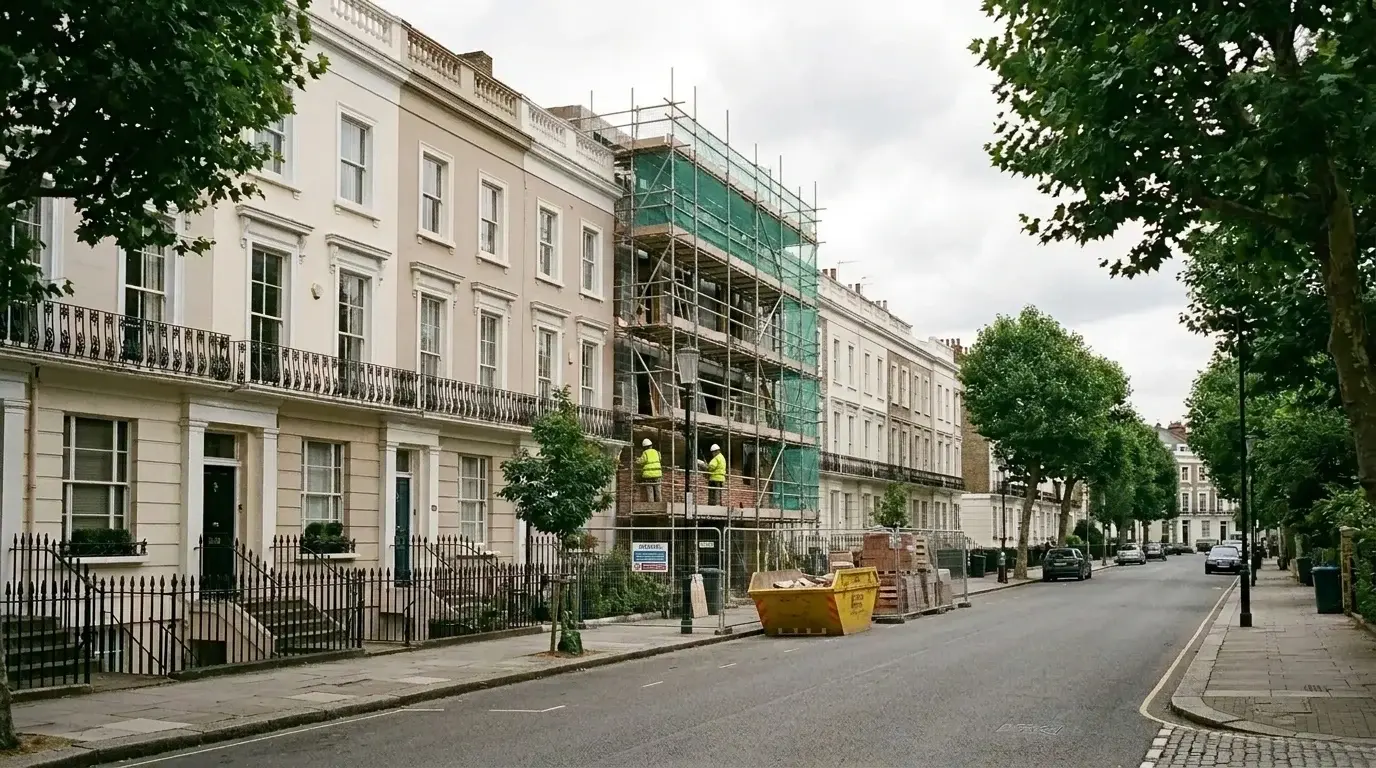
For teams comparing routes, planning application visuals can cover design explanation and committee-pack imagery, while verified views are scoped when the viewpoint, survey relationship and methodology need to be documented.
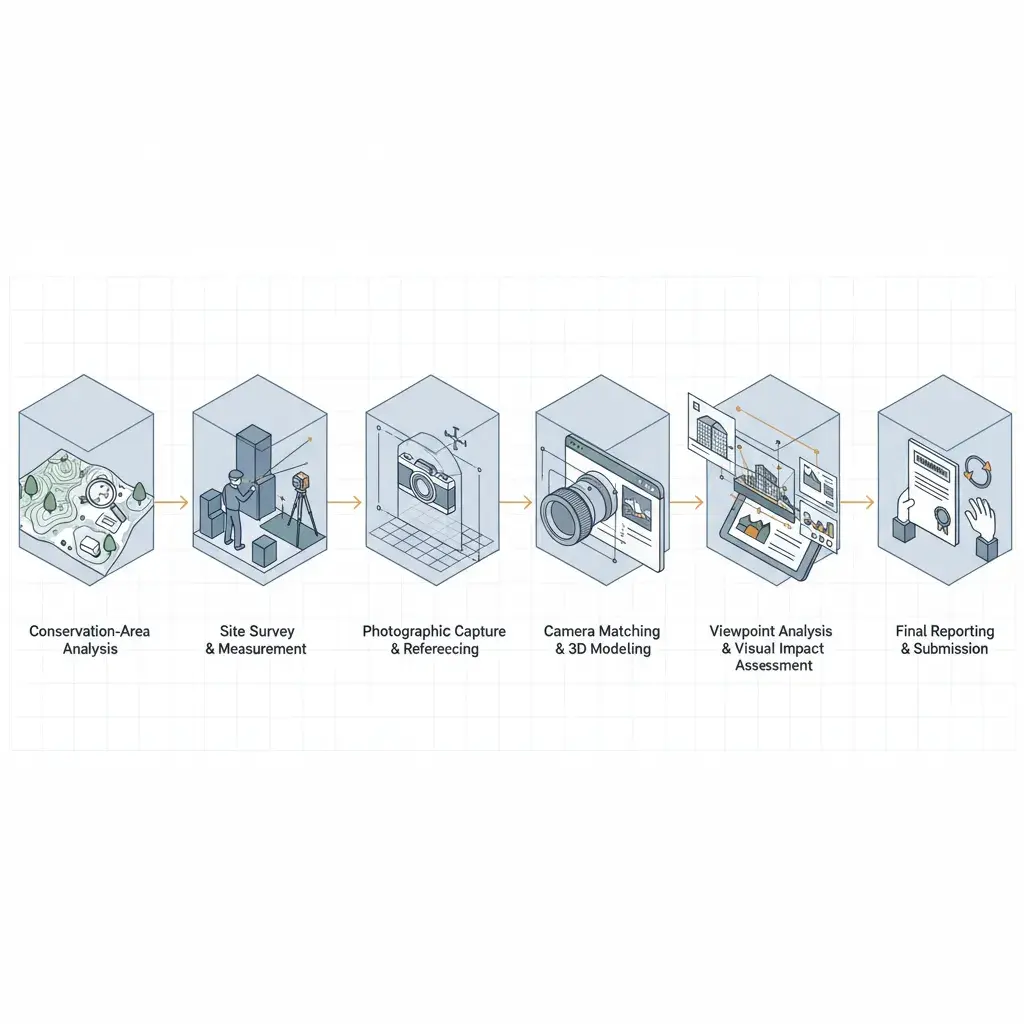
For Camden projects that take the verified-view route, the methodology runs through four stages: viewpoint scoping, surveyed photography, camera matching against the 3D model, and final photomontage or AVR reporting.
Relevant references include Landscape Institute Technical Guidance Note 06/19: Visual Representation of Development Proposals, Camden Council planning guidance. If the Camden brief may need AVR, agree the visual route before photography and viewpoint selection are fixed.
Camden briefs often combine residential alterations with urban complexity. A townhouse extension in Hampstead, a shopfront in Camden Town, a workplace interior near King’s Cross and an infill proposal in Kentish Town each need a different visual argument.
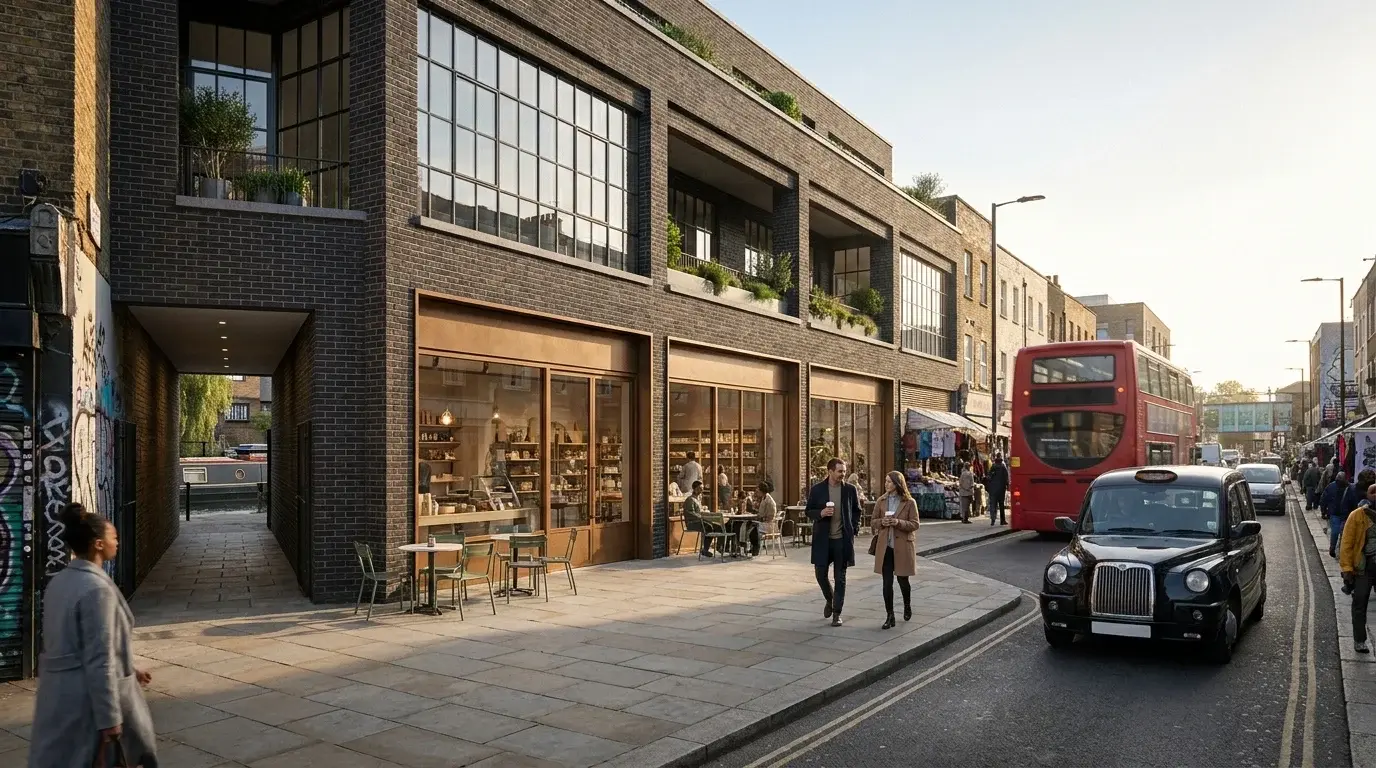
Town-centre and canalside frontages need a single photomontage that resolves the shopfront, the hospitality entrance, the workspace door, the upper-level massing, the signage and the pavement life inside one frame.
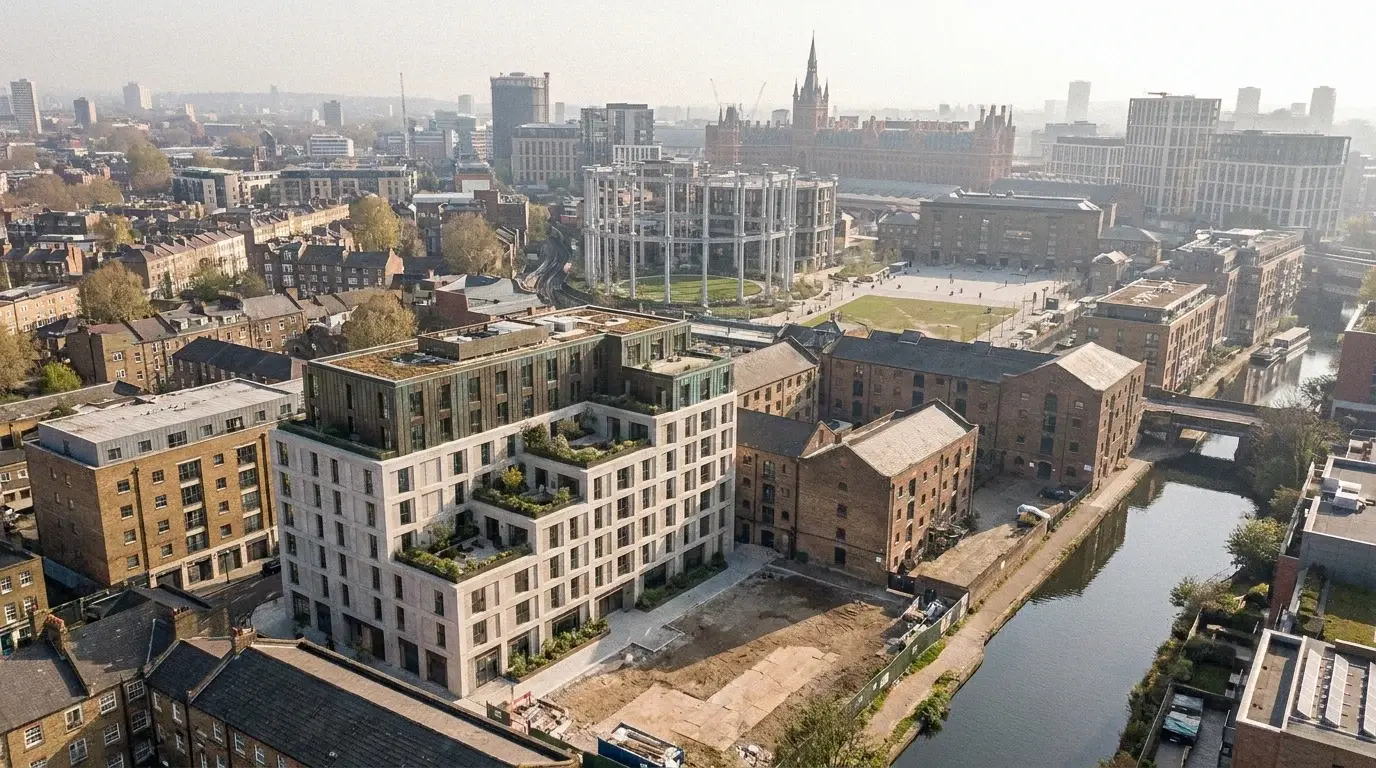
Mixed-use development imagery places the proposed massing inside the surrounding street network, the gasholder skyline, the canal frontage and the pedestrian routes that frame the plot.
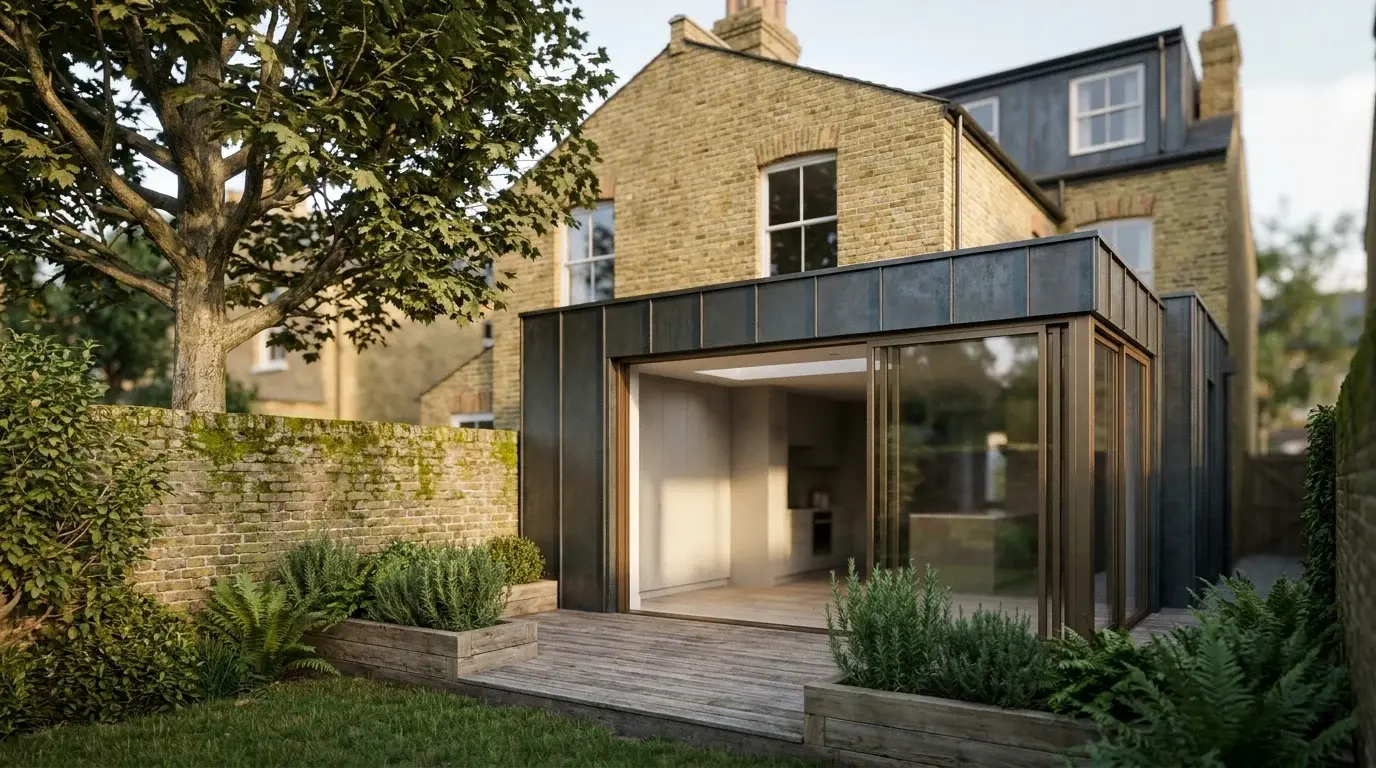
Residential extension visualisation makes the rear addition, the roof change, the dormer, the basement lightwell, the garden relationship and the material choice legible against the existing residential street.
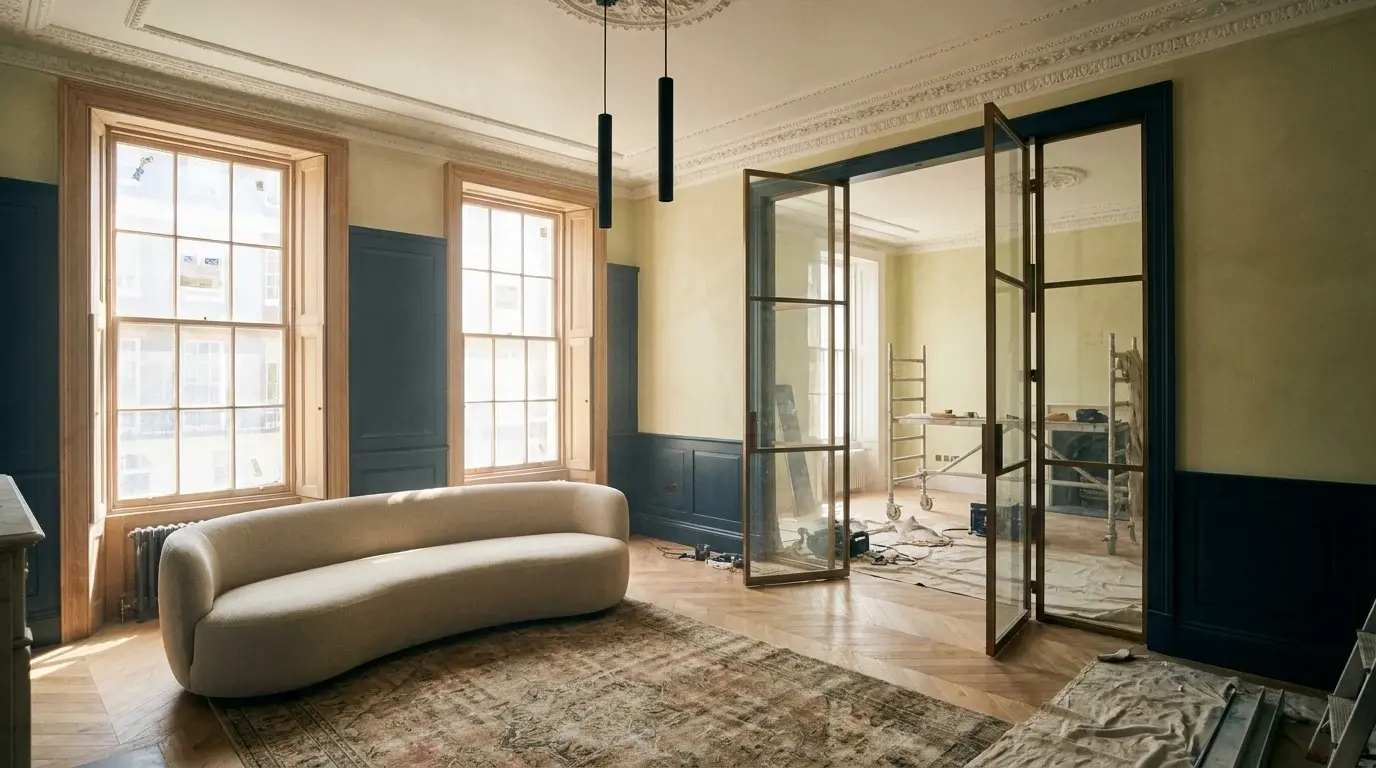
Conservation and heritage CGI distinguishes retained fabric from added fabric across facade adjustment, entrance change, interior insertion and material tone in heritage-adjacent context.
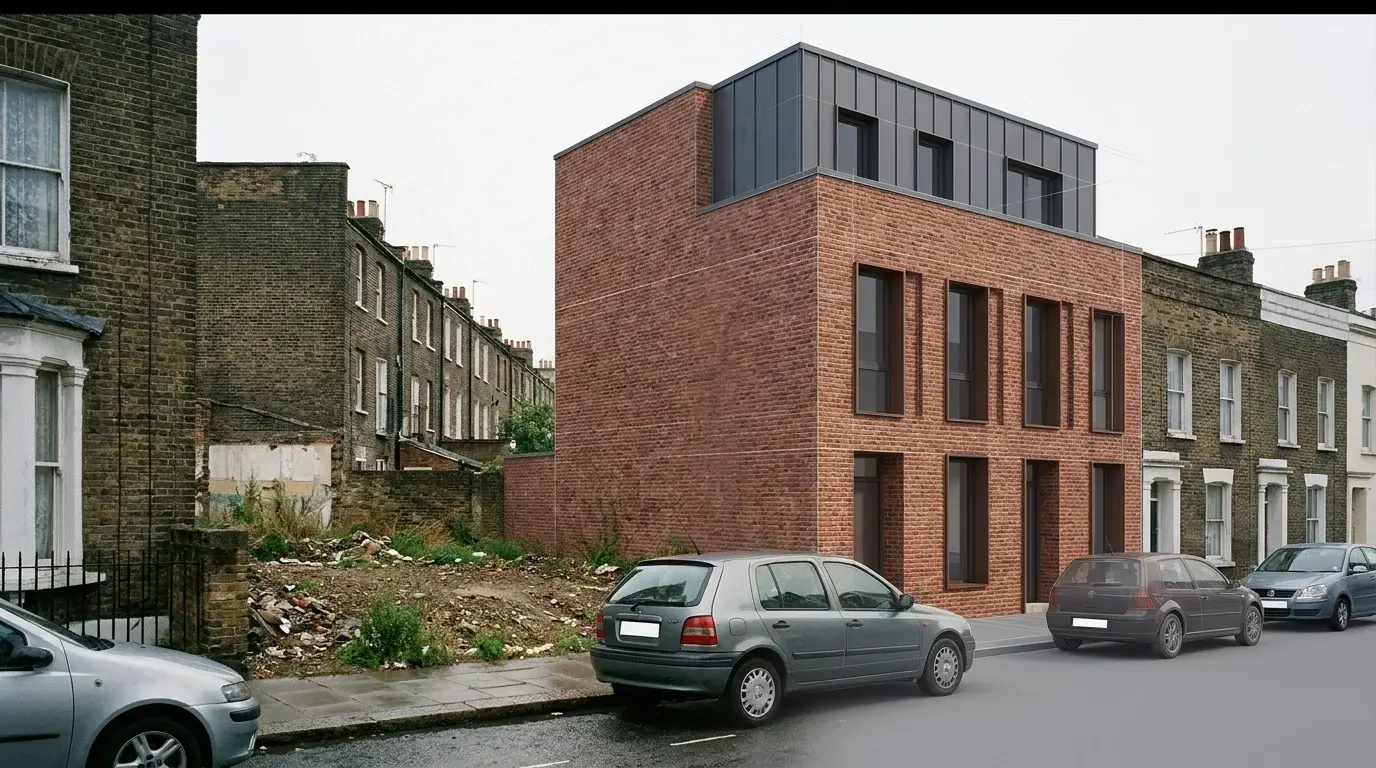
Infill and replacement schemes show how the new massing, the frontage rhythm, the neighbour privacy, the daylight, the material and the access negotiate the existing terraced street.
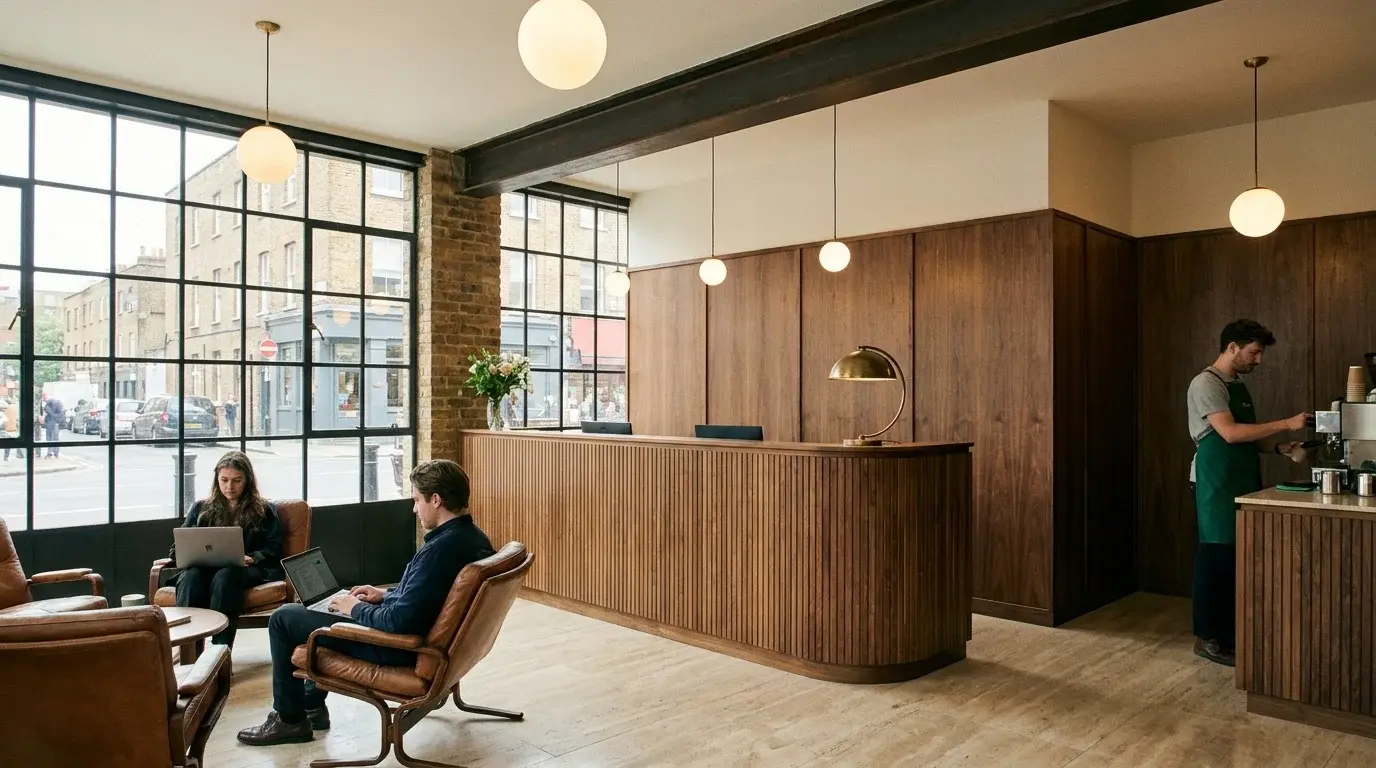
Workspace interior CGI lets the project team review the finish, the lighting, the furniture, the circulation and the arrival sequence ahead of client sign-off, leasing, investor review and stakeholder presentation.
A Camden Town corner reads first as a frontage: dark engineering-brick upper floors with deep Crittall reveals, a planted parapet setback, and an independent cafe shopfront held against an existing stock-brick neighbour, with Regent’s Canal visible through a side passage. The brick is dark to sit inside Camden Town’s Victorian fabric, not against it; the Crittall depth is sized to the neighbour reveal beside it; the shopfront sits flush with the pavement so the bus stop and the cafe chairs read as one street, not two.
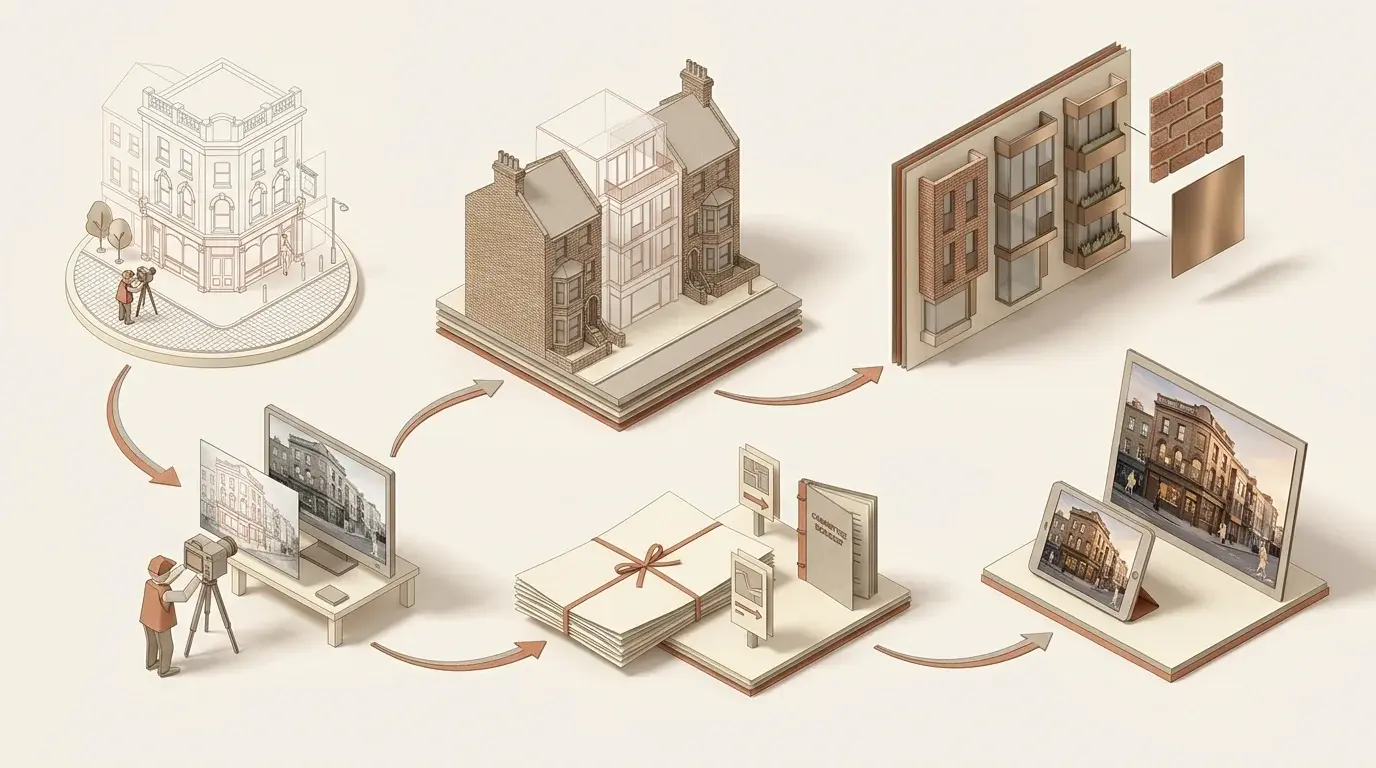
Below this paragraph, the six-step process diagram traces how that frontage image is built: surveyed photography of the corner, a wireframe model dropped between the existing neighbours, a facade study with the brick and bronze swatches matched, a photomontage match, the folded planning sheets and committee booklet, and the final tablet variant for committee or pre-let. Camden mixed-use frontages often sit inside one of the borough’s 40 conservation areas, where Article 4 directions cover front-elevation alterations on the residential dwellings inside them, so on a live-work scheme the brick choice and the Crittall reveal on the upper floors are planning decisions, not styling decisions, and the survey and facade study exist to defend them at committee.
A dusk variant of the same corner tests how the building reads after dark: shopfront glow, brushed-bronze blade sign reading from across the road, lit Crittall openings on the upper floors and the planted setback in silhouette. Lighting is treated as a planning matter on Camden’s high-street frontages, where luminance and signage weight are part of the public-realm argument, not just a marketing pass. Where the viewpoint, survey relationship and methodology need to be documented for visual-impact or heritage review, the image set is scoped as verified views or AVR.
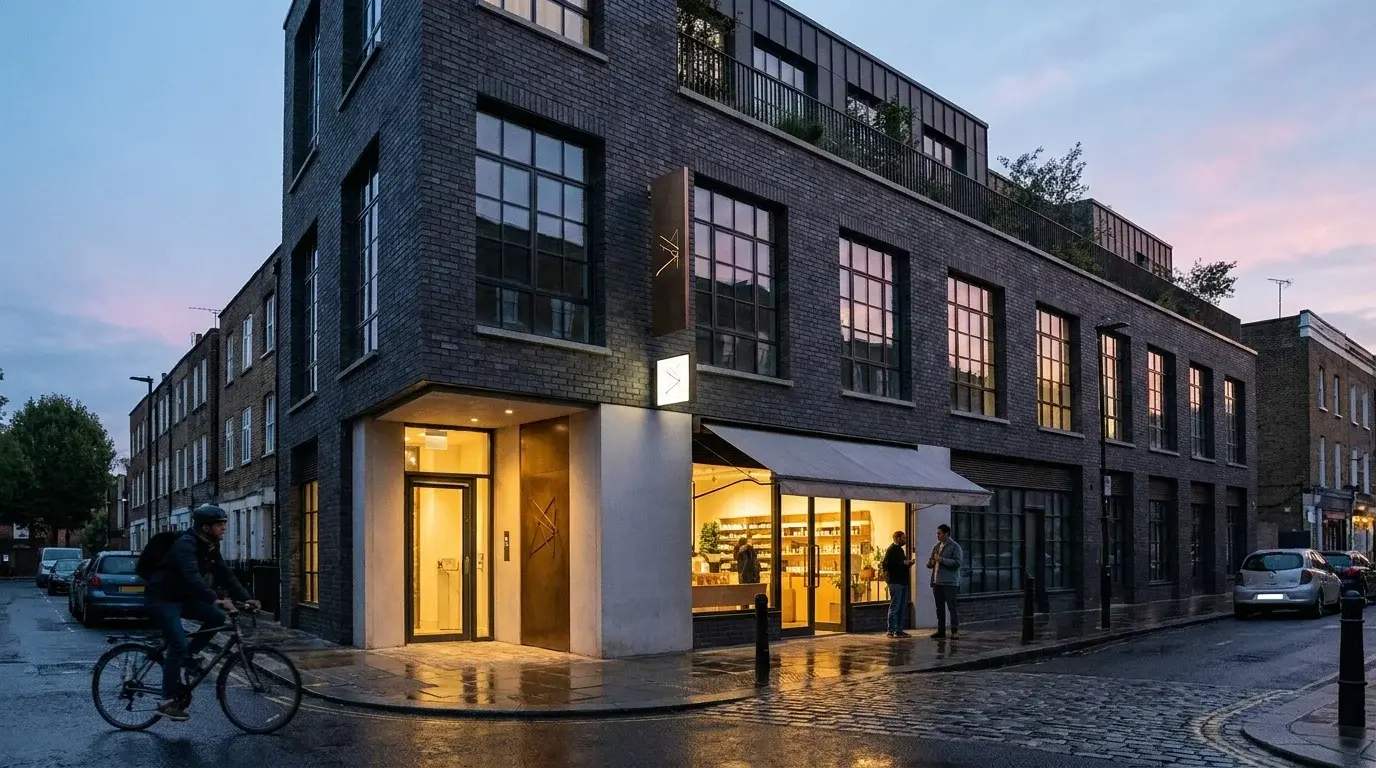
A Camden mixed-use visualisation package usually carries more than one polished exterior image because the planning officer, the freeholder, the operator and the prospective tenant are looking at different parts of the building. Useful deliverables run from corner street-scene photomontages and bay-by-bay facade studies through signage and lighting tests, canalside or towpath views, terrace and parapet visibility studies, lobby and entrance interiors and planning-statement figures, with pre-let or marketing variants kept separate from the planning evidence.
Outputs are normally prepared as web-optimised stills, print-ready planning images, annotated comparison views, design-and-access statement visuals and planning application visuals where needed. Marketing or pre-let variants can use the same model, but they should be separated from the planning set so the planning argument is not blurred with editorial gloss.
Illustrative CGI is enough when the team is testing material tone, signage logic, lighting weight or upper-storey rhythm. A photomontage is the right tool when the planning argument depends on how the new frontage sits in a real Camden street with its existing trees, kerbs and neighbour facades. Verified views or AVR are scoped when the viewpoint, survey relationship and methodology need to be documented for visual-impact or heritage review.
The choice usually depends on site sensitivity. A Camden Town corner plot may need a careful street photomontage to explain the shopfront and the upper-storey rhythm in one frame. A canalside plot may need surveyed viewpoints from the towpath and bridge approach. A conservation-area frontage may need verified evidence rather than illustrative imagery before the planning route is fixed.
Camden frontage visualisation has to work at street scale and at detail scale. Handmade brick, dark engineering brick, Crittall-style glazing, bronze metalwork, deep window reveals, fascia depth, blade-sign thickness and shopfront entrance threshold all decide whether the proposal reads as calm or forced. Reveals and setback upper levels can soften apparent bulk, but only if shadow, reflection and neighbour facade rhythm are accurate.
The pavement edge matters as much as the upper facade. Camden reviewers and Camden Town stakeholders need to see entrance hierarchy, pavement width, cycle access, servicing doors, planting, lighting and how pedestrians pass the building. Exterior rendering for this typology should include close facade studies and wider street views, because material credibility and street behaviour are judged together.
Camden Town, Chalk Farm and the Regent’s Canal corridor each set a different visual problem. Camden Town carries busy mixed retail and hospitality frontages, Chalk Farm reads as a quieter Victorian fabric, and the canal edge introduces towpath views that are protected in their own right. The same visual method cannot be copied across all three settings without losing Camden planning value, so the viewpoint set should be agreed with the planning consultant before surveyed photography begins.
Camden Council planning context can make local townscape, heritage and roofline visibility important even when a project is not a major scheme. A planning visual that matches the level of scrutiny the borough applies will help a planning consultant defend material tone, signage weight and upper-storey rhythm during review.
Residential extension visualisation in north Camden has to resolve the existing house and the new addition as one read. In Hampstead (NW3), Belsize Park (NW3) and Primrose Hill (NW1), a rear extension may need to show original yellow stock brick, retained sash windows, garden depth, neighbour line, party-wall relationship, material tone and interior light in one believable image set. The goal is not a generic luxury extension visual. It is a planning and detail-design image that helps the architect, client and planning officer judge scale, material change and neighbour impact before the team commits to submission or detail.
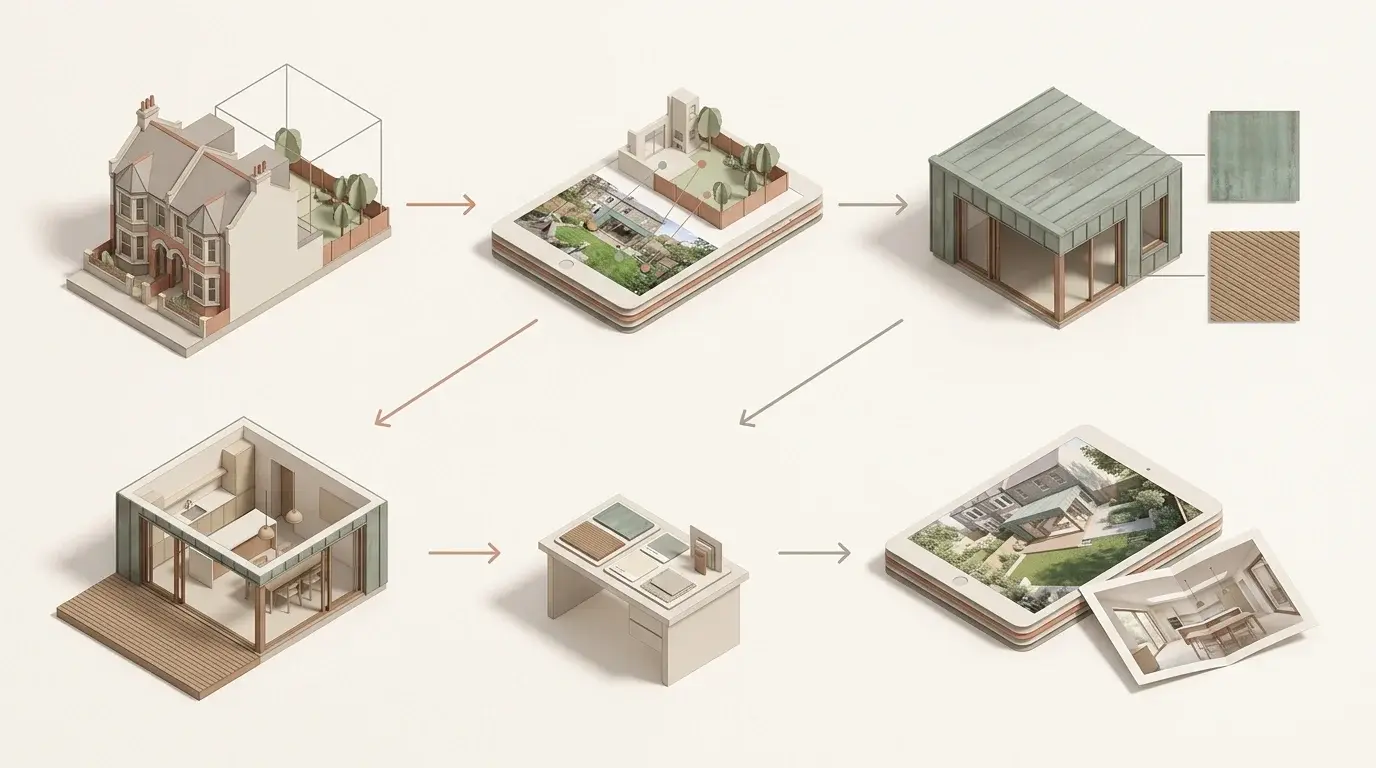
A Camden rear-extension visualisation package can include rear-garden CGIs, side-return views, interior views through full-height sliders, material sample boards, joinery studies, basement lightwell or roof-dormer studies, daylight comparisons and selected planning images where conservation-area or neighbour visibility matters. Extension rendering should make the relationship between retained Victorian fabric and contemporary material clear without making the addition feel arbitrary or oversized.
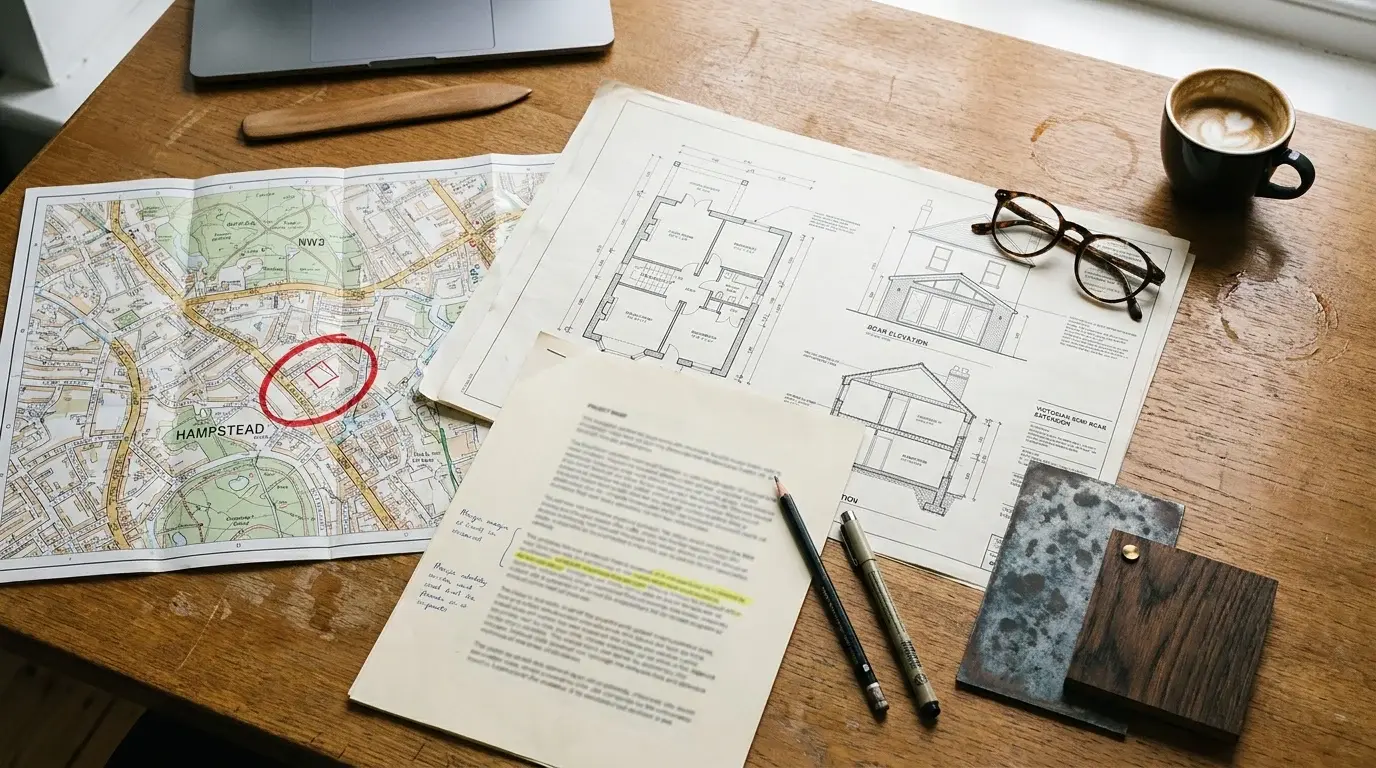
A north-Camden extension package usually combines design sign-off imagery with carefully scoped planning evidence. The visual workflow supports decisions before the team commits to specification, planning, neighbour consultation or contractor selection. A photoreal render can test zinc patina, bronze metalwork, sliding-door rhythm, deck timber and garden tone. The same model can then be reused for design review, neighbour-consultation imagery, marketing stills or selective planning evidence, as long as each output is scoped for its audience.
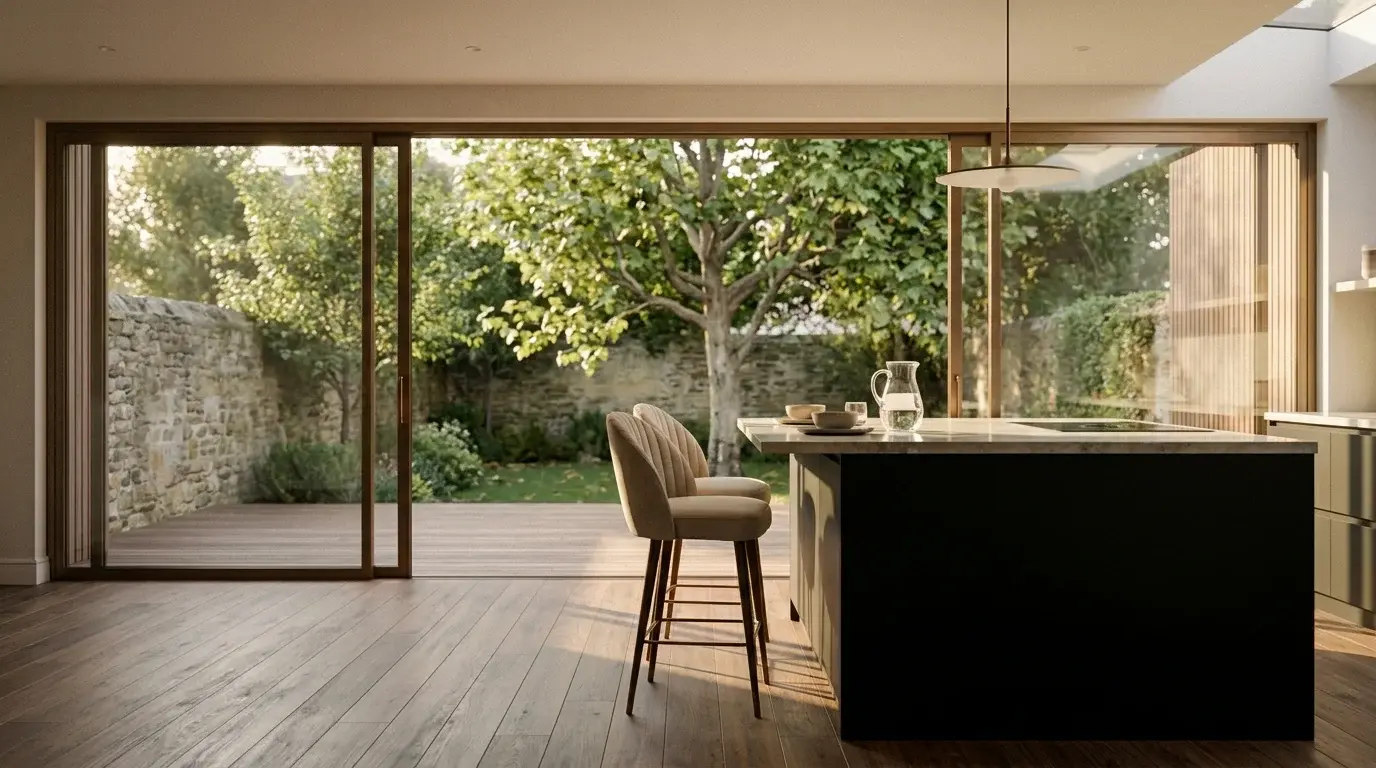
The visual package should be organised around decisions, not image count. The client may want a calm garden CGI to approve scale and material; the architect may need close studies of zinc patina, bronze frames and timber deck; the planning officer may need neighbour-line and roofline evidence to test impact. Marketing or sale imagery, if required, should sit downstream of the planning set rather than ahead of it.
A north-Camden extension visual has to resolve material tone against the existing yellow stock brick, sash windows and garden depth that define Hampstead, Belsize Park and Primrose Hill streets. Patinated zinc, dark-stained timber, bronze frames, slim-edge sliders, brick reveal depth and deck thickness all decide whether the extension reads as a quiet addition or a forced object. Reveals, setbacks and parapet weight can ease apparent bulk, but only when shadow and neighbour rhythm are accurate.
The garden relationship matters as much as the rear elevation. Reviewers and neighbours look for how the deck meets the garden, where the threshold sits, how planting wraps the addition and how the existing tree canopy reads against the new roofline. Exterior rendering for an extension should include close material studies and wider garden views, because material credibility and garden behaviour are judged together.
An extension is judged inside as much as outside. A photoreal interior visual can test furniture scale, kitchen-island position, light flooding through the sliders, walnut floor tone and ceiling-plane continuity before specification is fixed. Joinery studies, threshold detail at the deck line and pendant-lighting position decide how the room actually lives once the structure is finished.
Interior images should agree with the rear-garden view. The same materials, the same daylight, the same threshold geometry should read across both frames so the architect and client can trust the relationship between exterior and interior before the contractor commits to detail.
Hampstead, Belsize Park and Primrose Hill each carry tight conservation-area review, neighbour-line sensitivity and tree-protection considerations. A Hampstead extension may need careful rear-elevation evidence to test zinc tone and party-wall reading. A Belsize Park rear addition may need rooflight and dormer visibility studies. A Primrose Hill scheme may need roofline evidence where the back of the terrace is visible from the surrounding streets and parkland.
Camden Council planning context, conservation-area appraisals and Article 4 directions can make even modest residential additions visually load-bearing. A useful planning visual for these streets needs to match that scrutiny, because a planning consultant has to defend scale, material and neighbour relationship against a high baseline of architectural quality in the area.
Each service maps to a Camden use case, from extension visuals and planning CGI to interiors, mixed-use development images and verified-view support.
Streetscape, facade, roofline and public-realm views for Camden Town, Kentish Town, Hampstead, Bloomsbury and other Camden settings where context affects design perception.
Discuss this service Planning Application VisualsCamden Council planning images for design-and-access support, consultation packs, material studies, massing explanation and neighbour-facing communication.
Discuss this service Verified ViewsVerified-view and AVR support for sensitive townscape, roofline, public-realm or larger-development contexts where methodology should be agreed before production.
Discuss this service Interior VisualisationsInterior CGI for Camden hospitality, workplace, cultural, residential and private-client briefs, with finish, lighting, furniture and material accuracy for sign-off.
Discuss this service House ExtensionsRear extensions, loft conversions, roof additions, basements, garden rooms and infill proposals where homeowners and consultants need clear visual explanation.
Discuss this service Commercial DevelopmentsMixed-use, retail, workspace, hospitality and development CGI around Camden Town, King’s Cross, Euston, Holborn and other urban Camden contexts.
Discuss this serviceNeed planning visuals, conservation context and material studies that explain the Camden design argument without overstating the proposal.
Need extension, loft-conversion, basement, garden-room or interior visuals that turn drawings into understandable decisions before planning or procurement.
Need mixed-use, workplace, hospitality, cultural or residential CGI that balances presentation quality with believable Camden context.
Camden CGI needs to show more than a proposal in isolation. Street character, roofline visibility, material tone, neighbour relationships, public-realm context and interior finish accuracy all affect whether the visual helps the project team make a decision. For facade, roofline and streetscape visibility, see exterior rendering support.
The Camden visualisation process starts by identifying the decision the visuals need to inform, then matches model detail, viewpoint method and finish accuracy to that decision.
Review the Camden address, drawings, planning context, site photos, references, deadline and intended image use.
Agree the visual purpose: Camden Council planning explanation, extension design review, private-client sign-off, consultation, investor presentation or marketing.
Model the existing and proposed condition with enough neighbouring context for the Camden setting to read clearly.
Compose street, garden, interior, roofline, public-realm, photomontage or verified-view viewpoints before final rendering.
Apply materials, lighting, furniture direction, facade detail and borough-specific context, then deliver print-ready and web-optimised stills or iterations.
Tell us where the Camden project is, what stage it has reached, which drawings or references are ready, and whether the images need to support planning, extension design, client sign-off, procurement, consultation or marketing.
You can also email drawings, image references and deadlines to hello@architecturalvisualisationlondon.uk.
A clear Camden quote depends on the site address, planning stage, drawing information, visual method and decision the imagery needs to support.
Send drawings and references for a brief review and we will confirm the right visual route before quoting.
Free planning-oriented tool for residents and project teams.
View resource ResourceFree planning-oriented tool for residents and project teams.
View resource ResourceFree planning-oriented tool for residents and project teams.
View resourceCamden sits between central London, the West End and north London project contexts; nearby borough links extend that context for Camden briefs.
Not every Camden planning application needs verified views. Smaller extension, interior or material-study briefs may only need clear illustrative CGI. More sensitive townscape, roofline, conservation-area or larger-development proposals may need photomontage or verified-view support set by the consultant team.
Yes. CGI can show how proposed materials, massing, roof changes, extensions, shopfronts or facade alterations sit within conservation-area character, helping clients, consultants and reviewers understand the change more clearly.
Typical inputs include existing and proposed drawings, roof or section drawings, site photographs, garden or neighbour context, material references, preferred viewpoints, planning notes and the intended use of the image.
Yes. We can prepare exterior CGI, planning visuals, public-realm views, commercial frontage images, interior renders and photomontage-style material for mixed-use or commercial Camden briefs, provided the project team supplies the drawings and context needed for the intended use.
Yes. Interior CGI can support design sign-off, fit-out decisions, investor presentations, leasing material or marketing imagery by showing finishes, lighting, furniture, circulation and atmosphere before procurement or construction begins.