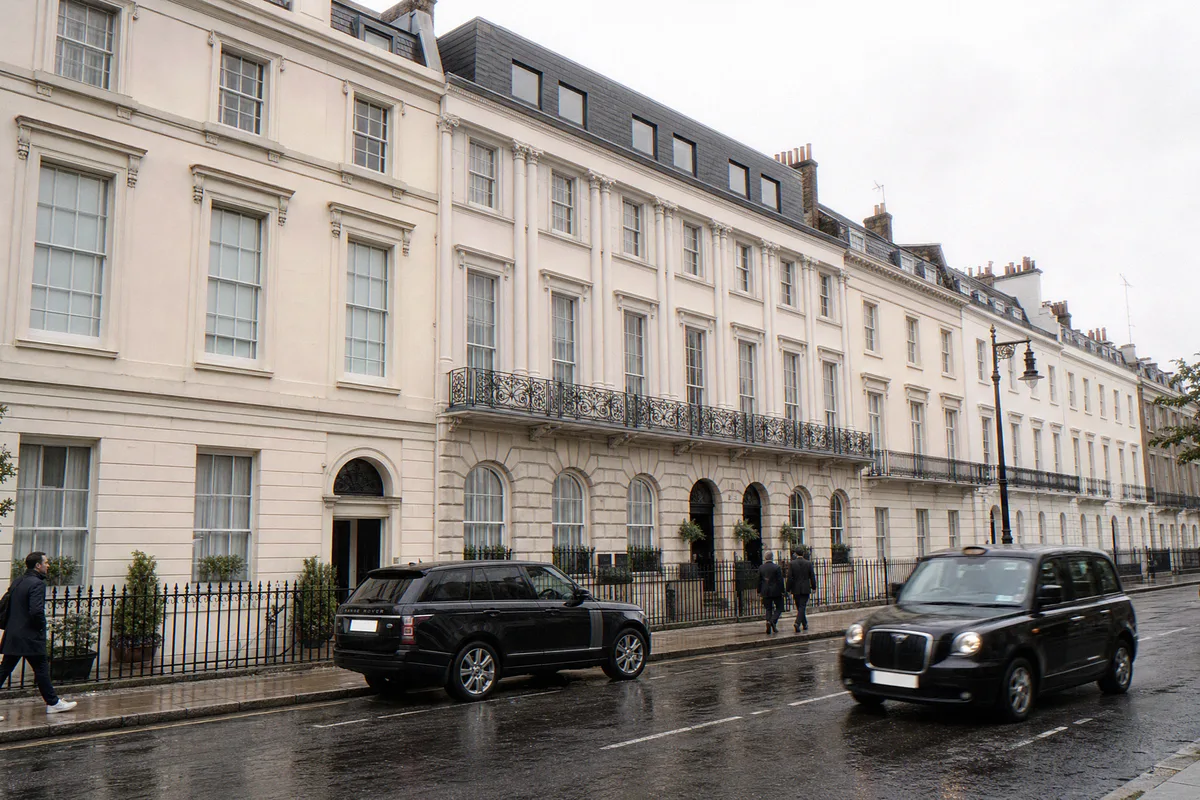
Heritage Expertise
Specialized visualisation for Westminster’s 56 conservation areas and Grade I/II listed settings.
Specialized visualisation for Westminster’s 56 conservation areas and Grade I/II listed settings.
Verified views and AVRs prepared to RICS and Landscape Institute standards for CAZ planning.
Efficient scoping and delivery aligned to tight Westminster committee and tender deadlines.
Westminster City Council submissions often need visuals that make scale, materials and street context easy to understand.
Westminster planning officers, design teams and private clients evaluate the same image against different criteria: facade rhythm against conservation-area character, roofline change against neighbour amenity, and prime-interior finish against procurement risk. Architectural CGI for Westminster has to read accurately on all three at once, which shapes the model fidelity, viewpoint selection and material work from the brief stage onwards.
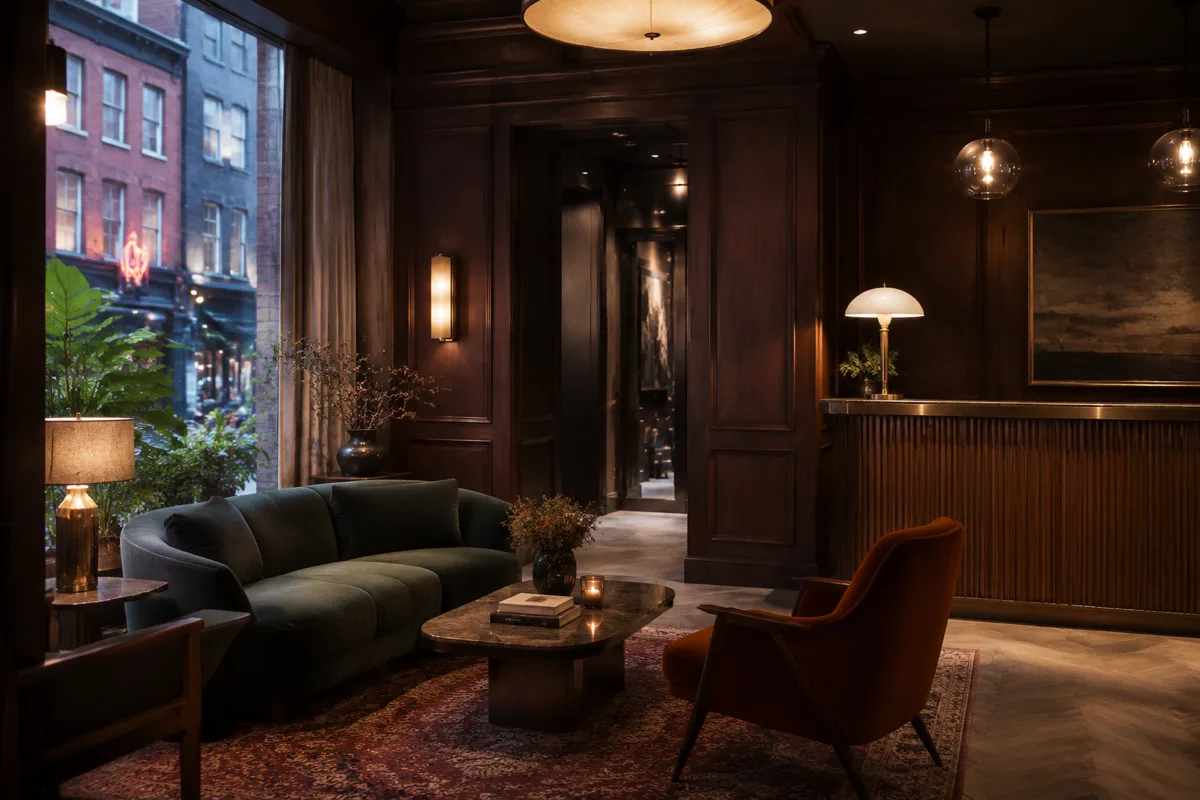
CGI is most useful in Westminster when a proposal needs to make a precise argument: how a roofline changes, how a shopfront sits in the street, how a townhouse extension affects neighbours, or how a prime interior will feel before procurement begins.
Westminster City Council visuals for design statements and consultation material.
Material and facade studies for sensitive streetscapes and estate settings.
Views that separate retained fabric from proposed intervention clearly.
Interior and exterior CGI for Mayfair, Belgravia, Marylebone and Pimlico homes.
Retail, hospitality and office imagery for Soho, Covent Garden and Victoria.
Mansards, terraces and below-ground proposals where visibility matters.
For Westminster City Council submissions, visual material should be scoped against site sensitivity, the relevant Conservation Area Appraisal, the LVMF Designated Views, and the decision audience (planning officer, committee, or pre-application consultee). We produce imagery for design and access statements, heritage statements, consultation packs, planning presentations, material studies, streetscape views, and photomontage-style images where the architect or planning consultant needs clear visual evidence.
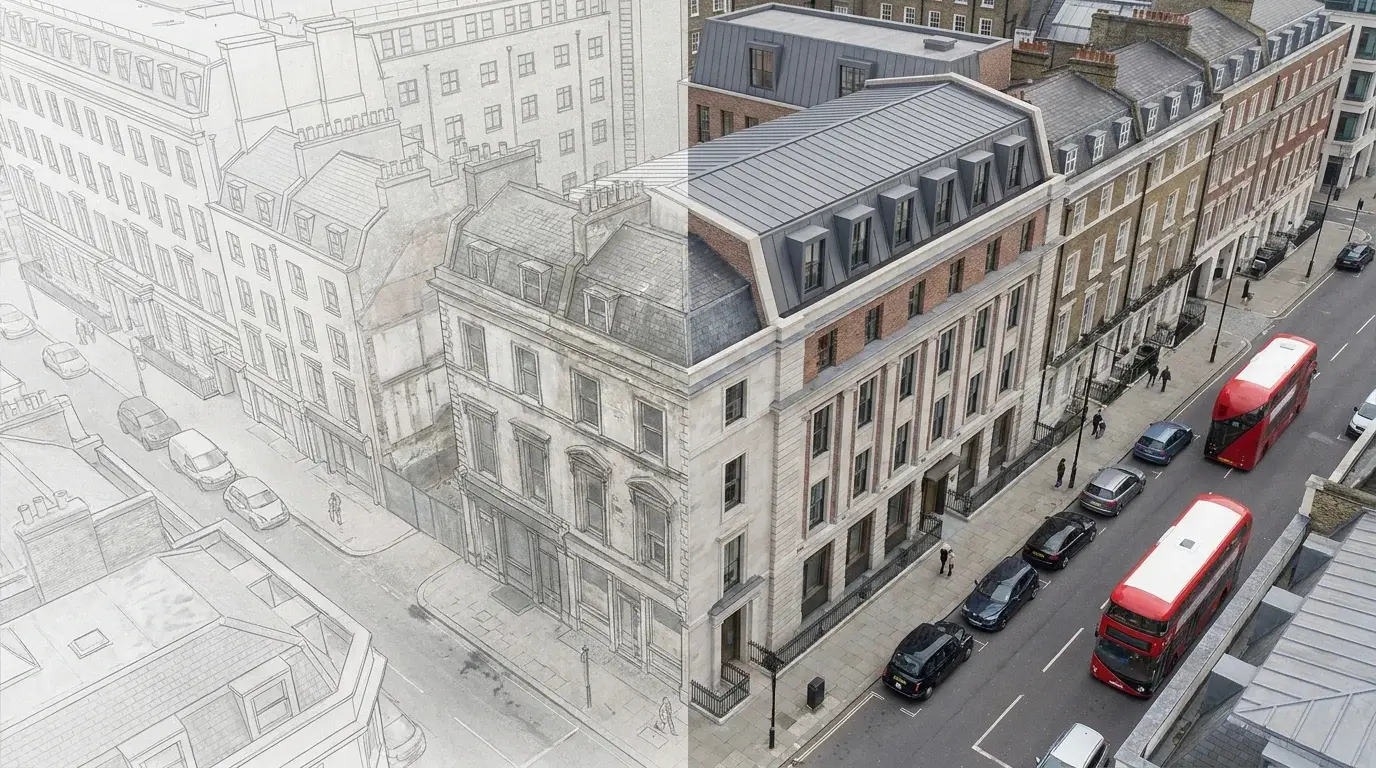
Verified views are not needed for every Westminster project, but sensitive sites may need Accurate Visual Representation (AVR) when townscape, skyline, heritage context or development scale is central to the planning argument.
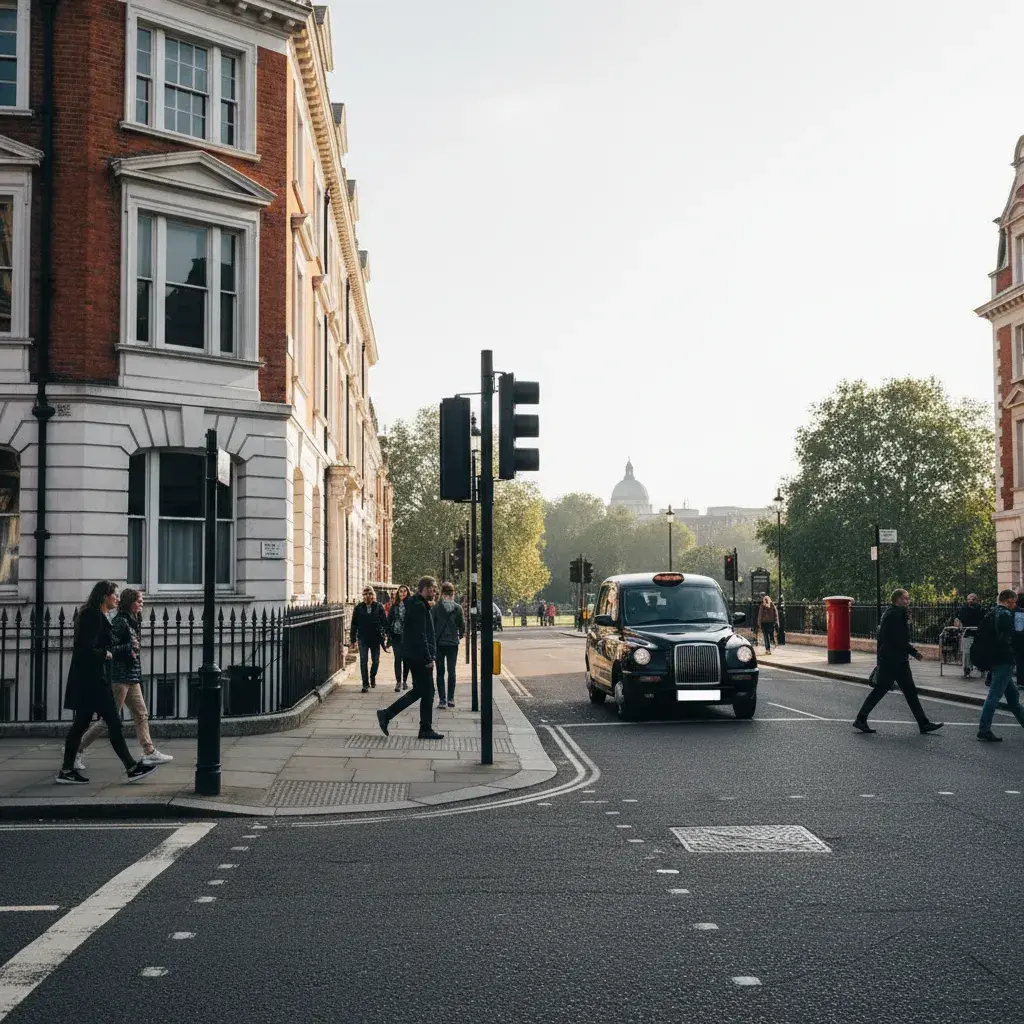
The need is normally set by the planning consultant, project team or authority requirements. Tall-building proposals, prominent riverside sites and conservation-area changes inside the LVMF should be reviewed early.
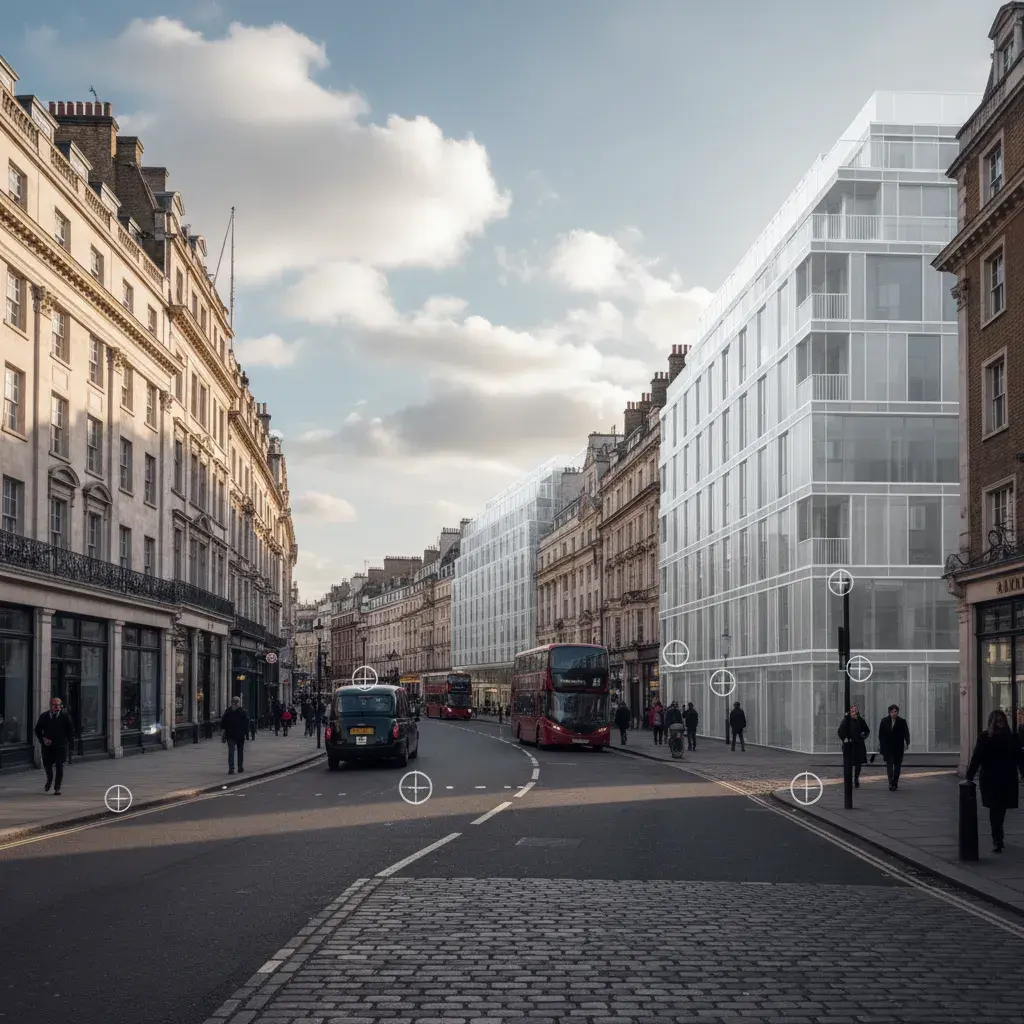
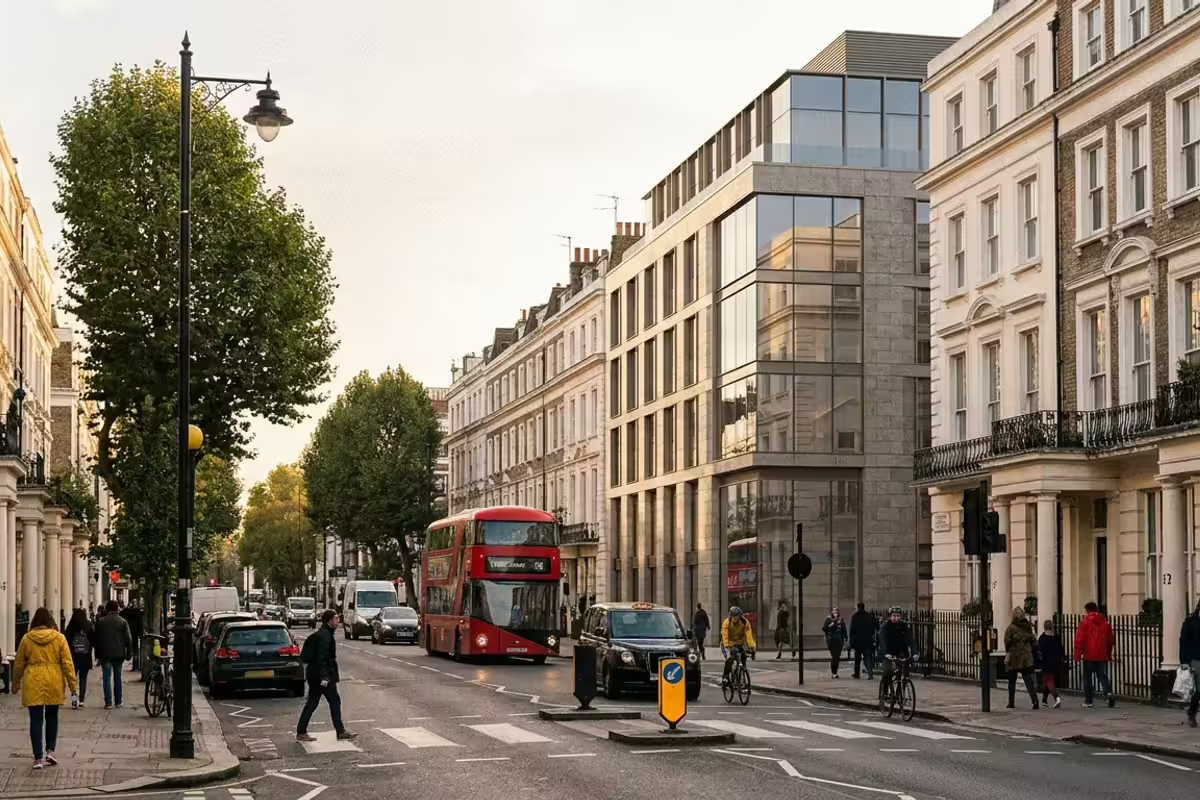
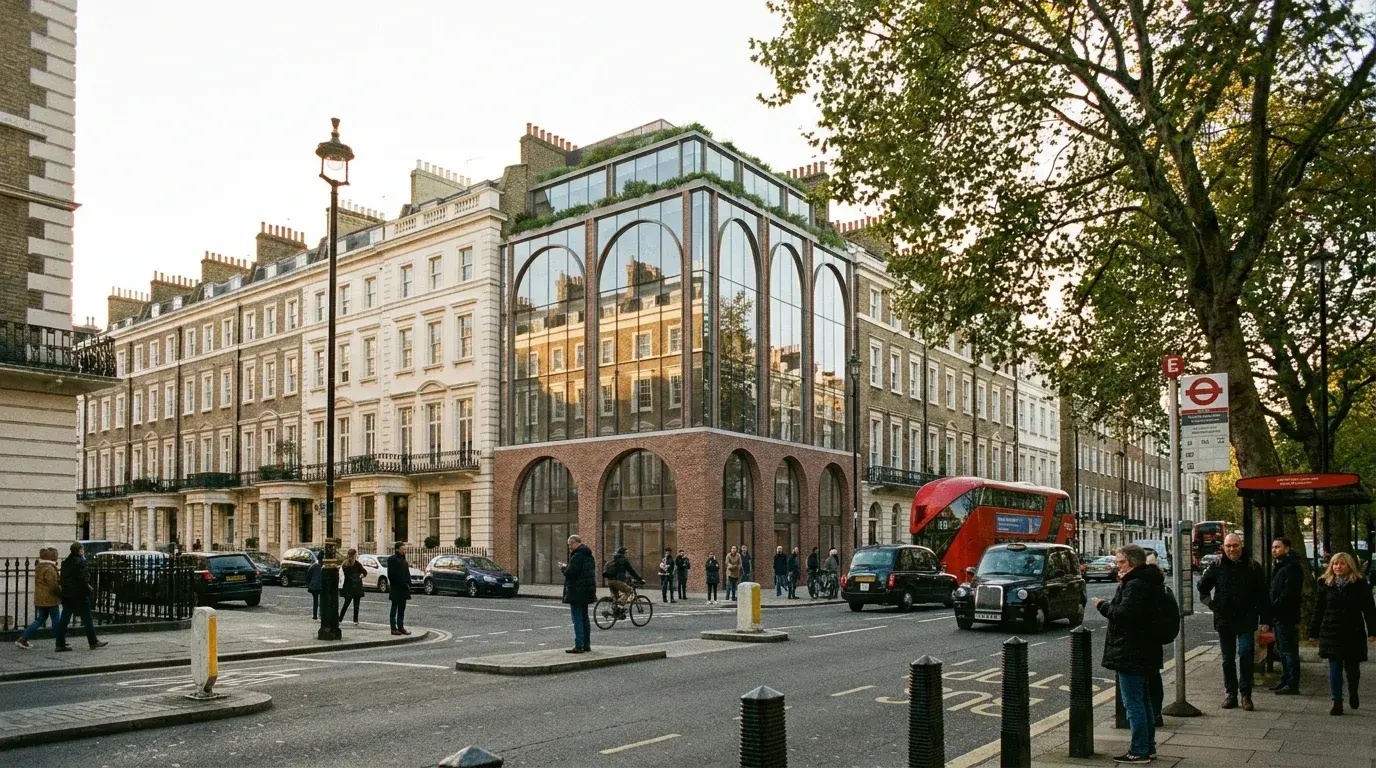
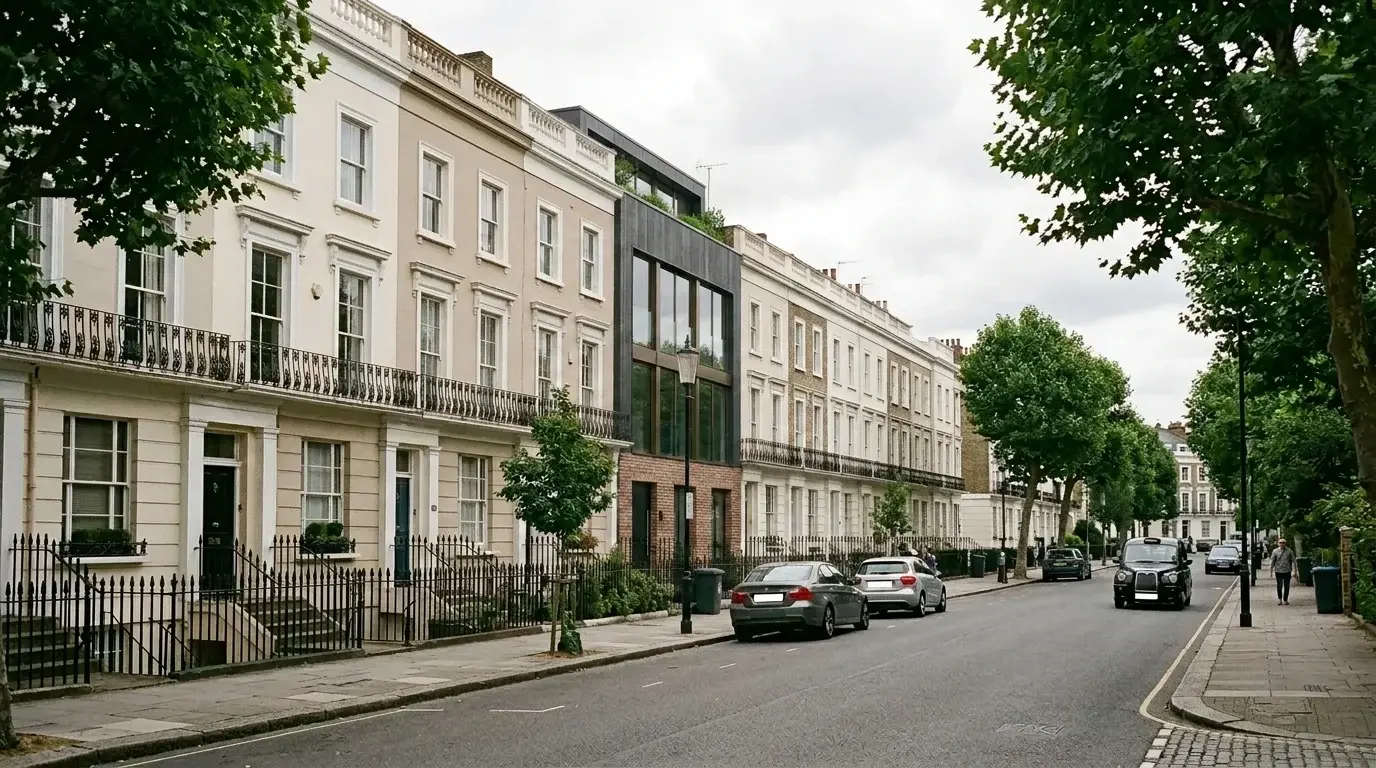
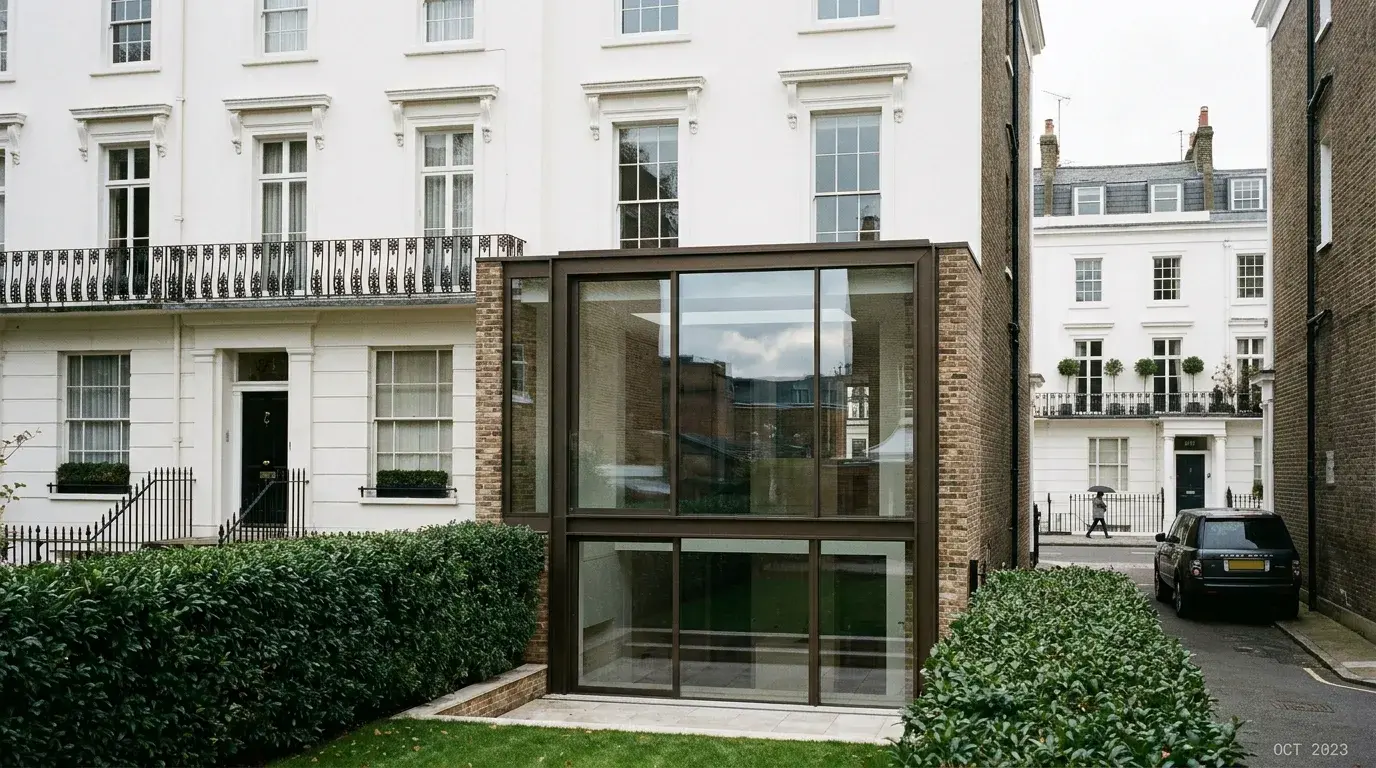
The first view acts as the surveyed AVR baseline: the existing Westminster street scene is held in the agreed camera position, with the proposed-development zone, viewpoint information and facade callouts marked for review. The second keeps the same view and annotation logic, then visualises a contemporary facade intervention within the conservation-area terrace so the planning team can compare existing context and proposed change directly.
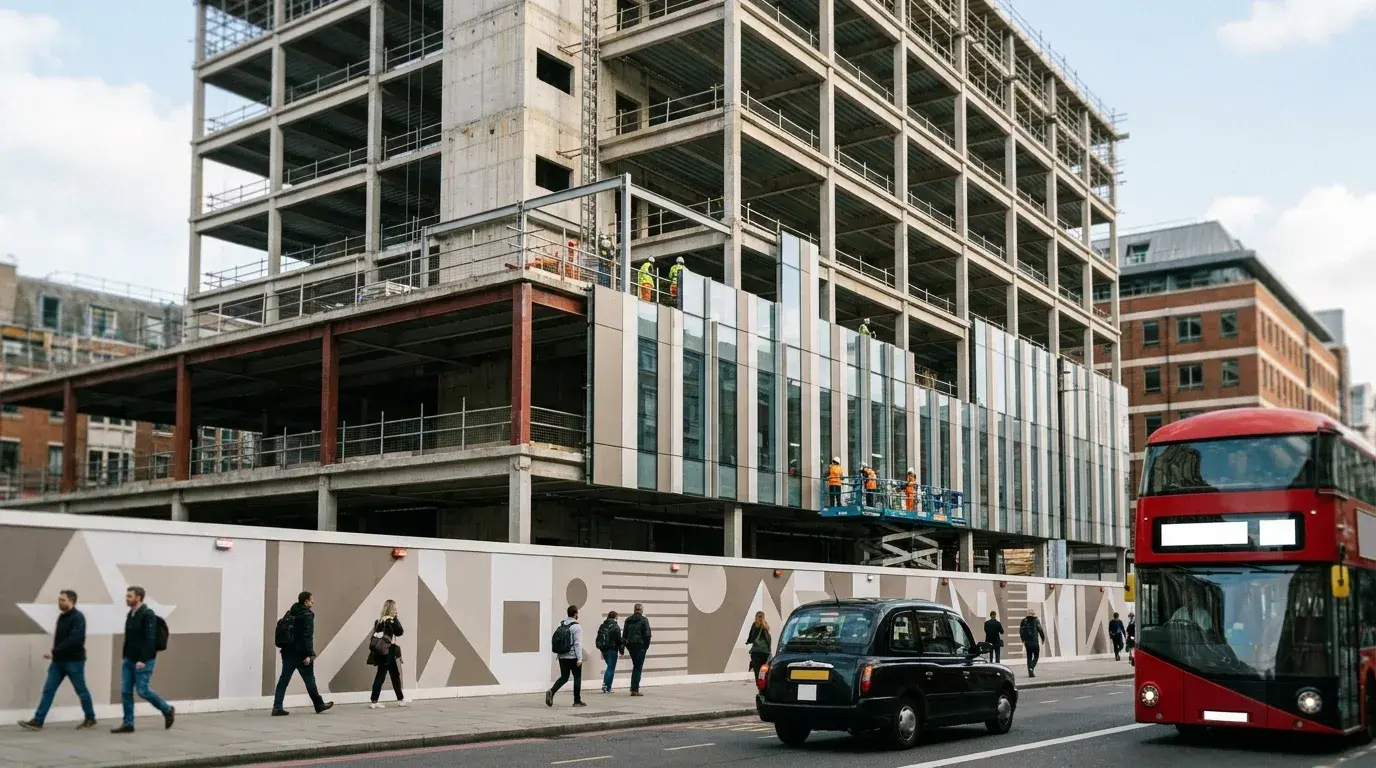
For teams comparing routes, planning application visuals can cover design explanation and committee-pack imagery, while verified views are scoped when the viewpoint, survey relationship and methodology need to be documented.
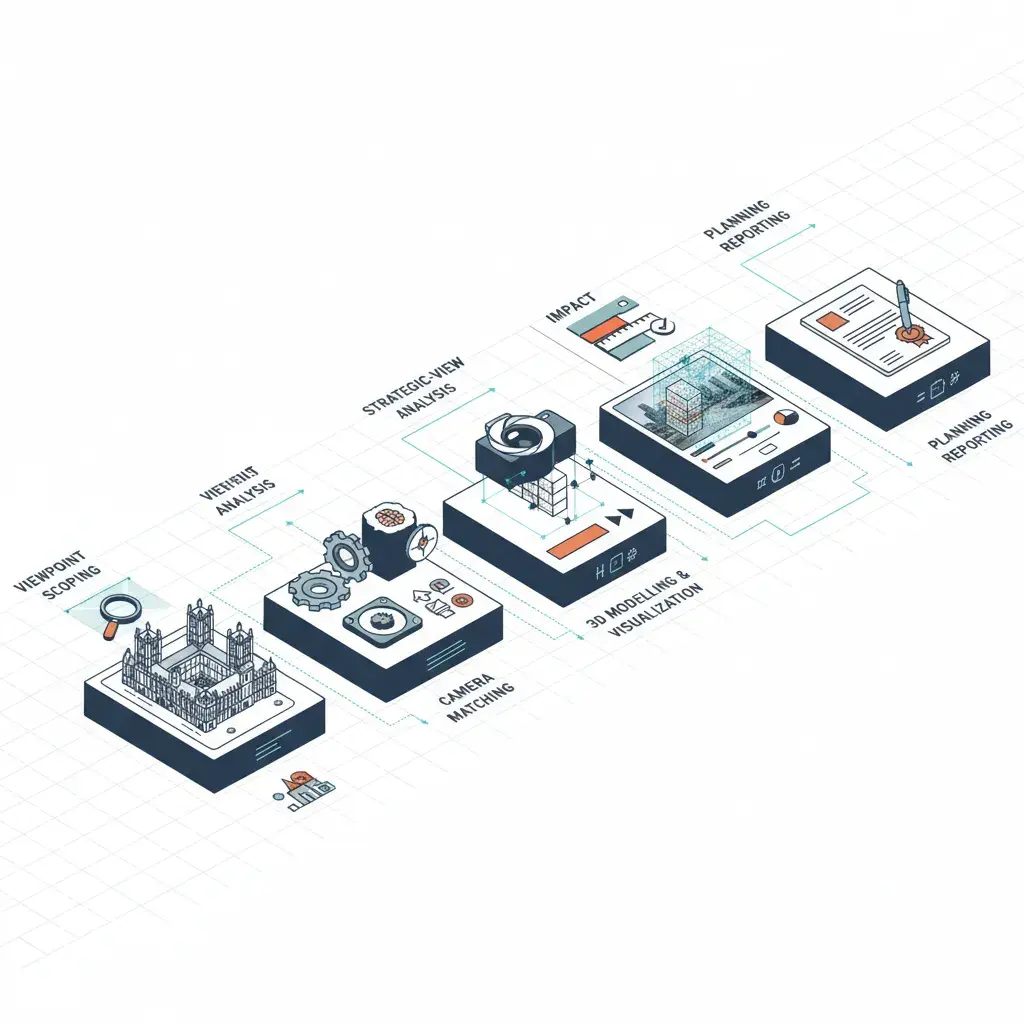
For Westminster projects that take the verified-view route, the methodology runs through four stages: viewpoint scoping, surveyed photography, camera matching against the 3D model, and final photomontage or AVR reporting.
Relevant references include Landscape Institute Technical Guidance Note 06/19: Visual Representation of Development Proposals, Westminster City Council planning guidance, London View Management Framework. If the Westminster brief may need AVR, agree the visual route before photography and viewpoint selection are fixed.
Westminster briefs often combine heritage sensitivity with high commercial expectations. The borough contains prime residential streets, mews houses, mansion blocks, West End hospitality, retail frontages, civic landmarks, and commercial interiors that all need a different visual approach.
Communicate high-end finishes, lighting, joinery, circulation changes and spatial decisions before procurement, client sign-off or sales presentation.
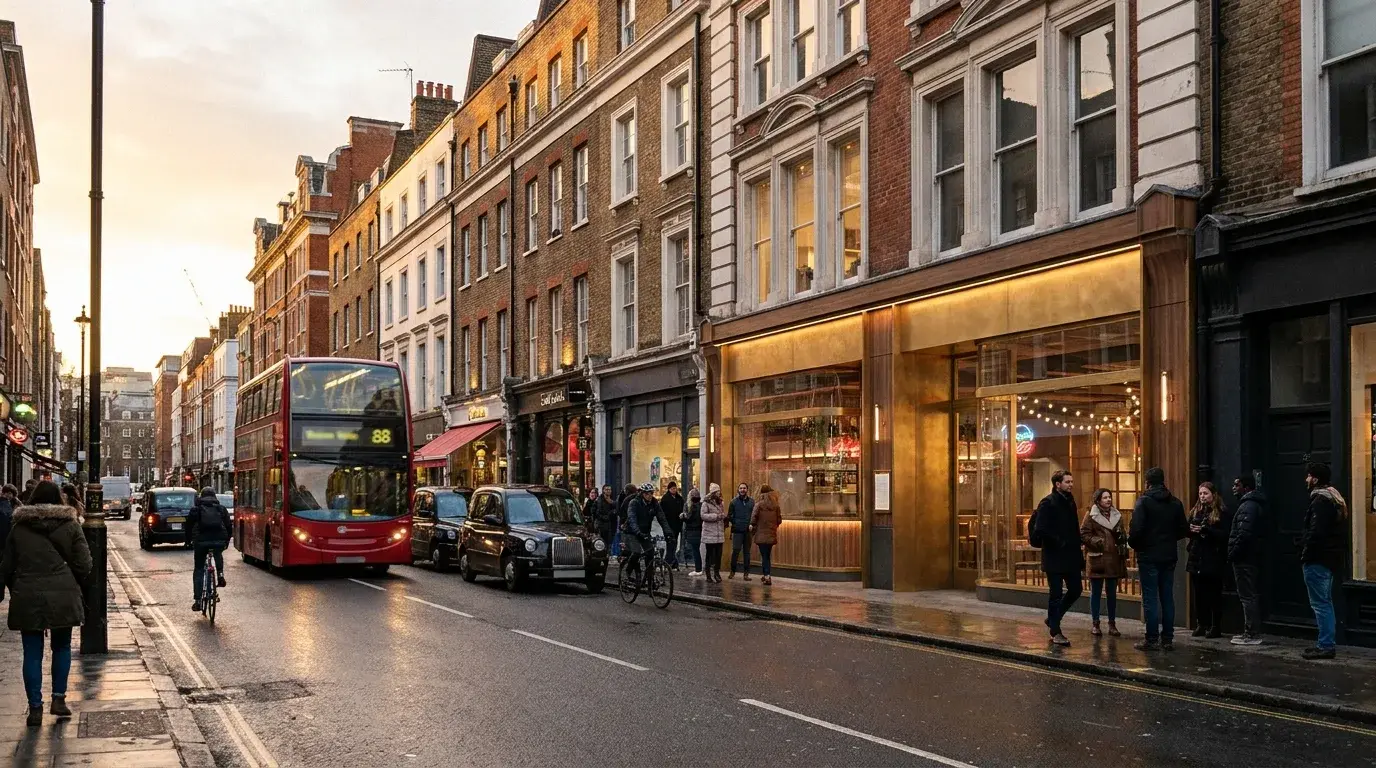
Present frontage, signage, lighting, seating, arrival sequence and customer experience within a sensitive commercial streetscape.
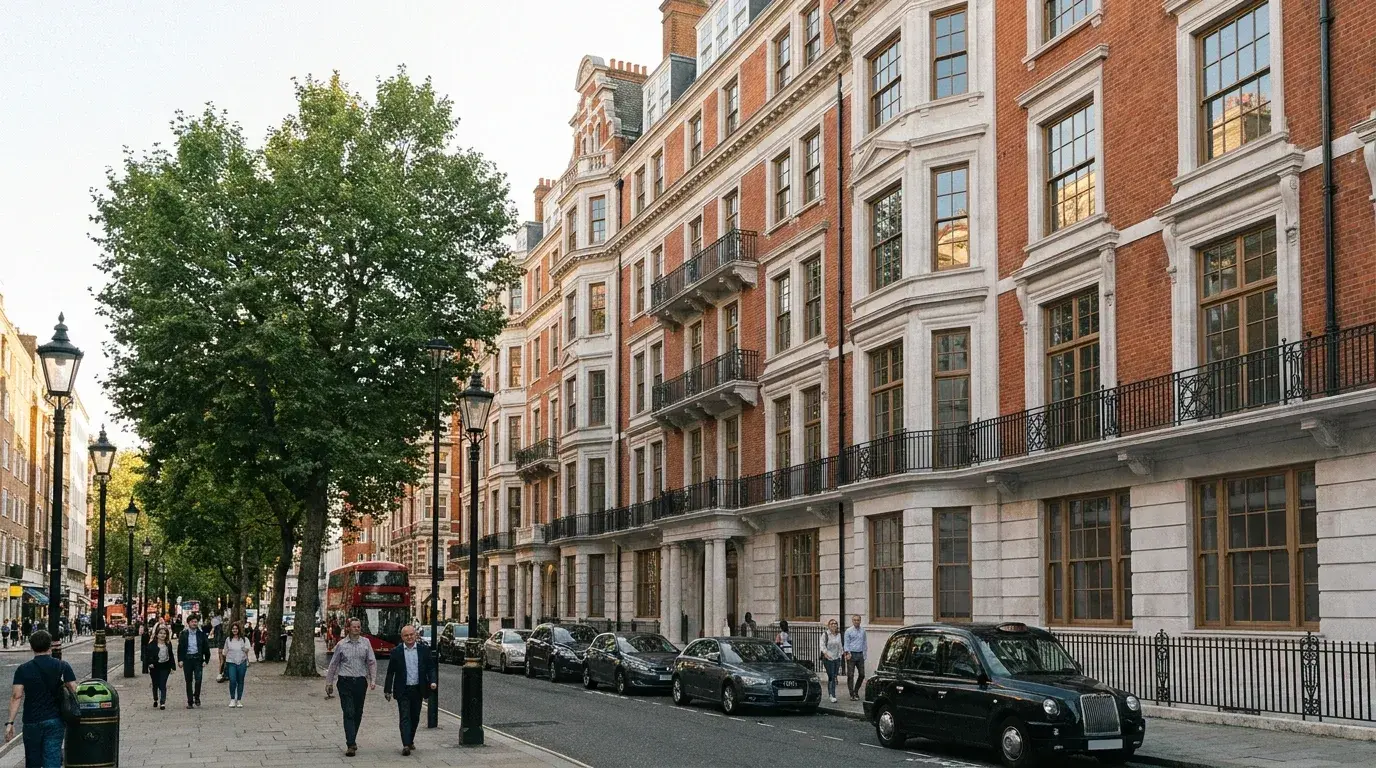
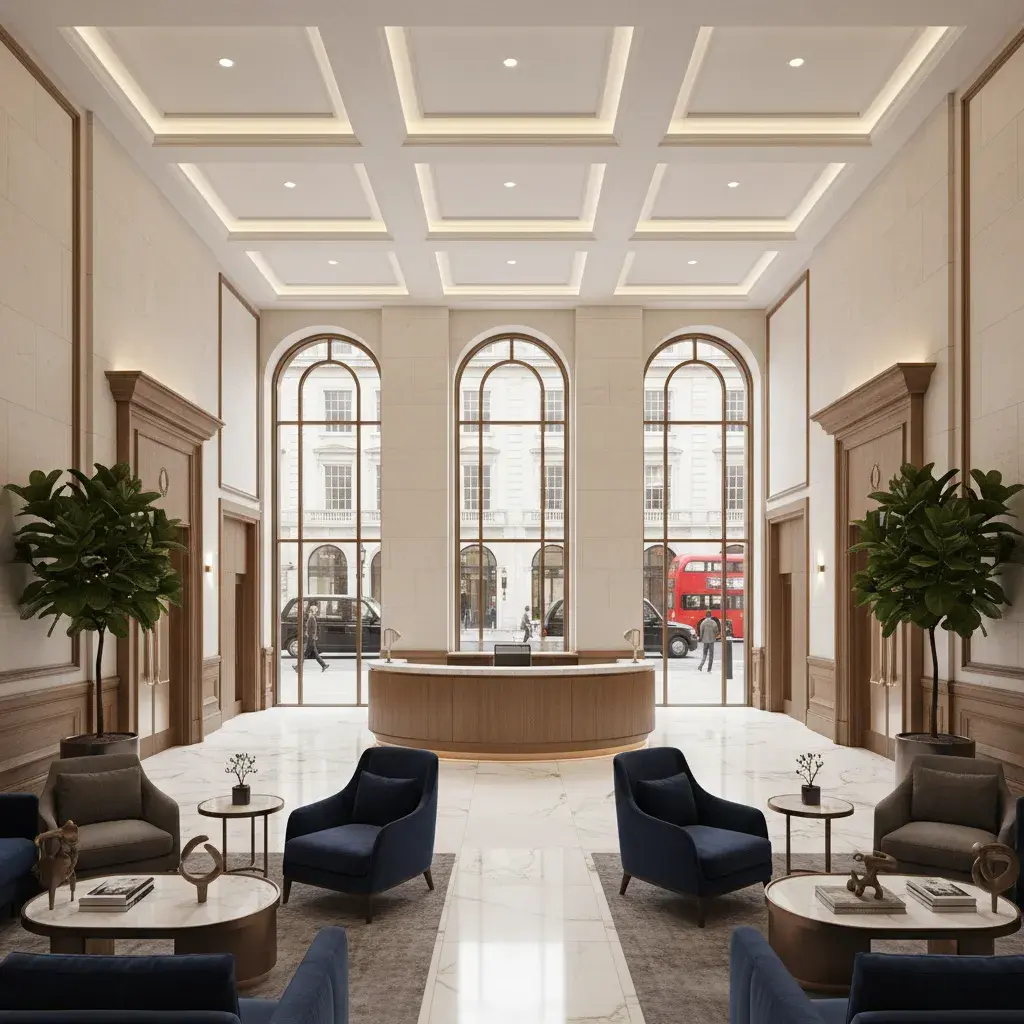
Support landlord, tenant, occupier and investor decisions with polished lobby, workplace, hospitality and mixed-use interior imagery.
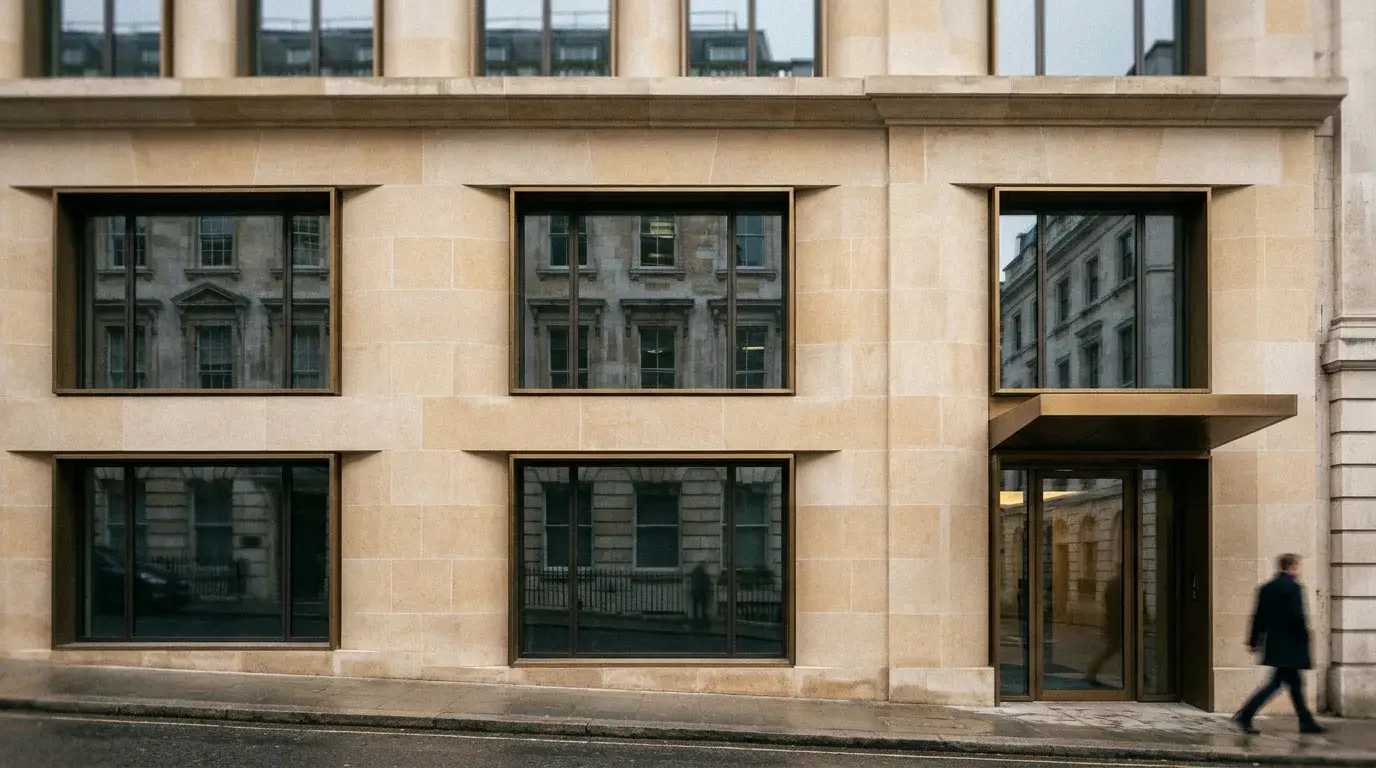
Compare brick, stone, stucco, glazing, metalwork, signage and lighting choices against the existing facade and wider townscape setting.
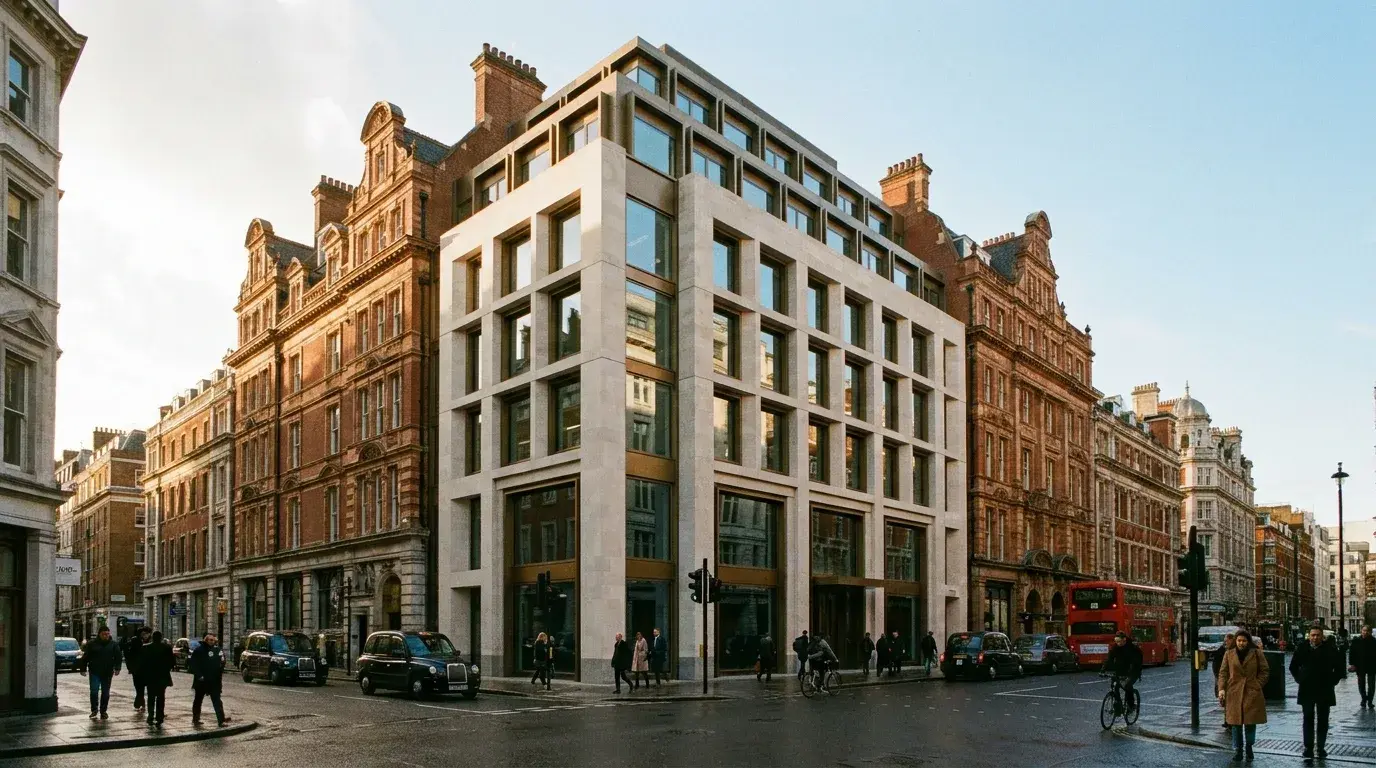
Westminster’s office retrofit pipeline, including schemes like 1 St James’s Square and 1 Victoria Street, with practices including Foster + Partners and AHMM, sets the tone for retained-structure visuals, replacement facades and carbon-led planning narratives. CGI can show how Portland-stone or stone-led facades, deep window reveals, setback upper levels, roof terraces and public-realm edges sit within established commercial streets. It also helps teams communicate BREEAM, NABERS and WELL-led design intent without making the proposal look detached from its heritage setting.
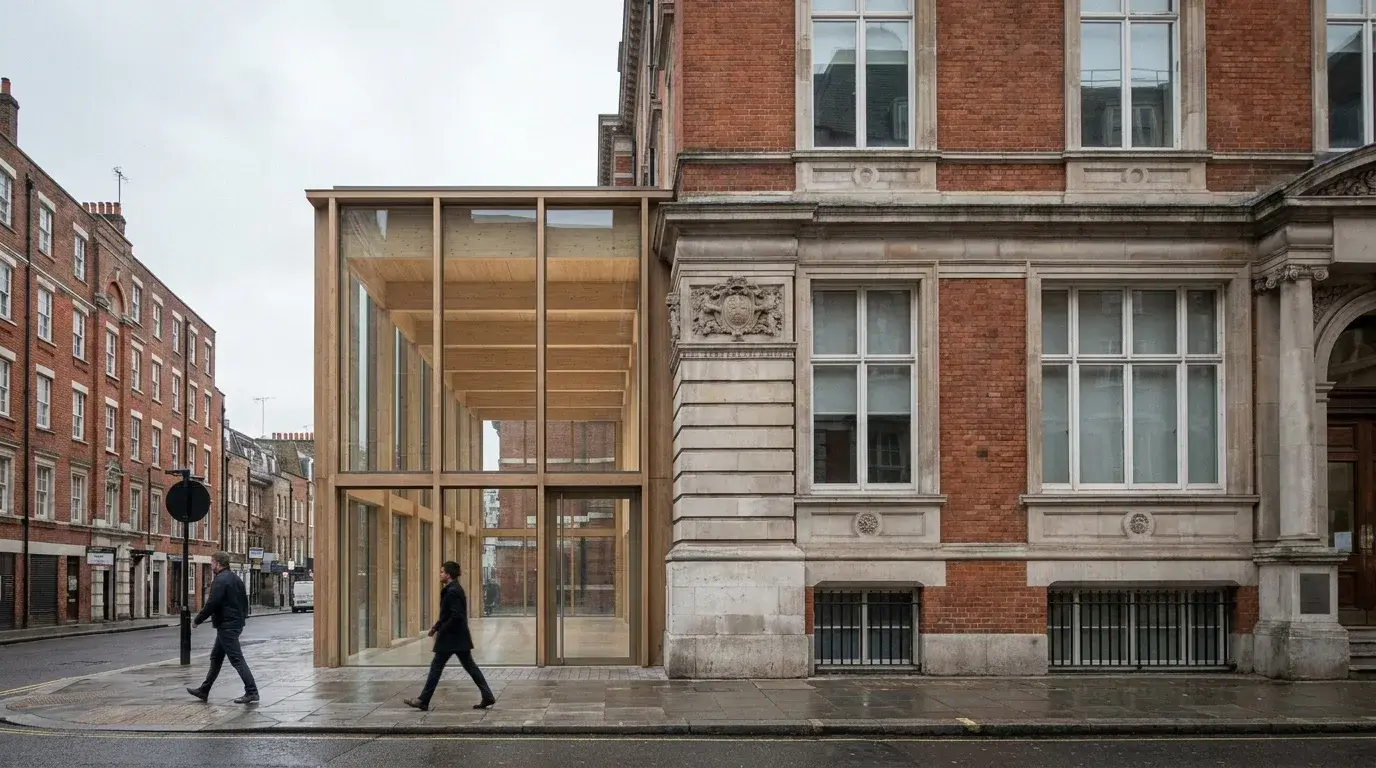
Civic projects in the borough such as Westminster Coroner’s Court demonstrate the heritage-junction detail that can decide whether a contemporary extension feels calm, legible and proportionate. Visuals for Grade II listed civic, cultural or institutional buildings need to show restored historic fabric, new stone or brick planes, glazing junctions, CLT or timber soffits and the relationship between old and new materials. Practices like Lynch Architects and Eric Parry show how carefully Westminster projects handle listed fabric, civic atmosphere and contemporary additions.
Office retrofit in Westminster is rarely judged as an isolated building exercise. The planning visual has to explain retained structure, replacement envelope, conservation-area frontage and public-realm change in one street-level view. In St James's (SW1Y) and Victoria (SW1E), viewers often need to understand facade rhythm, stone tone, entrance hierarchy, roof visibility and servicing edges in one clear view.
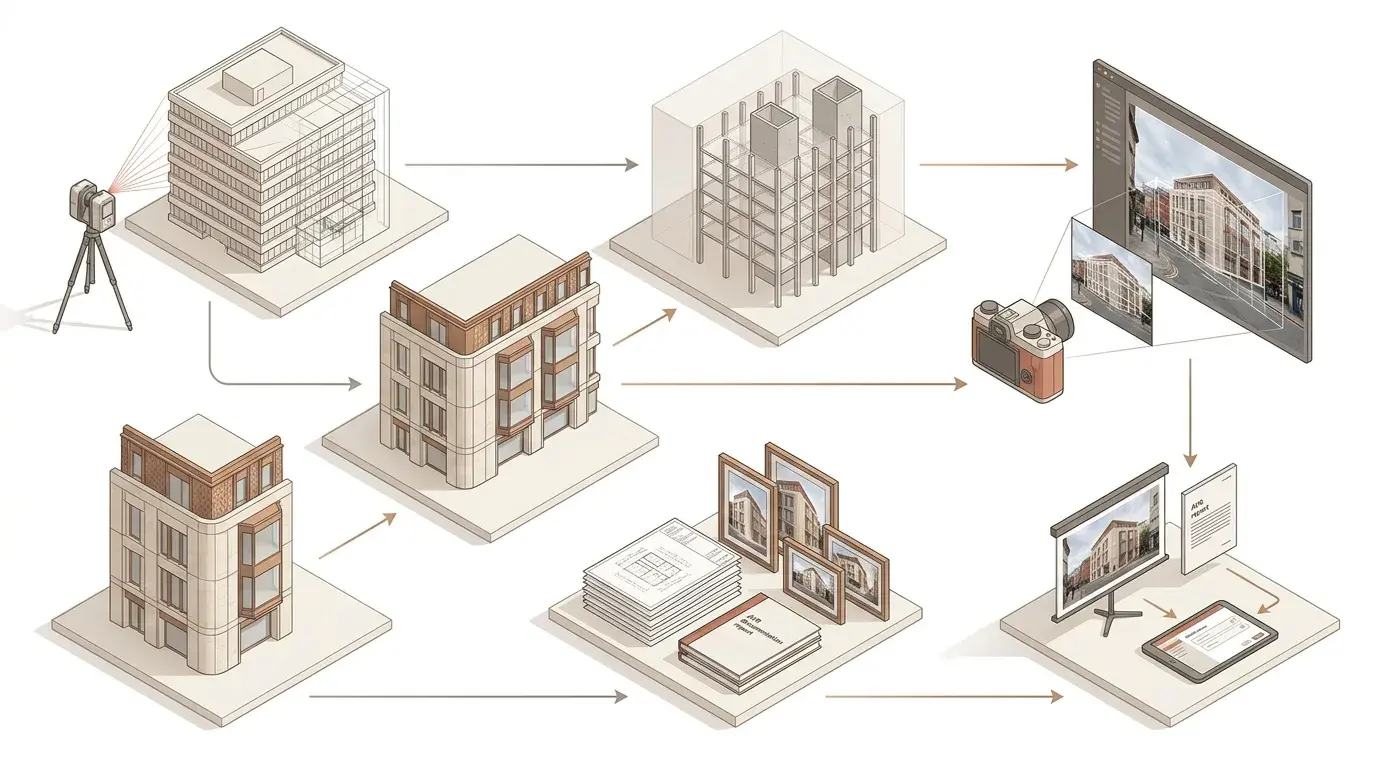
Public schemes such as 1 St James's Square, 1 Victoria Street and 11 Belgrave Road (SW1V) show the type of retrofit-led office work shaping the borough. They are useful context for the visual questions that come up on comparable briefs: retained structure, replacement envelope, setback levels, sustainability narrative and street-level character. A Westminster office retrofit visualisation package may include street-scene photomontages, facade material studies, retained-structure diagrams, roof and terrace visibility views, lobby renders, public-realm edge views, planning statement figures, committee visuals, commercial development rendering and leasing variants.
Planning outputs should be scoped around a decision, not around a generic image count. A commercial presentation may emphasise occupier arrival and workplace quality, while the planning set needs to show massing, materials, retained fabric and neighbour context with less editorial gloss. The planning visual package should make those questions legible before the team commits to planning submission, public consultation, commercial development CGI work or leasing imagery.
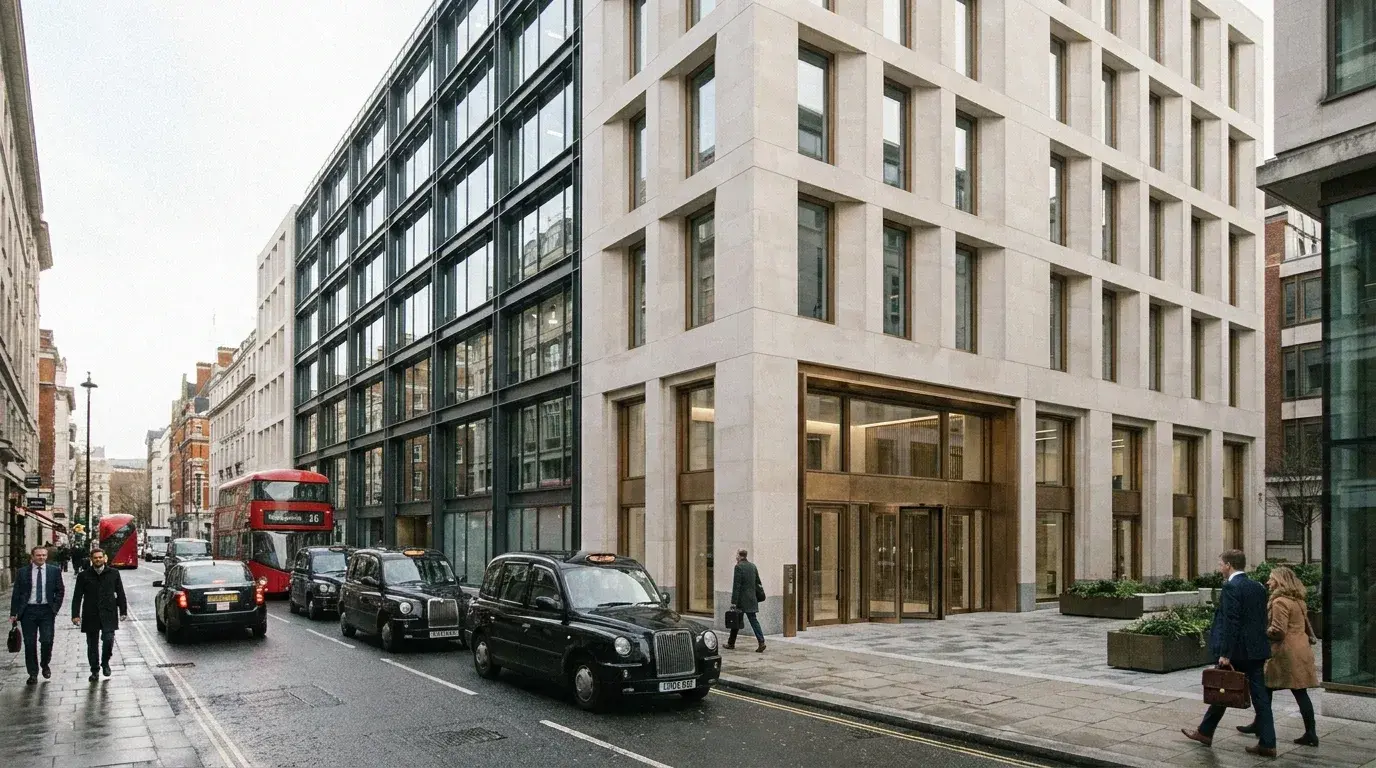
A Westminster office retrofit visualisation package usually needs more than one polished exterior render because planning officers, clients and leasing teams assess different evidence. Useful deliverables include verified or illustrative street photomontages, facade material studies, retained-structure diagrams, roof and terrace visibility views, lobby renders, public-realm edge views, planning statement figures, committee visuals, commercial development 3D visualisation and leasing variants. Each output should be scoped around a decision, not around a generic image count.
Planning outputs are normally prepared as web-optimised stills, print-ready planning images for reports, annotated comparison views, committee-pack figures, design-and-access statement visuals and planning application visuals where needed. Marketing variants can use the same model, but they should be separated from planning evidence. A commercial development CGI may emphasise arrival quality and occupier experience, while commercial development rendering for the planning set needs to show massing, materials, retained fabric and neighbour context with less editorial gloss.
Illustrative visualisation is suitable when the team needs to test design intent, material tone or leasing presentation before the proposal is fixed. Photomontage becomes more useful when the planning argument depends on how the retrofit sits in a real Westminster street. Verified views or AVR are the stricter route when the viewpoint, survey relationship, camera match and methodology need to be documented for visual-impact or heritage review.
The right route depends on the site sensitivity and the audience. A St James's square frontage may need careful street photomontage to explain a new stone facade, while a Victoria deep retrofit may need construction-stage diagrams to separate retained frame from new envelope. Where a consultant needs documented viewpoint evidence, verified views or AVR should be scoped before surveyed photography, model alignment and camera positions are finalised.
Facade visualisation for office retrofit has to work at both street scale and detail scale. Portland stone, reconstituted stone, bronze metalwork, glazing depth, window reveal shadow, canopy thickness, ashlar joint alignment and facade bay rhythm all affect whether the proposal reads as calm or forced. Deep reveals and setback upper levels can reduce apparent bulk, but only if the replacement envelope shows shadow, reflection and neighbouring facade rhythm accurately.
The public-realm edge matters just as much as the upper facade. Westminster reviewers and stakeholders need to see entrance hierarchy, pavement width, cycle access, servicing doors, planting, lighting and how pedestrians pass the building. Exterior rendering for this typology should therefore include close facade studies and wider street views, because material credibility and street behaviour are judged together.
Retrofit visuals can support whole-life carbon and sustainability narratives, but they should not invent BREEAM, NABERS, WELL or EPC performance claims. The image set can show retained structure, reduced demolition logic, improved facade performance, mixed-mode ventilation cues, roof greening, cycle facilities and workplace amenity. Any rating, retrofit-first policy evidence or performance claim should come from the project team; the visualisation should make the physical design measures understandable.
For carbon-led planning narratives, the most useful visuals often compare retained and new elements. A diagram can show the existing frame and cores that remain. A photomontage can show how the replacement envelope improves the street without implying total rebuild. A roof or terrace view can show greening and amenity. Together, those images help a planning consultant explain why retrofit is the design route, not just the construction route.
St James's, Victoria and Belgrave Road each bring a different visual problem. St James's often needs a facade language that respects formal streets and squares. Victoria has larger office blocks, complex servicing and public-realm pressure. Belgrave Road shows how workspace retrofit can sit close to mansion blocks, hotels and residential streets. The same visual method cannot be copied across all three settings without losing Westminster planning value.
Practices such as Foster + Partners, AHMM and Eric Parry are active reference points for the kind of retrofit work being discussed in this part of Westminster. That context does not make them collaborators or clients. It simply shows the level of architectural scrutiny in the borough. A useful planning visual needs to match that scrutiny by showing accurate material tone, conservation setting and street impact.
A clear quote depends on knowing what decision the images need to support. For early design review, basic drawings, massing and facade references may be enough. For planning photomontage, the team should provide site photographs, proposed elevations, material intent, preferred viewpoints and any heritage or townscape notes. For AVR, surveyed photography, control points, camera matching and methodology notes need to be agreed before production starts.
The most useful brief pack includes existing and proposed drawings, facade bay studies, floor and roof plans, site photos, neighbouring context, material samples, sustainability targets, planning consultant comments, image-use requirements and deadline. It should also state whether the output is for design review, planning submission, consultation, committee pack, investor communication or leasing. That distinction controls detail level, viewpoint selection and review rounds.
Not every office retrofit needs verified views. A smaller facade renewal may only need clear planning photomontages and material studies. A sensitive site near a listed building, formal square, protected townscape view or committee-level planning route may need AVR methodology. The planning consultant should confirm this early because surveyed photography, control points, camera matching and reporting affect cost and programme.
Yes, but the two uses should be separated. Planning images need to show scale, materials, retained structure, neighbour context and public-realm impact without excessive atmosphere. Leasing images can use the same model to show arrival, amenity, lobby quality and workplace character. Keeping both variants in one scoped package is efficient, but the review criteria and visual tone are different.
The CGI image needs more than a pale stone texture. It should show joint size, slab depth, reveal shadow, weathering variation, edge thickness, window reflection, metalwork colour and how the stone reads beside neighbouring facades. A close-up facade view is often useful before the wider planning photomontage because it lets the team test whether the material language is credible at pedestrian scale.
A retained-structure narrative is clearest when the package includes a diagram or construction-stage photomontage. The existing frame, cores or slab line can be shown separately from the new envelope, then tied back to the final street view. This helps stakeholders understand that the project is a retrofit strategy rather than a simple facade styling exercise.
Agree the viewpoint purpose, camera position, existing photography, level of accuracy, proposed model detail, material references and final image use. If the output may become AVR, agree methodology before photography. If the output is illustrative only, the team should still agree whether the image is for design review, planning statement, consultation or commercial presentation.
An illustrative photomontage explains design intent in a real street context, while an AVR documents viewpoint position, survey control, camera matching and methodology. Sensitive Westminster sites may need AVR when townscape or heritage impact is part of the planning argument.
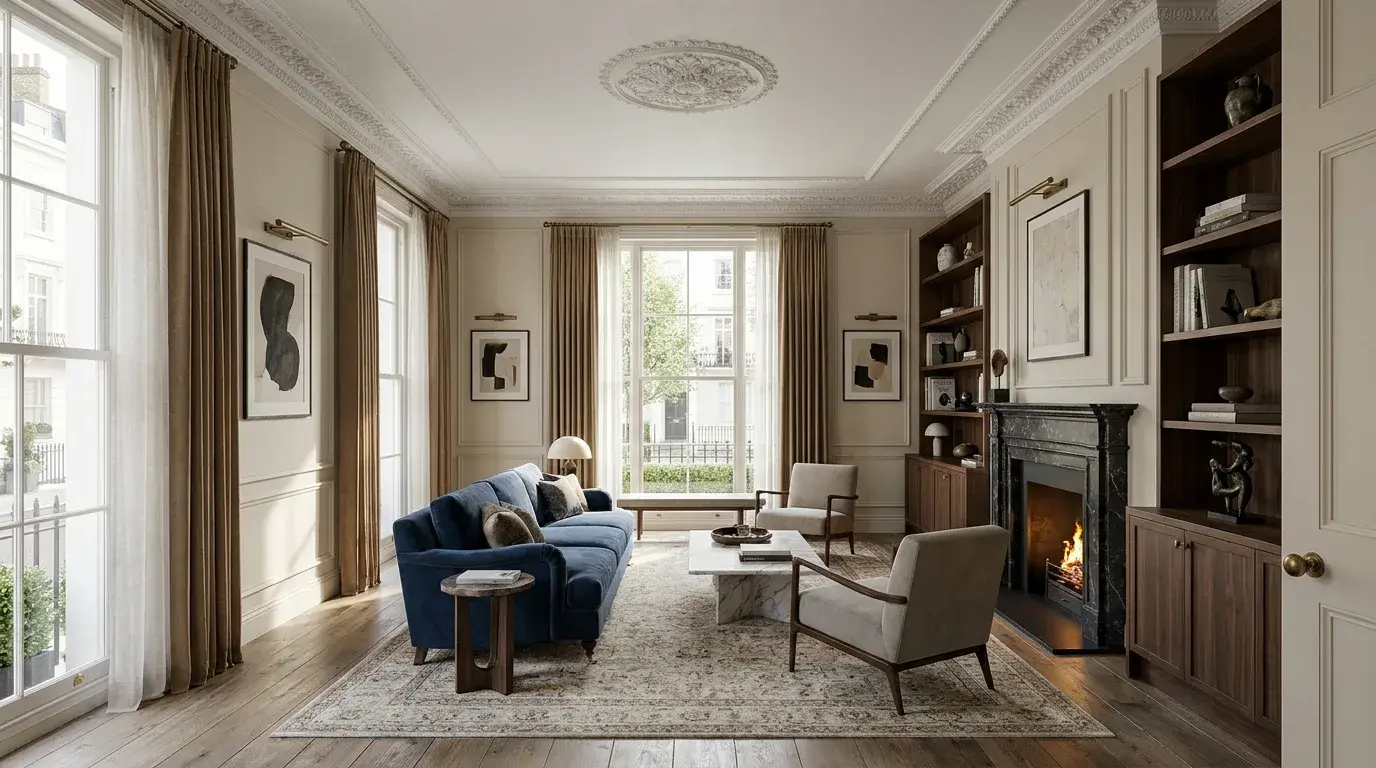
Prime residential visualisation in Westminster has to resolve design intent before expensive specification decisions are made. In Belgravia (SW1X) and Mayfair (W1K), a townhouse image may need to show restored period fabric, bespoke joinery, stone, lighting, furniture, art and soft furnishings in one believable room. The goal is not a generic luxury moodboard. It is a design sign-off image that helps the client, architect and interior team judge proportion, material tone and lived-in residential quality before procurement begins.

A prime residential visualisation package can include principal reception rooms, kitchens, bedrooms, bathrooms, dressing rooms, joinery studies, material and finish boards, lighting studies, FF&E renders, basement and wellness visuals, mews or garden views and planning visuals where listed-building or conservation-area questions matter. Prime residential rendering should make the relationship between existing townhouse character and contemporary refinement clear without making the space feel sterile.
A Westminster prime residential package usually combines design sign-off imagery with carefully scoped planning or marketing outputs. Useful deliverables include principal reception room visuals, kitchen and bathroom renders, staircase and entrance views, bespoke joinery studies, material boards, FF&E renders, lighting studies, basement wellness visuals, mews or garden views and selected exterior planning images where the townhouse setting needs explanation.

The visual workflow supports decisions before the team commits to specification, planning, procurement or marketing. A photoreal render can test marble veining, timber grain, brass or bronze ironmongery, plaster detail, fabric upholstery and rug texture. A prime residential 3D visualisation can then be reused for design review, client presentation, marketing stills or selective planning evidence, as long as each output is scoped for its audience.
The package should be organised around decisions, not image count. The client may need a calm room view to approve proportion and furniture, while the design team may need close material studies to test marble, veneer, metalwork and plaster detail. Estate agents or developers may need marketing stills later, but those outputs should not dilute the accuracy needed for design review.
Photoreal interior visualisation is most useful when it shows how the room will be lived in, not just how a finish schedule looks. A prime residential design visual can test furniture scale, art placement, curtain weight, rug size, lighting temperature and joinery rhythm before expensive items are ordered. FF&E renders are strongest when they keep the architecture, loose furniture and decorative layer in the same visual hierarchy.

Material studies can sit beside the main room views when a single image cannot carry enough detail. Close crops of stone, timber, bronze, upholstery and plasterwork help the team separate taste decisions from technical ones. That matters in Westminster townhouses because historic fabric and contemporary detailing are judged together, even when the final output is a marketing still rather than a planning visual.
Specifying-grade visualisation depends on material behaviour as much as composition. Marble should show veining depth and edge thickness. Walnut or oak joinery should show grain direction, mitred corners and shadow gaps. Brass and bronze ironmongery should reflect light without looking plastic. Plaster cornices, panel mouldings, woven fabric and rug edges all need enough texture to support real procurement conversations.
Lighting accuracy is equally important. A townhouse room may need soft daylight through sash windows, evening lamp warmth, concealed joinery lighting and picture lights working together. The render should show where shadow gathers, where fabric changes tone and how polished surfaces reflect the room. Without that discipline, the image may look expensive but fail as a design visual.
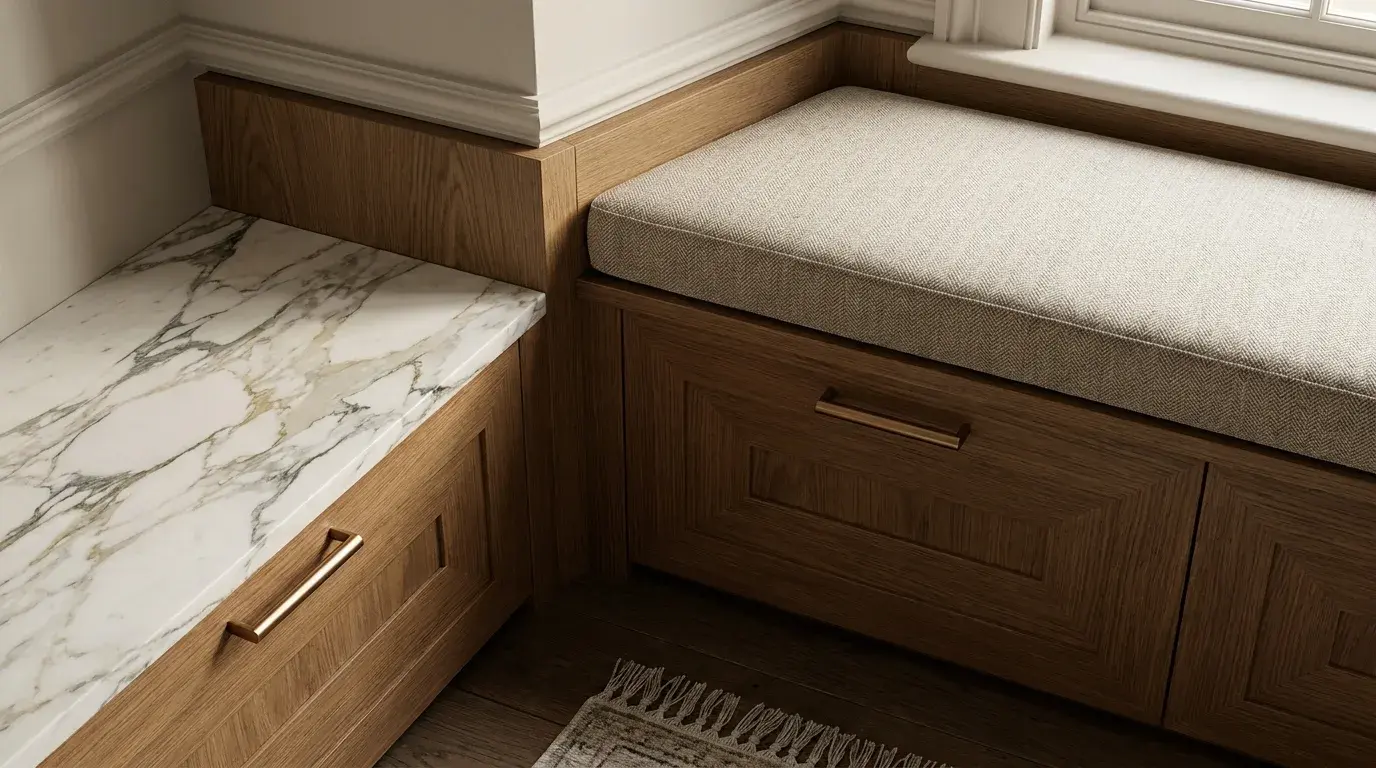
A clear review workflow protects the value of the image set. Early clay or draft views can test camera position, room proportion and furniture scale before detailed materials are applied. Later rounds can refine joinery, stone, fabrics, art, lighting and styling. Separating those stages prevents the client from judging a material before the composition is agreed, or approving a composition before the key finishes are credible.
The best review packs are explicit about what each image is meant to decide. A joinery study may approve door rhythm and handle position. A lighting study may test warmth and glare. A marketing still may communicate atmosphere. Keeping those uses separate lets one interior model support design sign-off, procurement confidence and luxury residential marketing without confusing the review process.
Prime residential townhouse visuals in Belgravia and Mayfair often sit inside a heritage context even when the image is an interior. The room may need to show cornices, ceiling roses, chimneypieces, panelling, sash windows and stair details with enough care that retained fabric and new intervention read as one coherent scheme. The visualisation should not erase the age of the building to make the room feel new.
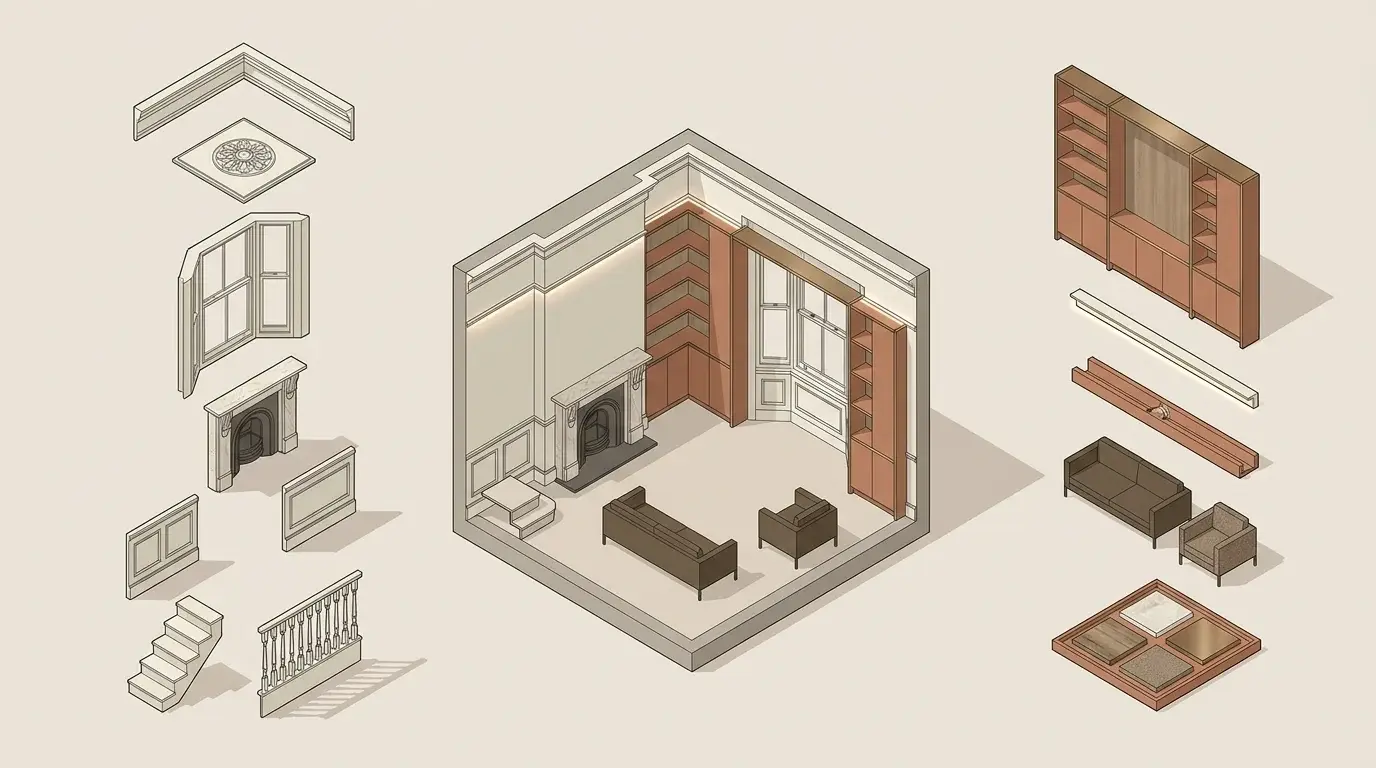
Where listed-building consent or conservation-area review is relevant, the imagery should separate existing fabric, proposed intervention and decorative styling. An interior render may support the design narrative, while a planning view or detail study explains what changes and what remains. That distinction keeps the image useful for both private client approval and consultant review.
Basement and wellness spaces are common prime residential visualisation subjects because they are difficult to understand from plans alone. A basement pool, gym, cinema, spa, wine room or treatment suite needs views that explain ceiling height, circulation, lightwell position, material warmth and acoustic atmosphere. The image should make the lower-ground space feel resolved without pretending it has the same daylight as an upper-floor reception room.
Useful basement visualisation often combines an atmospheric view with a more explanatory design visual. The atmospheric view can test mood, reflection and material comfort. The explanatory view can show lightwell edges, stair connection, glazing, planting, water, stone and ceiling lighting. Together, they help the client and design team judge whether the space feels generous, calm and buildable.
A prime residential quote depends on knowing what the images need to decide. For early design sign-off, plans, elevations, mood references, furniture direction and material intent may be enough. For specifying-grade imagery, the team should provide joinery drawings, finish schedules, lighting layouts, fabric and stone references, art direction, styling notes and any listed-building or conservation constraints already known.
The strongest brief pack includes existing and proposed drawings, room elevations, reflected ceiling plans, joinery details, FF&E schedules, material samples, site photographs, preferred viewpoints, intended image use and review deadlines. It should also state whether the output is for private client approval, consultant coordination, planning support, estate-agent marketing or investor presentation. That use controls detail level, styling and review rounds.
Photoreal interior visualisation is the broader production method: it can support design review, material testing, procurement decisions, planning support and marketing. A marketing still is one output from that model, usually styled to communicate atmosphere and value to a buyer, investor or agent. For prime residential work in Westminster, the same model can often produce both, but the review criteria are different. Design sign-off needs material accuracy and proportion, while marketing needs a finished, lived-in room that still feels credible.
The starting pack should include plans, elevations, room sections, joinery drawings, lighting layouts, material references, FF&E direction, site photographs and preferred viewpoints. For a Belgravia or Mayfair townhouse, it is also useful to send any listed-building notes, conservation constraints, retained fabric information and styling references. If the image is for procurement or client sign-off, finish schedules and specific product references matter more than broad mood images.
Interior visualisation can help a listed-building consent team explain what is retained, what changes and how new work sits beside historic fabric. It can show cornices, chimneypieces, panelling, stair details, joinery and lighting in context rather than as isolated drawings. The visual should not invent consent evidence, but it can make the design narrative clearer for consultants, clients and reviewers when drawings alone do not show material tone or spatial impact.
Yes, but the outputs should be separated. Design sign-off images need accurate materials, furniture scale, joinery detail and lighting behaviour. Planning or listed-building visuals need restraint and clarity about retained fabric, proposed change and context. Marketing stills can use the same model to communicate atmosphere and lifestyle, but they should not replace the more technical views needed for consultant review or planning support.
Basement and wellness suite visualisation should be honest about daylight. A lower-ground room may use lightwells, glazing, pale stone, water reflection, planting and layered artificial lighting, but it should not be rendered as if it were an upper-floor room. Good visualisation shows ceiling height, stair connection, lightwell position, shadow, reflection and material warmth so the client can judge whether the space feels calm, generous and buildable.
Each service maps to a Westminster decision: planning route, conservation context, prime-interior finish accuracy, or West End frontage quality. The visual brief reflects how the borough actually reads on the ground, not a generic London CGI scope.
Prime residential, hospitality and workplace interiors in Mayfair, Marylebone, Soho and Victoria, with accurate finishes, lighting, joinery and FF&E direction.
Discuss this service Exterior RenderingsFacade, roofline and streetscape views for terraces, mews properties and commercial frontages where Westminster context affects design perception.
Discuss this service Planning Application VisualsContext images, material studies and photomontage-style views for Westminster City Council submissions and design-and-access statement support.
Discuss this service House ExtensionsBasement, rear, roof and mansard proposals where neighbour amenity, conservation setting and existing townhouse character must be clear.
Discuss this service Verified ViewsAVR and verified-view support for sensitive townscape settings, landmark-adjacent sites and proposals where viewpoint methodology needs early coordination.
Discuss this service Commercial DevelopmentsOffice lobby, retail, restaurant, hotel and mixed-use visuals for Westminster stakeholders, landlords, tenants and investor presentations.
Discuss this serviceArchitects present massing studies, material choices and neighbour context through Westminster CGI for clients, design teams and planning audiences. A defined view purpose at brief stage lets the same package carry through client approval, design review, board presentation and planning submission material.
Planning consultants specify whether illustrative CGI, photomontage or verified views are proportionate for the site, then commission the package against that scope. Westminster committee packs, design-and-access statements and consultation material need visuals that argue visibility, townscape effect and retained context inside the LVMF and conservation-area framework.
Developers brief CGI to explain the scheme to investors, lenders, partners and internal teams before construction or marketing begins. In Westminster, that requires commercial presentation quality alongside enough site context for heritage, roofscape and streetscape questions to read clearly.
Interior designers prove material palettes, joinery, lighting and furniture direction in CGI before procurement. Prime residential and hospitality interiors in Westminster need finish accuracy at the level where the client can sign off the specification before orders, fabrication or site coordination begin.
Operators evaluate frontage, signage, lighting and interior CGI to read the customer experience before fit-out. For Soho, Covent Garden, Victoria and other busy Westminster districts, the visuals integrate arrival sequence, street presence and internal atmosphere in a single image set.
Westminster CGI needs to show more than a proposal in isolation. Camera positions, material finish, facade rhythm, neighbour context, roof visibility, and internal finish accuracy all affect whether the image equips the project team to decide with confidence. For facade, roofline and streetscape visibility, see exterior rendering support.
The process starts with drawings and context, then locks the visual purpose before modelling. That anchors the output to planning review, client sign-off, investor presentation, or marketing rather than producing generic renders.
Review drawings, planning context, site photos, references, deadlines and intended use.
Agree the visual purpose: planning explanation, design sign-off, investor presentation, sales imagery or consultation support.
Model the existing and proposed condition with enough surrounding context for the Westminster setting to read clearly.
Compose street, interior, roofline, mews, material or planning viewpoints before final rendering.
Apply materials, lighting, furniture direction, facade detail and borough-specific context, then deliver print-ready and web-optimised stills or iterations.
Tell us where the project is, what stage it has reached, which drawings or references are ready, and whether the images need to support planning, design sign-off, investor review or marketing.
You can also email drawings, image references and deadlines to hello@architecturalvisualisationlondon.uk.
A Westminster visualisation brief can usually be scoped from a focused drawing and context pack. The exact inputs depend on whether the output is illustrative CGI, planning photomontage or a verified view, but the items below give the studio enough information to confirm the right route.
Send drawings for a brief review and we will confirm whether illustrative CGI or verified views are the right fit.
Where Westminster projects sit on the map
The City of Westminster is one of the central London local authorities, bordered by the River Thames to the south, the City of London to the east, the London Borough of Camden to the north, and the Royal Borough of Kensington and Chelsea to the west, with a short Brent boundary in the north west. It contains the seat of UK government at Whitehall and Parliament, all of Hyde Park and the Westminster portion of Regent’s Park (which is shared with Camden), and the LVMF strategic views that terminate at the Palace of Westminster and St Paul’s, so the planning context is unusually layered for any architectural visualisation brief here.
Westminster’s districts fall into four bands. The southern band runs along the Thames through Pimlico, Westminster, Whitehall and the Palace of Westminster (Grade I). The central core takes in Mayfair, St James’s, Soho, Covent Garden and the Strand. The northern band runs from Marylebone and Fitzrovia (the Westminster portion) west to Paddington, Bayswater and the area around Regent’s Park. Belgravia and the Westminster portion of Knightsbridge sit in the south west, with the rest of Knightsbridge falling into Kensington and Chelsea.
Building stock tracks the same geography. Georgian and Regency stucco terraces line Belgravia and Pimlico; Victorian and Edwardian mansion blocks fill Marylebone and Bayswater; mixed-use commercial fabric runs through Soho and Covent Garden; parliamentary and civic architecture frames Whitehall and the Strand.
Westminster carries the highest heritage density of any UK local authority. Westminster City Council operates 56 conservation areas covering more than 76 per cent of the borough, and the council’s own guidance records approximately 11,000 listed buildings and structures across Grade I, Grade II* and Grade II. The London View Management Framework (LVMF) sits on the borough as well: of the LVMF’s 27 Designated Views, 13 are Protected Vistas, several aimed at the Palace of Westminster or passing through Westminster towards St Paul’s. Most Westminster visualisation briefs sit inside a conservation area, adjacent to a listed building, or visible from a strategic view.
District geography shapes the visualisation work directly. Belgravia, Pimlico and Marylebone hold most of the prime residential, mansion-block and townhouse refurbishment briefs. Whitehall, Mayfair and St James’s drive the listed-building, civic and high-end commercial briefs. Paddington, Victoria and the Bayswater Road corridor are where larger mixed-use and tall-building work sits, with Townscape and Visual Impact Assessments and verified views to LVMF standard routinely required. Illustrative CGI, photomontage and material studies remain useful across the borough for design review, planning explanation and private-client sign-off.
Nearby borough links extend Central London project context for Westminster briefs.
Kensington and Chelsea sits immediately west and shares the same prime-residential, conservation-area and listed-building register, so many Westminster project teams scope across both boroughs in parallel.
Camden sits to the north and brings a related but different building stock (Bloomsbury squares, Fitzrovia mixed-use and the Regent’s Park terraces shared with Westminster), which matters when a scheme straddles the boundary or carries on through the Marylebone Road.
Lambeth sits across the Thames to the south, and is the most common location for verified-view photography looking back towards Westminster from the South Bank, including LVMF Protected Vistas of the Palace of Westminster and Whitehall.
The City of London lies immediately east; few Westminster typologies repeat in the City, but the St Paul’s Protected Vistas pass through both authorities and need coordinated visualisation when the scheme is in their footprint.
Not every project needs verified views. Smaller schemes may use clear illustrative CGIs, street-scene views or material studies, while larger or more sensitive proposals may require a stricter visual methodology set by the planning consultant, design team or authority requirements.
Yes. CGI can show how proposed materials, massing, roof alterations, shopfronts, rear extensions or facade changes sit within conservation-area character, helping reviewers and clients understand the change more clearly.
Typical inputs include existing and proposed drawings, site photos, material references, interior finish direction, planning notes, preferred viewpoints and any conservation or heritage constraints already identified by the project team.
Yes. We can prepare material-accurate CGI, facade studies and comparison views that distinguish retained fabric, new intervention, neighbouring heritage assets and the proposed finish palette.
Timing depends on drawing completeness, model complexity, number of viewpoints and review rounds. Send the brief, deadline and intended use, and we will scope a realistic programme before work begins.
Within Westminster's 56 conservation areas and hundreds of Grade II and Grade II* listed buildings, external facade changes face extreme municipal planning hurdles. Custom micro-CGI details showing matched historical timber profiles are critical tools for securing Historic England and conservation officer approvals.
Retrofit Planning Controls: Under Westminster Council's official **Retrofit How-To Guide** for windows, planning officers strictly prioritize the repair and retention of historic timber sashes. Any replacement double-glazed units require **Listed Building Consent (LBC)** and are only approved if existing frames are structurally beyond repair.
Slim Double Glazing: Standard thick double-glazing is rejected due to thick sightlines. Westminster Council mandates slim-profile double-glazed units (typically 10-12mm total depth, gas-filled) to match original profiles.
Micro-CGI Details: We produce high-resolution, close-up 3D CGI views of the proposed timber joinery junctions. These detailed sections illustrate the exact visual profile of the slim glazing bars, historic horns, and frame profiles.
Original vs. Proposed comparison: Before-and-after joinery overlays demonstrate that the proposed double-glazed sash replacement preserves the delicate shadow lines and glazing reflections of the original single-glazed window, providing indisputable visual proof to satisfy both local conservation officers and Historic England.
Westminster City Council enforces strict Article 4 Directions regulating basement development. Excavating beneath historic townhouses requires highly technical visual evidence to support complex structural method statements and satisfy neighborhood amenity requirements.
Article 4 depth & footprint limits: Westminster limits basements to a single story and restricts extensions to a maximum of 50% of the rear garden area. Precisely georeferenced 3D models demonstrate strict compliance with these engineering boundaries.
Lightwell Integration: Introduction of natural light into subterranean rooms is required but must minimize impact on the historic facade. We render photo-real basement lightwells, showglass structures, and landscape treatments to prove the proposed structural extension integrates seamlessly with the garden setting.
Structural Method Statements: Subterranean applications are scrutinized for structural and hydrological safety. We supply 3D volumetric overlays that help project engineers visualize key structural support sequences and underpinning zones.
Amenity Daylight Protection: Neighbor objections regarding lost garden sunlight or overshadowed windows are a frequent cause of rejection. We run precise, astronomical-time shadow tracks (March 21st equinox) that mathematically prove neighboring outdoor assets and window sunlight levels are fully protected.