Islington Council planning visuals
Pre-application advice for Angel or Clerkenwell often calls for one clear street image before the design statement is drafted.
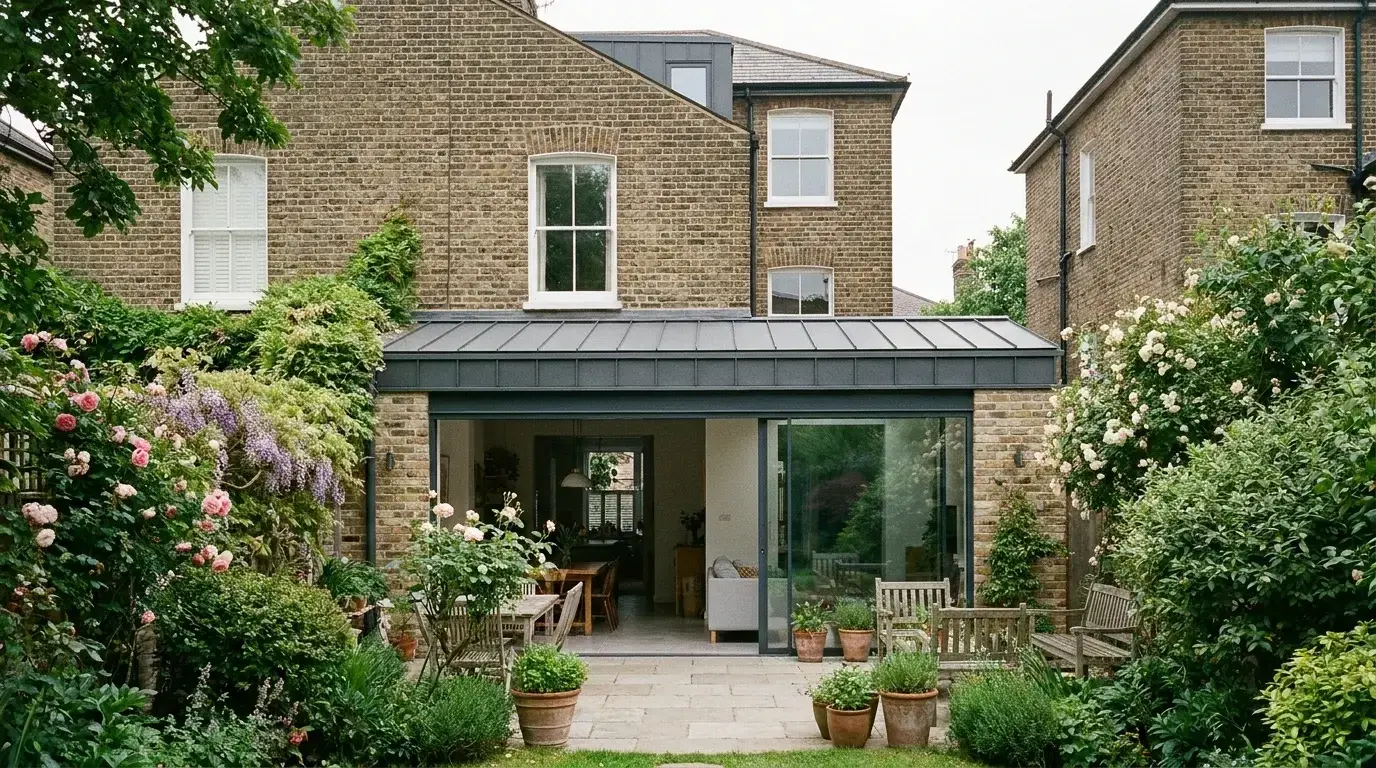
Islington Council submissions often need visuals that make scale, materials and street context easy to understand.
Islington projects often need CGI that explains design intent, planning context and material changes clearly for Islington Council submissions, private-client decisions or marketing presentations. The borough includes Angel, Upper Street, Clerkenwell, Finsbury, Highbury, Canonbury, Barnsbury, Holloway, Archway, Tufnell Park, the Farringdon and Old Street edge, Regent’s Canal and the New River, so visualisation work has to adapt to terraces, squares, high streets, mews, canalside settings, workspace interiors and compact infill sites.
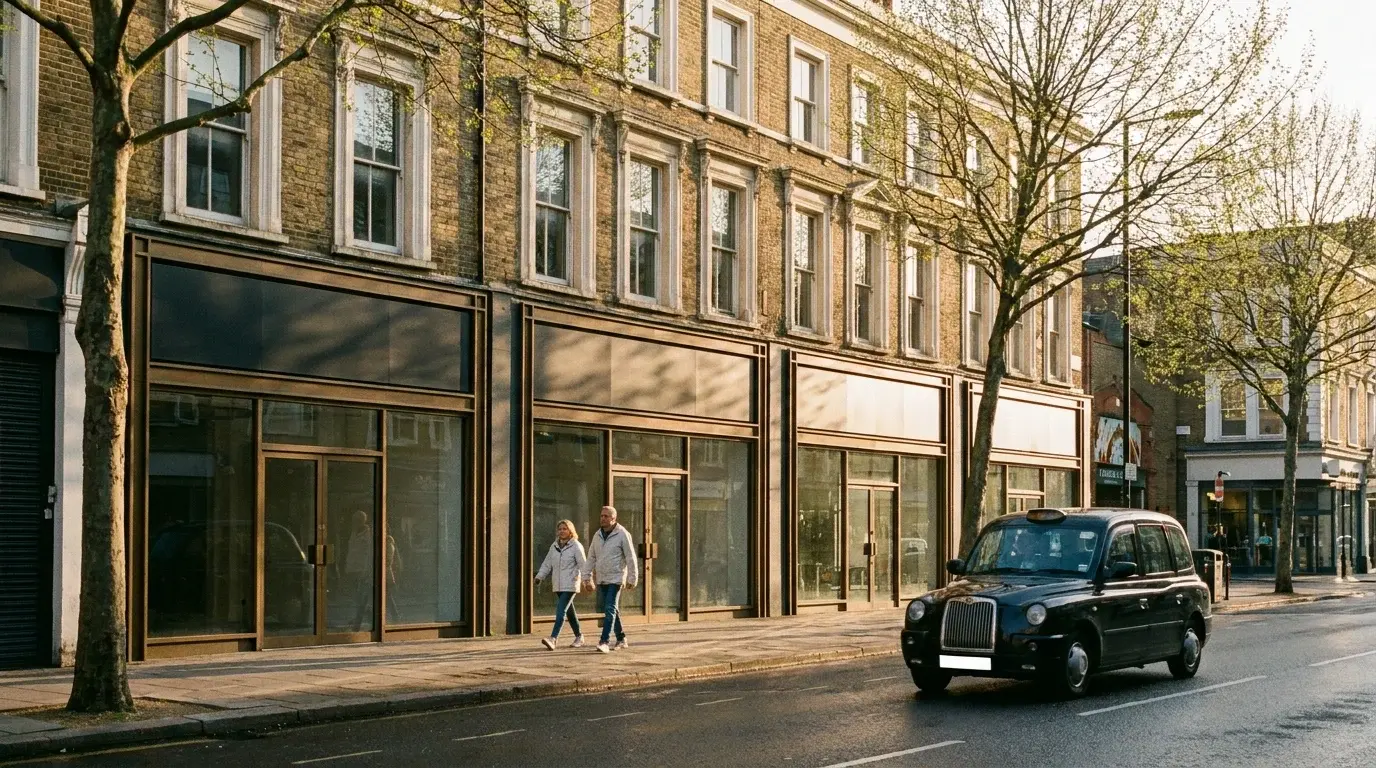
Angel shopfronts, Holloway infill plots and Canonbury rear pitches expose problems that plans can hide: threshold depth, rear-pitch dormer bulk, neighbour privacy, shopfront lighting and brick tone. CGI makes those choices visible early enough to change them.
Pre-application advice for Angel or Clerkenwell often calls for one clear street image before the design statement is drafted.
Canonbury and Highbury roof briefs use rear-pitch dormer, stair-head and garden views to test mass, light and neighbour effect.
A Barnsbury or Canonbury heritage statement lands better when retained sash lines, brickwork and new junctions are shown plainly.
Upper Street and Clerkenwell commercial images can separate shopfront glow, office arrival, servicing and public pavement behaviour.
Holloway, Archway and Tufnell Park backland plots need images that reveal access width, overlooking angles and party-wall pressure.
Finsbury, Old Street edge and larger Clerkenwell sites may need camera-matched views with viewpoint logic documented from the start.
Canonbury rear-pitch and Clerkenwell infill packages often turn on one visual question: how a dormer sits below a ridge, whether a mews infill overlooks a neighbour, or how a Class E to C3 conversion changes a street frontage. We prepare CGI, photomontage, BRE 209 daylight-support views and verified-view scoping around that question.
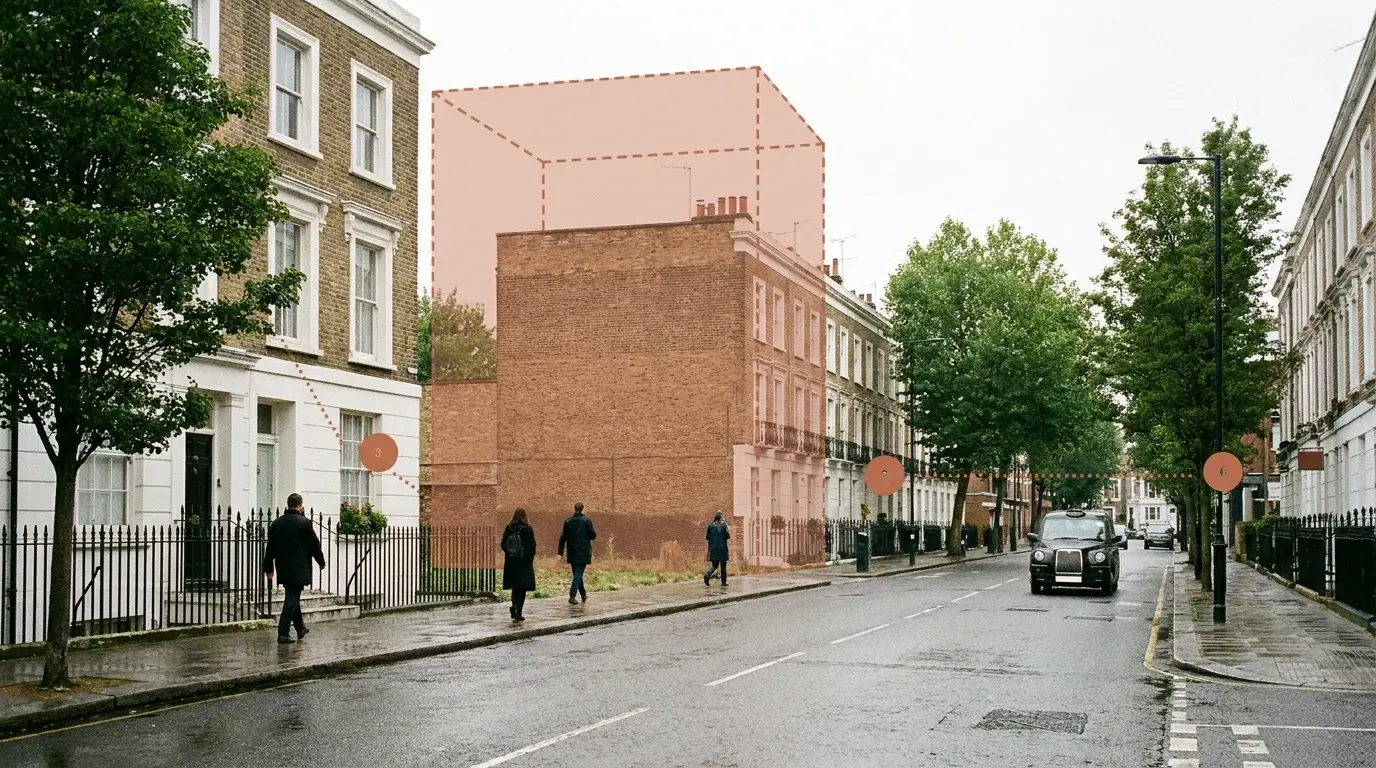
Verified views are not needed for every Islington project, but sensitive sites may need a stricter visual route when townscape, roofline, canal-edge, public realm, heritage context or development scale is central to the planning argument.
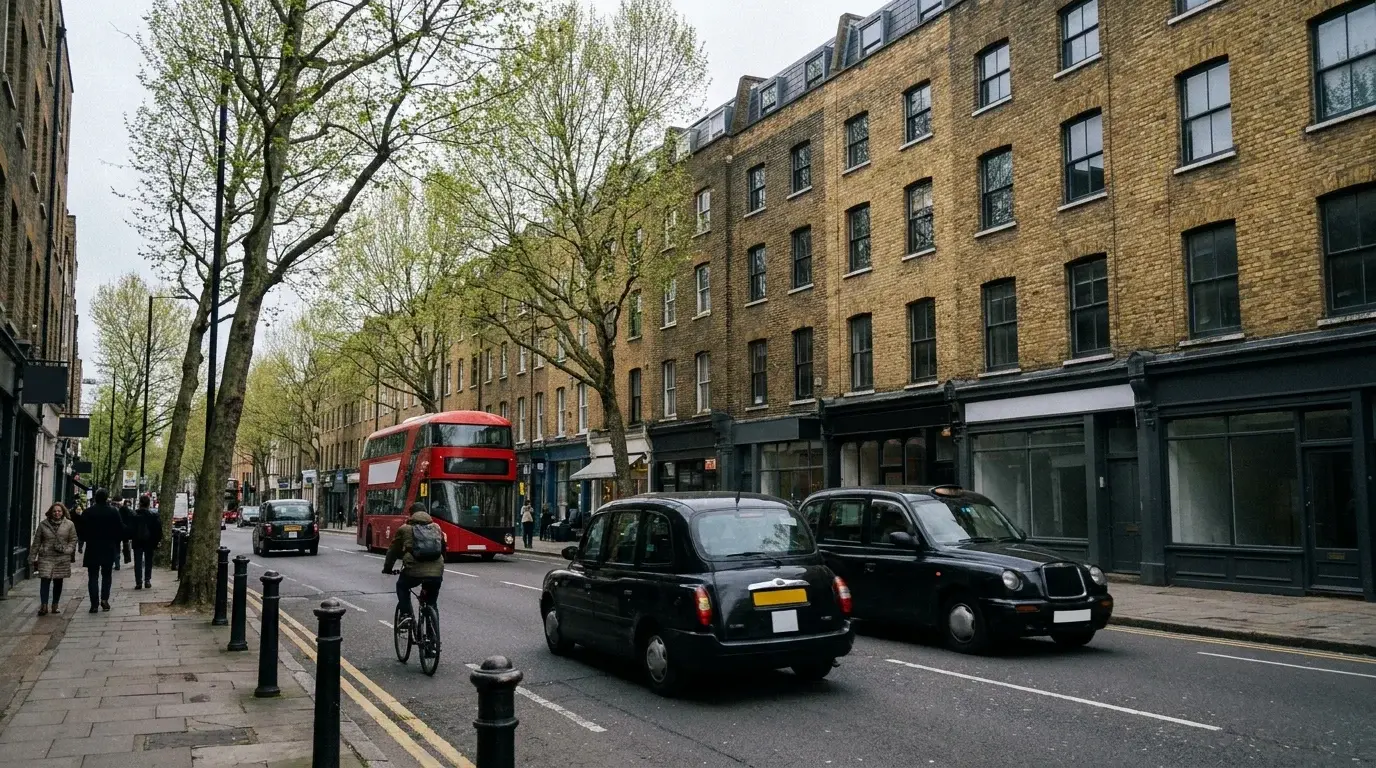
The need is normally set by the planning consultant, project team or authority requirements. Larger mixed-use proposals, prominent roof additions, conservation-area changes, City-fringe sites and viewpoint-sensitive locations should be reviewed early.
The first view acts as the surveyed AVR baseline: the existing Islington street scene is held in the agreed camera position, with the proposed-development zone, viewpoint information and facade callouts marked for review. The second keeps the same view and annotation logic, then visualises a contemporary facade intervention within the conservation-area terrace so the planning team can compare existing context and proposed change directly.
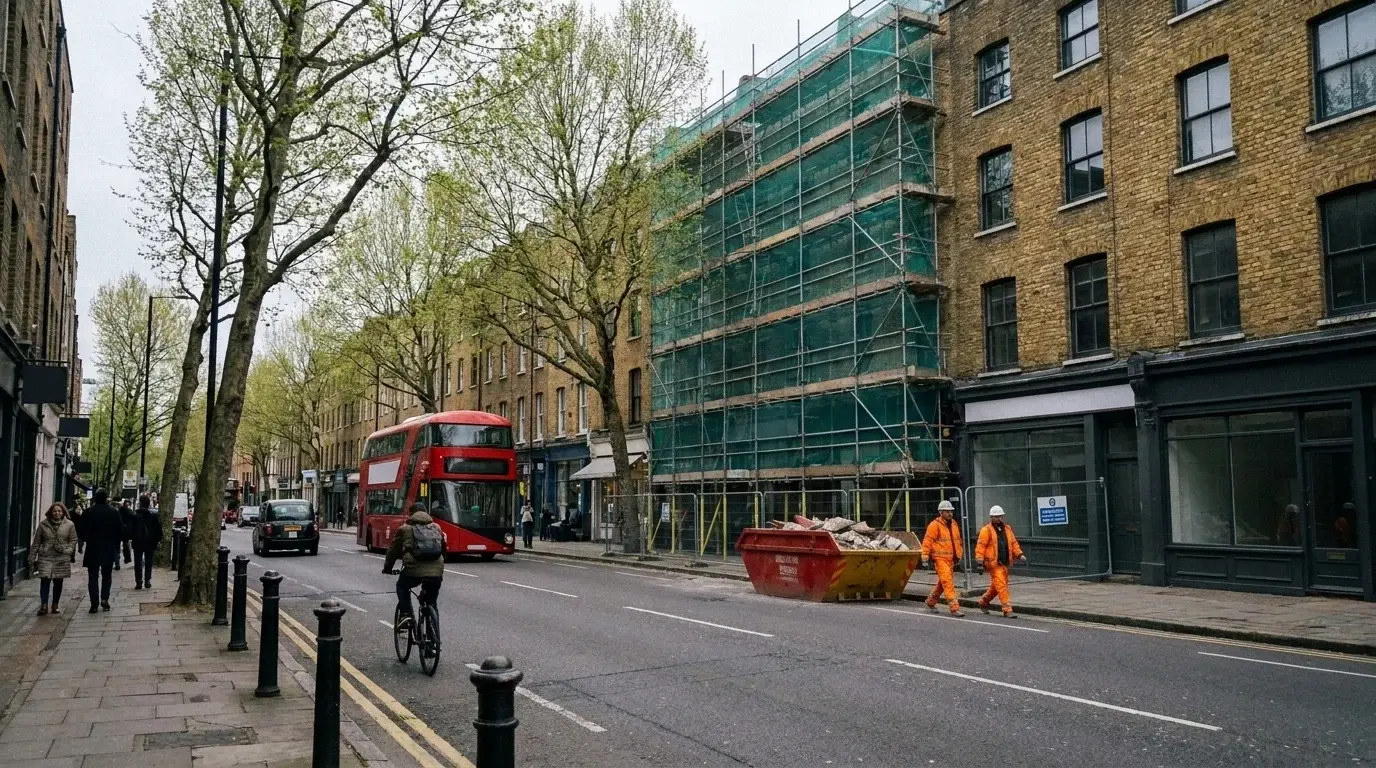
For teams comparing routes, planning application visuals can cover design explanation and committee-pack imagery, while verified views are scoped when the viewpoint, survey relationship and methodology need to be documented.
For Islington projects that take the verified-view route, the methodology runs through four stages: viewpoint scoping, surveyed photography, camera matching against the 3D model, and final photomontage or AVR reporting.
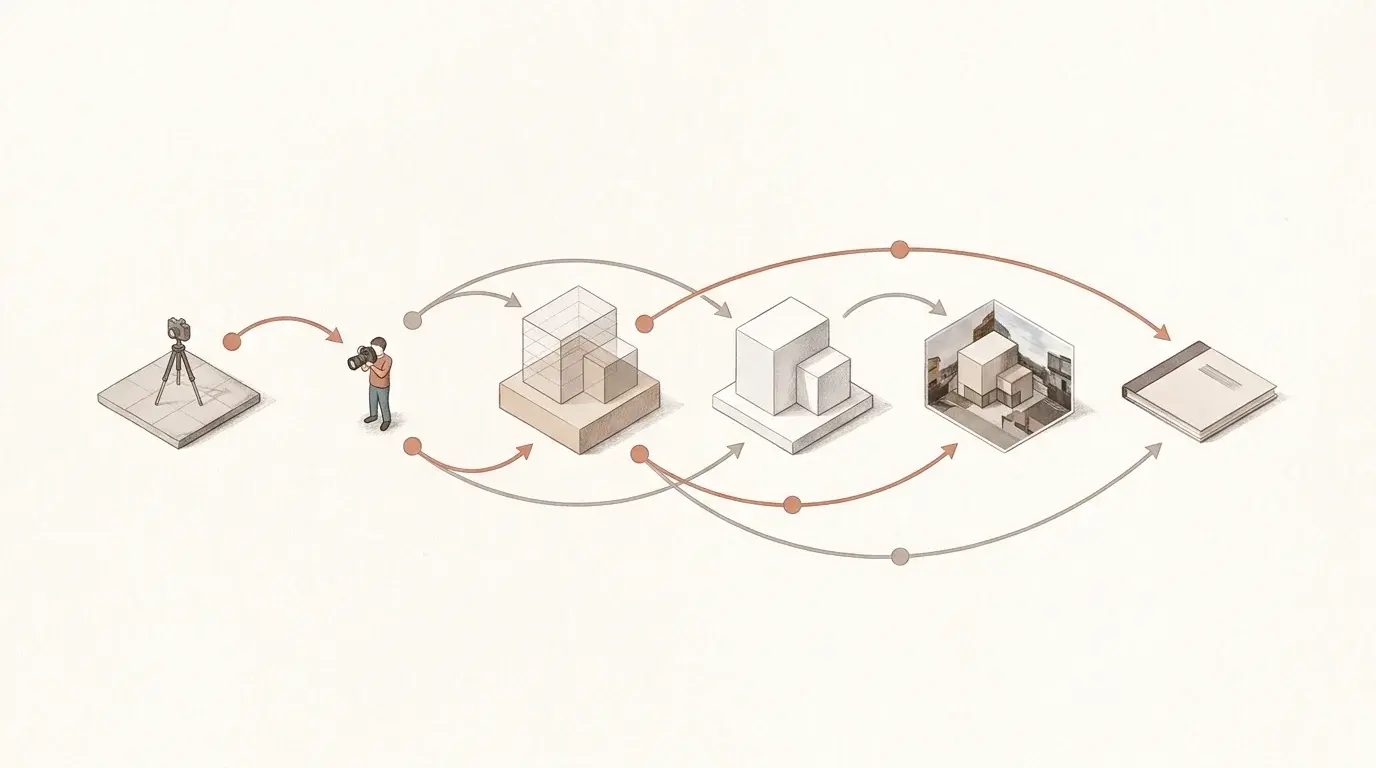
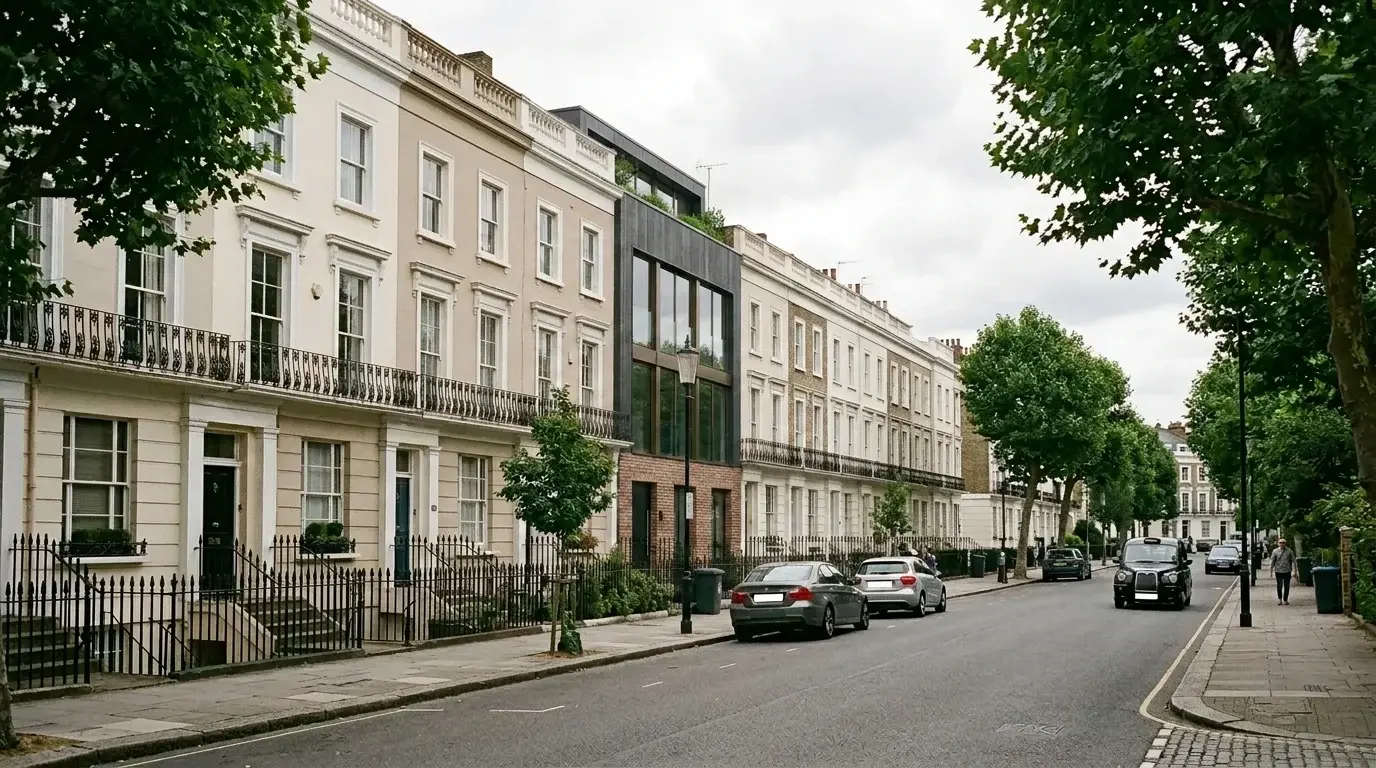
Relevant references include Landscape Institute Technical Guidance Note 06/19: Visual Representation of Development Proposals, London View Management Framework where relevant, project-team planning and townscape consultant requirements. If the Islington brief may need AVR, agree the visual route before photography and viewpoint selection are fixed.
Canonbury Square lofts, Clerkenwell warehouse conversions, Upper Street frontage work and Holloway backland infill each ask for a different image language. A single Camden-style template would flatten those differences.
Mixed-use frontage CGI for restored Victorian shopfronts, upper-floor residential changes and arrival sequences around Camden Passage and Angel Central.
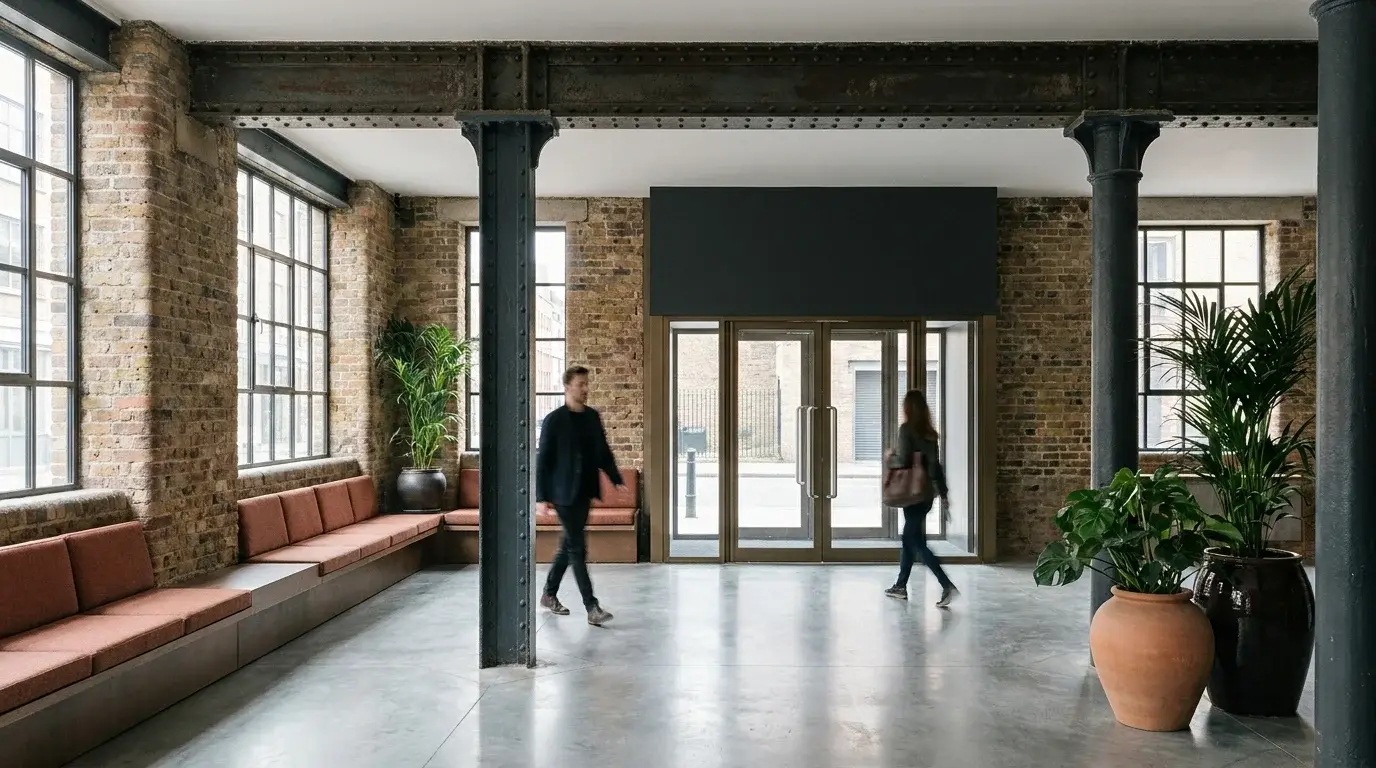
Workspace lobby and floor CGI for warehouse conversions where loadbearing brick, cast iron, steel beams and material accents read alongside an arrival sequence.
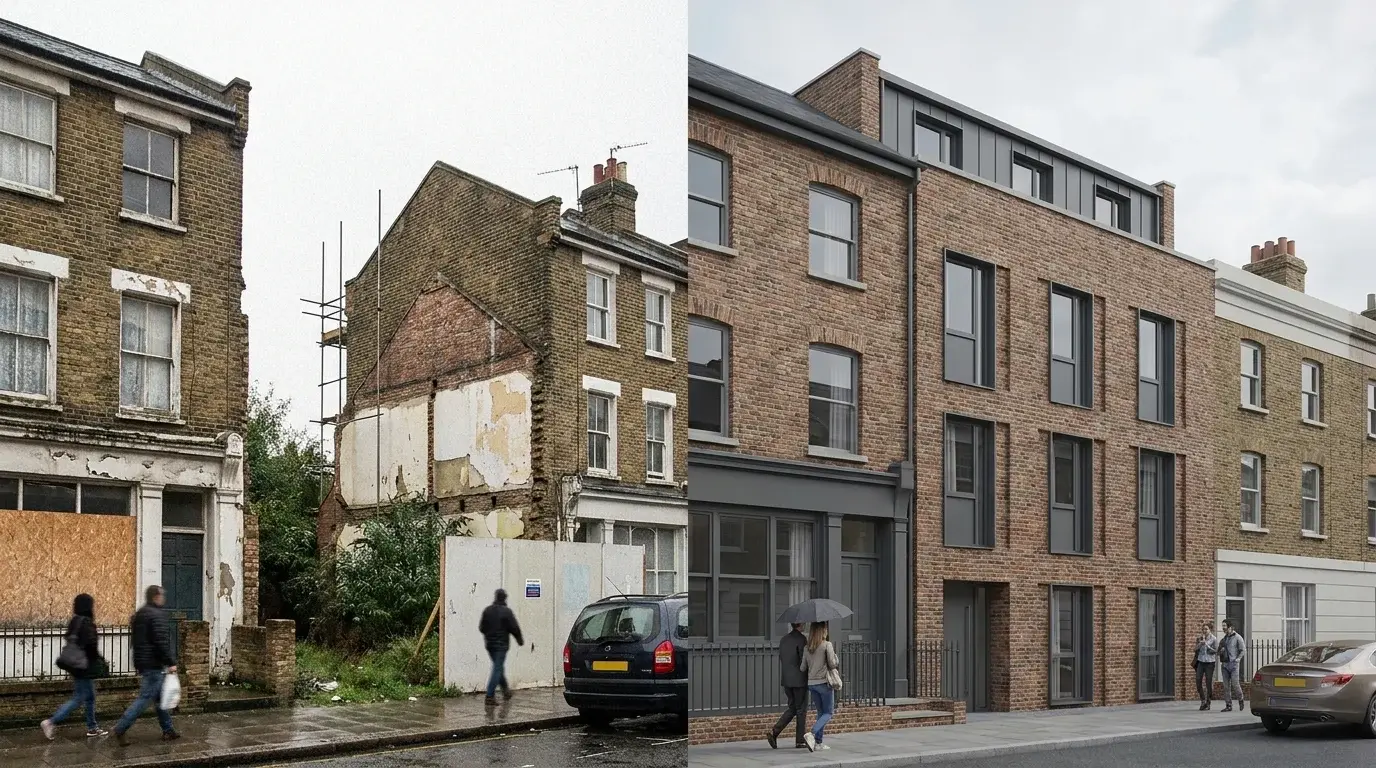
Infill CGI that pairs the existing party-wall gap or backland site photograph with the proposed contemporary stock-brick volume so frontage rhythm, neighbour privacy and material choice can be judged.
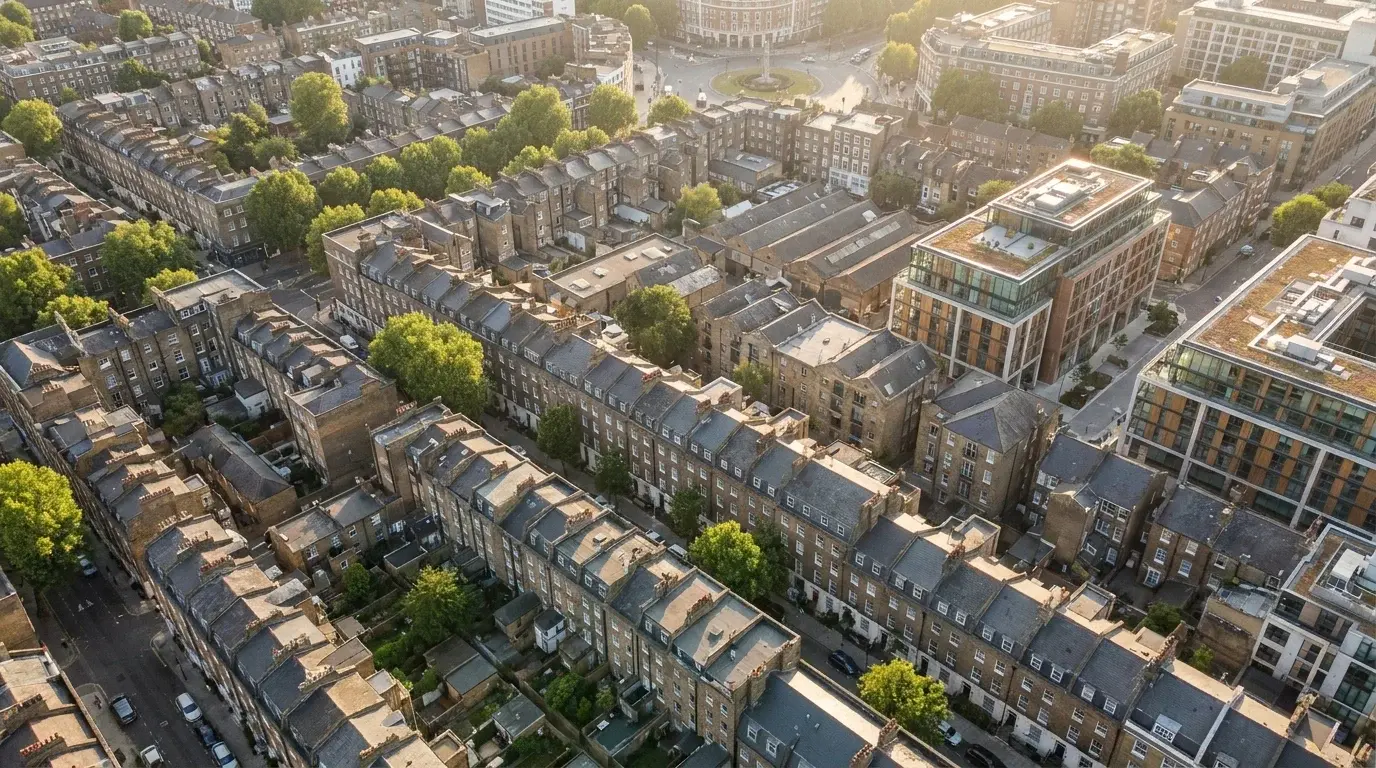
Aerial and context CGI for Clerkenwell and the Old Street edge, where new infill volumes have to sit credibly within Victorian terraces, garden squares and existing rooftops.
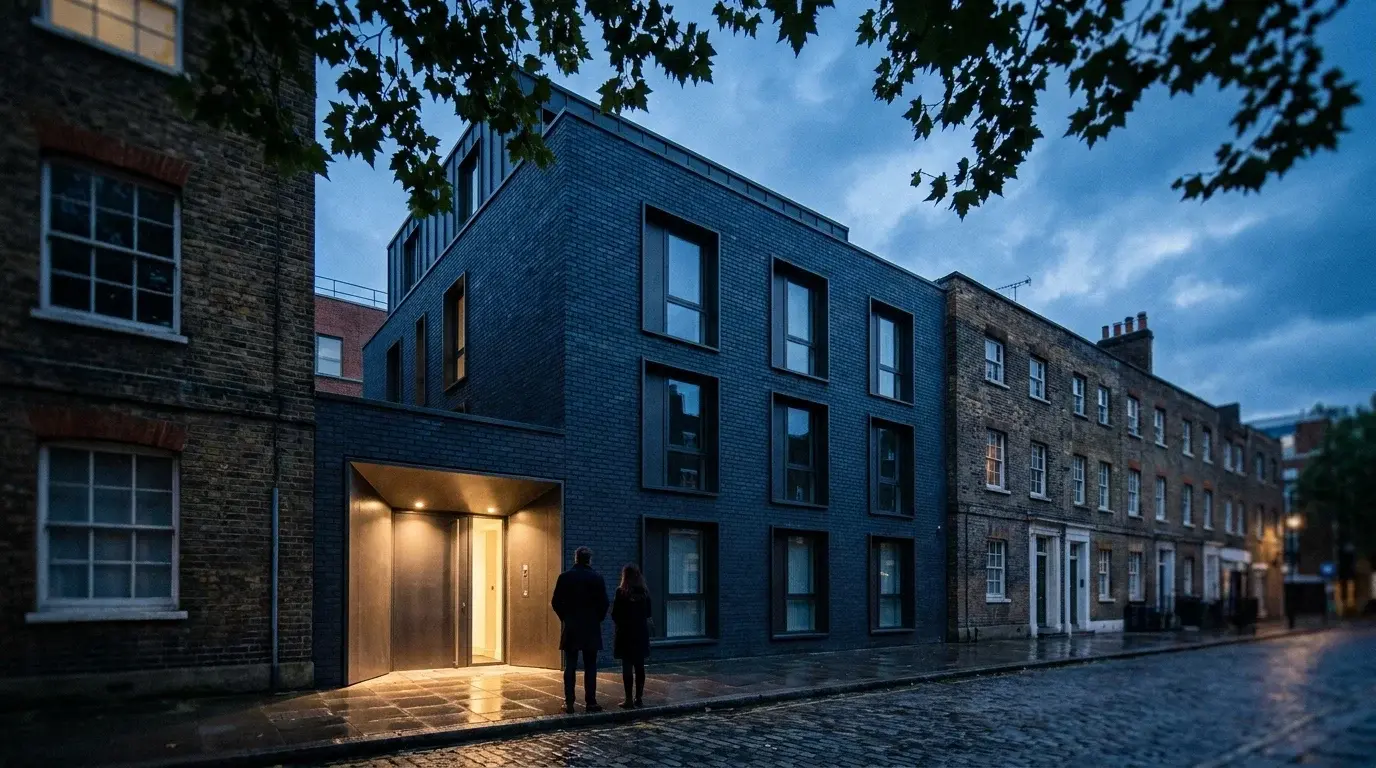
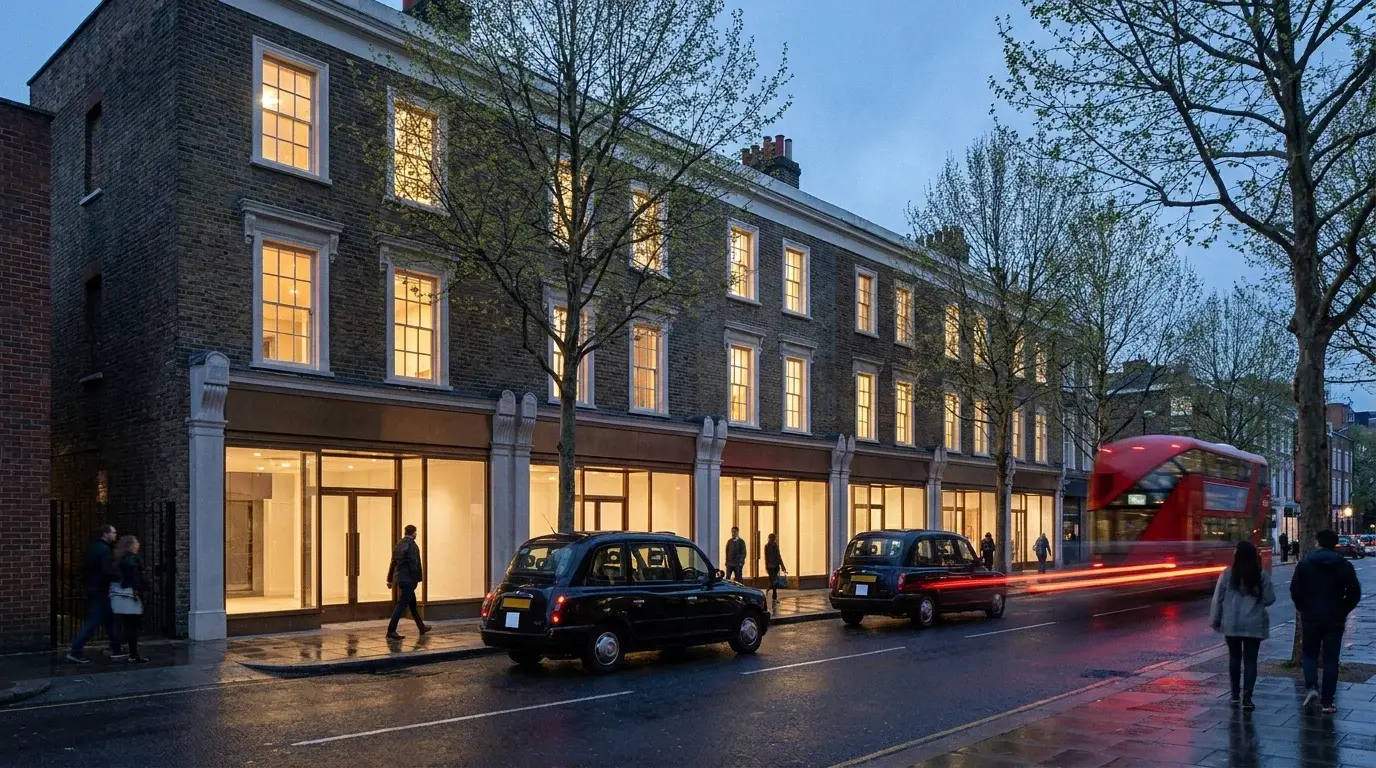
A typical Clerkenwell new-build infill brief sits on a cobbled side street near Clerkenwell Green, between two London stock brick neighbours that were warehouse conversions a generation earlier. The decision a CGI has to support at this scale is whether a contemporary volume in deep engineering brick, with charcoal metal frames and a slim recessed entrance, sits within the same warehouse family or arrives as a foreign object. The dusk study below tests interior light against the existing stock brick, so material tone, glazing depth and entrance threshold can be judged at evening conditions before any planning commitment is made.
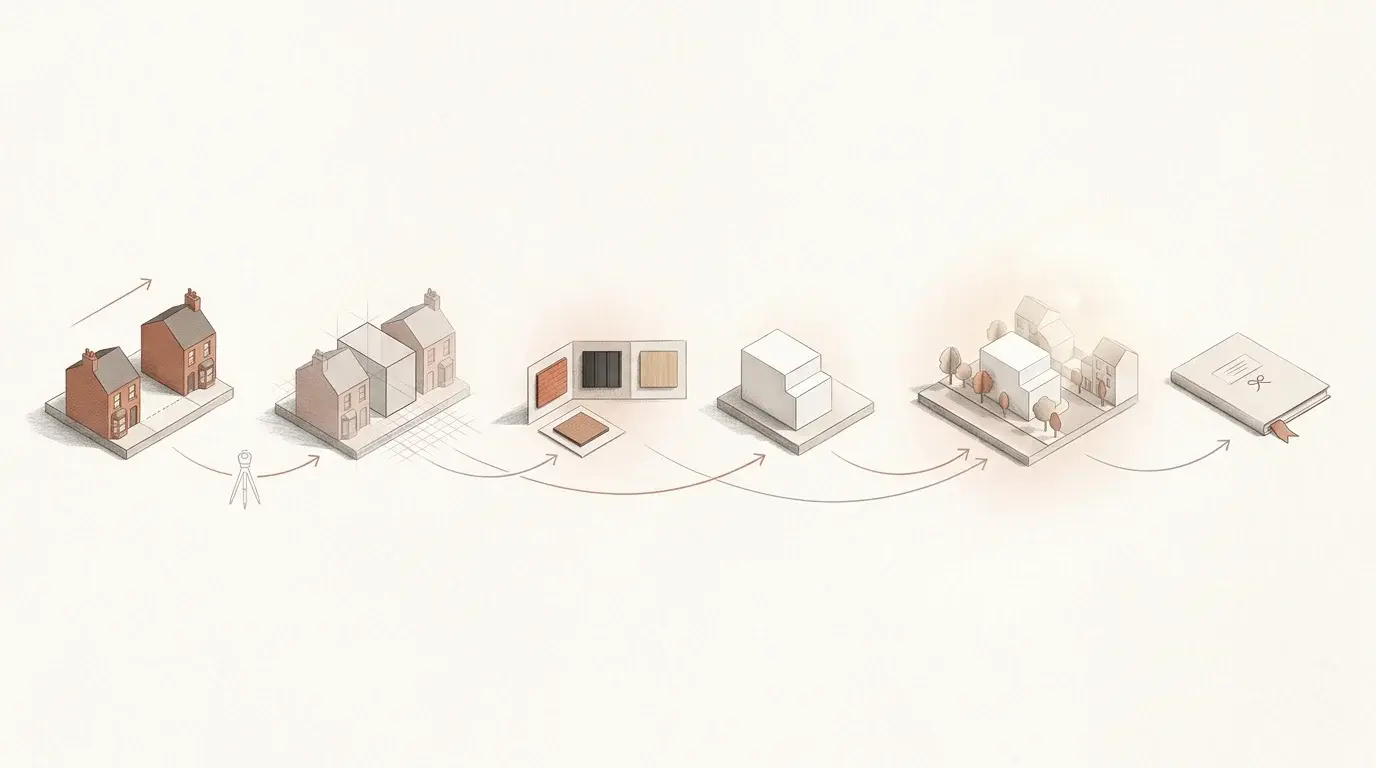
Above this paragraph, the workflow diagram traces six stages from site analysis to the final photomontage, with planning massing and material study in the middle. Recent third-party schemes shaping the Clerkenwell pipeline include Buckley Gray Yeoman's Technique on Goswell Road (RIBA London 2025), Eric Parry's loadbearing-stone office at 31 to 37 Central Street in St Luke's, and Piercy and Company's Xylo at 155 Clerkenwell Road (the UK's largest all-timber-frame office at around 95,000 square feet). The material conversation has shifted from pure brick toward CLT, glulam and loadbearing stone. Islington Local Plan 2023 policies DH1 and DH2, together with the Bunhill and Clerkenwell Area Action Plan, set the heritage frame any new infill is judged against.
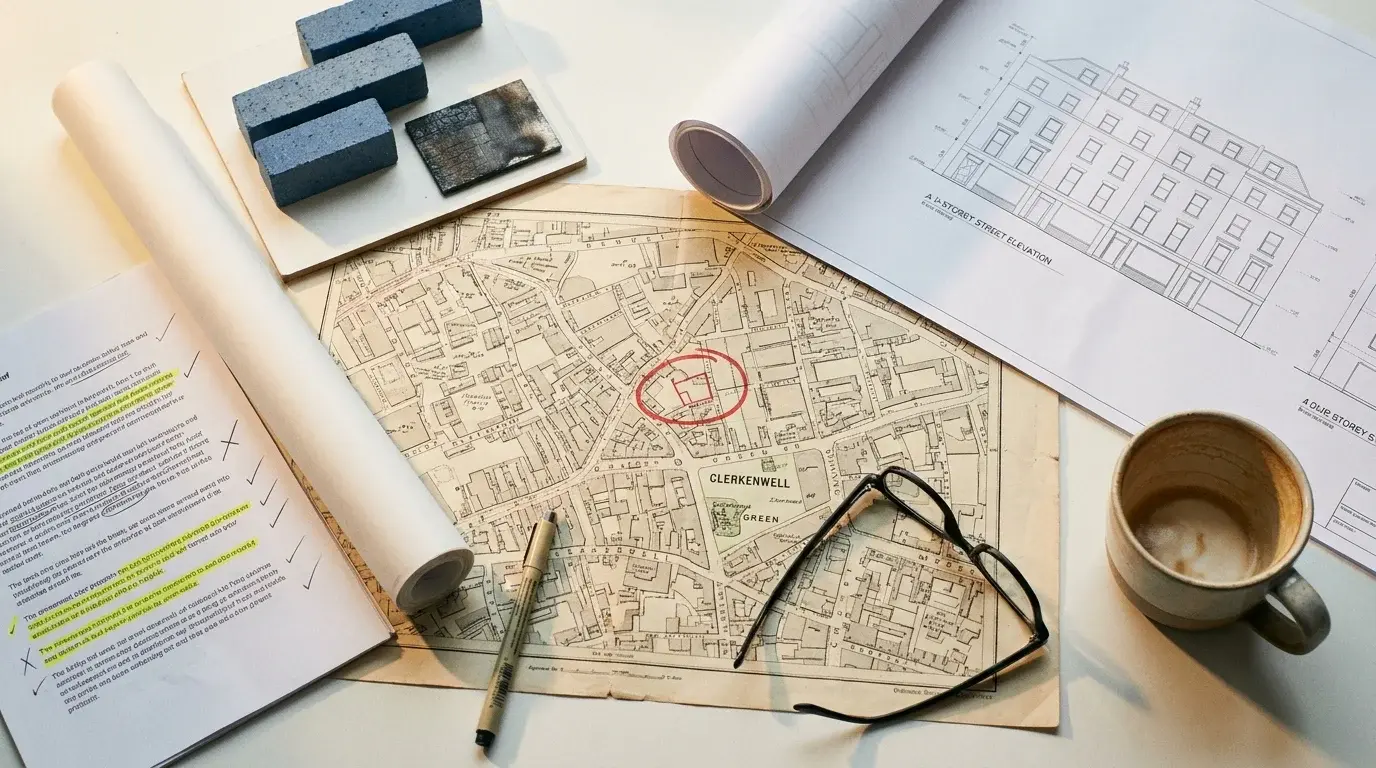
Below this paragraph, an architects desk flat-lay shows the inputs that arrive before any 3D model is started: a marked-up Ordnance Survey extract of Clerkenwell Green, A3 elevation drawings, brick and metal material samples, and an annotated brief. The decisions that drive the planning argument are made on the desk, not in the render engine. A scoped package for a Clerkenwell new-build brief typically separates planning evidence from leasing imagery, because the conservation-area committee, the developer and the future ground-floor occupier each need a different visual answer from the same model. A pre-application advice meeting with Islington Council, a heritage statement, a daylight and sunlight assessment under BRE 209, and a CIL liability notice are usually arranged in parallel.
An evening pedestrian view follows this paragraph, capturing the same side-street at street level so entrance threshold and lighting can be judged at human scale. For larger Clerkenwell new-build proposals, verified-view methodology has to be agreed with the planning consultant before surveyed photography and viewpoint selection are fixed, particularly where the Mayor of London has called in adjacent Islington schemes for stage-2 review (such as Niall McLaughlin's Archway Campus tower). We can scope and deliver verified views where the conservation-area or wider townscape route requires that stricter visual method.
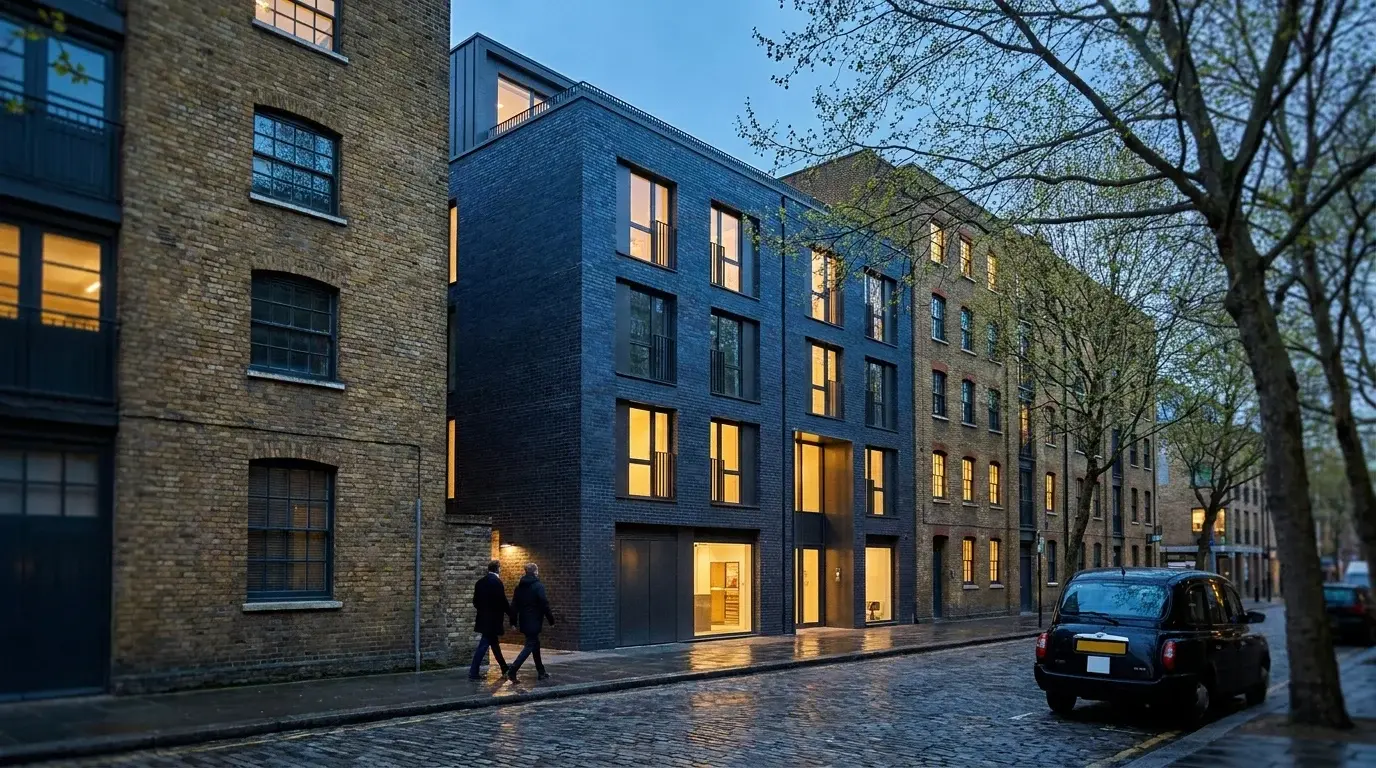
A Clerkenwell new-build infill package usually needs more than one polished hero render. Planning officers, the developer, the future ground-floor occupier and the conservation-area committee each assess different evidence. Useful deliverables include kerb-opposite street photomontages, facade material studies (engineering brick, CLT, loadbearing stone where relevant), party-wall context diagrams, dusk and daytime variants, ground-floor entrance studies, public-realm edge views, planning-pack figures and committee visuals.
Each output is built around a single decision, not a generic image count. A planning-route image emphasises massing and conservation-area fit, while a leasing image leans on interior atmosphere at dusk and pedestrian arrival. Both can come from one model. Both are priced and reviewed separately because the audience and the review criteria are different.
The recent Clerkenwell pipeline shows the material vocabulary is widening. Recent third-party precedents in this part of the borough include Buckley Gray Yeoman's Technique on Goswell Road (a retain-and-extend of a former printworks), Piercy and Company's Xylo at 155 Clerkenwell Road (the UK's largest all-timber-frame office, with its glulam and CLT structure exposed to street level), and Eric Parry's 31 to 37 Central Street in St Luke's (loadbearing stone). Engineering brick stays valid as a heritage base, but pairing it with a contemporary timber or stone upper is the move that matches what developers are now buying and what planning committees are now approving.
CGI for a Clerkenwell new-build needs to make those materials credible at both street scale and detail scale. Brick reveal depth, exposed CLT soffit and stone joint alignment together decide whether the proposal sits within the warehouse family or arrives as a foreign object dropped onto a cobbled street.
Most Clerkenwell streets sit within one of Islington's 42 conservation areas. The Local Plan 2023 was adopted on 28 September 2023, and the Bunhill and Clerkenwell Area Action Plan covers the immediate context. Policies DH1 and DH2 govern heritage decisions. Article 4 directions in Islington cover Class E to C3 commercial-to-residential conversions (Tranche 2 in force from 1 September 2025), so a new-build proposal with mixed-use ground floor needs an early conversation with the planning consultant about which Article 4 scope applies to the upper-floor residential portion.
Verified-view or AVR methodology should be agreed with the planning consultant before surveyed photography and viewpoint selection are fixed. The Mayor of London has called in adjacent Islington schemes for stage-2 review (such as Niall McLaughlin's Archway Campus tower), which raises the bar for visual evidence on larger or sensitive Clerkenwell sites. Methodology references include Landscape Institute Technical Guidance Note 06/19: Visual Representation of Development Proposals.
Not every Clerkenwell new-build needs verified views. A modest infill within a single conservation area street may only need clear illustrative photomontages and a material study. A larger scheme, a sensitive view across Clerkenwell Green, or a project the Mayor of London may call in for stage-2 review usually needs AVR methodology and surveyed photography agreed before viewpoint selection.
CLT, glulam and loadbearing stone change what the visual has to evidence. A timber upper requires the photomontage to show exposed soffit, glulam column profile and acoustic or fire-protection finishes credibly. A loadbearing stone upper has to show joint depth, weathering and bay rhythm. Engineering brick stays valid as a heritage base, but the material conversation in Clerkenwell now expects a clear narrative about what sits above.
Send the site address, an Ordnance Survey extract or Land Registry plan, existing and proposed drawings, party-wall context photographs, material intent (brick band, CLT or stone upper, metalwork), preferred viewpoints, planning consultant notes, the intended use of each image and the submission deadline. Pre-application advice notes from Islington Council, the heritage statement, the daylight and sunlight assessment under BRE 209, the CIL liability notice, conservation-area appraisal references and any Mayor-of-London call-in correspondence should also come with the brief.
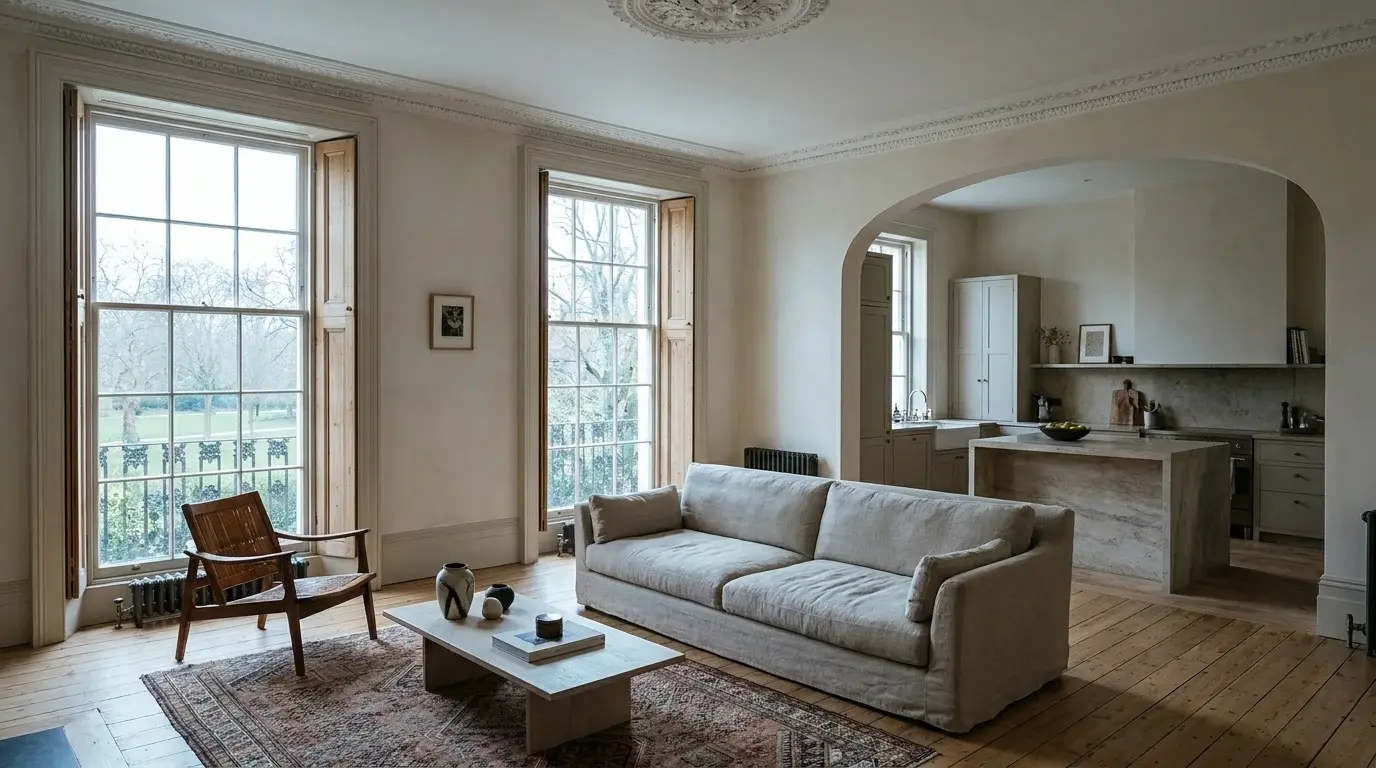
A typical Canonbury loft conversion brief turns vertical at the half-landing. The CGI for this kind of project has to hold the new staircase, the dormer cheek and the front-pitch rooflight in one frame, because those three moves carry the spatial argument before the structural calculation lands. A retained sash window on the half-landing is the anchor that keeps the existing Victorian house legible against the new vertical insertion. Cool morning daylight from the rooflight reaches all the way down to the half-landing, which lets the dormer be assessed from below the floor it sits on.
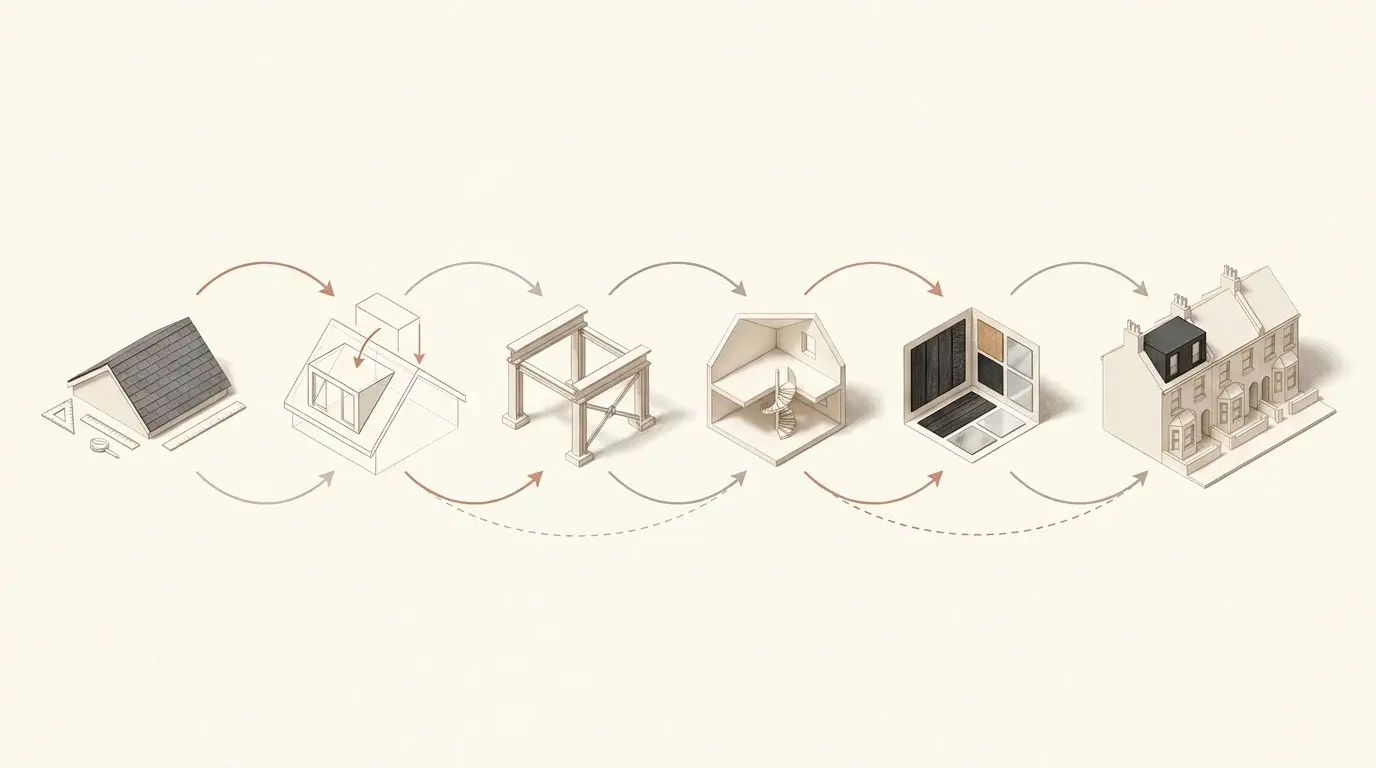
Above this paragraph, the workflow diagram traces six stages from roof analysis to the final photomontage of the dormer in place. Canonbury sits inside one of Islington's 42 conservation areas, so a roof addition has to be read against the existing terrace silhouette before it adds anything new. Islington Local Plan 2023 policies DH1 and DH2 govern the heritage decision, and Figure 22 in the Urban Design Guide SPD (January 2017) illustrates the difference between an acceptable mansard or dormer form and one the council will refuse. Recent third-party precedents in this part of the borough include Architecture for London's Highbury House Extension on Calabria Road; the level of evidence used on a published scheme of that kind is what new Canonbury or Highbury briefs are now expected to meet. A pre-application advice meeting with Islington Council, a heritage statement and a daylight and sunlight assessment under BRE 209 are usually arranged in parallel.
Below this paragraph, the closing image holds the staircase, the dormer cheek and the rooflight in one composed frame, because those three moves carry the loft conversion's entire spatial argument. For conservation-area loft briefs, design sign-off CGI usually arrives before the structural calculation and the planning application: the homeowner, architect and planning officer have to agree on the dormer form first, and a render at this fidelity is what closes that conversation. We can deliver this kind of staircase, dormer and rooflight study for Canonbury, Highbury, Barnsbury and similar Victorian terrace briefs across Islington.
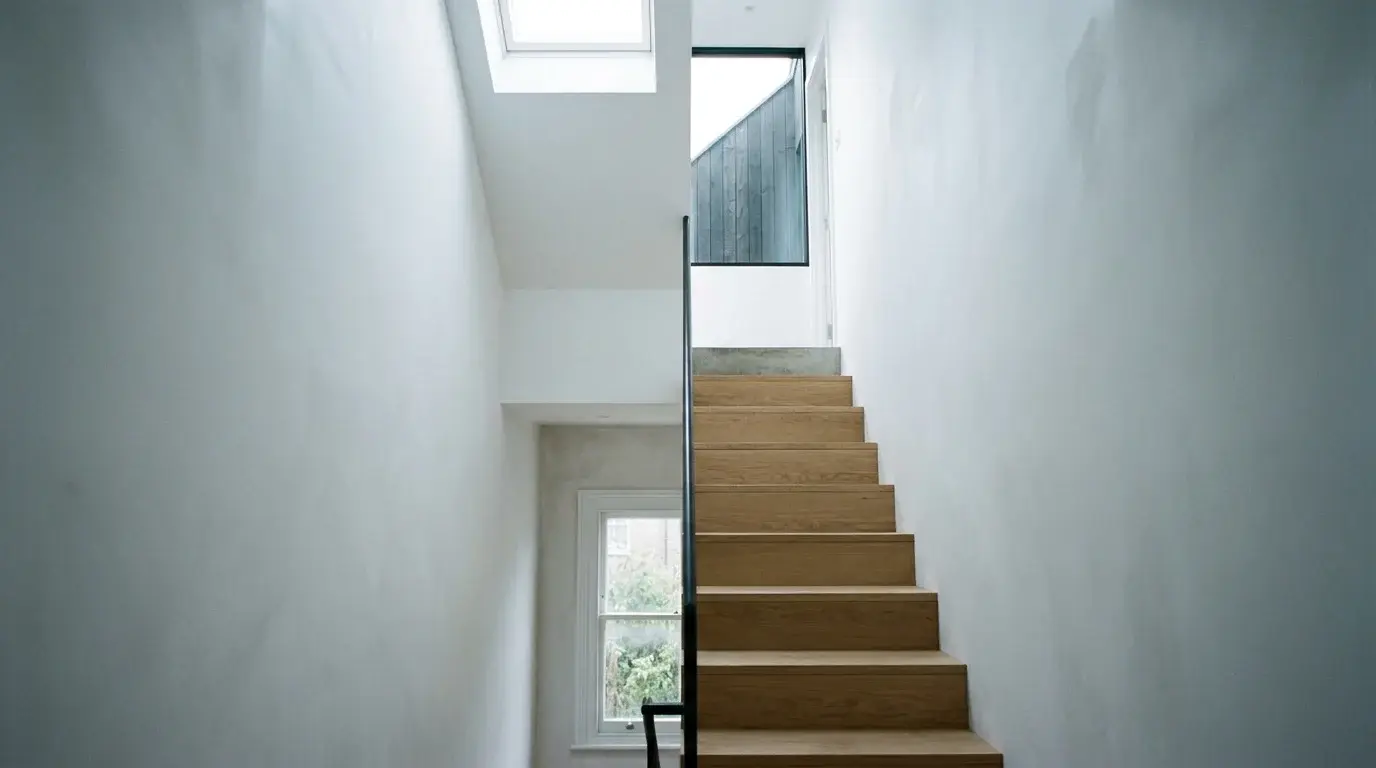
A Canonbury loft conversion package leans toward design sign-off images rather than a stack of planning photomontages. The homeowner, architect and planning officer have to agree on the dormer form, the rooflight position and the internal vertical before the structural engineer's calculation lands. Useful deliverables include rear-pitch dormer studies, front-pitch rooflight options, internal staircase and head-of-stairs renders, retained sash window and party-wall studies, neighbouring roof-line context views and material samples for the dormer cheek.
Where the loft is inside a conservation area, additional outputs may include a roof-line photomontage from the rear garden or from a neighbouring street where the terrace is read in the round. For listed-building consent (less common in Canonbury, more common in Barnsbury Grade II), the package needs old-new junction drawings and material annotation.
Islington's Urban Design Guide SPD (January 2017) Figure 22 illustrates which roof addition forms the council finds acceptable and which are routinely refused. A full mansard with steep pitch and a clear set-back at parapet level usually clears the heritage test. A flat-roof box bolted onto the existing rear pitch typically does not, particularly inside a conservation area. The CGI image needs to show set-back distance, dormer cheek material, glazing depth and how the new addition reads against the neighbouring untouched terrace silhouette.
Charred larch (Shou sugi ban), standing-seam zinc, lead and stained timber are the materials currently doing well at planning committee for rear-pitch dormers in Islington. Charred larch in particular sits darkly against weathered slate without imitating it. The visual has to show that contrast credibly at the side gable, where the dormer cheek meets the existing party wall.
The Canonbury Conservation Area (which contains Canonbury Square), Barnsbury, Highbury Fields and the New River Conservation Area (which includes the New River Walk) are among the named conservation areas in this part of Islington. A roof addition has to be assessed against the appraisal for whichever conservation area the property sits in. Islington Local Plan 2023 Policies DH1 (historic environment) and DH2 (heritage assets) govern the heritage decision in every case. Trees in conservation areas are protected by Town and Country Planning Act 1990 section 211, so a rear-garden viewpoint that includes a mature tree must not propose its removal without checking the constraint first.
For Grade II listed terraces (more common in Barnsbury, occasional in Canonbury), the package needs listed-building consent drawings as well as planning-application visuals. Recent third-party precedents include Architecture for London's Highbury House Extension on Calabria Road and Neil Dusheiko's Grade II listed Barnsbury work; both are useful published references for the kind of material and proportional decisions Islington committees expect, alongside a heritage statement and pre-application advice from the council.
Most Canonbury loft conversions need full planning permission rather than permitted development, because the property sits inside a conservation area. Article 4 directions in Islington cover Class E to C3 commercial-to-residential conversion and do not apply to roof alterations directly, but conservation-area status removes most permitted development for roofs. The conservation-area appraisal and Local Plan 2023 policies DH1 and DH2 are the documents to read first.
Charred larch, standing-seam zinc, lead and dark-stained timber are the materials currently passing committee for rear-pitch dormers in Canonbury and Highbury terraces. Pure white render or oversized aluminium-framed glazed boxes are normally refused. The Urban Design Guide SPD Figure 22 illustrates the acceptable forms.
No. A sash window survey by a conservation specialist or measured-survey contractor should still happen. CGI translates that survey into a sign-off image so the homeowner, architect and planning officer can see how the retained window reads against the new vertical, the dormer cheek and the rooflight before the structural calculation is committed.
A listed-building loft (most often Grade II in Barnsbury, occasionally Canonbury) needs listed-building consent in addition to planning permission. The package usually includes old-new junction drawings, material annotation and an explicit narrative for any retained or altered original fabric. The visual evidence bar is higher and the consent route is longer.
Angel, Archway and Highbury briefs use the same core services in different ways: verified views for sensitive townscape, interiors for workplace sign-off, photomontage for mews access and CGI for roof or rear-extension evidence.
Angel frontage views, Canonbury garden elevations and Archway street corners use exterior rendering to test threshold depth, brick colour, railings, planting and evening light in recognisable local context.
Discuss this service Planning Application VisualsClerkenwell Green and Holloway planning packs need images tied to the actual submission issue, such as Class E to C3 frontage change, mews access, dormer visibility or BRE 209 daylight evidence.
Discuss this service Verified ViewsOld Street edge, Finsbury and larger Clerkenwell schemes can require verified-view scoping before photography, especially where townscape consultants need surveyed camera control.
Discuss this service Interior VisualisationsClerkenwell warehouse-conversion workspaces and Highbury homes use interior CGI to settle joinery, lighting, retained fabric and furniture clearance before procurement.
Discuss this service House ExtensionsCanonbury Square, Barnsbury and Highbury Fields house projects often need rear-pitch dormer, side-return, basement lightwell and garden-threshold images before neighbour or officer review.
Discuss this service Commercial DevelopmentsUpper Street, Angel and Finsbury commercial teams use CGI to test shopfront proportion, signage weight, office arrival and ground-floor use before leasing or submission.
Discuss this serviceClerkenwell and Finsbury teams need evidence-led images that explain massing, material, heritage and verified-view assumptions without turning the submission into sales material.
Canonbury, Highbury and Barnsbury owners use CGI to decide roof form, side-return depth, stair position, garden threshold and finishes before planning or procurement.
Angel, Upper Street and Holloway commercial briefs need believable frontage, workplace, hospitality and residential images that keep the surrounding street legible.
Highbury Fields rooflines, Barnsbury listed fabric and Tufnell Park side streets all need local judgement. The useful image is the one that shows the exact constraint: stair headroom, dormer cheek material, courtyard access, neighbour window angle or evening shopfront spill. For facade, roofline and streetscape visibility, see exterior rendering support.
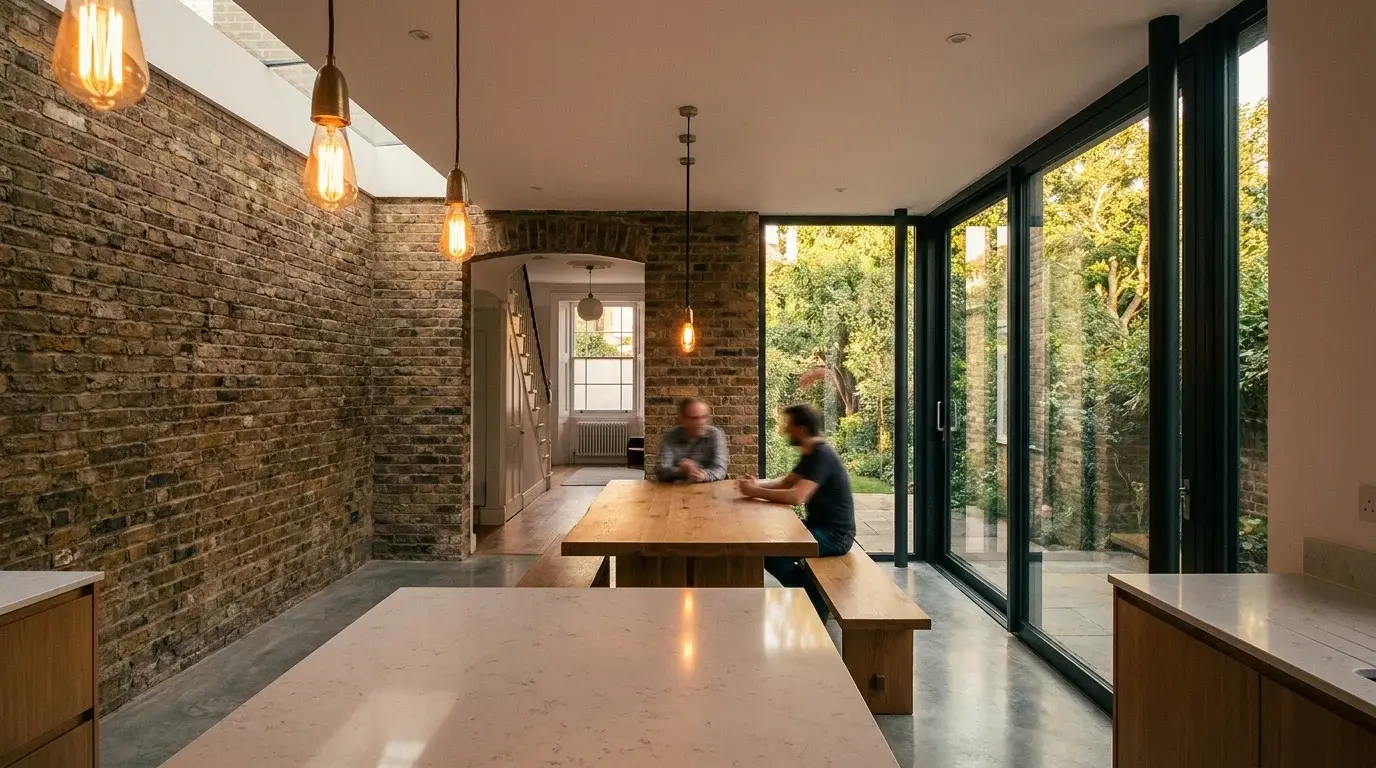
Clerkenwell or Canonbury work starts with the planning issue, not the render style. We fix the viewpoint, model depth and material evidence after reading the site, drawings and consultant notes.
Map the Angel, Clerkenwell, Canonbury, Holloway or Archway address against drawings, photos, planning notes, references and deadline.
Canonbury roof-form review, Clerkenwell council submission, Class E to C3 frontage argument, BRE 209 support, client sign-off or leasing sets the evidence job.
Holloway and Archway models include only the surrounding context the decision needs, such as roof pitches, mews access, garden boundary, shopfront bay or warehouse shell.
Upper Street, Highbury Fields or New River viewpoints are set from the actual receptor: pavement, rear garden, stair core, neighbour window, public square, consultant camera or interior threshold.
Finsbury and Barnsbury outputs get material, light, furniture, planting and facade detail before planning, review or presentation files are exported.
Tell us where the Islington project is, what stage it has reached, which drawings or references are ready, and whether the images need to support planning, extension design, client sign-off, procurement, consultation or marketing.
You can also email drawings, image references and deadlines to hello@architecturalvisualisationlondon.uk.
A useful Islington quote starts with the address, constraint and image use: a Canonbury loft, a Clerkenwell infill and an Archway backland site all need different evidence.
Send drawings and references for a brief review and we will confirm the right visual route before quoting.
Free planning-oriented tool for residents and project teams.
View resource ResourceFree planning-oriented tool for residents and project teams.
View resource ResourceFree planning-oriented tool for residents and project teams.
View resourceAngel and Clerkenwell sit between Camden terraces, City-fringe offices and north London residential streets. The links below help users move between adjacent planning-visual contexts without treating them as interchangeable.
Tower Hamlets adjoins the City Fringe at Aldgate, so Clerkenwell and Old Street commercial schemes often share verified-view, frontage and tall-building logic with east London projects. See Tower Hamlets verified views and Canary Wharf CGI when the brief stretches into Aldgate, Whitechapel or the Isle of Dogs.
Camden links Islington to Bloomsbury, Fitzrovia and St Pancras, where mixed-use frontage and conservation-area logic continue across the borough boundary.
Hackney joins Islington through Shoreditch, Hoxton and Dalston, where Article 4 directions and creative-industrial conversion projects can cross both boroughs.
Not every Islington planning application needs verified views. Smaller extension, interior or material-study briefs may only need clear illustrative CGI. More sensitive townscape, roofline, conservation-area, canal-edge or larger-development proposals may need photomontage or verified-view support set by the consultant team.
Yes. CGI can show how proposed materials, massing, roof changes, extensions, shopfronts or facade alterations sit within terrace rhythm and conservation-area character, helping clients, consultants and reviewers understand the change more clearly.
Typical inputs include existing and proposed drawings, roof or section drawings, site photographs, garden or neighbour context, material references, preferred viewpoints, planning notes and the intended use of the image.
Yes. We can prepare exterior CGI, planning visuals, public-realm views, commercial frontage images, interior renders and photomontage-style material for mixed-use or commercial Islington briefs, provided the project team supplies the drawings and context needed for the intended use.
Yes. Interior CGI can support design sign-off, fit-out decisions, investor presentations, leasing material or marketing imagery by showing finishes, lighting, furniture, circulation and atmosphere before procurement or construction begins.