Islington Conservation Area Homeowner Guide
Islington has 41 conservation areas covering a significant portion of the borough's historic Victorian, Georgian, and industrial fabric. This guide explains what this means for your property and your planning goals.
What is a Conservation Area?
A conservation area is an area of "special architectural or historic interest, the character or appearance of which it is desirable to preserve or enhance." In Islington, this means extra controls over demolition, extensions, roof alterations, and even minor changes like windows and doors.
The Article 4 Direction
Many Islington streets are subject to Article 4 Directions. These legal orders remove specific "permitted development" rights, meaning you need planning permission for changes that would normally be allowed elsewhere, such as replacing a front door or installing a rooflight.
Quick Stats
- Total CAs
- 41 Areas
- Coverage
- ~30% of Borough
- Listed Buildings
- 4,500+
Search Conservation Area Appraisals
Every conservation area has an official "Appraisal" document that defines its character. Find yours below to see the specific rules for your street.
Angel
View Appraisal (PDF)Barnsbury
View Appraisal (PDF)Canonbury
View Appraisal (PDF)Clerkenwell Green
View Appraisal (PDF)Highbury Fields
View Appraisal (PDF)New River
View Appraisal (PDF)Tufnell Park
View Appraisal (PDF)Note: This is a selection of the most active areas. For a full list, visit the official Islington Council page below.
Common Misconceptions
Can I replace my windows with double-glazing?
In most Islington conservation areas, you can, but the frames must usually match the original profile and material (often slimline timber sashes). UPVC is almost always refused.
Do I need permission for a garden room?
Yes, if the building is in a conservation area, normal permitted development rights for outbuildings are often restricted or removed entirely by Article 4 directions.
Can I paint my house a different colour?
Check your specific Conservation Area Appraisal. Some areas have strict controls over external finishes and paint colours to maintain terrace uniformity.
Is a loft conversion possible?
Yes, but the form and visibility from the street are strictly controlled. Rear-pitch dormers that follow the Urban Design Guide are the most likely route to approval.
How Visuals Help in Heritage Cases
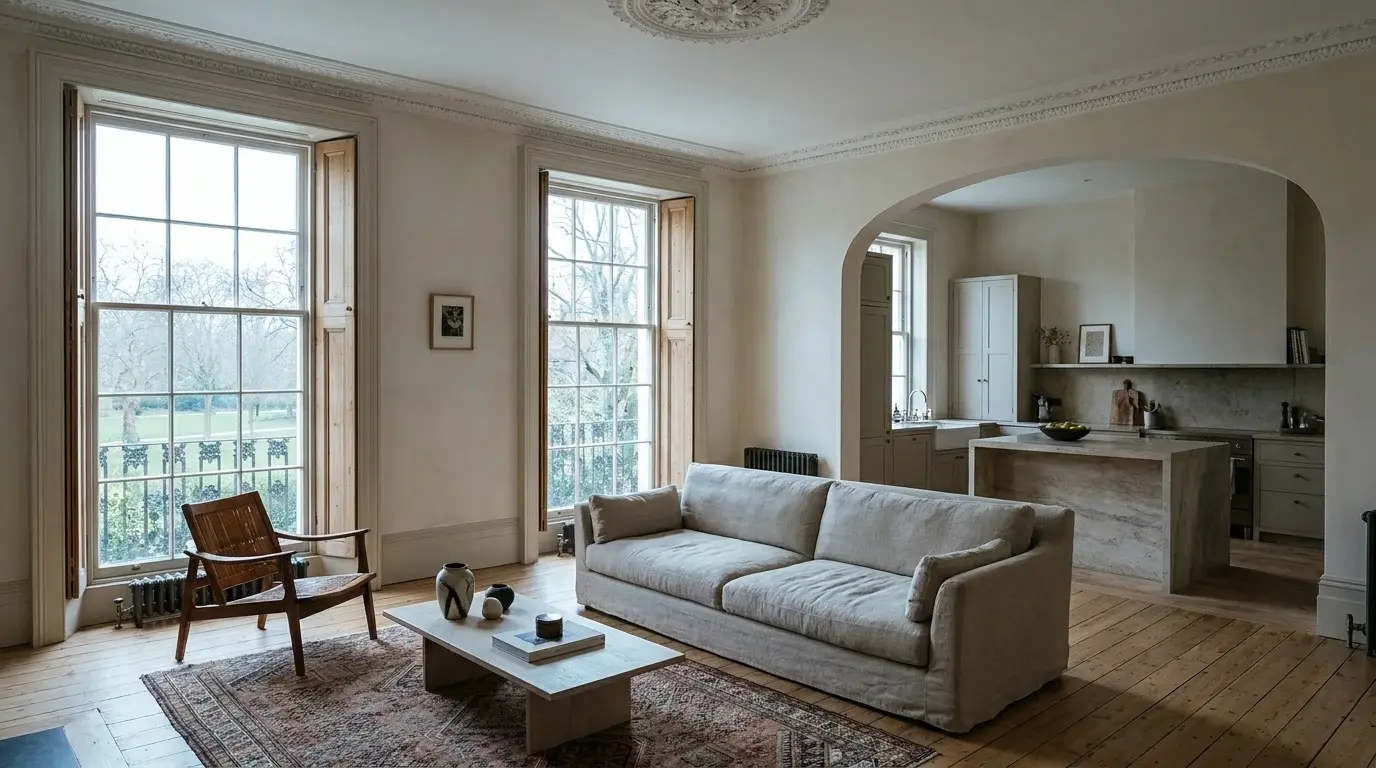
When a project affects a heritage asset, the planning officer must assess the "impact on character and appearance." 3D visuals, material studies, and photomontages are the most effective way to prove that a contemporary addition (like a zinc roof or glass extension) complements the original fabric rather than clashing with it.
Official Islington Conservation Resources
Disclaimer: This guide is for informational purposes and does not constitute legal or professional planning advice. Conservation policies in Islington are highly specific to individual streets and properties. You should always consult with Islington Council or a qualified heritage consultant before undertaking work on a property in a conservation area.