Planning submissions
Wandsworth Council visuals for design statements, consultation packs, committee material and pre-application review.
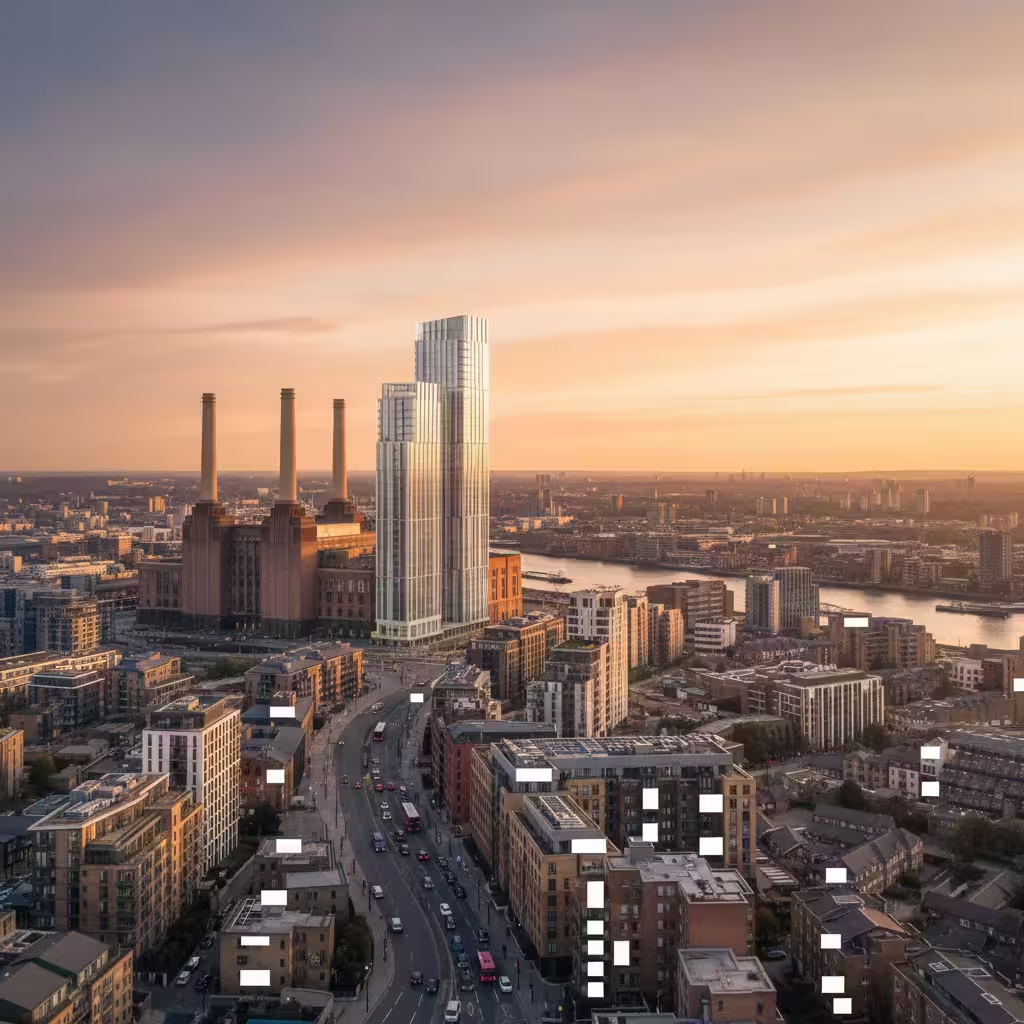
Wandsworth Council submissions often need visuals that make scale, materials and street context easy to understand.
Wandsworth combines some of London's most intense regeneration areas with stable, high-value residential neighbourhoods. From the massive scale of the Vauxhall, Nine Elms and Battersea (VNEB) Opportunity Area to the high-street and station-edge growth of Wandsworth Town and Putney, and the sensitive residential fabric of Balham and Tooting, the borough requires a visual approach that can handle both skyline impact and street-level material precision.
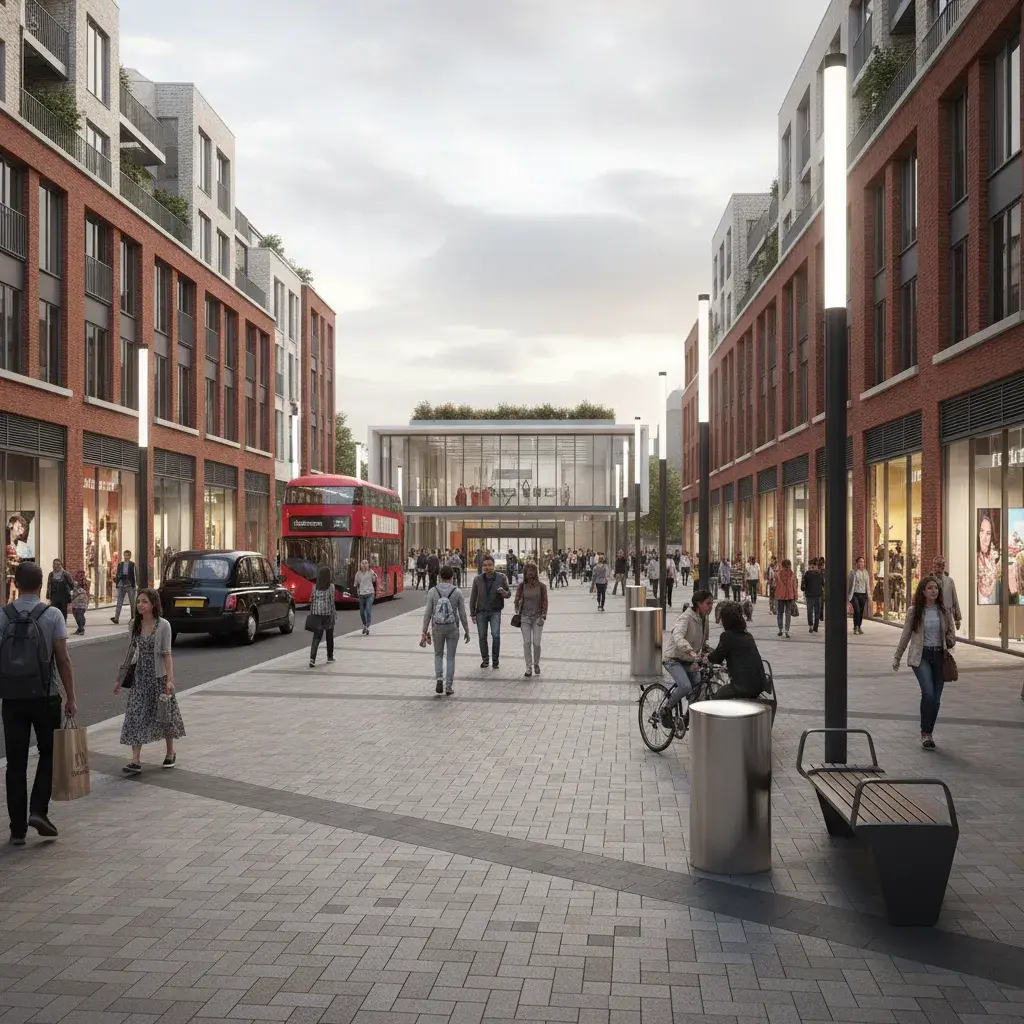
CGI supports Wandsworth projects by evidencing tall-building massing, riverside townscape impact, public-realm benefit, and the sympathetic treatment of the borough's 45 conservation areas.
Wandsworth Council visuals for design statements, consultation packs, committee material and pre-application review.
AVR, photomontage and camera-matched views where townscape, skyline or riverside visibility matters in Wandsworth.
Facade, lobby and high-street CGI for Wandsworth Town, Putney and Balham town-centre projects.
Masterplan, public-realm and massing visuals for Nine Elms and Wandsworth Town regeneration areas.
Material and extension studies for Putney, Balham, Earlsfield and other sensitive Wandsworth streets.
Interior CGI for offices, hospitality, show apartments and design sign-off across Wandsworth.
Wandsworth Council planning submissions are guided by the Local Plan 2023-2038 and the VNEB Opportunity Area Planning Framework. Tall-building proposals in Nine Elms or Wandsworth Town typically require Accurate Visual Representation (AVR) and Townscape and Visual Impact Assessment (TVIA) to support the planning case. Heritage-sensitive visuals are essential for the borough's Victorian and Edwardian residential clusters.
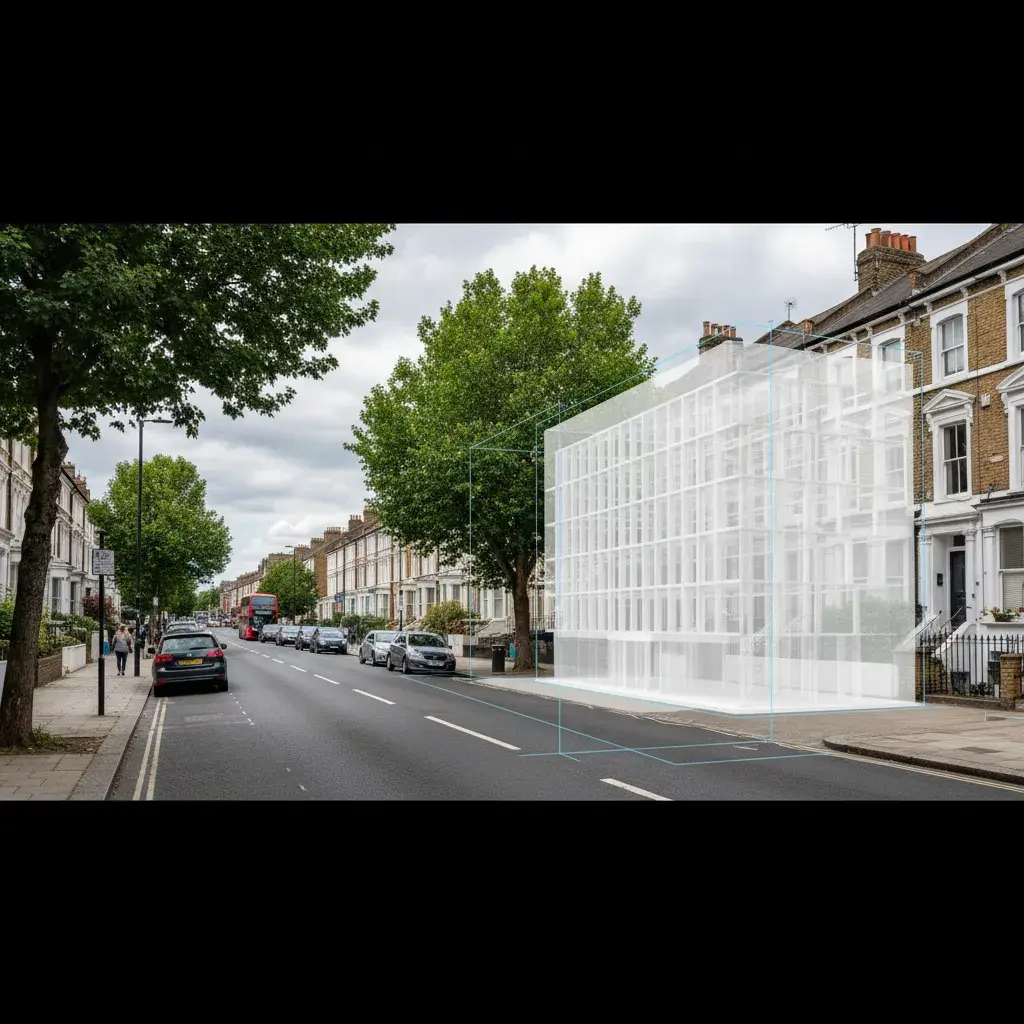
Verified views are essential for Wandsworth sites where townscape, riverside, skyline or conservation-area character is central to the planning argument.
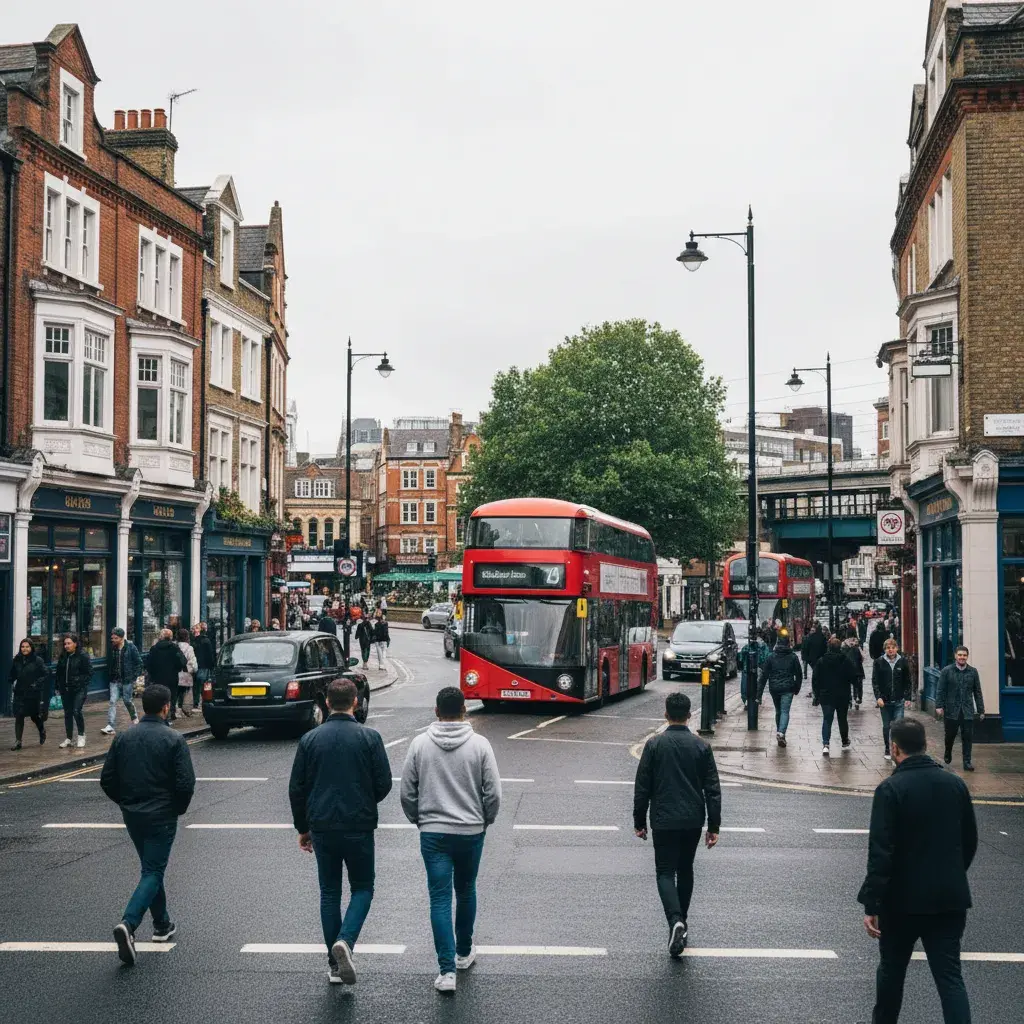
The need is normally set by the planning consultant, project team or authority requirements. Tall-building proposals in Nine Elms or Wandsworth Town and prominent riverside sites should be reviewed early.
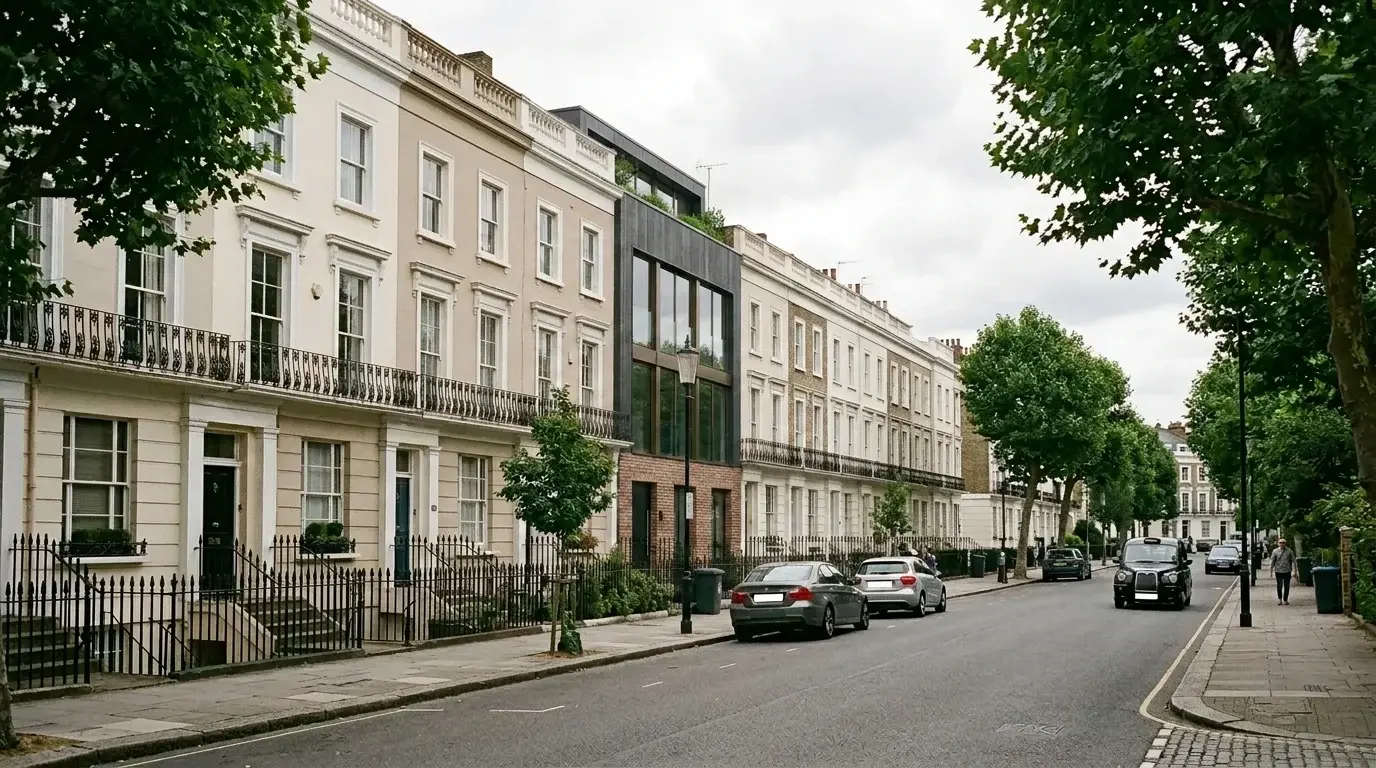
The first view acts as the surveyed AVR baseline: the existing Wandsworth street scene is held in the agreed camera position, with the proposed-development zone, viewpoint information and facade callouts marked for review. The second keeps the same view and annotation logic, then visualises a contemporary facade intervention within the conservation-area terrace so the planning team can compare existing context and proposed change directly.
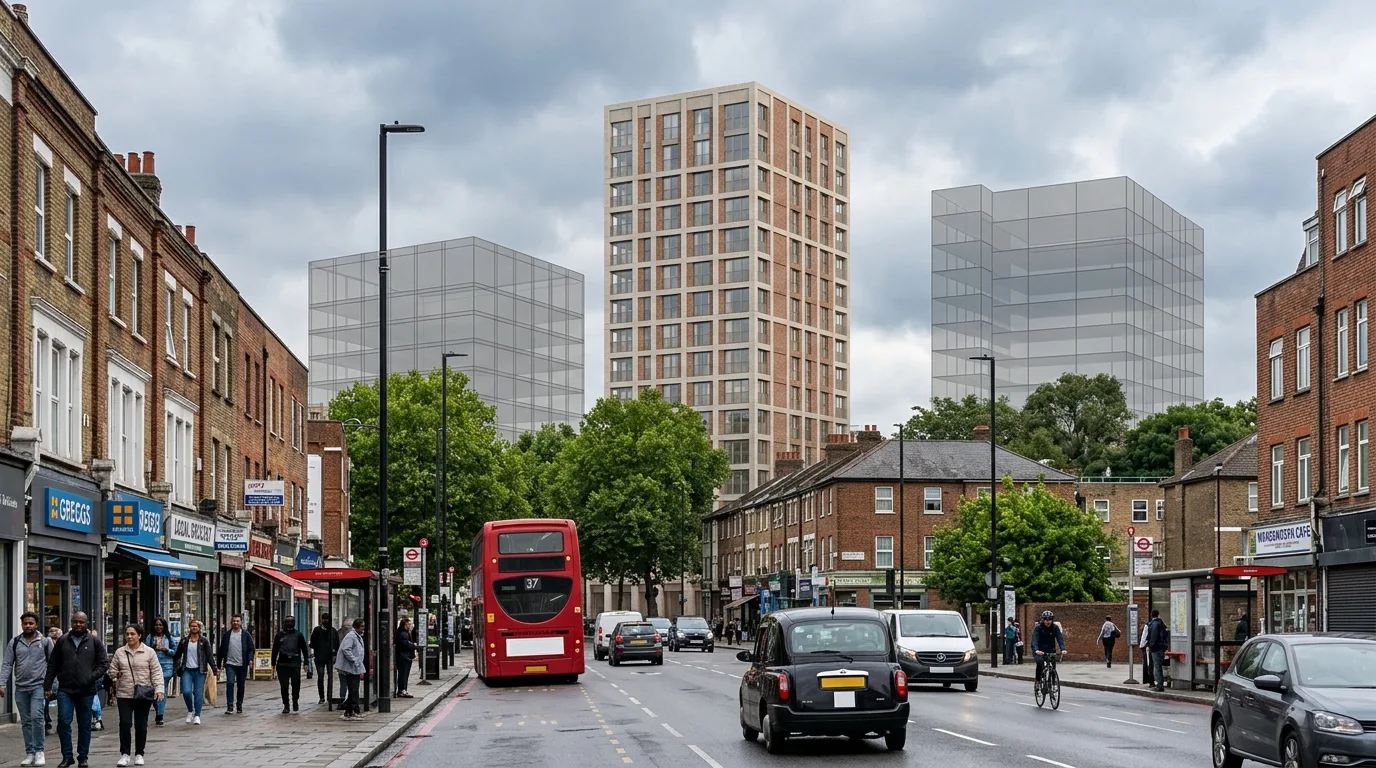
For teams comparing routes, planning application visuals can cover design explanation and committee-pack imagery, while verified views are scoped when the viewpoint, survey relationship and methodology need to be documented.
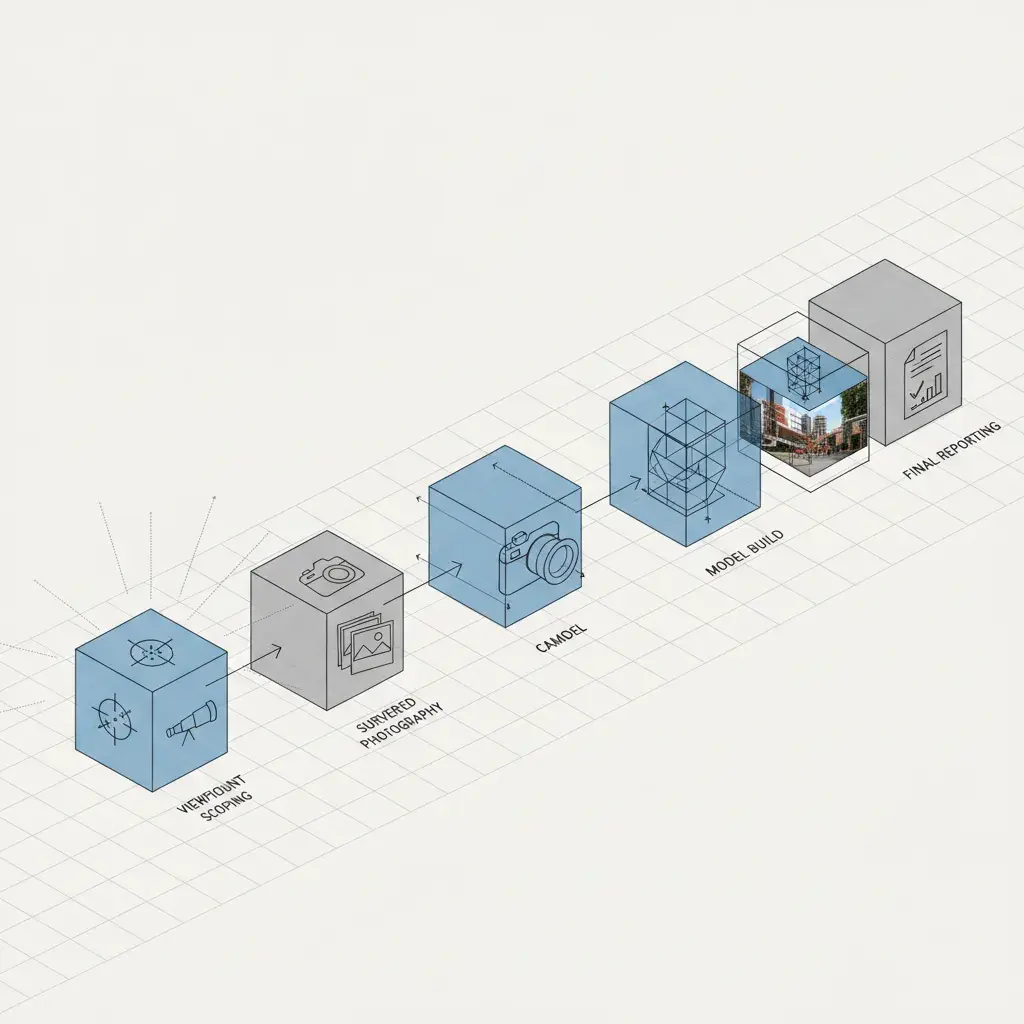
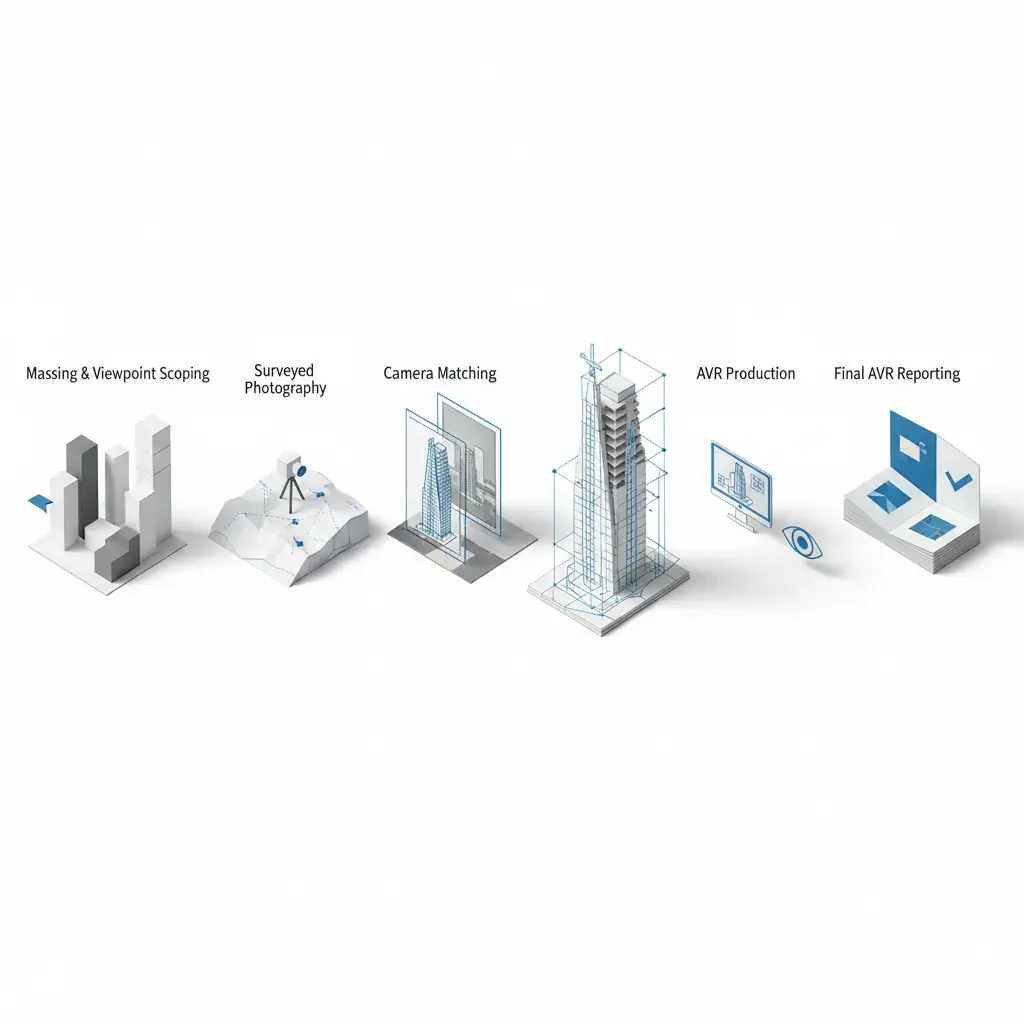
For Wandsworth projects that take the verified-view route, the methodology runs through four stages: viewpoint scoping, surveyed photography, camera matching against the 3D model, and final photomontage or AVR reporting.
Relevant references include Landscape Institute Technical Guidance Note 06/19: Visual Representation of Development Proposals, Wandsworth Council planning guidance. If the Wandsworth brief may need AVR, agree the visual route before photography and viewpoint selection are fixed.
Six Wandsworth project clusters define the visual demand: Battersea and Nine Elms tall-building growth; Wandsworth Town centre and station-edge masterplans; Putney and riverside mixed-use frontage; Balham and Tooting residential extensions; Earlsfield and Wandsworth Common conservation-area work; and borough-wide public-realm improvements.
Communicate station-edge improvements, active ground-floor life, high-quality paving and masterplan phasing in regeneration areas.
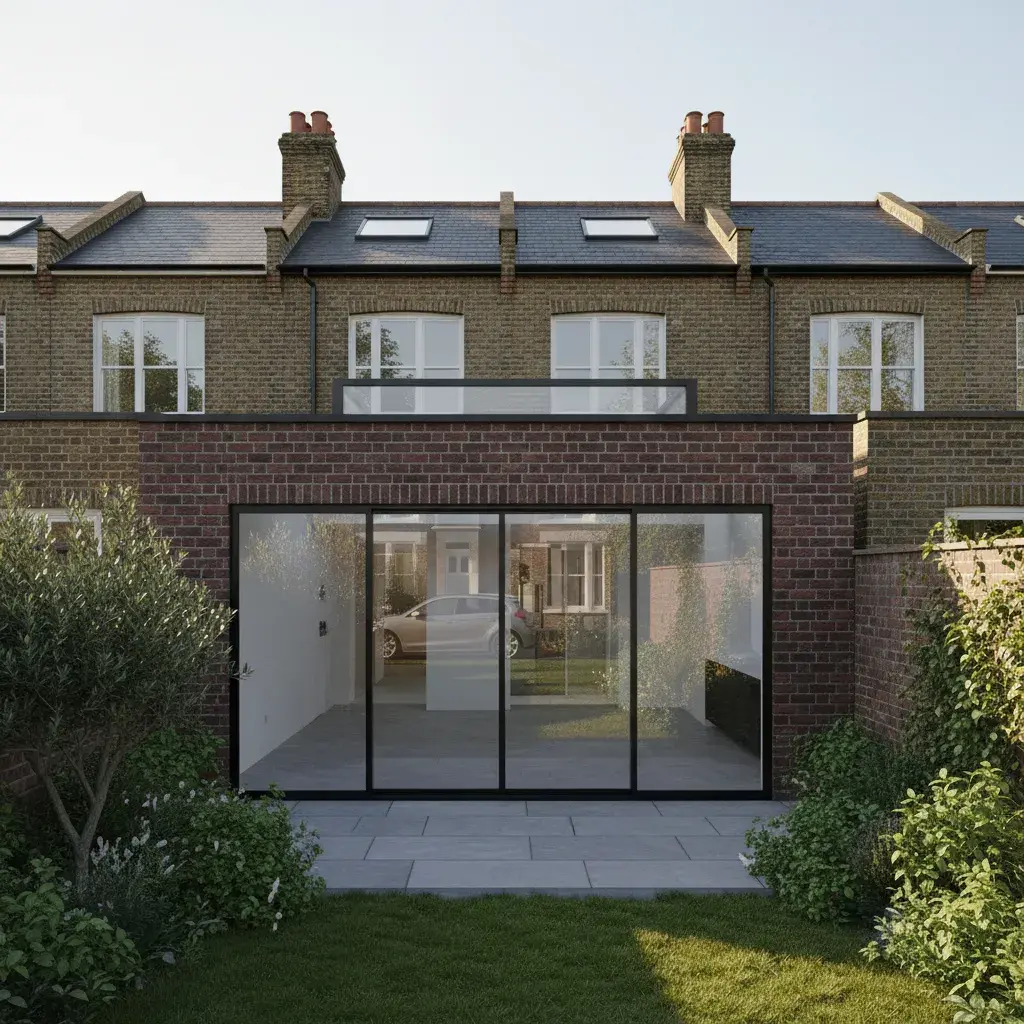
Clarify rear extensions, roof changes and material junctions for Victorian and Edwardian terrace homes in sensitive heritage contexts.
Nine Elms and Battersea represent one of London's most significant tall-building clusters, sitting within the Vauxhall, Nine Elms and Battersea (VNEB) Opportunity Area. Visualisation briefs here are frequently defined by height, skyline impact and riverside townscape sensitivity. The requirement is for accurate, evidence-led verified views (AVR) that anchor the new massing to its surveyed London context.
The workflow diagram traces the process from tall-building massing and viewpoint scoping through surveyed photography and camera matching to final AVR reporting. For projects in Nine Elms, the methodology must be robust enough to withstand design review and possible Mayor of London referral. The CGI evidences the project's relationship to the Thames and the wider Wandsworth skyline.
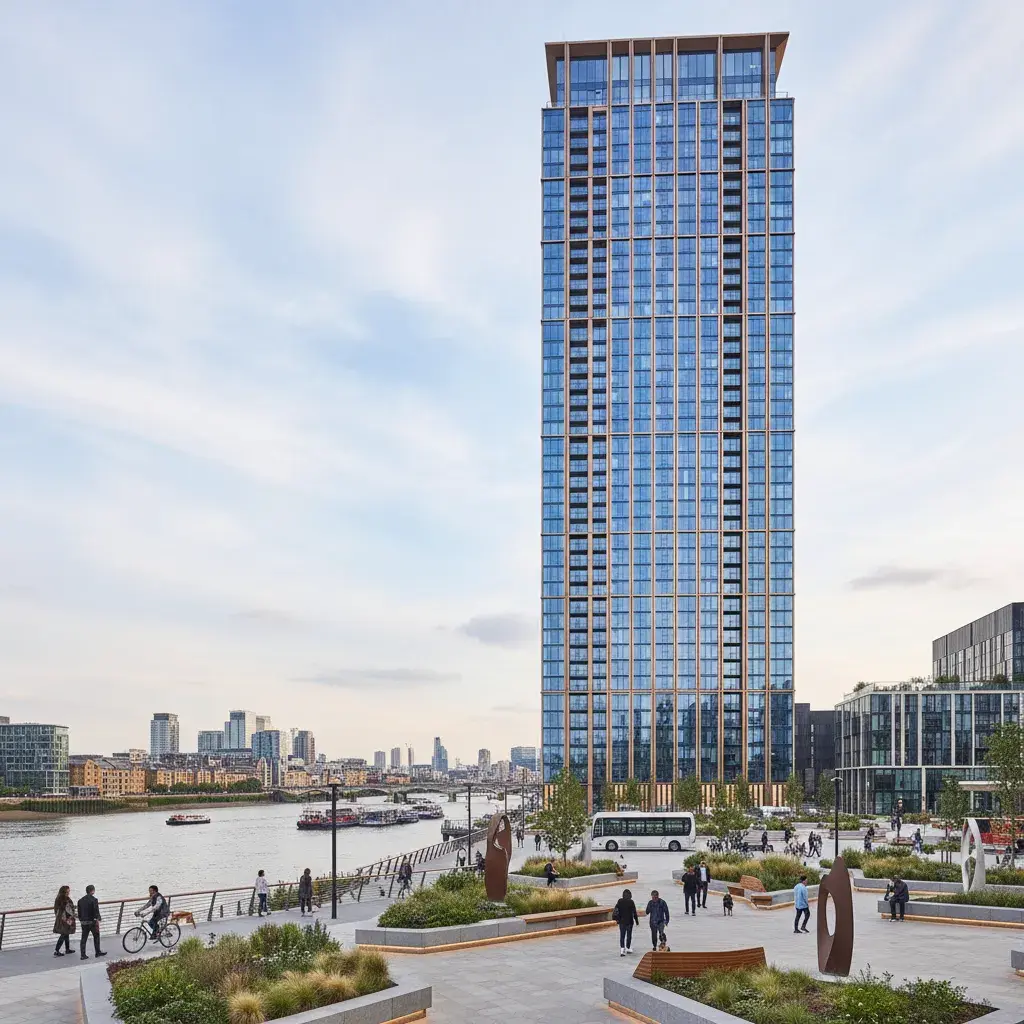
A riverside terrace view at a Nine Elms residential tower captures the character and views a future owner will value. By showing the modern material detail of the building alongside the wider Thames and Battersea Power Station context, the CGI bridges the gap between technical planning evidence and premium residential marketing.
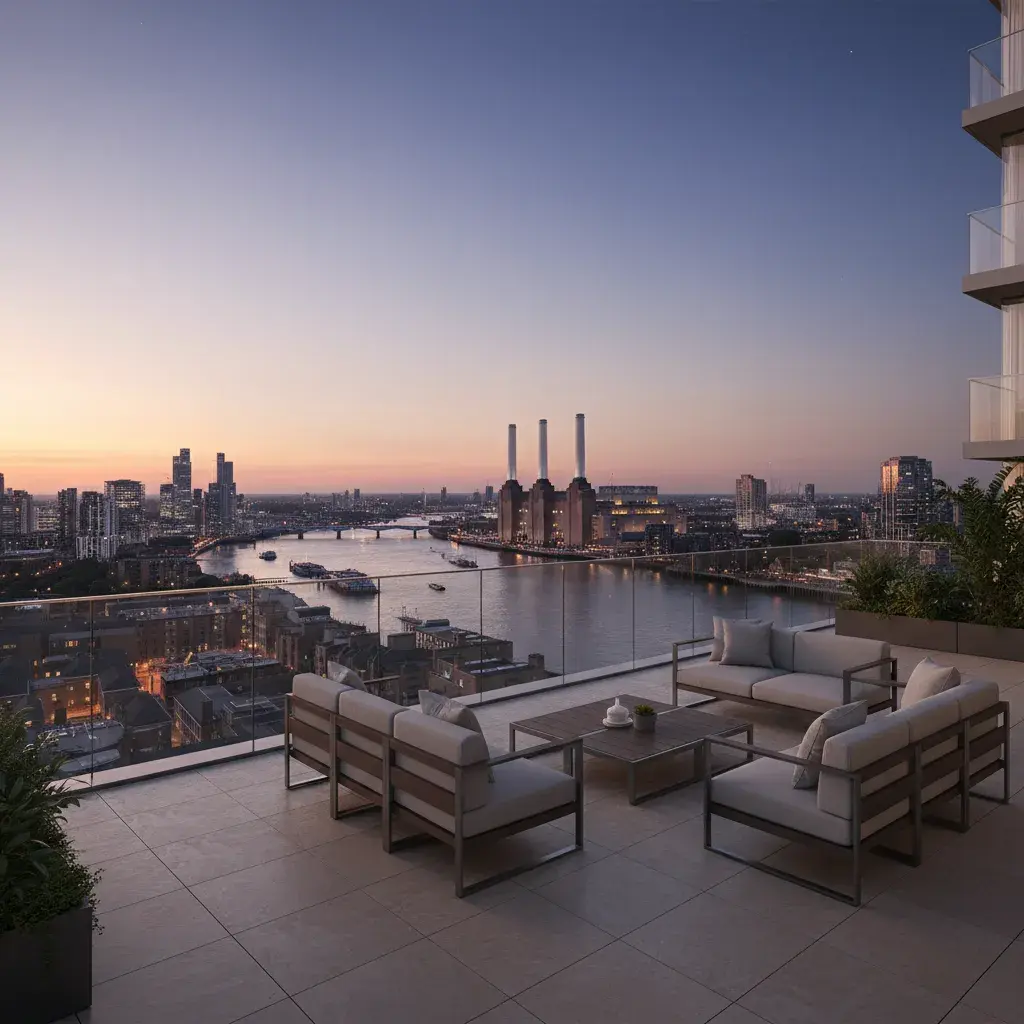
Wandsworth tall-building packages typically include verified views (AVR Type 0-3), riverside photomontages, and residential or hotel lobby and terrace CGI.
Wandsworth Town and the station-edge regeneration areas represent a significant visualisation demand in the borough. Projects here often sit within masterplan phasing and must address the specific transport and community context of Wandsworth Town Station. The visual task is to communicate high-quality public realm, active frontage, and modern architectural interventions that respect the area's character.
An architects desk flat-lay captures the specific inputs for a Wandsworth Town brief: an Ordnance Survey map of the area with the site circled, A3 drawings of a new mixed-use block, and material samples of brick and metal. This "deskscape" evidences the rigorous design thinking that precedes the 3D model.
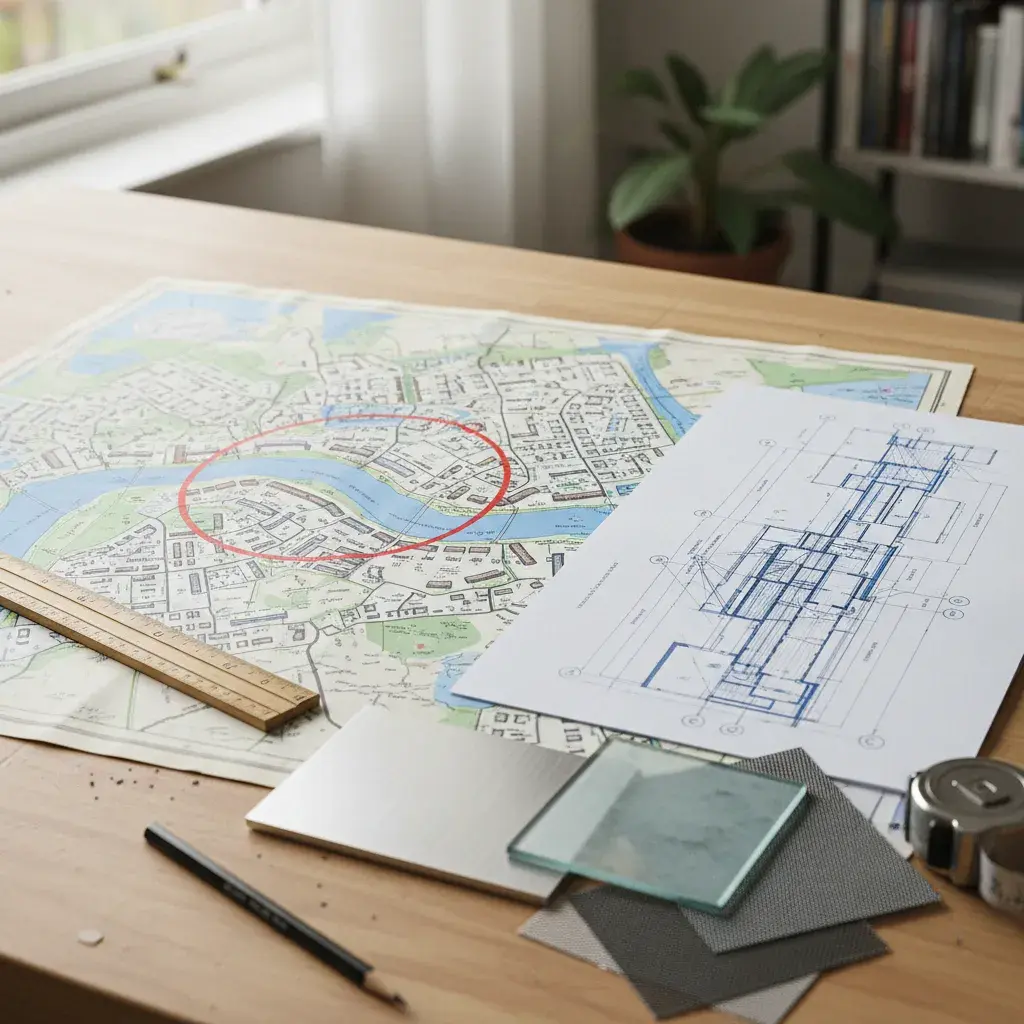
Wandsworth Town packages typically cover public-realm integration, commercial frontage and masterplan phasing.
Wandsworth visualisation services range from verified views for tall-building planning routes to interior CGI for premium residential launches and cultural workspace.
Wandsworth Council planning images for design-and-access support, public consultation, committee packs and material studies.
Discuss this service Verified ViewsAVR, verified-view and photomontage support for tall-building, riverside, VNEB and townscape-sensitive Wandsworth sites.
Discuss this service Commercial DevelopmentsCommercial, cultural, workspace, hospitality and mixed-use CGI for Battersea, Nine Elms and Wandsworth Town.
Discuss this service Exterior RenderingsFacade, street-scene, public-realm and masterplan views for Wandsworth high streets, estates and waterfront plots.
Discuss this service Interior VisualisationsInterior CGI for lobbies, workspace, hospitality, show apartments and design sign-off across Wandsworth.
Discuss this service House ExtensionsRear extensions, roof alterations and townhouse visuals for Balham, Putney, Earlsfield and Tooting homes.
Discuss this serviceNine Elms and Wandsworth Town teams need evidence-led images that explain massing, townscape effect and verified-view assumptions clearly.
Mixed-use and residential briefs in Wandsworth Town or Battersea need believable street-life and public-realm visuals for consultation and marketing.
Balham, Putney and Earlsfield owners use CGI to decide extension form, roof changes and material tone before planning or construction.
Wandsworth CGI is evaluated on its ability to show how new massing sits within iconic riverside, high-street or heritage contexts. Scale, material tone and public-realm quality are key priorities. For facade, roofline and streetscape visibility, see exterior rendering support.
A Wandsworth visualisation package starts by matching the viewpoint method and model detail to the specific planning or commercial decision the images need to support.
Review the Wandsworth address, planning route, drawings, photos, viewpoint requirements and deadline.
Agree the visual purpose: Nine Elms verified-view support, Wandsworth Town consultation or Balham design review.
Model the existing and proposed condition with enough Wandsworth street, river or station context for the decision to read clearly.
Compose the camera positions—skyline, riverside, street-level or interior—before final rendering.
Apply material, light and Wandsworth-specific context, then deliver final print-ready and web-optimised files.
Tell us where the Wandsworth project is, what stage it has reached, which drawings or references are ready, and whether the images need to support planning, verified views, consultation or marketing.
You can also email drawings, image references and deadlines to hello@architecturalvisualisationlondon.uk.
A useful Wandsworth quote starts with the address, planning route and image use: a Nine Elms tower and a Balham terrace need different evidence.
Send drawings and references for a brief review and we will confirm the right visual route before quoting.
Nearby borough links connect Wandsworth to the wider south and west London planning corridors.
Lambeth shares the VNEB Opportunity Area with Wandsworth, making tall-building and riverside verified-view logic a shared consideration.
Kensington and Chelsea sits across the river, influencing the demand for high-end residential and heritage-sensitive visuals in Putney and Battersea.
Richmond upon Thames connects through the western edge, where riverside and park-adjacent planning logic often overlaps.
Merton and Kingston connect through the southern residential clusters, where extension and conversion work is prominent.
Not every Wandsworth application needs verified views. Tall-building proposals in Nine Elms or Wandsworth Town, prominent riverside schemes and sensitive conservation-area projects may need AVR or photomontage support agreed with the planning consultant.
Yes. CGI can show public-realm integration, commercial frontage, interior spatial quality and the relationship to the Power Station landmark for planning, consultation or marketing.
Useful visuals include rear-extension CGI, roof-change studies, material samples and existing-and-proposed photomontages that show conservation-area fit clearly.
The Vauxhall, Nine Elms and Battersea (VNEB) Opportunity Area targets intense growth. Visualisation briefs here typically focus on tall-building scale, skyline effect, public-realm benefit and riverside context.
Typical inputs include the site address, drawings, site photos, viewpoint requirements, planning notes, material references, image use and deadline.